While many audit firms have adopted GRC and control testing software, the process still includes a good deal of inefficiency. Evidence is often divided among numerous email threads. Reviewers spend a great deal of time searching for missing documentation. Workpapers are corrected and signed off multiple times.
It's not always due to lack of effort. Platforms that service the testing and assessment of controls overlap to a great degree with GRC software. The difference is in where the focus lies. GRC software gives a firm-wide view of risks and compliance. Tools focused on control testing help auditors perform tests, assess evidence, and document their results.
Ultimately, your firm must decide: does it need a more comprehensive firm-wide GRC platform? Or does it need a more specialized control testing platform?
In this article, I will walk through how each category works, where audit firms run into trouble, what to look for when evaluating a platform, and how a specialized testing layer like Roz fits alongside the GRC systems you may already use.
What Is a Control Testing Platform?

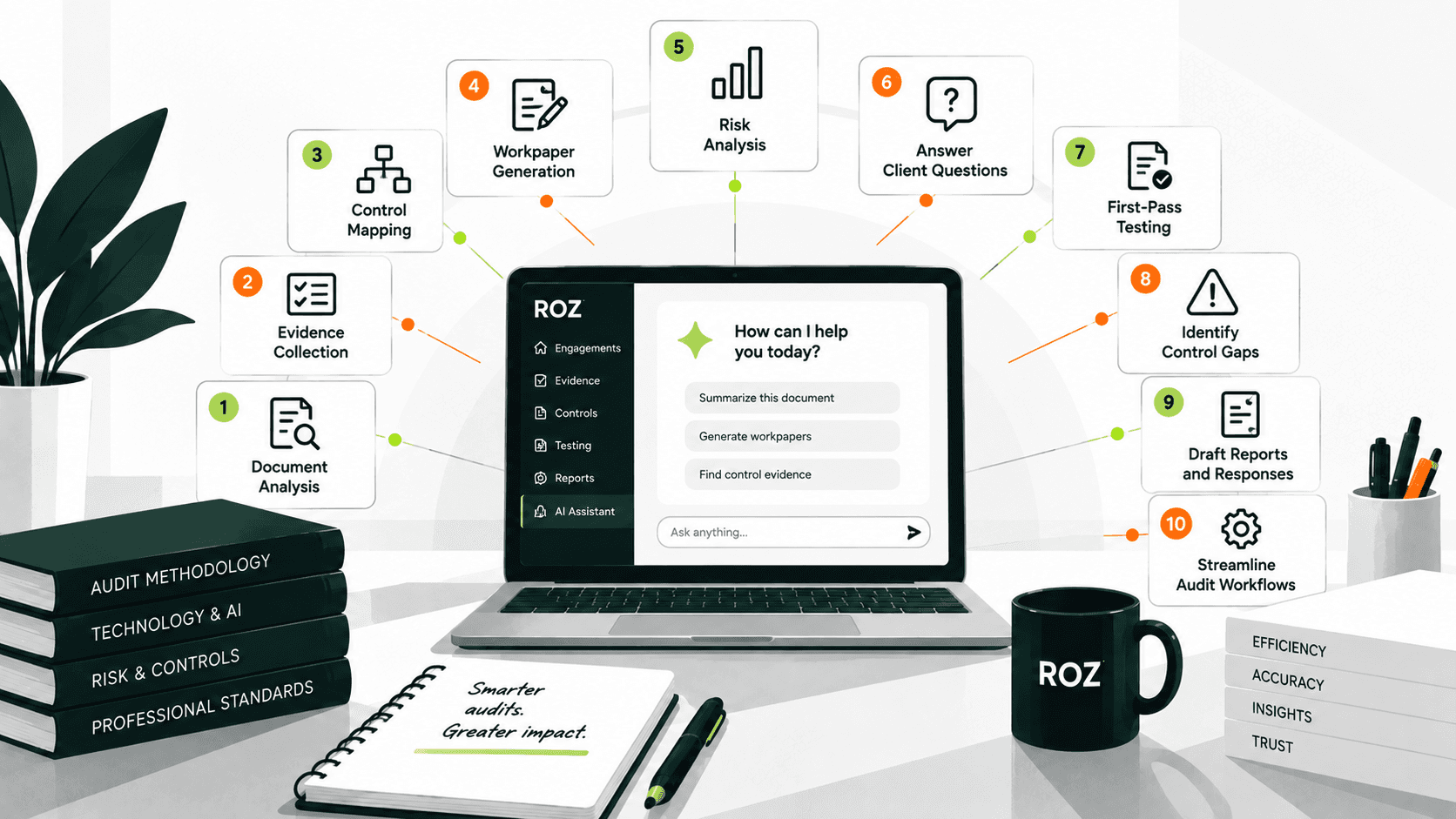
A control testing platform is a tool that helps auditors automate their workflow to plan tests, gather and review evidence, and prepare work for review. Core features may include the ability to:
Control-level test planning and documentation: Establish what will be tested and the criteria against which the tests will be performed prior to fieldwork.
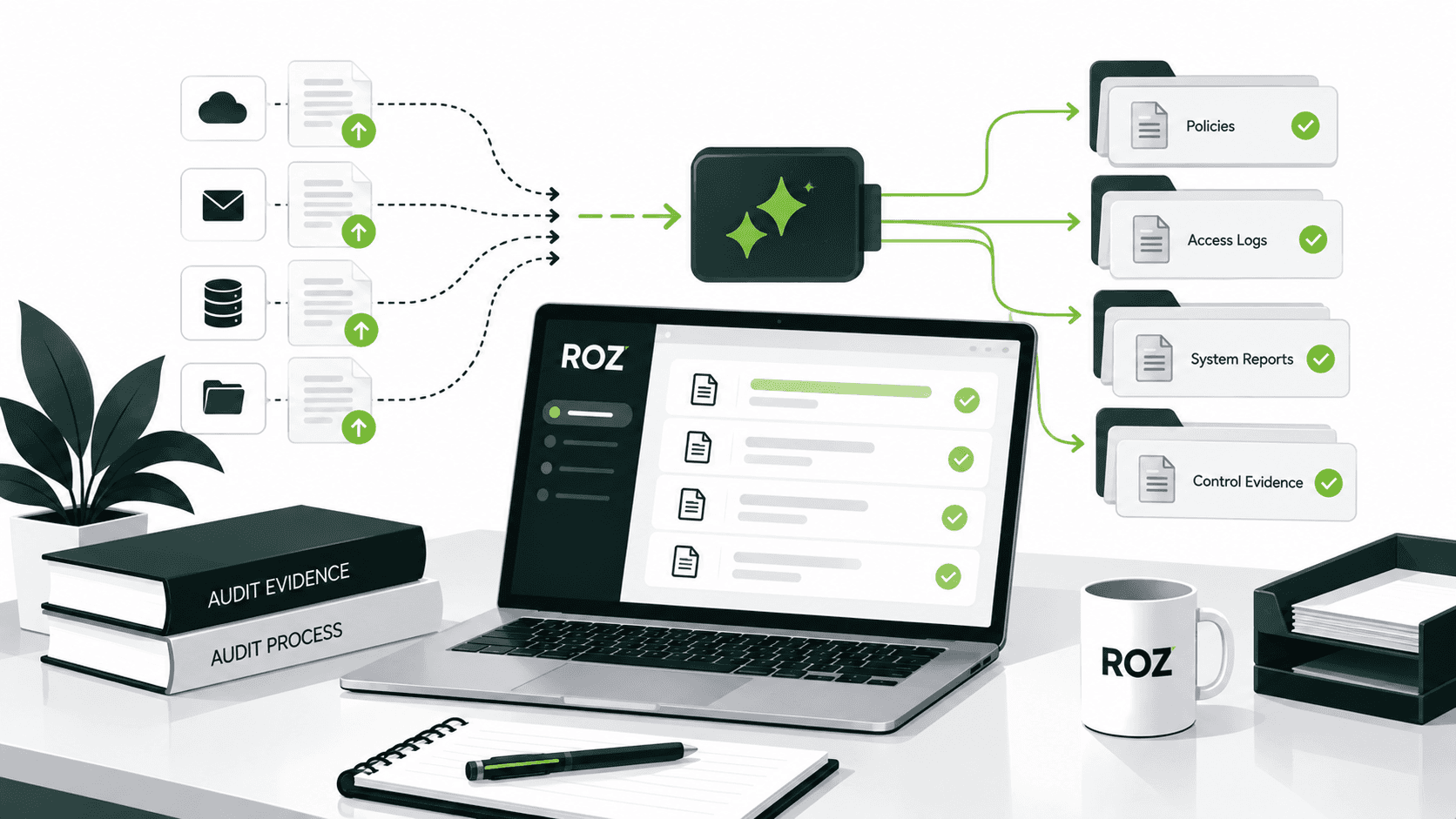
Evidence collection and mapping to controls: Connect the submitted documentation to the relevant controls, samples, and testing procedures.
Sample and testing-attribute documentation: Identify which items have been sampled and which attributes are being tested.
First-pass testing and exception identification: Assisting with repeatable checks and flagging potential exceptions or items requiring further auditor review.
Evidence-linked workpapers and annotations: Linking supporting source material to the test results and conclusions it informs.
Audit trails: Record relevant actions and changes throughout the engagement, supporting traceability of testing activity and review decisions.
Who uses control testing platforms?
Risk advisory firms performing outsourced or co-sourced internal audits.
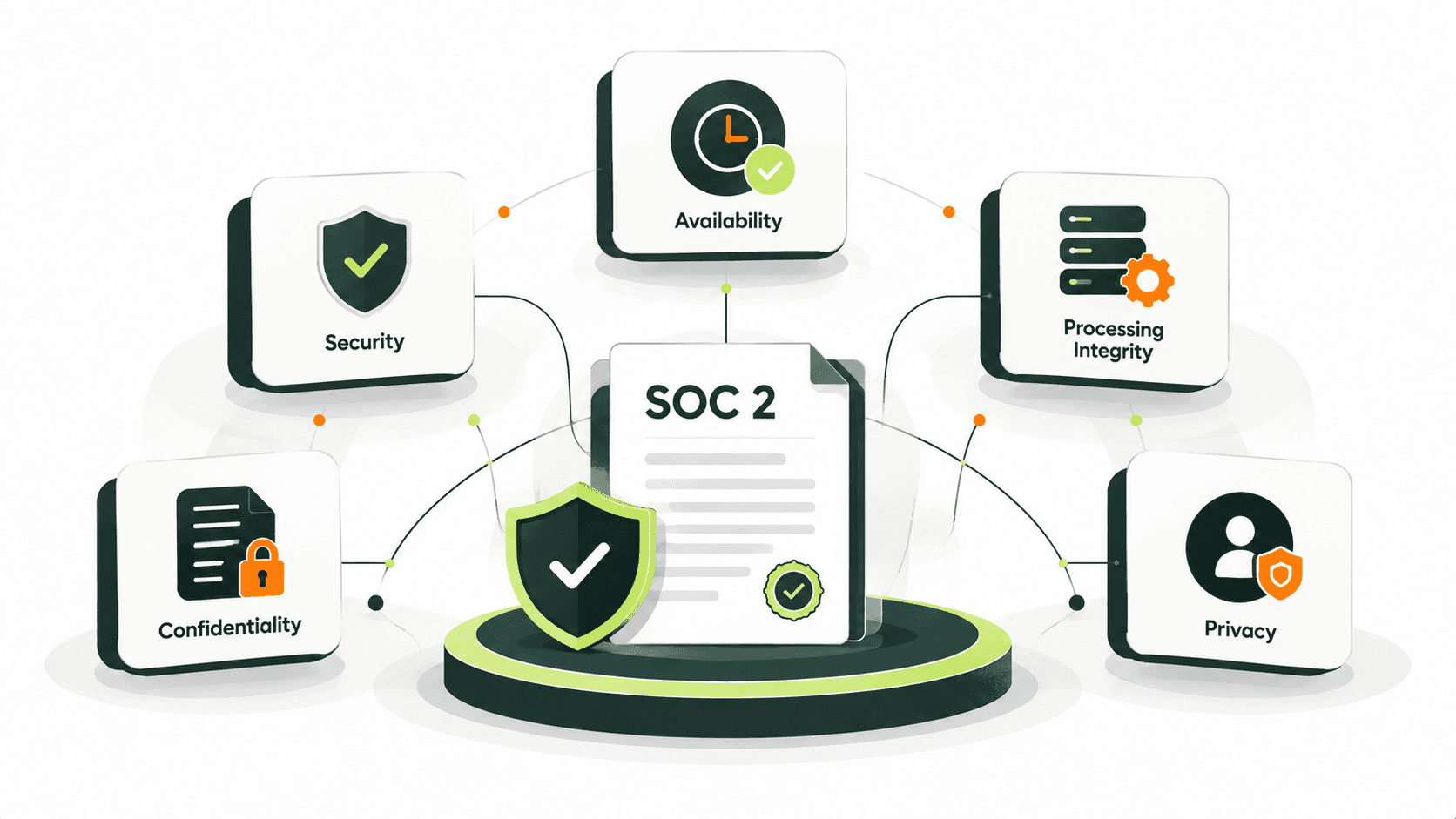
CPA firms performing SOC 2 and other assurance services.
Enterprise internal audit teams conducting recurring control testing.
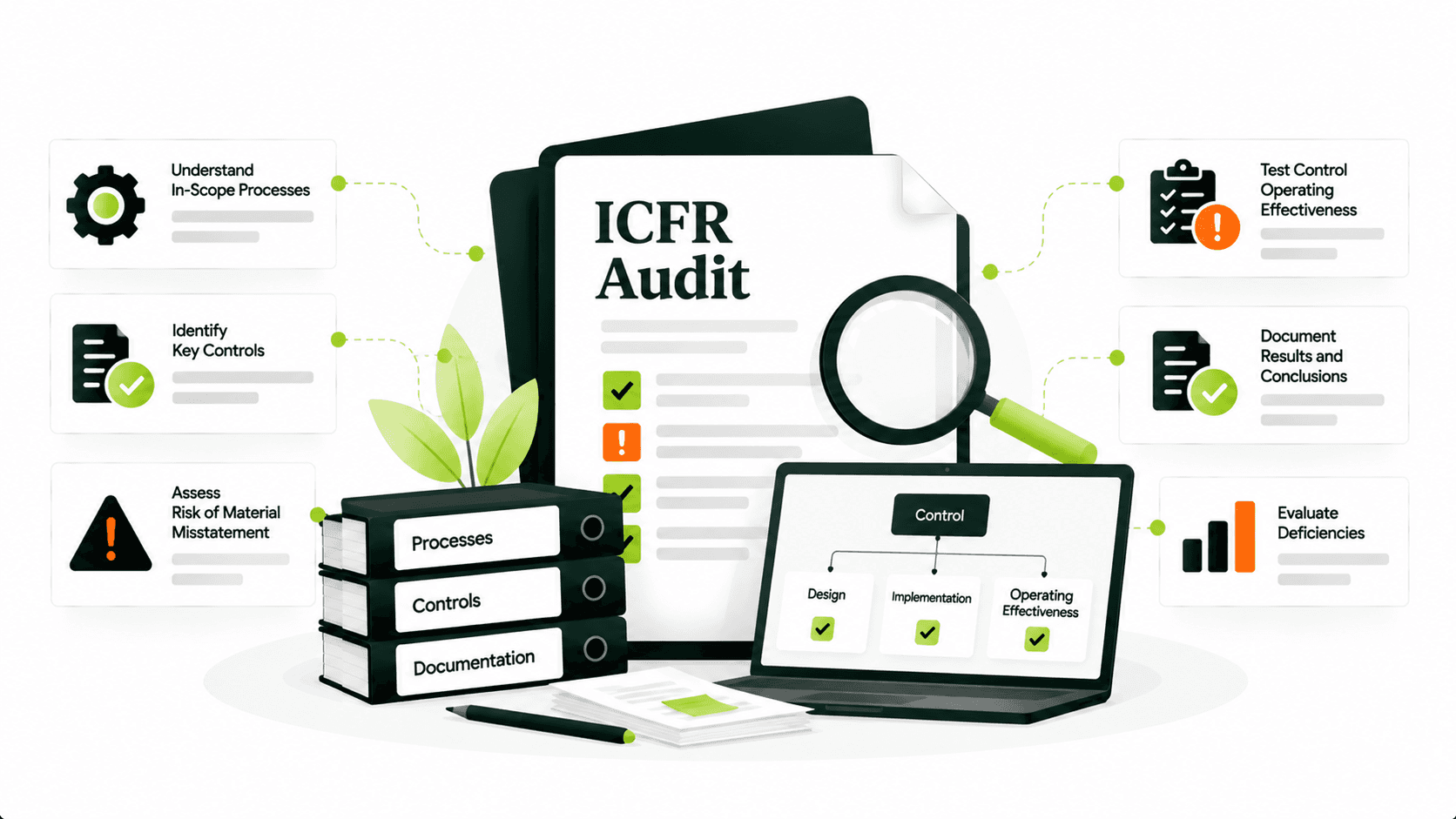
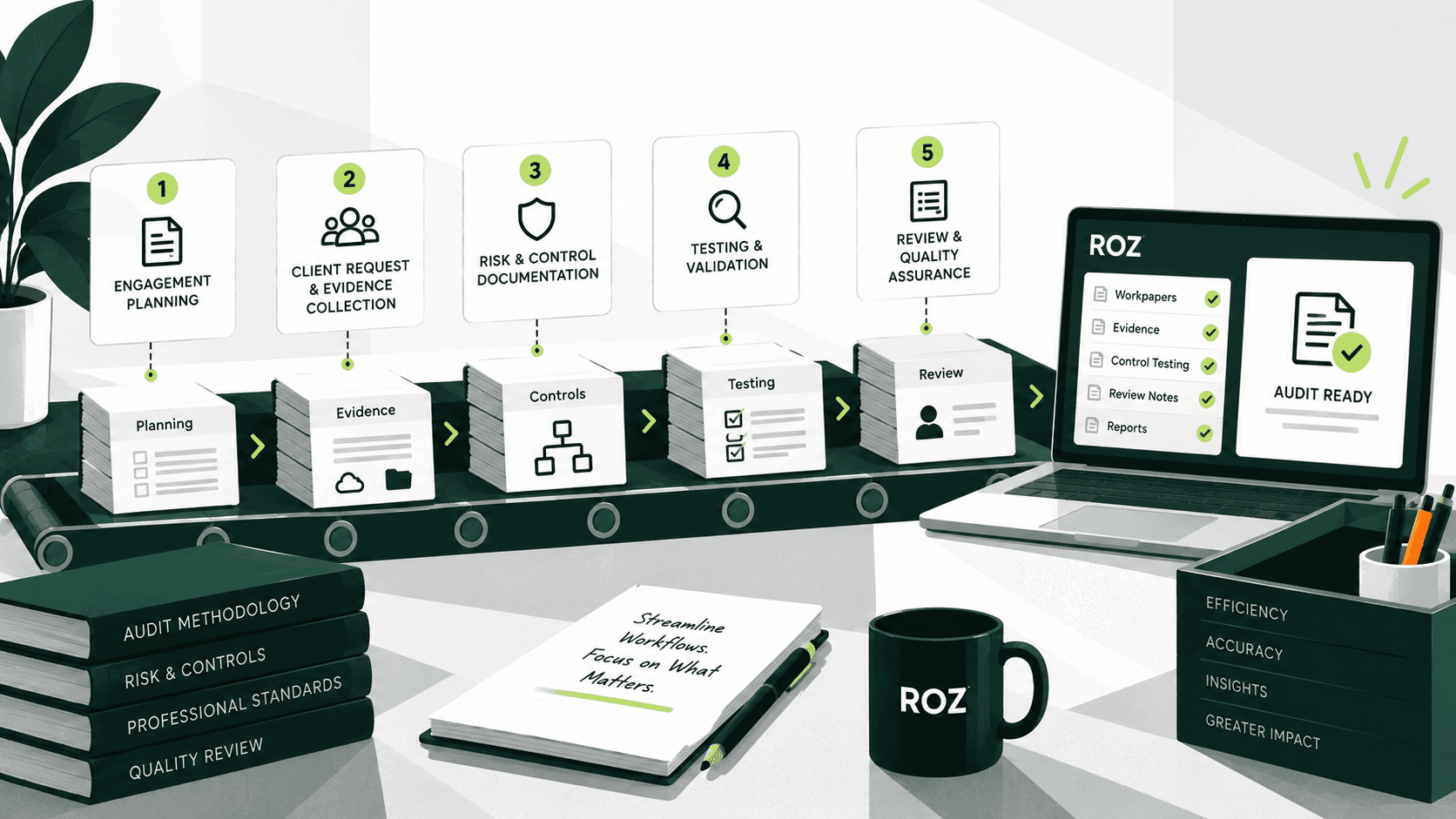
Control testing platforms can support evidence collection and review across different types of controls. Auditors gather the relevant documentation, assess the population and period, evaluate evidence against defined testing criteria, and investigate potential exceptions. They then document their procedures and results in workpapers for review.
That sequence, request, evaluate, document, and review, illustrates the workflow a control testing platform can support.
Key takeaway: A control record describes how a control is designed to operate. A testing workflow documents the procedures performed, the evidence examined, and the results that support the auditor’s evaluation.
What Is a GRC Platform?
A governance, risk, and compliance (GRC) platform provides support for the enterprise-wide coordination of governance, risk management, and compliance activities. Typical functionality includes:
Enterprise risk registers and assessments.
Policy and compliance obligation management.
Centralized control libraries and framework mapping.
Control ownership and ongoing monitoring.
Issue tracking and remediation.
Compliance dashboards and management reporting.
Audit planning and control testing, where supported by the product.
Who uses GRC software?
Chief risk and compliance officers.
Enterprise risk management teams.
Compliance and security teams.
Internal audit departments.
Organizations managing multiple frameworks or business units.
Some products offer end-to-end integration of risk management, compliance, audit management, and control testing in a single suite, and others focus on a few of these functions.
GRC platforms are not inherently incapable of supporting control testing. The meaningful distinction should be made on intended users, fieldwork and audit oversight, and how well the product supports enterprise oversight.
Control Testing vs. GRC Platforms: Key Differences
Evaluation area | Control testing platform | GRC platform |
Primary purpose | Execute and document control tests | Manage broader governance, risk, and compliance |
Main users | Auditors and assurance teams | Risk, compliance, security, and audit teams |
Typical workflow | Evidence >> test procedure >> result >> review >> workpaper | Risk >> control >> compliance activity >> issue >> reporting |
Evidence handling | Connects evidence to tests, samples, and findings | Collects and manages evidence across controls and compliance activities |
Testing depth | Focused on test execution and documentation | Varies by platform and module |
Risk management | Usually supports testing within a risk context | Often provides broader enterprise risk assessment |
Workpapers | Emphasizes test-level documentation and review | Depends on audit management capabilities |
Reporting | Test results, exceptions, and workpaper status | Enterprise risk, compliance status, controls, and audit reporting |
Best-fit scenario | Evidence-heavy audit fieldwork | Coordinated enterprise risk and compliance management |
Why does workflow depth matter more than a feature list?
A long feature list does not necessarily mean a platform fits your firm’s workflow. Evaluate whether the product supports your audit methodology, evidence requirements, testing procedures, review policies, and documentation needs across multiple client engagements.
Some GRC platforms provide comprehensive control testing and workpaper capabilities, while others require the use of add-on products or customizations. A product demonstration should show a representative engagement, from the collection of evidence through testing and exception documentation to the final review of the workpaper.
The purpose is to understand if the product meets the firm’s workflow requirements, not if it provides a particular feature.
Common Control Testing Problems Audit Firms Face

Evidence collection delays fieldwork
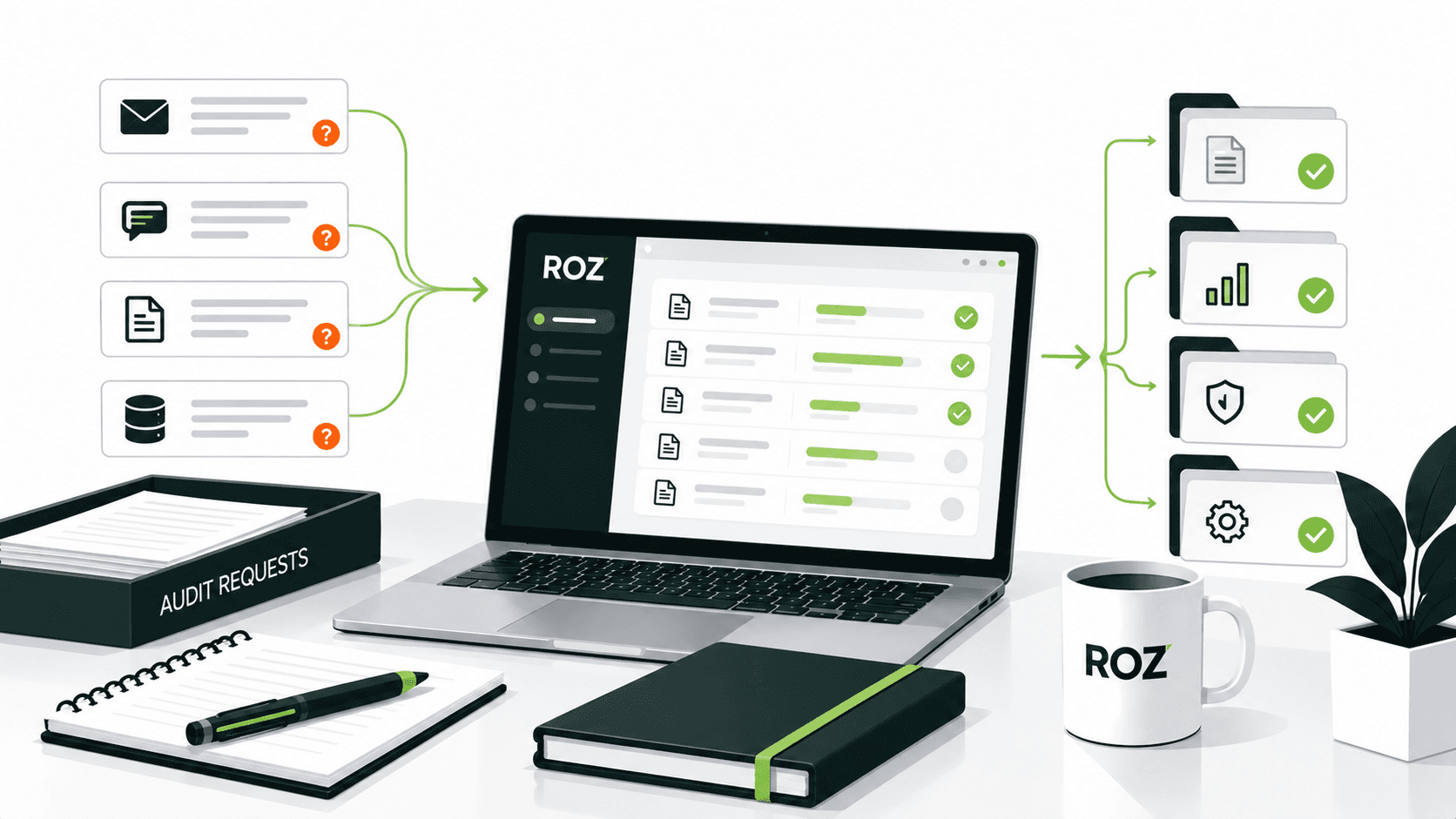
Client requests often come incomplete. Submissions are frequently late. Follow-up requests and the associated evidence are spread across email, client portals, and shared drives. Without a centralized requests and evidence tracking system, auditors spend time reconstructing how an engagement was completed instead of performing tests of controls.
Evidence is disconnected from control tests
Auditors may document test results separately from the controls, samples, and testing attributes they relate to. Manually connecting these records can introduce inconsistencies and make it harder for reviewers to confirm that the workpaper accurately reflects the procedures performed and evidence examined.
Manual testing creates repetitive work
Auditors often repeat similar checks across samples and engagements. When these procedures require extensive manual effort, less time may be available to investigate exceptions, resolve review comments, and complete workpapers.
Workpaper preparation creates review bottlenecks
Incomplete documentation, inconsistent testing records, and unclear links between evidence and results can increase review effort. Reviewers may need to request clarifications, return workpapers for corrections, and repeat checks before documentation is ready for sign-off.
Existing platforms leave workflow gaps
A firm may use a GRC system to manage control ownership and compliance while its audit delivery team relies on spreadsheets, document repositories, or other tools for parts of fieldwork. Whether this creates a workflow gap depends on the platform’s testing capabilities, integrations, and fit with the firm’s methodology.
AI outputs need validation
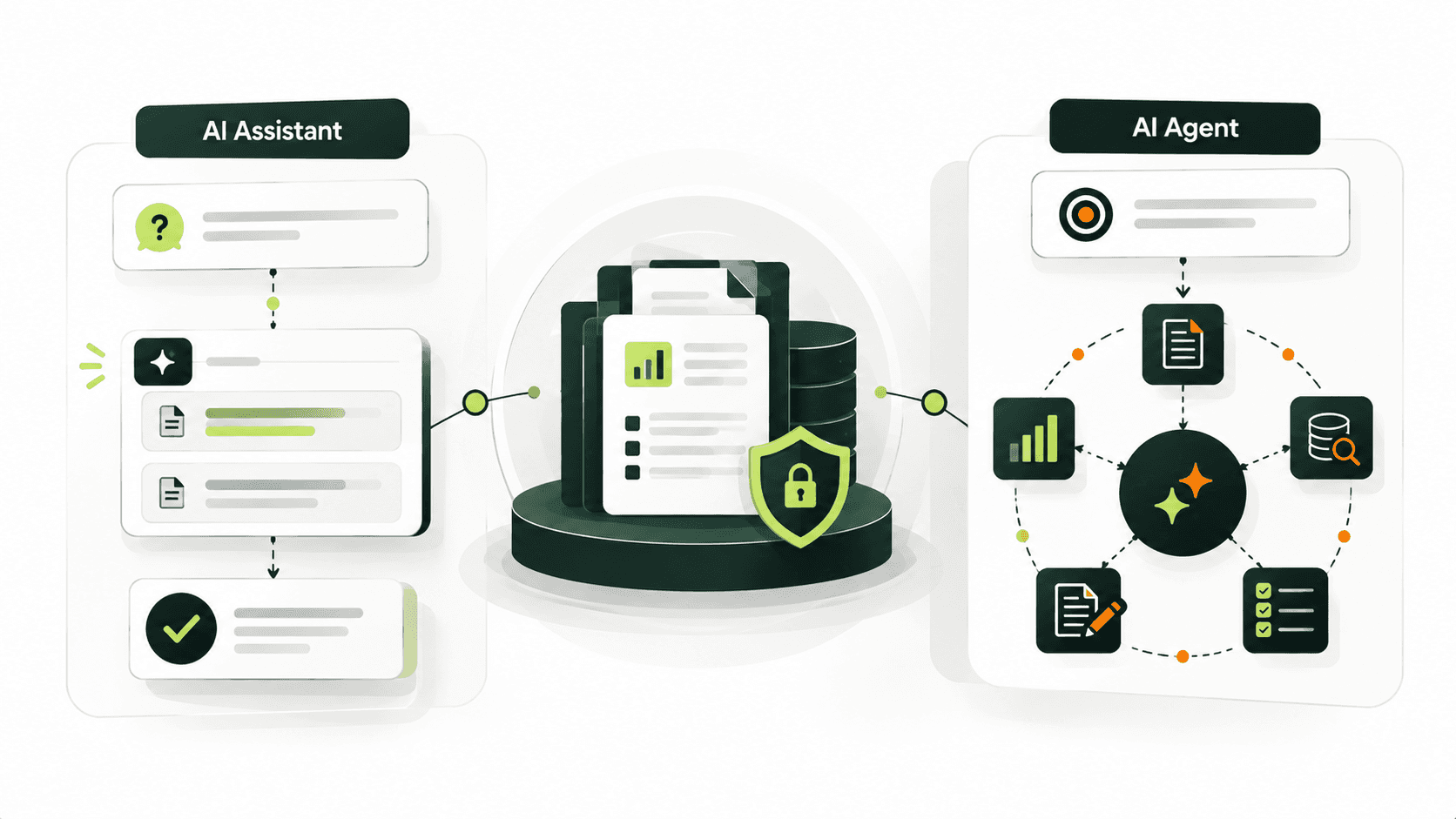
AI-assisted workflows can produce summaries, suggest testing steps, and identify potential exceptions, but they may miss context, misinterpret evidence, or overlook relevant information. Auditors should verify AI-generated outputs against the underlying evidence and applicable testing criteria. Under PCAOB standards, the nature and extent of testing should reflect the assessed risks and the control being evaluated. Inquiry alone may not provide sufficient evidence in some circumstances, so auditors may also need to inspect documentation, observe control performance, or reperform procedures as appropriate.
When Should an Audit Firm Use GRC Software, Control Testing Software, or Both?
Choose GRC software when enterprise-wide oversight is the priority
If an organization needs a central system for managing risk registers, compliance frameworks, policies, control ownership, remediation, and reporting, a GRC solution may serve as its primary system of record. Also, some GRC solutions provide advanced audit and control testing capabilities.
Prioritize control testing tools when fieldwork is the bottleneck
If the main bottlenecks involve evidence-heavy engagements, repetitive testing, workpaper preparation, reviewer rework, or limited source traceability, assess whether a specialized control testing platform could address these needs more effectively than your current tools.
Use both when oversight and execution have different needs
A GRC solution can serve as the system of record for enterprise risks and controls, while a specialized control testing platform supports fieldwork and evidence review. Using both may make sense when the existing GRC platform does not adequately support the firm’s testing workflow.
Before implementing both solutions, evaluate the integration points and record duplication and access controls, as well as which solution will be the system of record for each type of record. In some cases, a control testing solution may not be needed if a GRC solution effectively supports both functions.
What to Look for When Evaluating Control Testing Platforms
Testing workflow fit: Can the tool document test procedures, samples, attributes, results, exceptions, and conclusions in one place?
Evidence traceability: Can a reviewer trace a finding back to the relevant evidence and understand how the auditor evaluated it?
Workpaper quality and review: Can the firm use its own approved templates, document review notes, track changes, and record sign-off?
Multi-client data separation: Does each engagement run in an appropriately isolated workspace with role-based permissions?
AI transparency and human review: Can the tool show its supporting sources, preserve testing rationale, flag uncertainty, and require human review of AI-assisted outputs?
Integrations and implementation: Can it work alongside your firm's existing GRC, document management, and audit systems without creating duplicate records?
Scalability and cost: What do pricing, usage limits, implementation effort, and total cost of ownership look like at your firm's scale?
Practical tip: Ask each provider to demonstrate an end-to-end control test using your firm’s testing criteria and representative evidence. Include examples with complete documentation, missing information, and a potential exception. Evaluate how the platform handles evidence mapping, testing results, source traceability, reviewer comments, and workpaper preparation. A realistic demonstration can reveal workflow gaps that may not be apparent from dashboards or feature lists.
How Roz Supports Control Testing and Audit Fieldwork
Roz is an AI-native audit fieldwork and control-testing platform built for the auditor, not the companies being audited. It helps audit firms and risk advisory teams accelerate control testing while keeping evidence, results, and documentation connected throughout fieldwork.
Client-Specific Workspaces and Evidence Collection
Every client engagement has its own isolated workspace, keeping documents, evidence, and assessments separate. Evidence requests are tied directly to relevant controls, helping audit teams organize client submissions and track evidence collection without relying on scattered email threads and spreadsheets.
Evidence Mapping and AI-Powered Control Testing
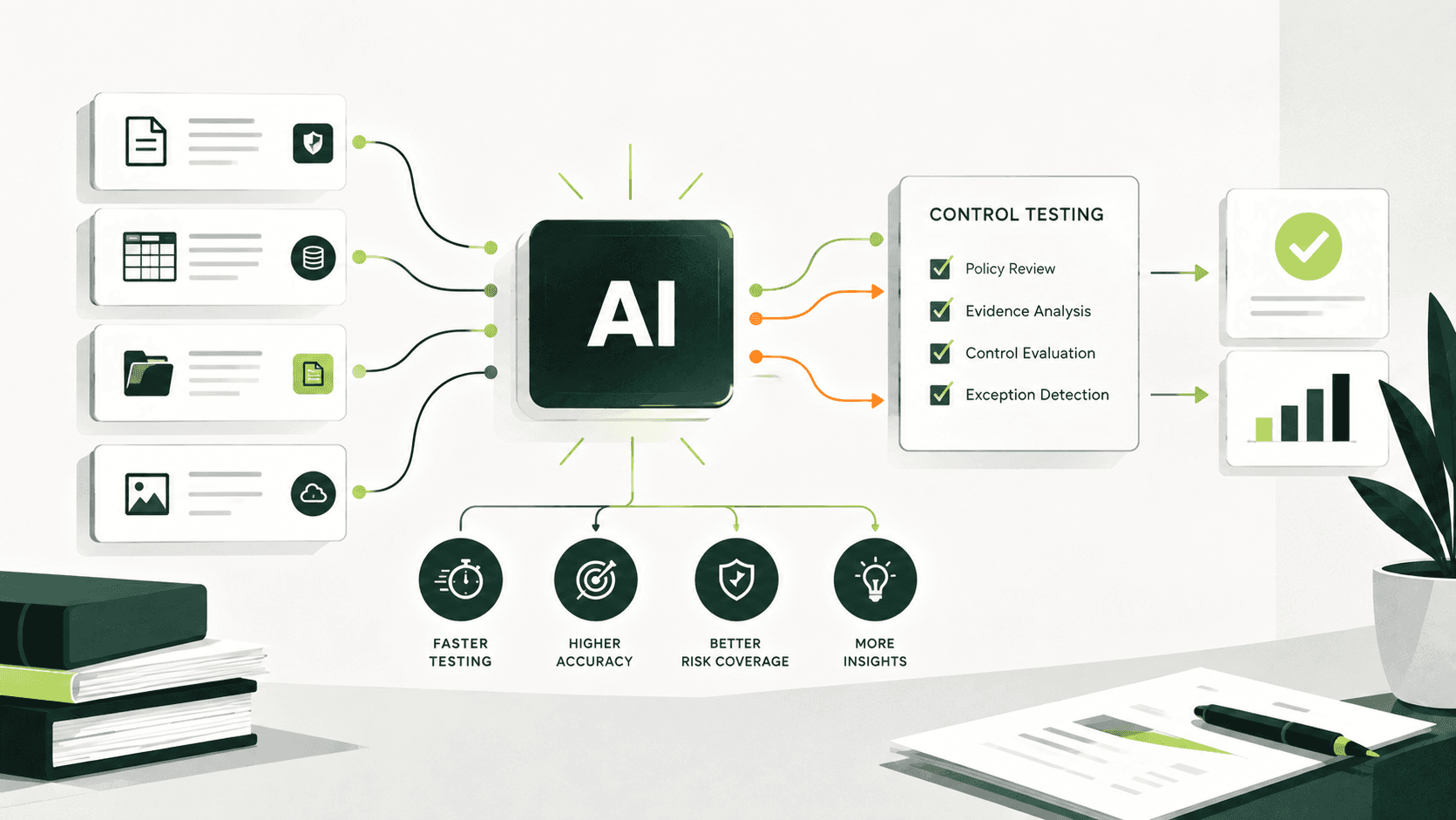
Roz connects evidence to relevant controls and sample entries, then runs defined or AI-suggested attribute checks against the supporting documentation. Testing returns PASS, FAIL, N/A, or INFO results with reasoning, helping auditors identify potential exceptions and focus their review where it matters.
Workpaper Preparation and Traceability
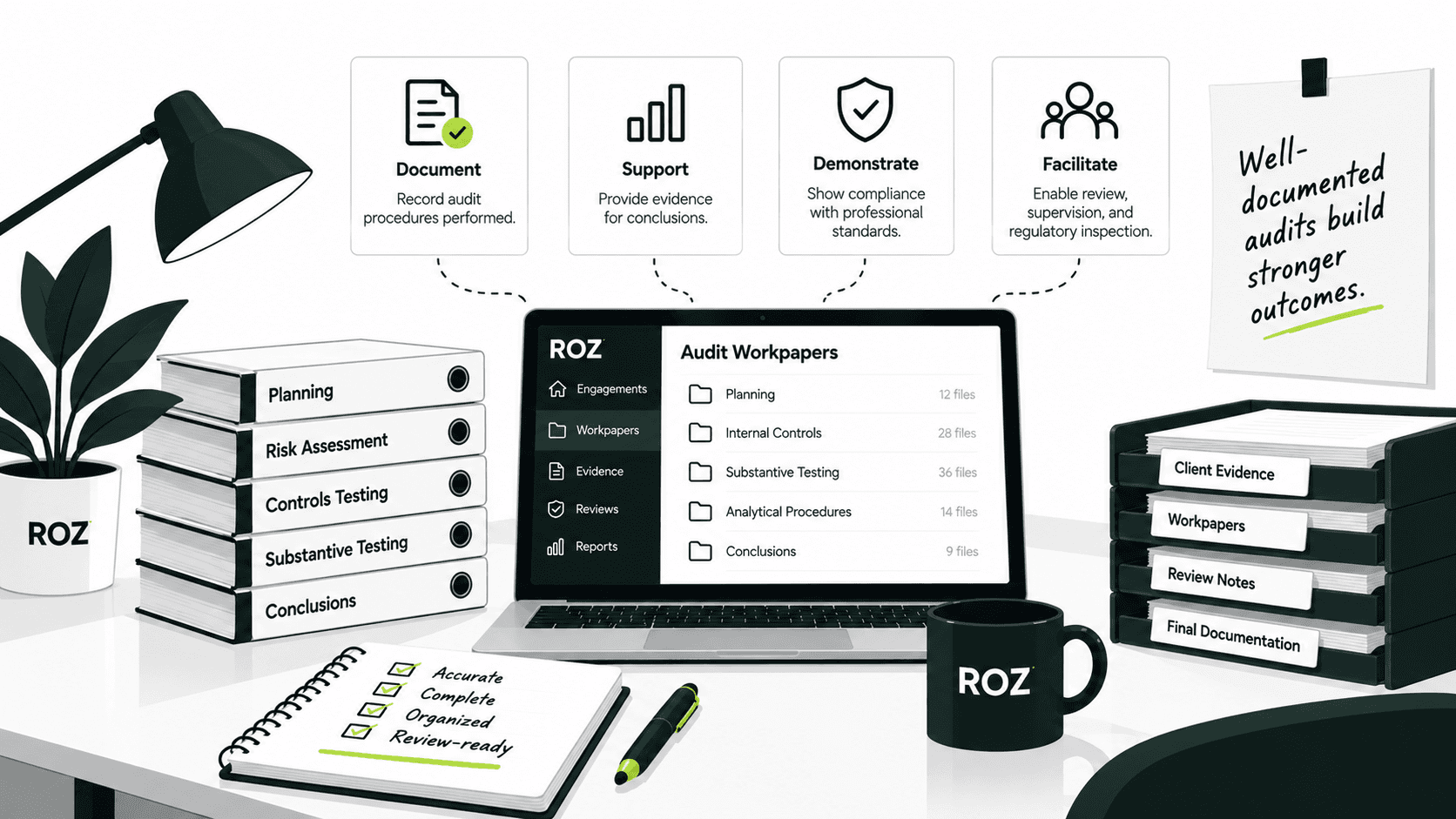
Completed control activities can be exported as formatted workpapers with supporting evidence and annotations. Quote Highlighting lets auditors jump from an AI-cited result to the relevant passage in source evidence. Roz also records test reruns, verifications, and overrides in its audit trail, supporting review and traceability.
Human-in-the-Loop Audit Delivery
Roz accelerates repetitive control-testing work while keeping auditors in control of the outcome. Auditors can verify results, rerun tests, and override them where appropriate. Roz helps reduce manual effort—delivering approximately 80% average time savings on control testing, while professional judgment and final conclusions remain with the engagement team.
Works Alongside Your Existing Audit Systems
Roz complements broader GRC and audit management platforms, including Workiva, Optro, and TeamMate. It adds focused support for evidence-heavy control testing and fieldwork without requiring firms to replace their existing systems. If your team spends too much time reviewing evidence, testing controls, and preparing workpapers, see how Roz can accelerate your audit fieldwork.
Conclusion
GRC software platforms give more expansive risk and compliance coverage across an organization. Control testing software focuses on executing and documenting evidence-based tests, even though the categories overlap more than vendors imply. The choice should not rest on category names alone. It should rest on your firm's real bottlenecks, the depth of your testing requirements, and what your systems already do well.
Effective audit delivery depends on connecting evidence, testing procedures, review activity, and workpaper documentation in a traceable workflow. See how Roz supports control testing and workpaper preparation as part of your firm’s audit delivery process.
Frequently Asked Questions
What is the difference between control testing software and GRC software?
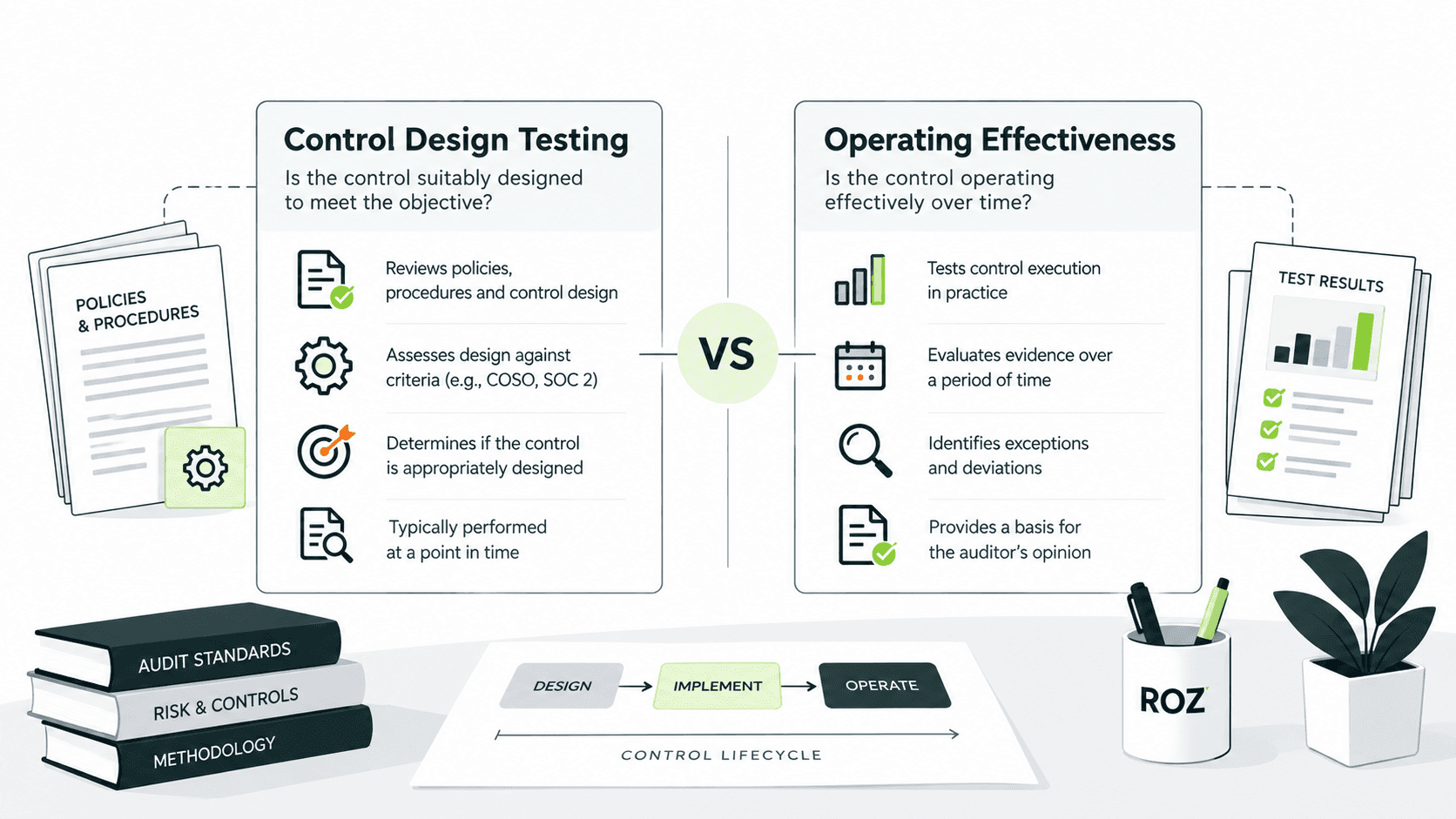
Control testing software helps auditors document and evaluate control design and operating effectiveness through defined procedures and supporting evidence. GRC software supports broader governance, risk, and compliance activities, although some platforms also offer control testing capabilities. Firms should evaluate each product’s actual testing and workpaper functionality rather than relying on category labels alone.
Can GRC platforms perform control testing?
Many GRC platforms can perform control testing, though how well they do it varies greatly by vendor and module. Some GRC suites offer end-to-end testing workflows. Others merely support control mapping and leave testing to be done manually in spreadsheets. A demonstration using your firm’s test criteria is the fastest way to assess a platform’s functionality.
What software do audit firms use for control testing?
Audit firms use several options, including audit management platforms and GRC suites that include a testing module. The best fit depends on the volume of engagements, how complex the testing evidence is, and how well the firm’s systems support fieldwork.
Should CPA firms use both GRC and control testing platforms?
Some firms use both: a GRC platform for enterprise risk and control management and a specialized platform for control testing and workpaper preparation. Whether both are necessary depends on how effectively the existing GRC platform supports the firm’s fieldwork, evidence review, and documentation requirements.