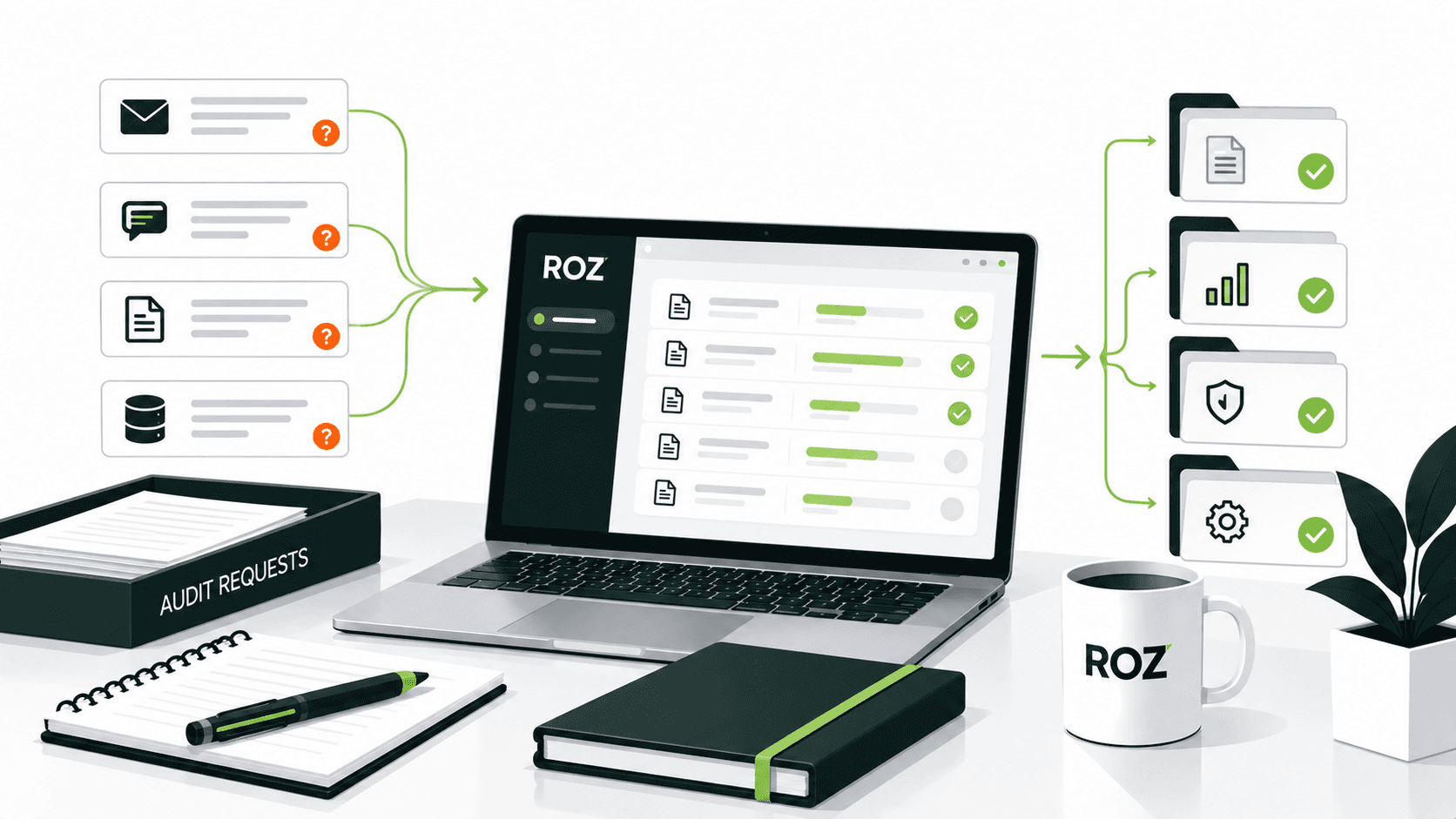
Every audit runs on documents. Contracts, invoices, policies, spreadsheets, correspondence, control descriptions, the evidence keeps piling up, and it rarely arrives in a tidy, consistent format. Locating the right detail, extracting it, comparing it across files, and organizing it all can eat up a large share of engagement hours before any real analysis begins.
That manual work is where consistency tends to slip. When evidence comes from a dozen different sources, keeping your review criteria steady across every file is genuinely hard (and tedious).
AI document review offers a way to assist with that analysis. It can read, extract, compare, and flag, while professional judgment and responsibility stay with you. In this article, I will walk through what AI document review does, where it helps, where it can trip you up, and how to use it well. Both the benefits and the risks are on the table.
What is AI document review for auditors?

AI document review is the use of AI-assisted software to analyze engagement documentation, identify information that may require attention, and extract relevant content for auditor review.
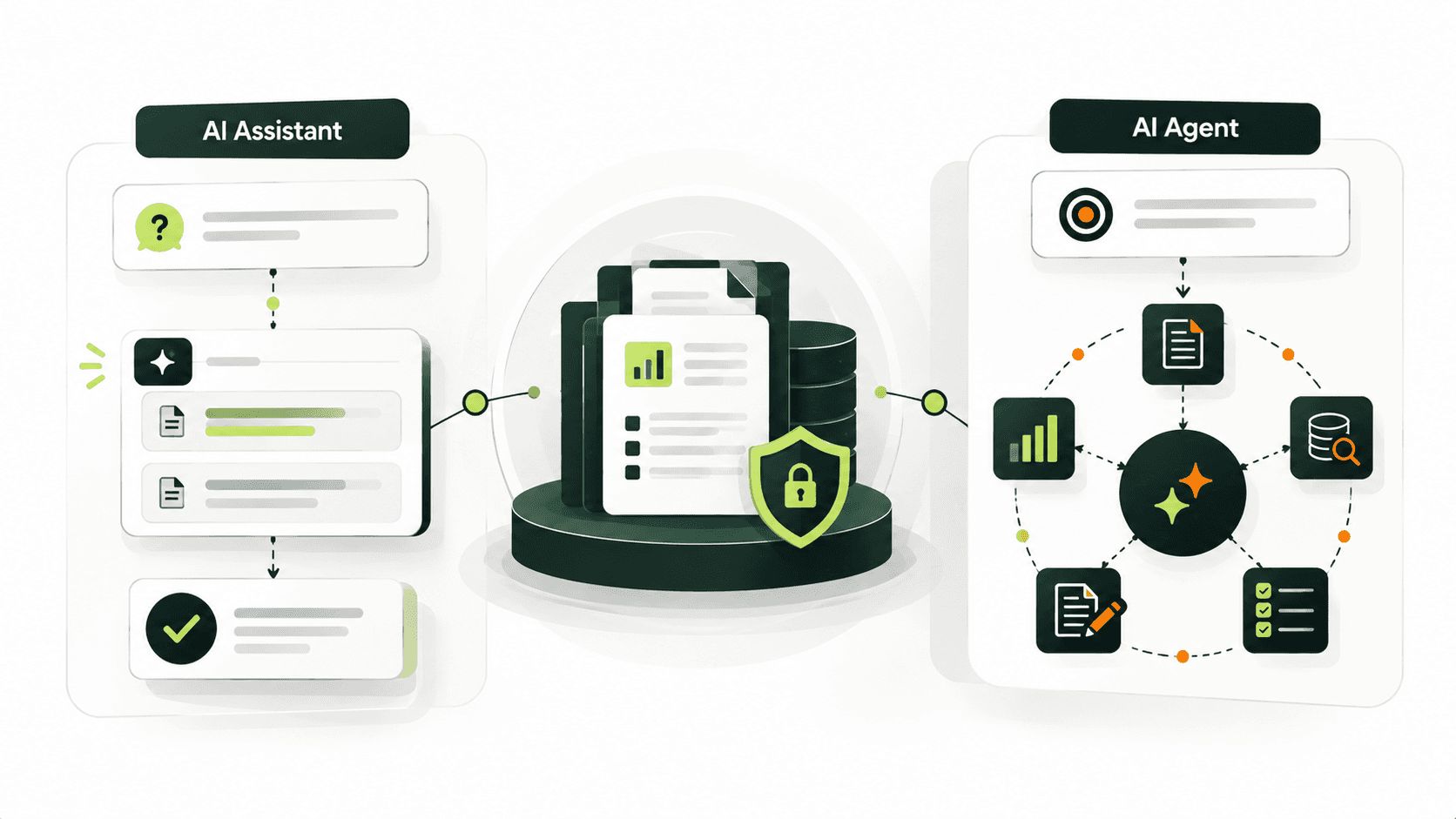
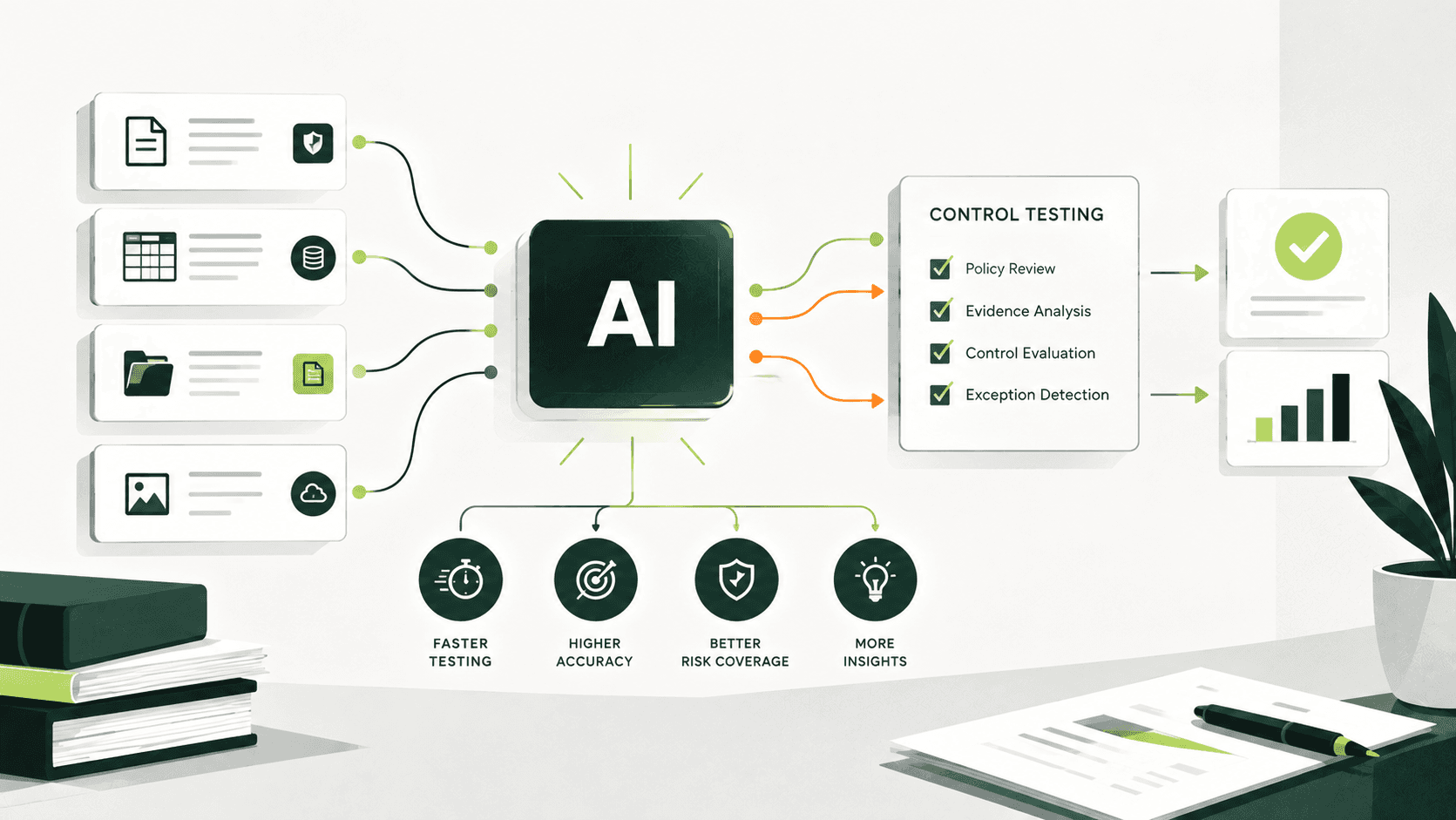
AI performs the analysis by thoroughly examining the content in the documents and analyzing related information in other documents, which allows the software to identify gaps, inconsistencies, and other items that potentially require review. The auditor still has the responsibility of reviewing the actual information and deciding how that information is related to the engagement. The software does not take on this responsibility.
This greatly differs from other methods of document review. Keyword search locates specific words or phrases. AI-assisted document review can analyze the context of the terms, analyze documents and relationships, and extract and analyze relevant content while identifying potentially contradictory information.
Think of this as going beyond searching for a word and seeing how it relates to the surrounding documentation.
What can AI document review actually do in an audit?

AI document review is not a single capability; it is a set of functions that can support different audit tasks. For example, it can:
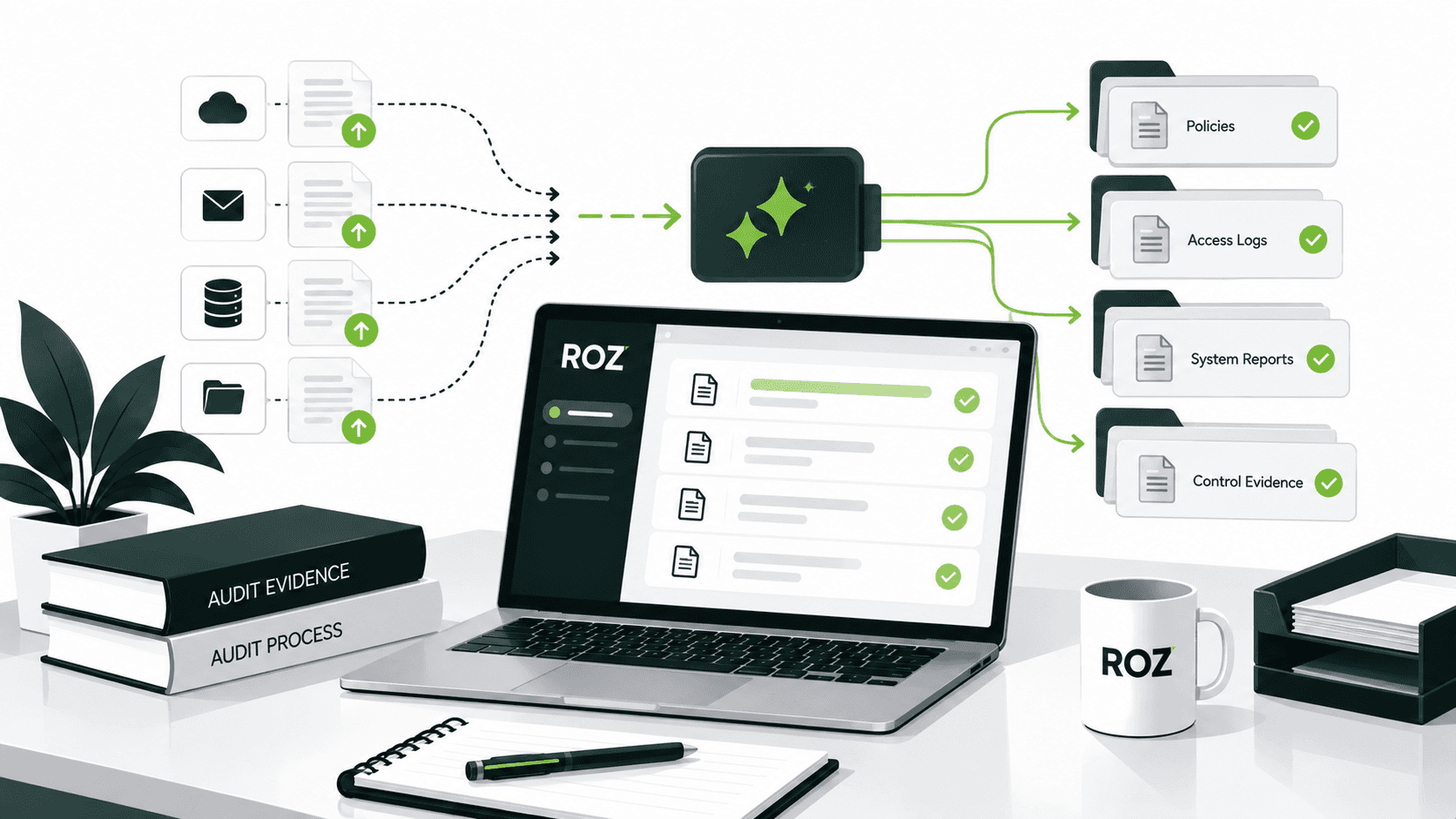
Extract structured information: Helps extract structured elements, including amounts, names, dates, payment terms, and other relevant information from source documents, reducing the need for manual reading and data capture.
Search large evidence populations: Locates pertinent information in a large volume of documents that may require significant manual review.
Compare information across documents: Compares documents to determine a potential discrepancy, including purchase orders to invoices, contracts to revenue documentation, policies to evidence of controls, etc.
Identify potential exceptions: Highlights potential exceptions, including document discrepancies, missing approvals, anomalies, duplicative records, conflicts, and gaps in supporting documents.
Summarize documents and findings: Summarization tools can help guide auditors to focus on the relevant parts of a large evidentiary population more efficiently.
An important qualifier on summary documentation: a summary directs an auditor toward where to look and what potentially could be of interest, but it does not replace underlying documentation as audit evidence. Conclusions still need to be documented with sufficient audit evidence and reviewed by an auditor.
While AI document reviews can assist an auditor in more efficiently reviewing documentation, this technology does not replace the decision-making process of an auditor.
Benefits of AI document review for auditors
AI document review enables auditors to shift their focus from repetitive reading tasks to professional experience and evaluative judgment.
Faster document review: Less time is spent on mundane document review. The review system will help prioritize document review; however, the auditor is responsible for analyzing and determining what is relevant.
Reduced manual extraction: Rather than pulling policy terms, dates on contracts, or descriptions on controls, the AI pulls the relevant information. The auditor then reviews to ensure accuracy.
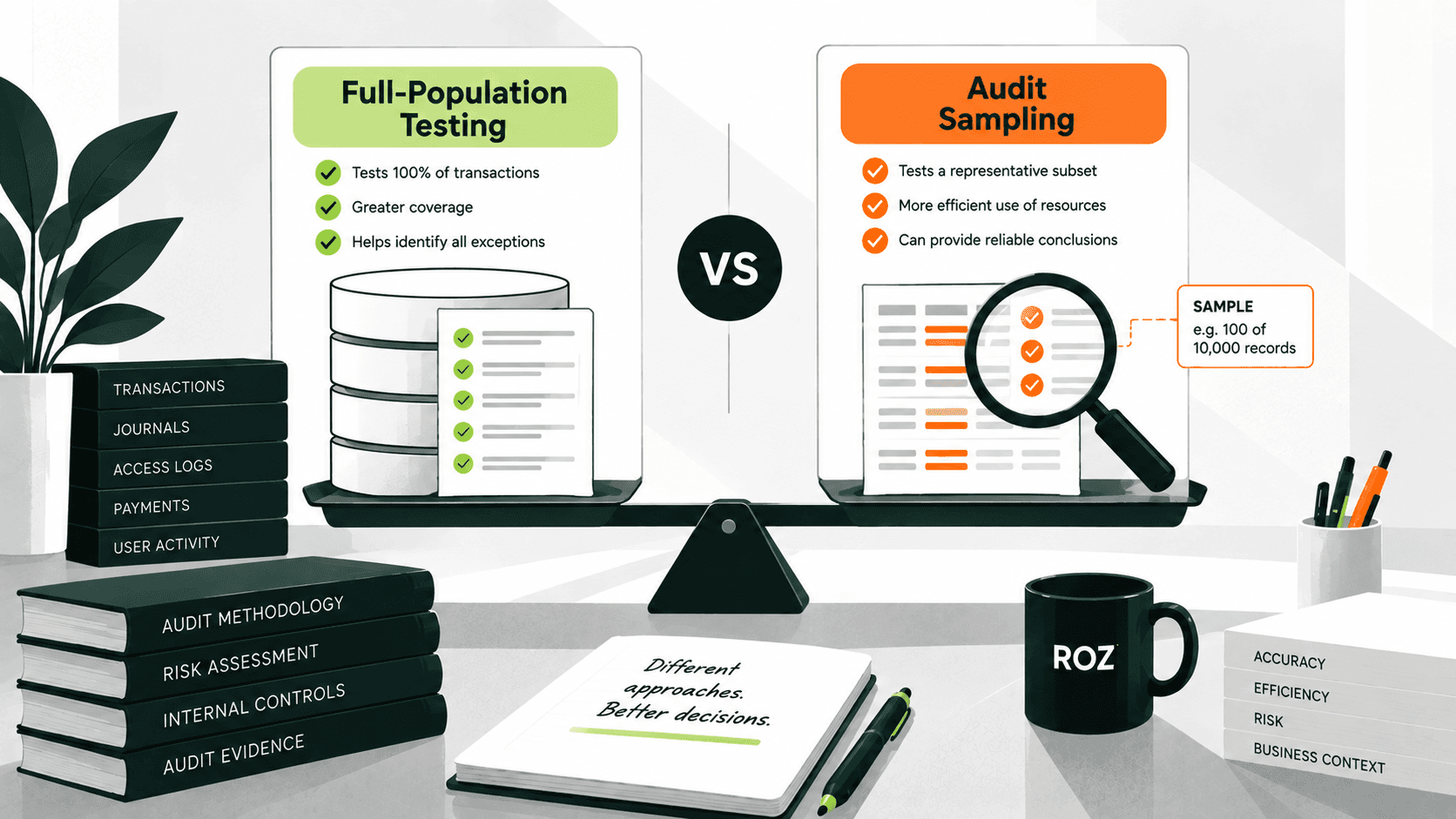
Greater scalability: AI can support broader review coverage beyond conventional samples when the population, data quality, audit objective, and testing approach make that appropriate. The auditor remains responsible for determining whether full-population coverage is appropriate.
More consistent procedures: A predefined set of review criteria will provide more standardization for document review. While the use of AI does not eliminate variation in review, the reliance on judgment across a large document set does bring fatigue, shifting focus, and a natural decrease in the quality of review.
Faster exception identification: AI can review and prioritize documents based on defined criteria, helping auditors focus attention on items that may warrant further investigation.
Better-organized evidence: Rather than review documents and important information scattered among handwritten notes, documents, and tabs, the evidence is organized in one centralized location.
More time for judgment: This is the goal of using AI for document review; the AI can support information extraction, while the auditor remains responsible for reviewing exceptions and evaluating the sufficiency and reliability of the evidence.
Risks of AI document review for auditors

AI document review offers real advantages, but it also introduces risks you need to manage, not ignore.
Hallucinations and incorrect interpretations: AI may produce well-formed responses to queries, which may erroneously convince users of the accuracy of the generated responses. Findings that sound meaningful or well-reasoned may not be justified by the evidence on which they rely. Trace every conclusion to the source on which it rests.
False positives and false negatives: AI incorrectly identifies issues that do not exist and fails to identify real issues. Both types of errors can affect audit conclusions if they are not identified through appropriate human review and validation.
Overreliance. Accepting AI work product without subjecting the evidence to scrutiny fundamentally discredits the review. AI can support the screening; the auditor performs the evaluation and reasoning.
Data privacy and confidentiality: Before using any tools, the data protection and retention policies, access controls, and privacy systems must be analyzed. Terms of use, how client data is processed, and if the client data is used to enhance the model must be evaluated, as there are differing levels of vendor protection and product configuration.
Lack of explainability: Operationally, you must be able to explain how a finding connects to the evidence that supports it, and if that evidence is not available and visible, you cannot maintain the finding in the audit file. Opt for systems where outputs are directly connected to the source documents.
Poor source documents: AI has a difficult time analyzing documents that are illegible, missing, or contain other data that is corrupt. Evaluate the reliability of your source documents before you draw conclusions from AI review.
Document authenticity: AI-generated and digitally manipulated documents present a spike in concern to auditors. Review tools will help, but ultimately, auditors will need to rely on their judgement in order to address the situation.
Audit trail gaps: Your firm expects a clear, defensible breakdown of the document reviewed, what the AI detected, the supporting evidence for each finding, and the conclusion. Gaps in this chain can make individual findings harder to substantiate and may create challenges during engagement or quality review.
AI Document Review vs. Manual Document Review
AI document review does not necessarily replace manual review. In many audit workflows, the practical approach is to use AI to assist with repetitive document-analysis tasks while auditors remain responsible for evaluating evidence and reaching conclusions.
Factor | Manual Review | AI-Assisted Review |
Document search | Manual | AI-assisted |
Information extraction | Manual | AI-assisted |
Large document populations | More time-intensive | More scalable |
Cross-document comparison | Manual | AI-assisted |
Exception identification | Auditor-driven | AI-assisted |
Professional judgment | Auditor | Auditor |
Evidence evaluation | Auditor | Auditor |
Final conclusion | Auditor | Auditor |
Notice the bottom three rows. AI changes how documents get reviewed; it does not transfer audit responsibility to the software. Professional judgment, evidence evaluation, and final conclusions remain with the auditor. Not the platform. Not the model. You.
Common Use Cases for AI Document Review in Audits
AI document review can assist with many audit tasks based on the nature of the engagement, the documents available, and the selected tool.
Contract review: Analyze the terms and clauses, payment conditions, and other provisions relevant to the audit.
Invoice review: Review invoices and compare amounts, dates, vendor information, and references to identify potentially irregular invoices.
Expense review: Review the receipts and invoices, approvals, and supporting documentation for the items that you need to review.
Revenue documentation review: Evaluate contracts, invoices, delivery documentation, and supporting accounting documentation to review for potential inconsistencies.
Accounts payable review: Identify potentially unsupported, inconsistent, or duplicate transactions for auditor review.
Control documentation review: Identify controls described in policies and procedures and surface potential gaps or areas that may require auditor evaluation.
Financial statement and disclosure review: Review supporting documentation relevant to financial statement disclosures and surface information that may require further auditor attention.
In each case, AI can support search, extraction, and comparison and help prioritize information that may warrant closer attention. The auditor determines whether additional audit procedures are necessary
Best practices for using AI document review in auditing
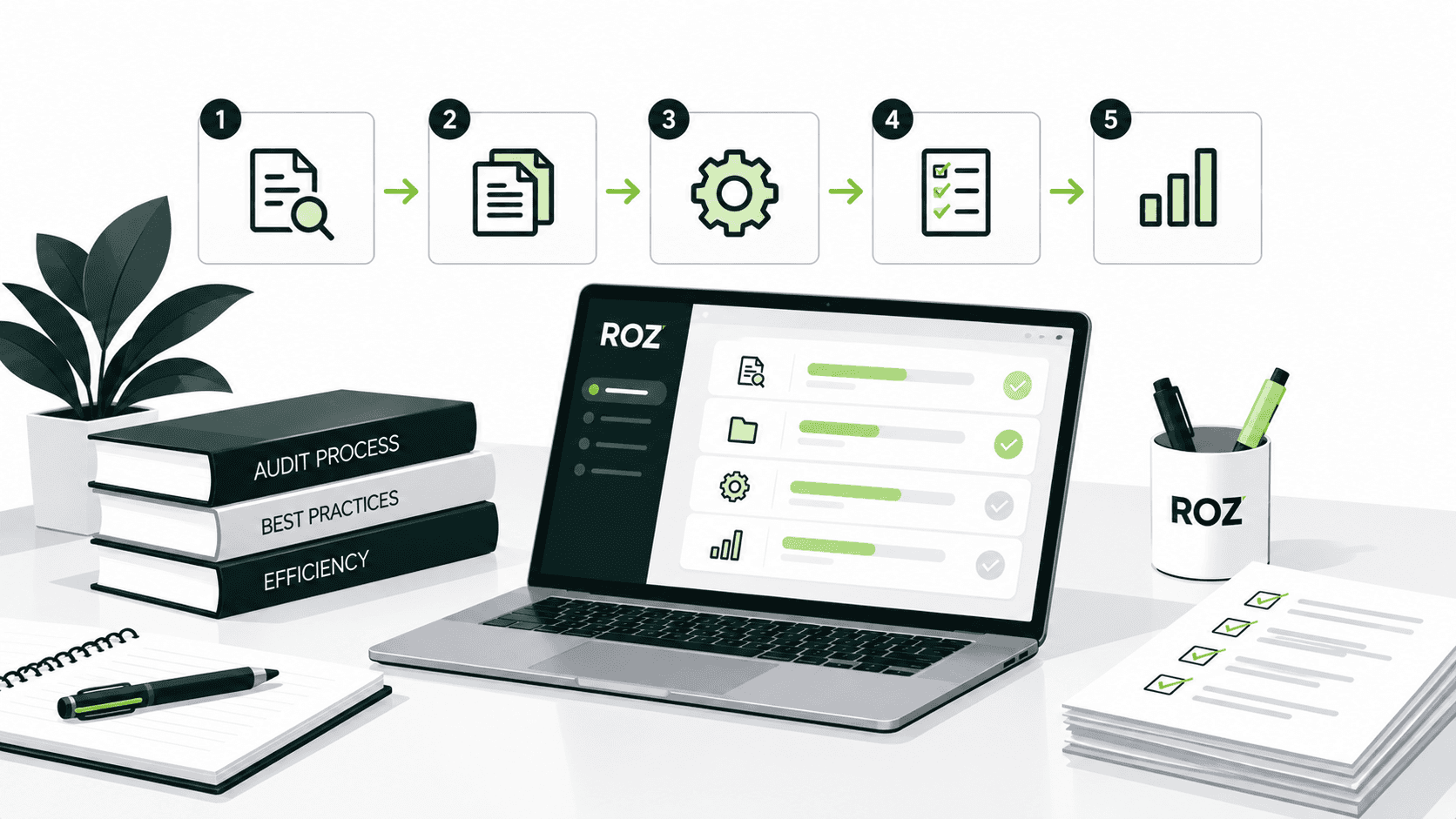
Start with clearly defined use cases: Start by applying AI to processes where you understand the goal, boundaries, inputs, and desired outputs. Determine what the AI will perform and what the auditor will need to review.
Validate findings against source evidence: Do not view output generated by AI systems as a substitute for evidence. Verify your finding with the relevant source document before using it.
Keep human review in the process: Let AI perform tasks like searching, extraction, comparison, and prioritization: The auditor is required to exercise professional judgment and evaluate evidence.
Document how AI was used: Keep a record of the AI-assisted procedures, related output, and your review to provide sufficient detail of the work done and conclusions.
Establish exception and escalation rules: Define which findings, uncertainties, or unusual results require additional investigation, manual review, or other audit procedures before you move forward.
Protect client data: Adjust security and privacy controls around confidential audit information. Determine how your chosen AI vendor addresses these controls.
How Roz supports AI-powered audit document review
Roz is an AI-native audit fieldwork platform built for auditors and advisory firms performing control-based engagements across SOC 2, ISO 27001, CMMC, SOX, and similar frameworks. Here's how it supports document review:
Centralized documentation: Each engagement has its own workspace where client documents and evidence are organized in one structured place.
AI-assisted extraction: Roz helps surface relevant information, controls, and evidence from client-provided documents for auditor review.
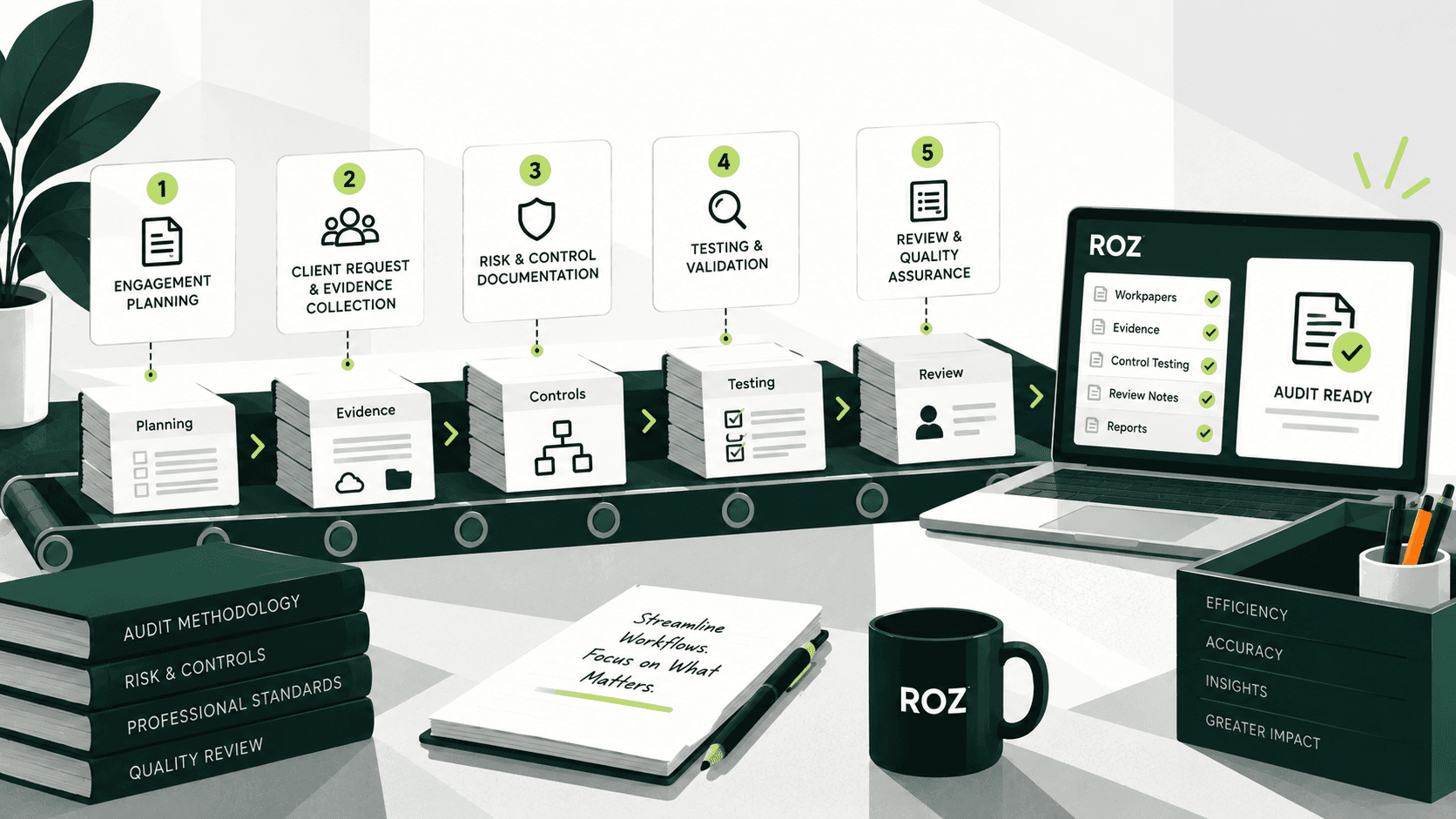
Evidence review and organization: It supports first-pass evidence review and connects documentation directly to relevant controls and testing workflows.
Potential gaps and exceptions: Roz can surface potential gaps or inconsistencies for auditor investigation and review.
From documents to workpapers: It supports AI-powered control testing and workpaper preparation, with source links, annotations, and audit trails maintained throughout.
Human review: Auditor evaluation and professional judgment remain central to the workflow. Engagement teams remain responsible for conclusions and final deliverables.
Conclusion
AI document review can reduce repetitive analysis by helping auditors search, extract, compare, and organize evidence more efficiently. It can also surface potential exceptions and inconsistencies for closer review.
However, AI-assisted review introduces risks, including inaccurate interpretations, false positives and false negatives, privacy concerns, overreliance, and gaps in traceability. These risks require appropriate security controls, source validation, human oversight, and clear documentation of how AI was used.
The goal is not to replace auditor judgment. AI can generate a useful first pass of document analysis, while auditors remain responsible for evaluating evidence, investigating exceptions, and reaching defensible conclusions.
Frequently Asked Questions
How does AI document review work in auditing?.
AI analyzes documents based on defined instructions or criteria, extracts relevant information, compares content across documents, and surfaces potential exceptions or inconsistencies for auditor review.
What types of documents can AI review during an audit?
AI document review can undertake a range of documents, for example, contracts, invoices, receipts, policies and procedures, spreadsheets, and correspondence.
Can AI review audit evidence?
AI can help you analyze, extract from, and compare audit evidence and surface information that may warrant closer attention. Evaluating relevance, reliability, sufficiency, and appropriateness remains your responsibility.
How do auditors validate AI-generated findings?
Auditors should review potential exceptions against the relevant source document and determine whether the identified issue is supported by the evidence. They then evaluate the significance of the exception and determine whether additional procedures or documentation are necessary. The source evidence, rather than the AI output itself, should support the conclusion.
Is AI document review secure for audit data?
Before uploading client data, review how the vendor processes, stores, and retains information; how access is controlled; what encryption and confidentiality safeguards are provided; and whether client data may be used for model training or other purposes. Review the relevant vendor terms and contractual protections as part of your firm's security and privacy assessment.