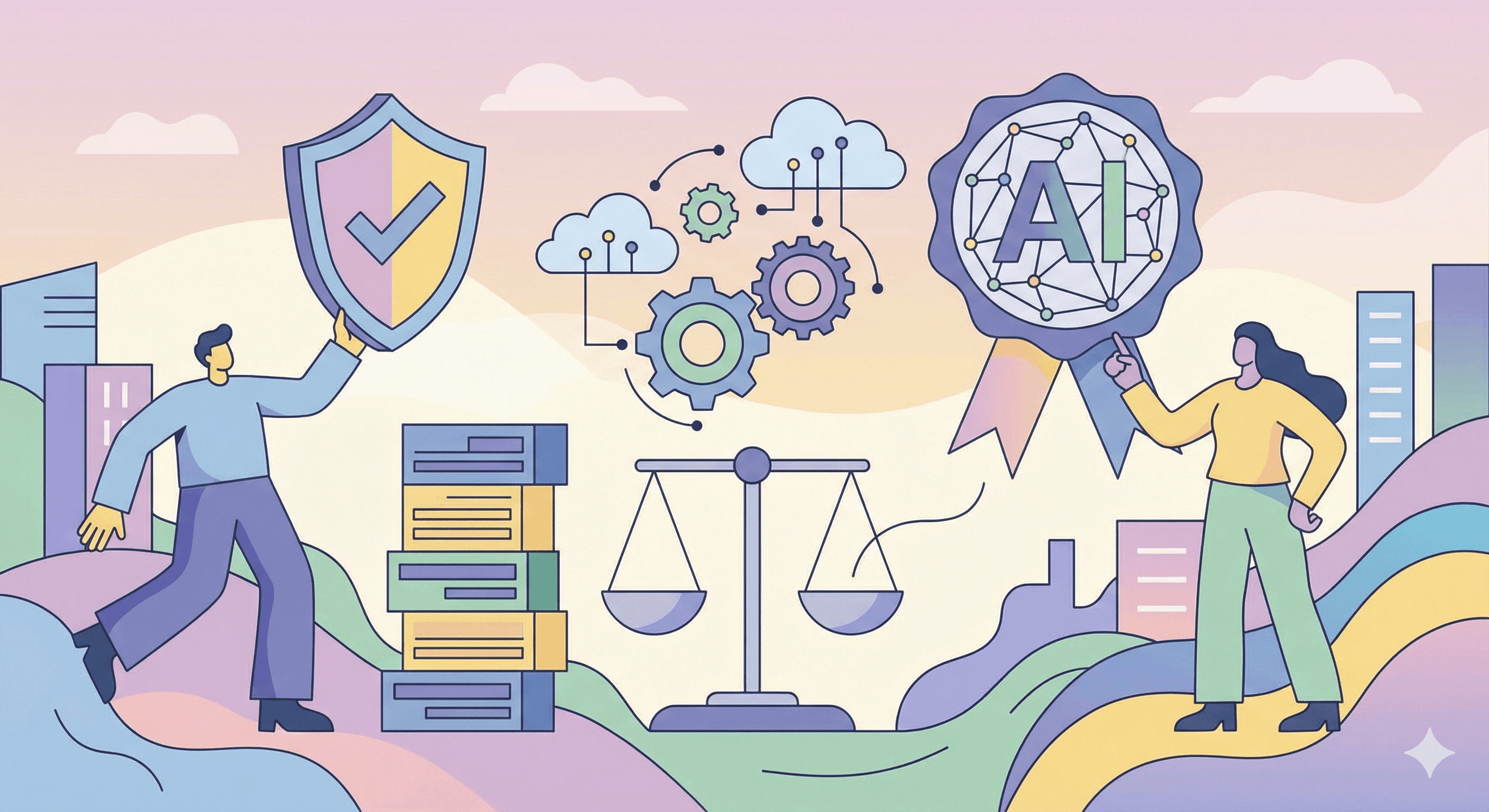
As artificial intelligence becomes more common in every industry, there are both positives and negatives that accompany it. Traditional security measures may not fully address the specific challenges introduced by AI, such as decision-making, transparency, and accountability. Businesses possess the data that drives AI and must devise a method to govern their own AI systems.
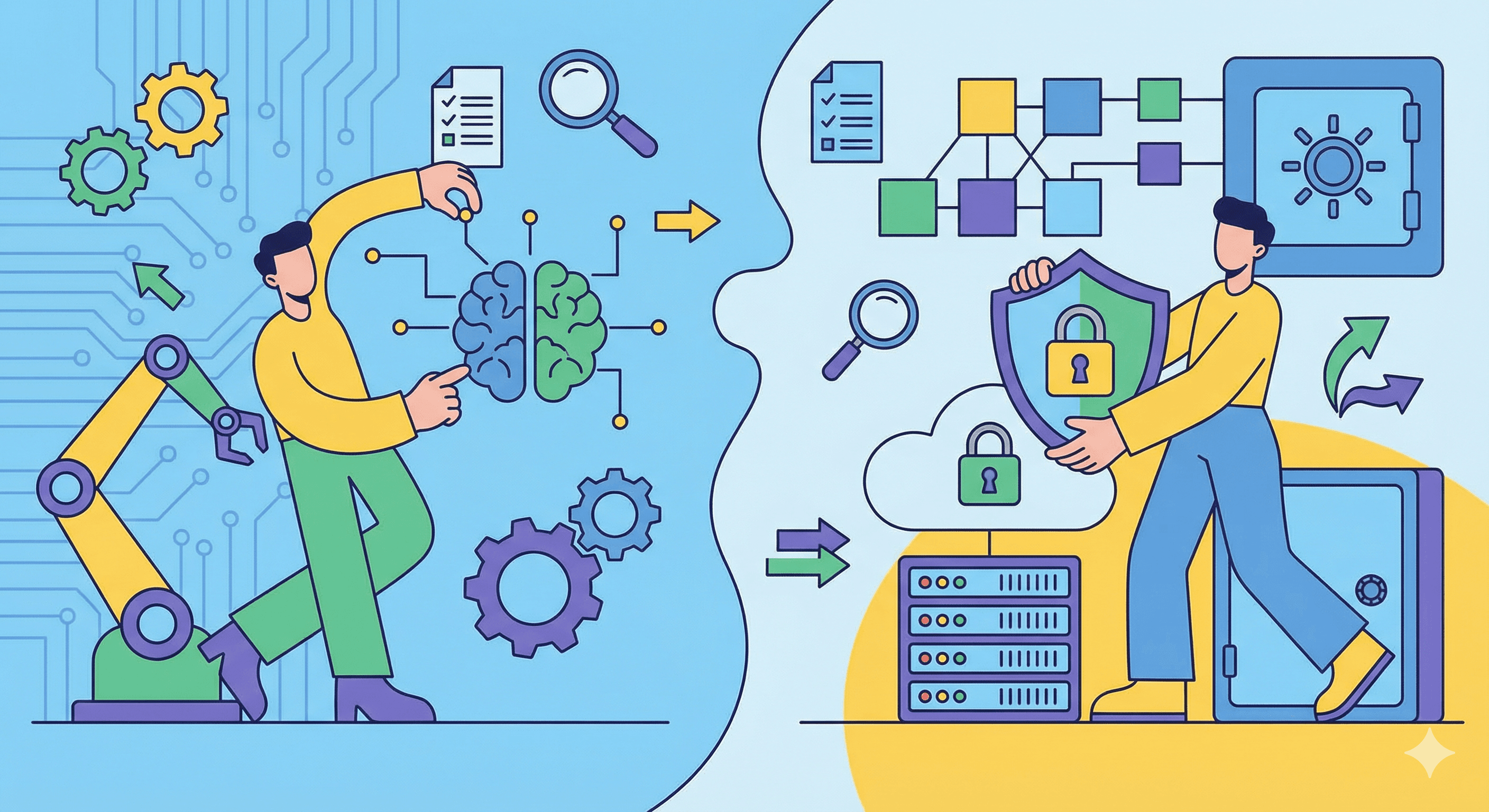
This has caused confusion with two evolving standards: the recent ISO 42001 and the much older ISO 27001. ISO 27001 concerns the protection of information and the management of cybersecurity threats, while ISO 42001 is concerned with the governance of AI systems and deals with model management, bias, and human control.
It is crucial to understand the implications of these standards. The regulators are creating fresh AI expectations, and the clientele are demanding transparency. Adopting a structured framework can help companies strengthen governance practices and prepare for evolving regulatory expectations.
In this article, I will cover everything you need to know about ISO 42001 vs ISO 27001, including their key differences, scope, certification processes, and common use cases. By the end, you'll know when to use each framework and if implementing both is good for your company.
What is ISO 42001?
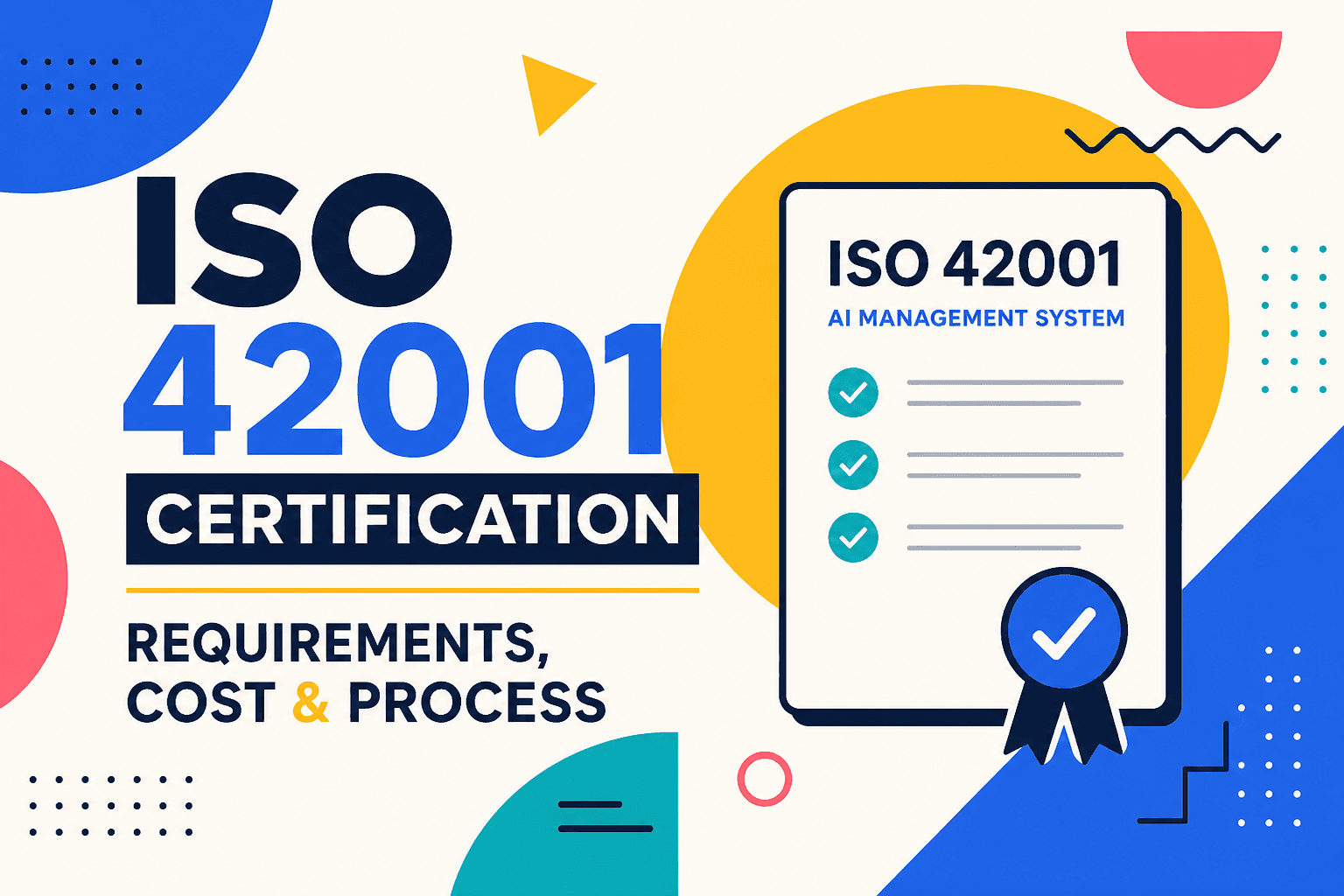
ISO 42001 is a global standard that specifies the requirements of an Artificial Intelligence Management System (AIMS). The standard outlines the positive and negative aspects that come with the use of artificial intelligence and the effects of both on a business.
The main goal of 42001 is to help companies govern their AI systems. The ISO 42001 standard aligns with responsible AI and effective risk management. A company implementing ISO 42001 can demonstrate structured governance around fairness, accountability, and AI risk management.
Key Focus Areas
To achieve its goals, ISO 42001 emphasizes several critical areas:
AI lifecycle governance: Managing the AI system throughout its lifecycle from design, development, and deployment to retirement.
Bias management: Identification and reduction of unfair biases in the algorithms and training data of an AI system.
Transparency: Ensuring that users of an AI system can understand and explain the system’s processes and decisions.
Human oversight: Keeping appropriate human involvement in the decision-making loop of an AI system.
AI risk management: Identification and management of risks that are associated with an AI system.
Who Should Consider ISO 42001
ISO 42001 is especially important to companies that build, use, or depend on AI systems, such as:
Companies building core AI models.
SaaS platforms integrating AI features into their core products.
Generative AI companies develop tools for text, image, or video generation.
AI automation platforms for complex workflow management.
Companies using AI for decision-making or analytics.
What is ISO 27001?
ISO/IEC 27001 is an internationally recognized standard for Information Security Management Systems (ISMS). It provides a structured framework for managing information security risks.
ISO 27001 provides a structured framework for identifying, assessing, and managing information security risks, including threats to sensitive organizational data.
Companies of all sizes and industries can adopt ISO 27001. It is commonly used to demonstrate that a company has implemented a structured information security management system aligned with ISO 27001.
Key Focus Areas
ISO 27001 is designed as an ongoing management system, requiring continuous identification, assessment, and treatment of information security risks. It covers:
Access control: Ensuring that only certain individuals are granted access to, or the ability to, change or remove certain data.
Encryption: Protection of data during storage, as well as the protection of data during transmission.
Incident response: There is a well-outlined plan for the management of security breaches.
Vendor security: Managing the risks posed by third-party suppliers and partners.
Risk management: Continuous identification of threats and subsequent treatment of those threats.
Who Should Consider ISO 27001
ISO 27001 is applicable to any company that stores, processes, or manages sensitive information, including:
SaaS companies that have users’ data stored in the cloud.
Cloud service providers store extensive client data.
Fintech companies store bank details and process financial transactions.
Health organizations store sensitive patient data.
Tech companies store confidential data.
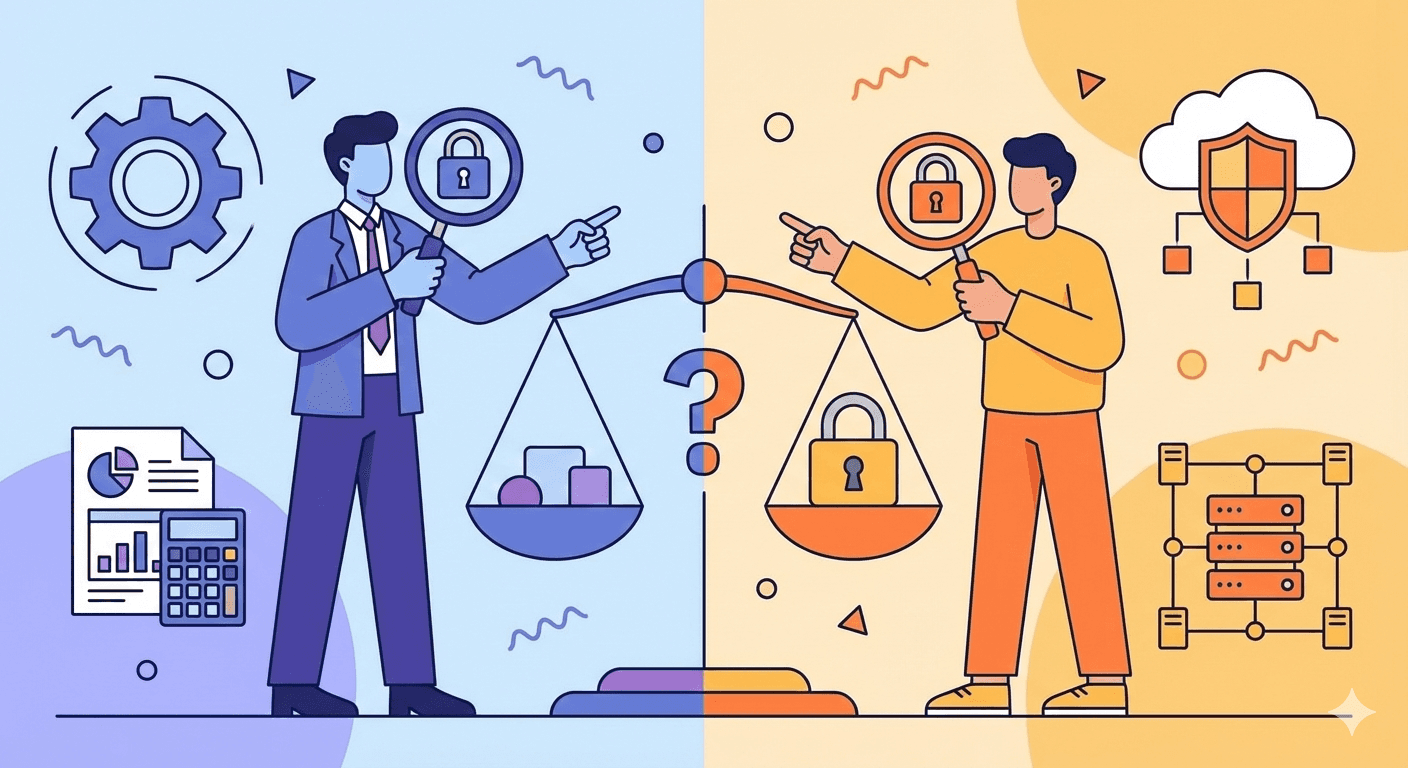
ISO 42001 vs ISO 27001: Key Differences
Comparison Table
To make things easier to digest, here is a quick breakdown of how these two standards compare:
Category | ISO 42001 | ISO 27001 |
Focus | AI Governance | Information Security |
Scope | AI systems lifecycle | Information assets and security controls |
Risk Type | AI risks (bias, transparency, model risks) | Cybersecurity risks (breaches, data loss, unauthorized access) |
Target Companies | Companies developing or using AI | Companies handling sensitive information |
Standard Type | AIMS (AI Management System) | ISMS (Information Security Management System) |
Published | 2023 | Originally 2005 (Latest update: 2022) |
Primary Objective | Responsible AI governance | Information security risk management |
Major Differences Explained
Although both ISO 42001 and ISO 27001 use a risk-based methodology, the two standards address different classifications of organizational risk. While ISO 42001 is concerned with the risks associated with governance of AI, including model reliability, algorithmic bias, transparency, and human oversight, ISO 27001 deals with risks of information and security, such as data breaches, unauthorized access, and security infrastructure risks.
Another important difference is in scope. While ISO 42001 provides governance guidance across the AI system lifecycle, including the design, development, deployment, monitoring, and continuous improvement of AI systems, ISO 27001 provides controls for managing the information lifecycle, including the creation, storage, processing, transmission, and destruction of data.
The standards may address different issues, but they are often complementary. While ISO 27001 protects the data and infrastructure that is used by AI systems, ISO 42001 safeguards the organizational control of AI systems and their decision-making.
ISO 42001 vs ISO 27001: Scope Comparison
ISO 42001
The scope of ISO 42001 narrows its focus to AI, specifically:
The complete AI lifecycle, including its design, development, testing, deployment, monitoring, and eventual retirement.
Governance and accountability structures for AI.
AI-specific risk assessments and impact evaluations.
Human oversight and decision-making controls.
Transparency and documentation requirements.
Responsible AI policies and governance.
ISO 27001
The scope of ISO 27001 is much wider, addressing a company's overall security posture, specifically:
Information assets (digital, physical, and intellectual property).
Data protection and security controls.
Access control and identity management.
Security of personnel, IT, and physical environments.
Vendor security and third-party risk management.
Detection and response to incidents.
How Do ISO 27001 and ISO 42001 Differ in the Certification Process?
ISO 42001 Certification Process
ISO 42001 certification requires companies to implement and maintain an AI management system that conforms to the standard’s requirements. Steps include:
Conducting a specific AI risk assessment.
Creating AI governance policies and documentation.
Creating transparency and accountability through AI control guidelines.
Conducting an internal audit on your AI management system.
Undergo a certification audit by an accredited certification body.
ISO 27001 Certification Process
For ISO 27001 certification, the steps are the same, but the goals are different as they concern ISMS documentation. Steps include:
Conducting a risk assessment for information security.
Choosing corresponding security controls from Annex A.
Implementing ISMS controls and documentation.
Conducting internal audits on the system health to verify.
Completing certification audit stages 1 and 2.
Certification Timeline Comparison
Here is a general comparison of how long certification might take, though timelines can vary depending on your company's readiness:
Company Size | ISO 42001 | ISO 27001 |
Small | 3-6 months | 2-4 months |
Mid-size | 4-8 months | 3-6 months |
Enterprise | 6-12 months | 6-12 months |
Because of these similarities, companies that have already implemented ISO 27001 may find that their structures can support the implementation of ISO 42001.
When to Use ISO 42001
If you want to demonstrate structured governance over AI risks and decision-making, ISO 42001 can help. You should consider ISO 42001 when
You create proprietary AI products or models.
You provide customers with generative AI solutions.
You make use of machine learning to make decisions.
You want a formalized approach to handle AI-related risks.
Examples: An AI-driven SaaS platform, a customer service chatbot provider, or an AI analytics solution.
When to Use ISO 27001
If your company deals with sensitive data and you need stringent information security mechanisms, then ISO 27001 is applicable. You should consider ISO 27001 when:
You manage sensitive customer or financial records.
You require enterprise security assurance.
Security documentation is part of your customers' requirements.
Your data is stored in the cloud.
Examples: A traditional SaaS company, a cloud hosting platform, or a growing fintech startup.
When to Use Both ISO 42001 and ISO 27001
Companies that use AI can gain from adopting ISO 42001 and ISO 27001 simultaneously. While ISO 27001 addresses the security of your data and your design, ISO 42001 deals with the governance of your AI systems.
Example Use Case
Consider an AI SaaS company that leverages customer data to provide insights.
ISO 42001 helps in establishing governance when it comes to AI decision-making, transparency, and risk.
ISO 27001 helps implement controls to protect training data from unauthorized access, provides encryption, and implements monitoring and security controls.
Similarities Between ISO 42001 and ISO 27001
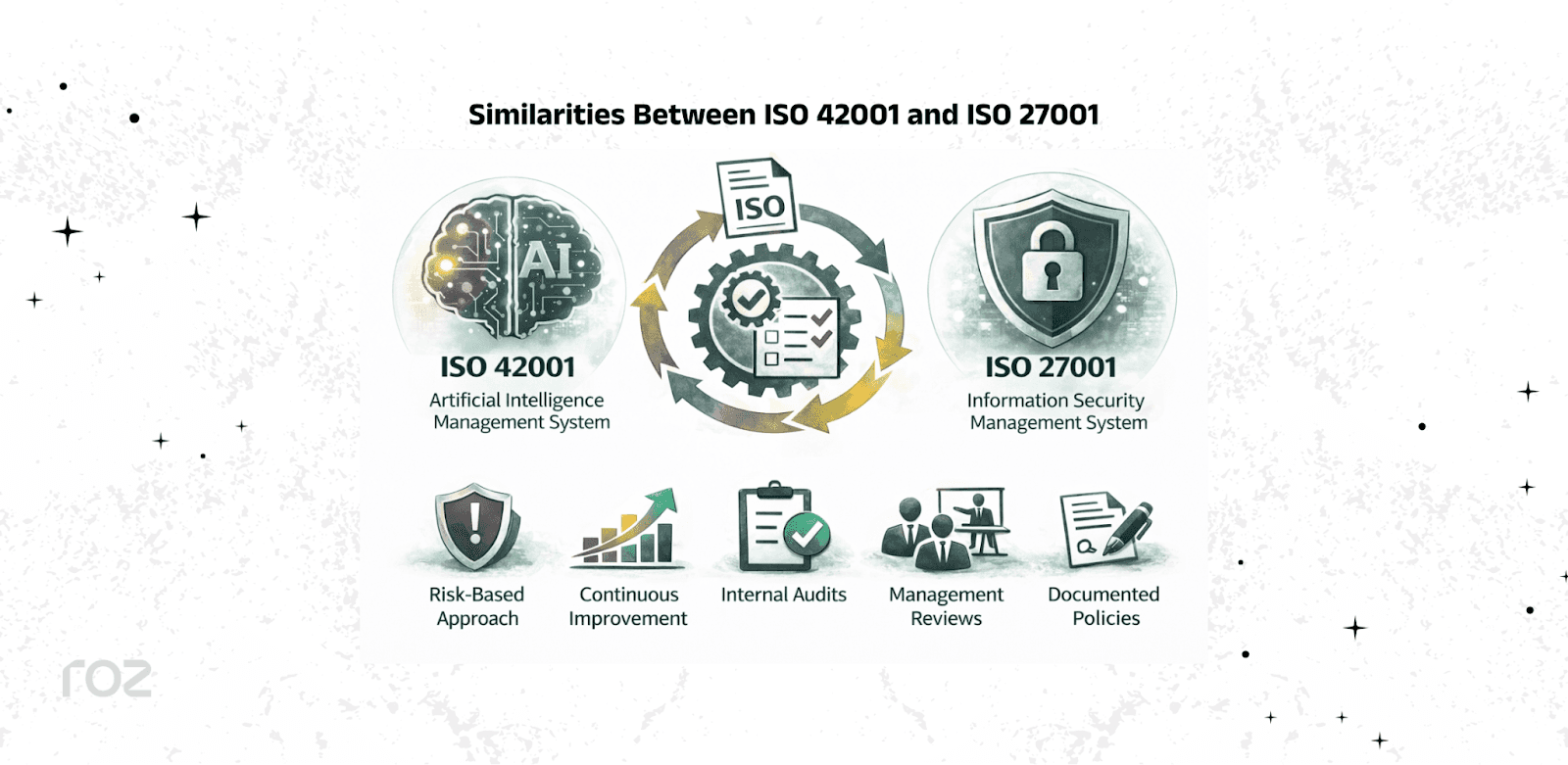
While the ISO 27001 and ISO 42001 standards focus on different areas, they have some similarities because they both use the ISO Harmonized Structure (formerly known as Annex SL). Within both standards, you can find the following:
A risk-based approach to identifying and managing risks.
A commitment to continuous improvement.
Requirements for internal audits and management reviews.
Reviews conducted by the company's upper management.
Documented information and policies.
How Roz Supports ISO 42001 and ISO 27001 Engagements
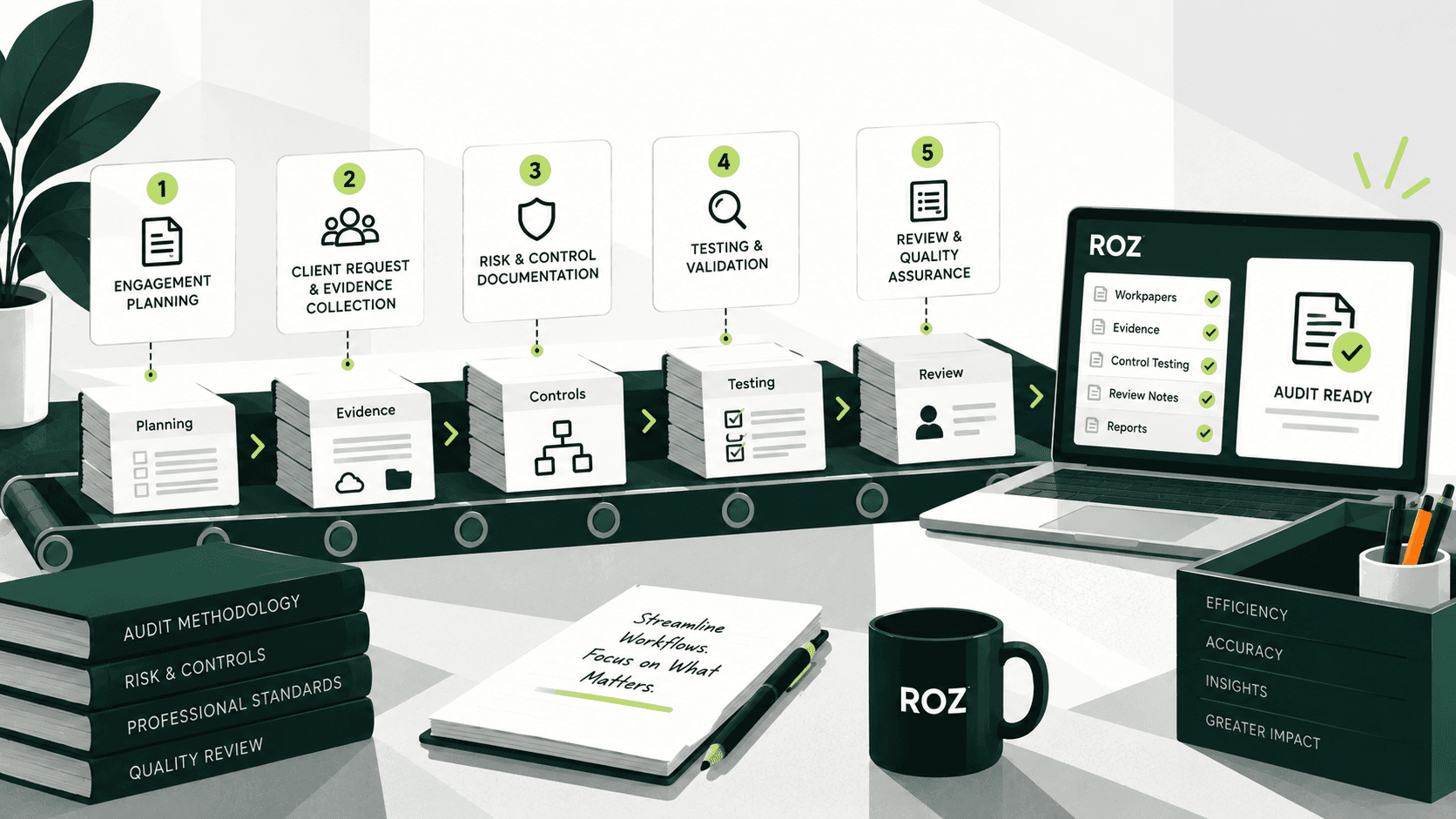
Managing ISO engagements can be documentation-heavy and time-consuming. From tracking policies to mapping controls to evidence, the process can slow down advisory teams. Our tool supports CPA firms and advisory teams by providing a structured, AI-native environment for compliance and audit engagements.
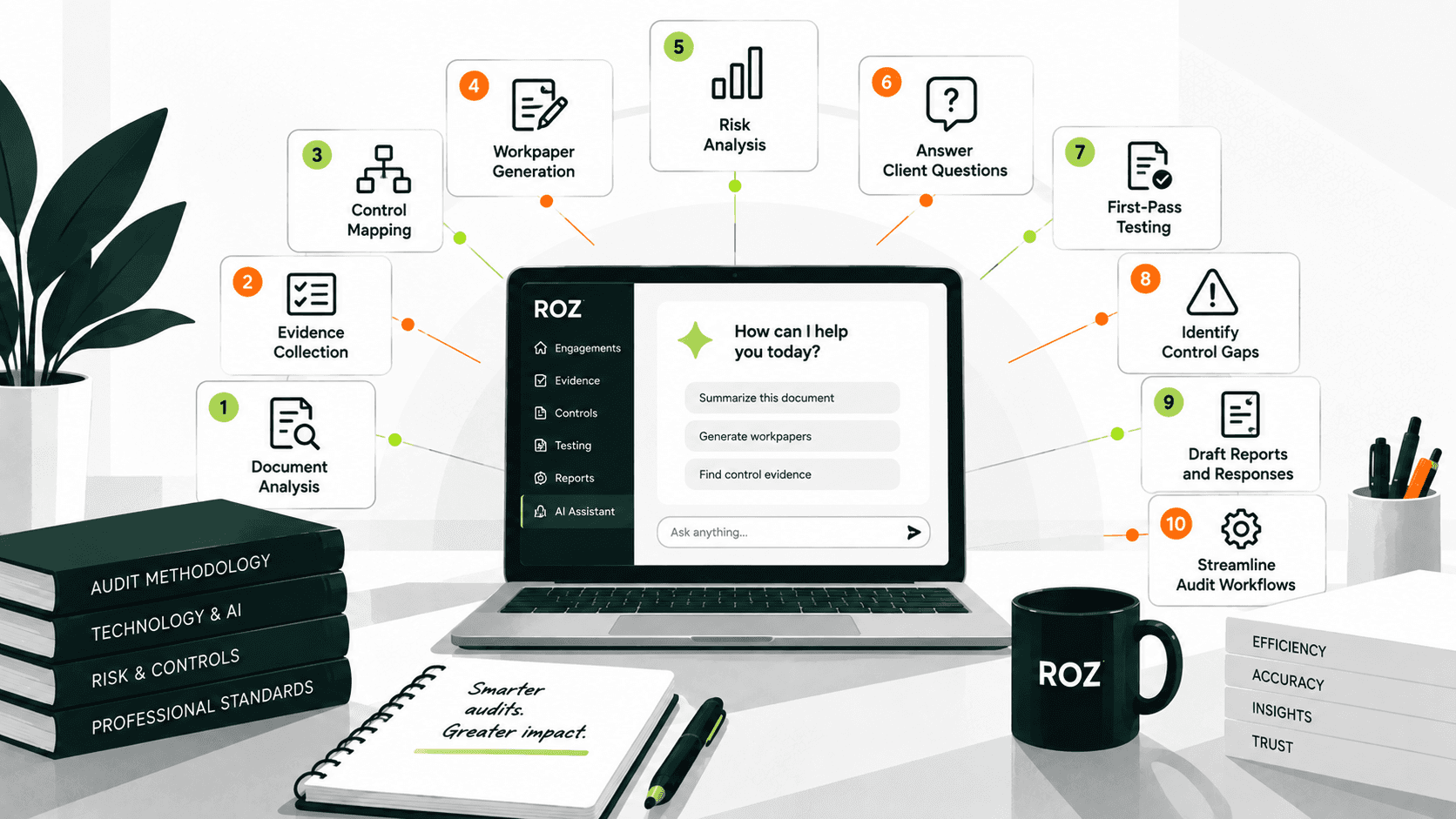
Roz acts as an intelligent enterprise data room designed for compliance-focused engagements such as ISO 42001, ISO 27001, SOC 2, and ISO 27701.
Roz helps teams:
Centralize client documentation in structured engagement workspaces.
Assist with questionnaires using source-linked evidence.
Generate draft workpapers from firm templates with audit trails.
Extract and map controls from uploaded policies.
Highlight documentation gaps through structured first-pass analysis.
Use risk and control matrix views to organize engagement progress.
By structuring documentation and automating first-pass analysis, our tool helps advisory teams deliver ISO 42001 and ISO 27001 engagements more consistently and efficiently.
Conclusion
While ISO 42001 and ISO 27001 both speak to areas of governance, each standard has a separate and distinct focus. ISO 27001 deals with the protection of information assets against security threats, and ISO 42001 establishes a framework for the governance of artificial intelligence systems. Companies that use AI can benefit from the implementation of both standards, as it offers a more integrated way of managing information security as well as AI-related risks.
Understanding the differences between ISO 42001 and ISO 27001 gives companies the ability to determine the most effective way to meet their operational objectives. Managing information security and AI governance simultaneously can help strengthen trust, improve risk management, and support compliance efforts with requirements.
I hope you have learned everything you need to know about ISO 42001 vs ISO 27001.