Audit fieldwork is the process by which an auditor reviews evidence to support audit judgments. Identifying and reviewing the relevant evidence needed to support audit judgments often creates a bottleneck during an audit. With the increasing number and variety of systems and technologies utilized by organizations, the evidence auditors review is more voluminous, wide-ranging, and often electronically dispersed. Traditionally, auditors review thousands of pieces of evidence to accomplish their audit work.
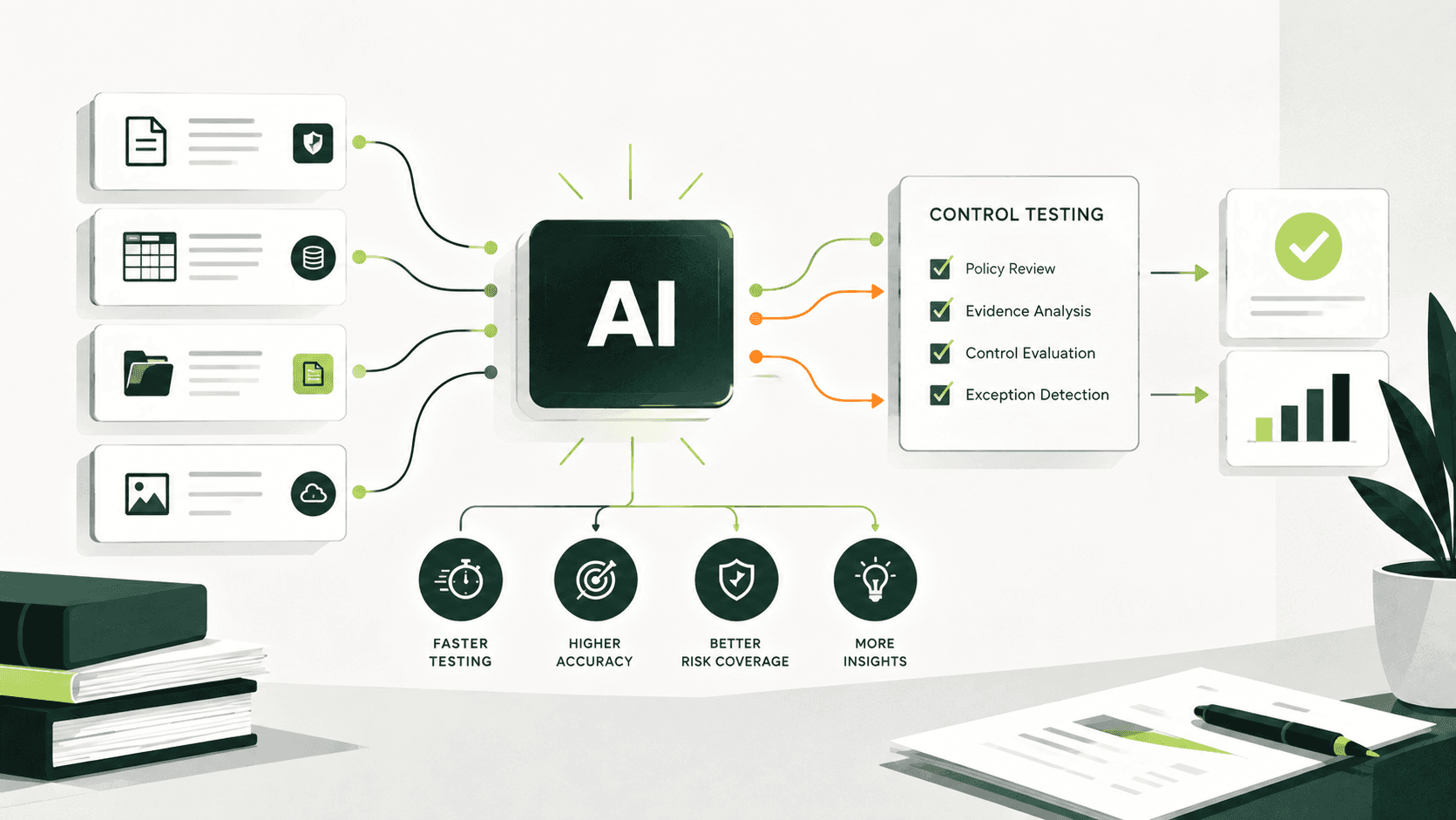
AI auditing tools simplify the review of some pieces of evidence. Relevant details and types of evidence are automatically classified and documented by AI. AI has the potential to help auditors by automatically mapping evidence to the controls, thus surfacing control deficiencies. It is important to note that AI will not determine if a control is effective. Rather, the tool has the potential to assist auditors and free up their time to perform more analyses requiring human judgment.
In this article, I will explain what AI evidence review is, how it fits into an audit workflow, and where it can create practical value while keeping auditor oversight central.
What Is AI Evidence Review?

AI evidence review utilizes AI technologies to review audit evidence during or prior to control testing. Traditionally, auditors review a large volume of evidence by manually reviewing documentation. With the assistance of AI, auditors can identify relevant pieces of evidence.
A typical AI-assisted evidence review workflow includes:
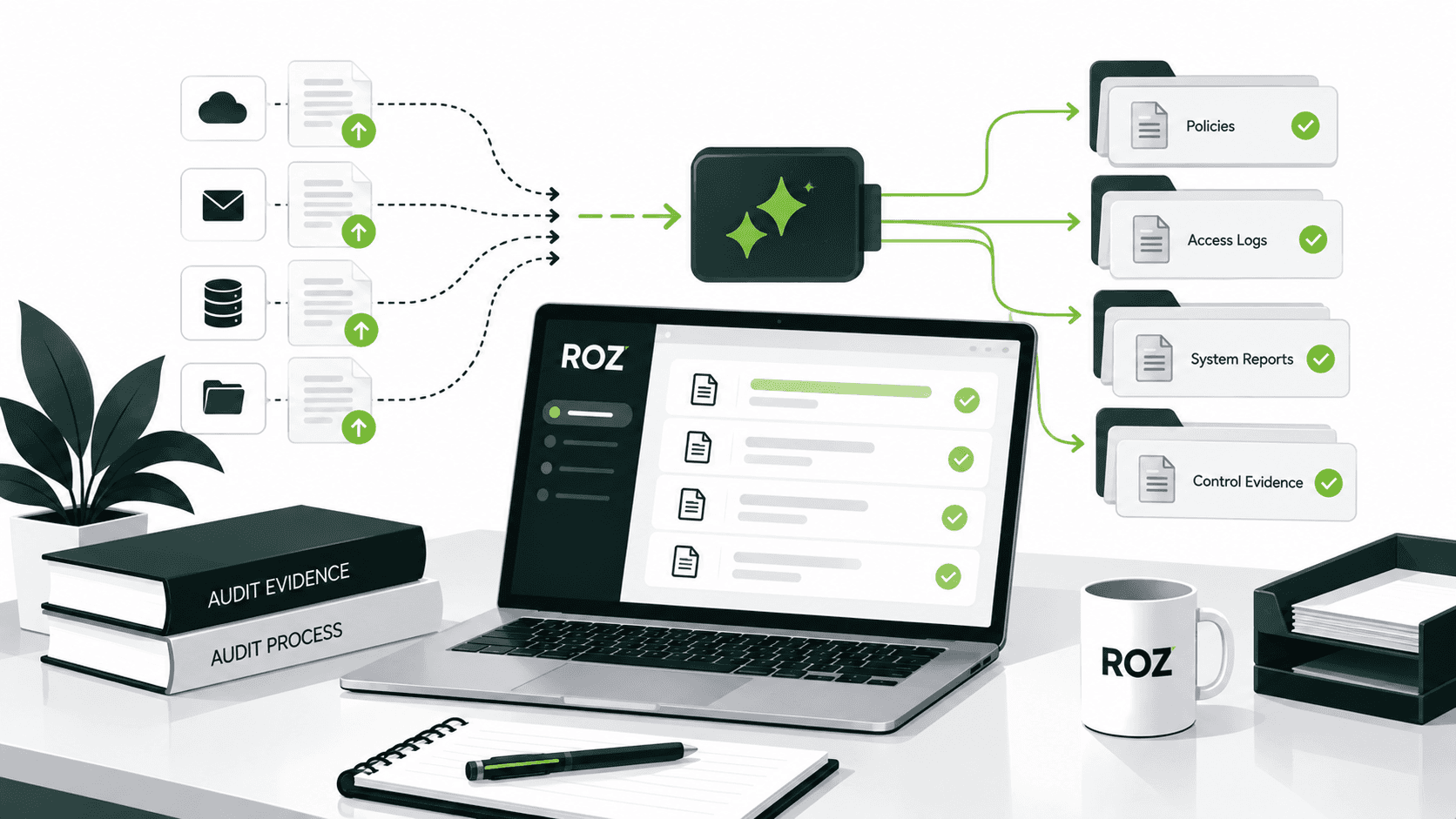
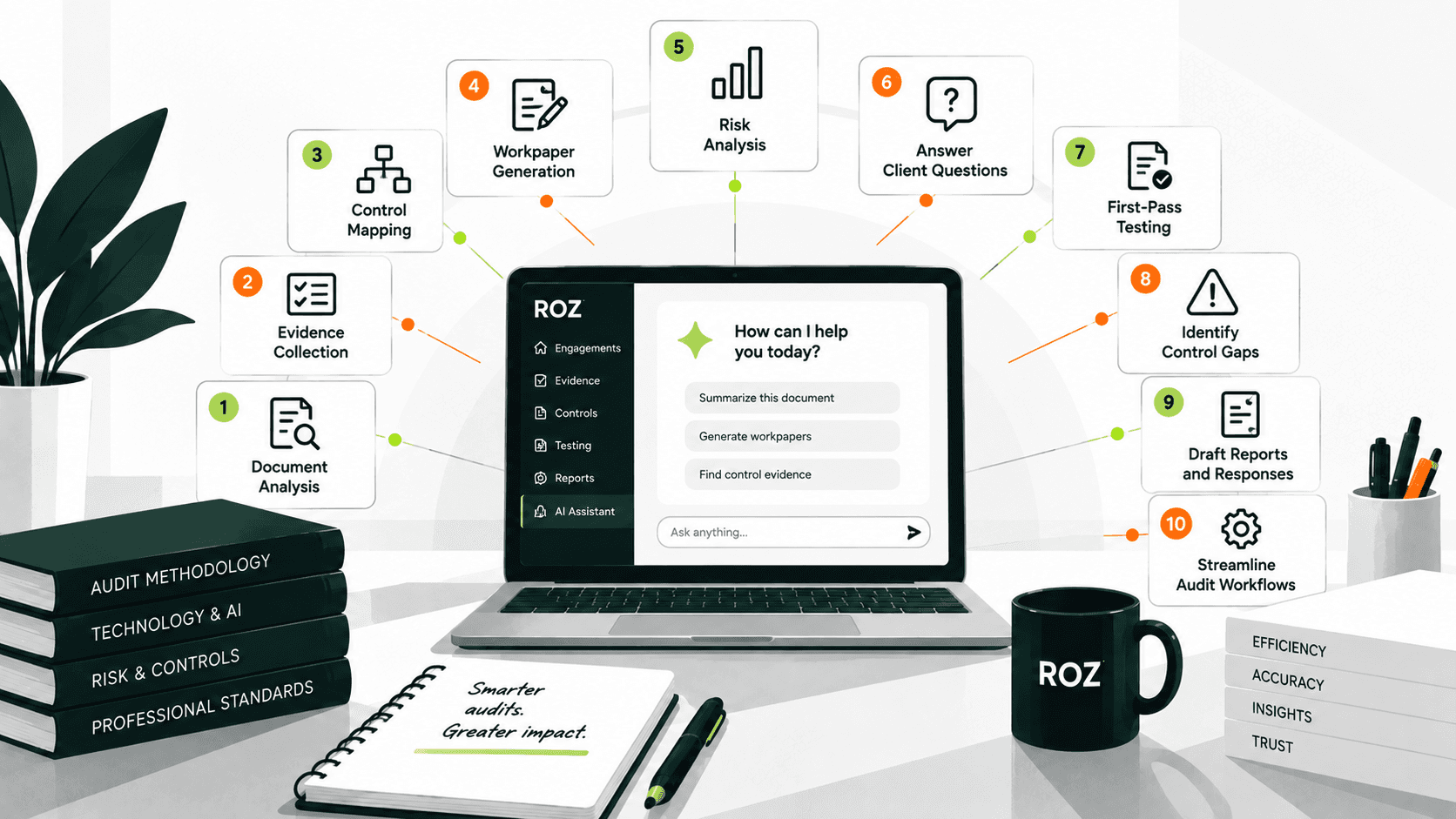
Evidence classification: Categorizing various forms of documents (i.e., policies, logs, approvals, and screenshots).
Information extraction: Pulling dates, control owners, approvals, exceptions, and system activity from unstructured files.
Evidence-to-control mapping: Identifying and expressing relationships between pieces of evidence and the controls being tested.
Gap and inconsistency identification: Recognizing and identifying inconsistencies in evidence (i.e., date and population gaps).
First-pass testing support: Applying defined testing criteria to evidence, surfacing potential exceptions, and providing results for auditor review.
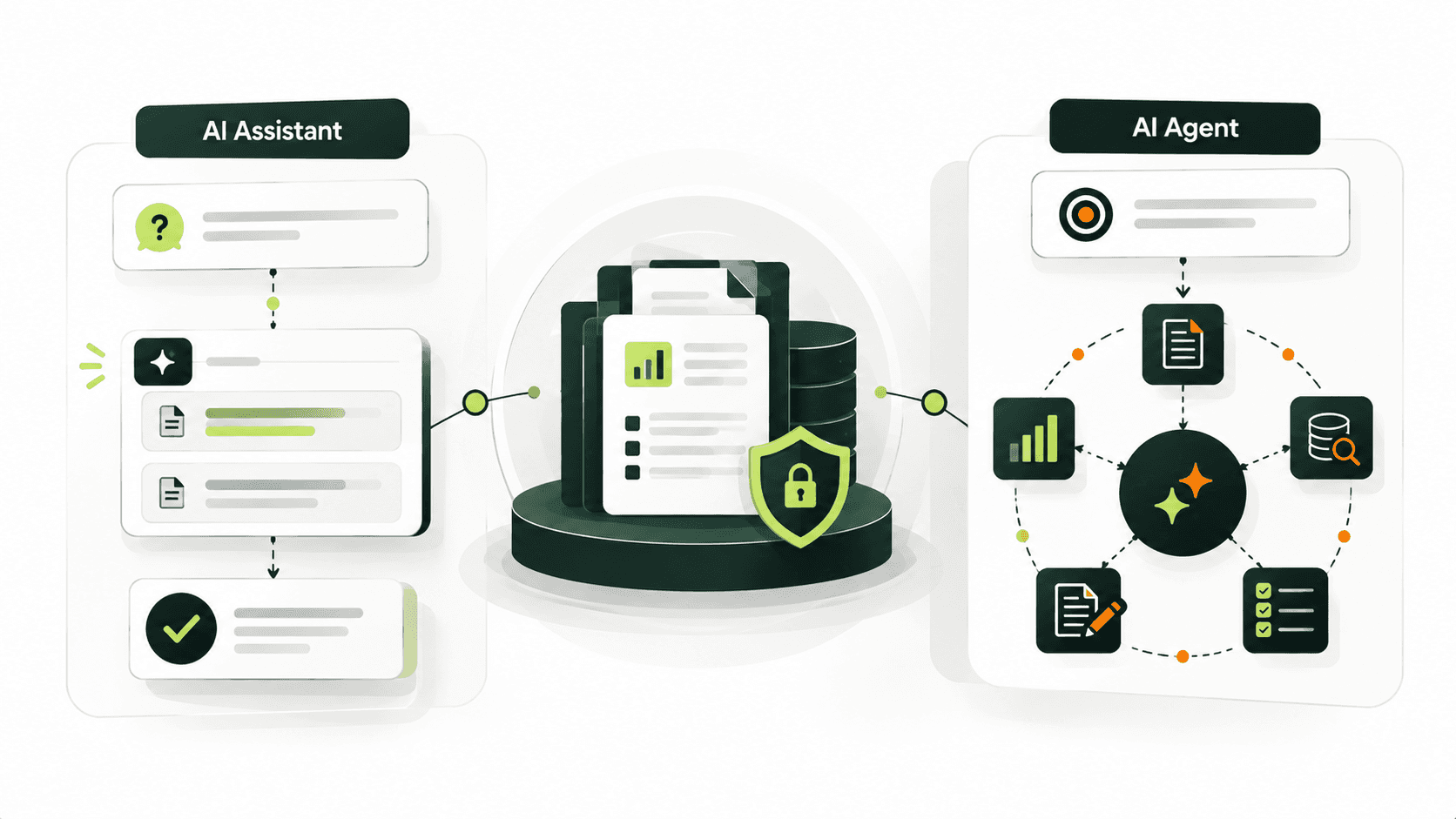
While the use of AI technologies can assist auditors in efficiently reviewing a large body of evidence, the ultimate judgment remains with the auditor. AI can assist in performing a first level of testing; however, the final determination in understanding and evaluating the adequacy of the control rests with the auditor.
How AI Evidence Review Works in an Audit
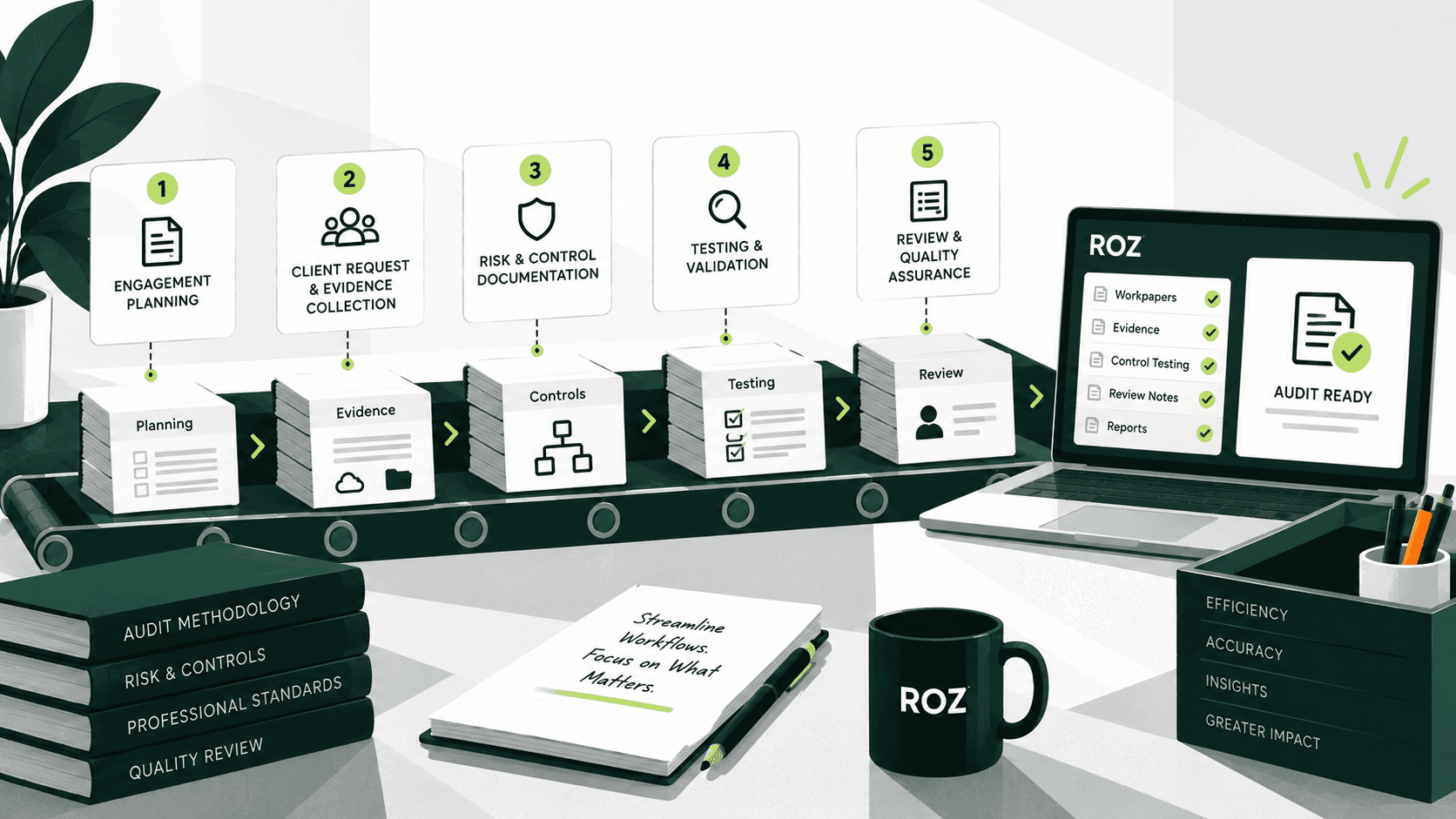
Here's a step-by-step look at how AI-assisted evidence review can fit into audit fieldwork.
Collect and organize evidence: During an audit, the audit team reviews and analyzes different types of evidence, including system export files, logs, approvals, tickets, and other documents. AI applications can assist in organizing the documents.
Extract relevant information: AI can identify information, including the name of the person who approved a particular evidence, exception, and system activity log, among others.
Map evidence to controls: AI can help identify relevant evidence to a control and can help analyze and summarize the evidence. For example, the AI can help analyze a quarterly review of access controls and identify relevant access logs, approval tickets, and reconciliations.
Check evidence against testing criteria: AI can help evaluate evidence and testing documentation to determine if the evidence supports the testing criteria and answers the questions posed by management. The AI can help identify potential issues, such as an approval ticker is missing.
Generate a first-pass assessment: Based on the evidence and defined testing criteria, AI can summarize its analysis, surface potential exceptions, and prepare initial documentation for auditor review.
Auditor review: While the AI applications can create reports and analyzes, the auditor must review and evaluate the information. The AI can assist the auditor in performing the analysis and create a report. However, the auditor is responsible for evaluating the evidence and making a conclusion.
Preserve traceability: A well-designed audit workflow can assist the auditor in capturing and documenting the analysis performed to support the conclusion drawn.

Benefits of AI Evidence Review for Auditors

Faster review of large evidence volumes: AI can enhance the first review of evidence and help the auditor determine which pieces of evidence require further review.
Earlier identification of evidence gaps: Through the application of AI, issues related to lack of evidence, incomplete documentation, or approvals, and other flaws may be identified.
Better evidence-to-control mapping: AI may assist auditors to more quickly align evidence to controls, thereby reducing the need for the auditor to review a larger volume of working papers.
Support for first-pass control testing: AI can apply defined testing criteria to evidence, surface potential exceptions, and organize results for auditor review. The auditor remains responsible for evaluating the evidence and determining the appropriate conclusion.
Less manual documentation work: AI may assist auditors to prepare initial drafts of review documents, summarize evidence and exceptions, and support other initial documentation for the audit.
Improved reviewer visibility: AI may allow auditors more readily to identify the evidence that supported a conclusion, thereby increasing the transparency of the auditor's review process.
More consistency across engagements: The use of strandlized templates to document evidence may allow auditors to more evenly evaluate client representations.
Best Practices for Using AI to Review Audit Evidence
As your firm becomes more comfortable with various AI audit software tools, consider the following best practices for defining your workflow to enhance reliability, traceability, and reviewability.
Define the testing objective first: Before having AI review audit evidence, determine the testing objective to communicate to the AI what it needs to assess and validate.
Use firm-approved testing criteria: The testing criteria specifies the control frames, procedures, and the type of evidence required. AI needs to consider the above in its analysis to ensure it is concurrent with the requirements set by the engagement team.
Require source-linked outputs: It is important that the outputs of the AI analysis and the testing results be traced to the audit evidence to allow the auditor to assess whether the output is appropriate.
Keep humans in the review loop: The nature and extent of review of AI findings should be commensurate with the nature and complexity of the procedure being performed and the importance of the findings. The auditor should evaluate the evidence to determine if it is relevant, reliable, and supports the testing objective.
Validate evidence reliability: AI analysis does not replace the auditor's evaluation of whether the underlying evidence is relevant, reliable, complete, and appropriate for the testing objective. PCAOB standards specifically require auditors to evaluate the relevance and reliability of information used as audit evidence.
Document AI's role: AI should not be relied upon to reach a conclusion on the relevance and reliability of evidence. In fact, the PCAOB has confirmed that it expects the same of the auditors.
Use AI to prioritize, not blindly conclude: AI will notify the user of items needing attention, suggest possible exceptions, and assist in initial assessment. The auditor determines the findings’ significance and determines the need for more audit procedures, if any. The PCAOB standards also require the auditor to evaluate the exception and determine the sufficiency of the audit evidence.
How to Avoid Overreliance
The auditor should review the output generated by the AI and determine if the exception is supported and evidence warrants further assessment. The output should not be finalized by the AI. Additionally, the auditor should evaluate the reason for the exception determined by the AI and the sufficiency of the evidence supporting the exception.
How AI Evidence Review Supports Control Testing
Evidence review and control testing are connected steps in the same workflow:
evidence collection → evidence review → evidence sufficiency → control testing → workpaper → review.
To demonstrate, let’s consider a quarterly review of privileged access. In examples where the system can process the pertinent format, AI can review access requests, align them with the approval documentation, and identify access requests for which sign-offs have not been documented. This would be considered evidence review. Control testing would require the auditor to evaluate if the flagged request denotes an adequate control failure. It may also be the case that the flagged access request is warranted and does not represent a control failure.
AI is adept at identifying numerous evidence gaps and discrepancies. AI will not be able to evaluate evidence sufficiency or determine the appropriateness of an exception. It is the responsibility of the auditor to determine these. Per PCAOB AS 1105 and PCAOB AS 1000, the responsibility of evaluating the relevance and reliability of the sufficiency of the evidence is that of the auditor and will not be absolved by the use of AI.
For these reasons, it is more realistic to incorporate the use of AI in audit field work for performing first- rather than last-step testing.
How Roz Supports AI-Assisted Evidence Review
Roz is an AI-native audit fieldwork platform built for auditors, risk advisory firms, and internal audit teams. It is designed around the audit workflow, with evidence review supporting control testing and fieldwork.
Client-specific evidence workspaces: Each engagement has its own isolated workspace, keeping evidence organized and accessible for testing and review.
AI-assisted evidence review: Roz helps identify relevant evidence against defined control requirements and surfaces potential gaps or inconsistencies for auditor review.
Evidence-to-control mapping: Roz connects specific evidence to relevant controls and testing criteria, including sample-level mapping where applicable.
AI-powered first-pass control testing: Roz runs defined or suggested attribute checks against evidence and sample sets, returning PASS, FAIL, N/A, or INFO results with reasoning for auditor review.
Source-linked results: Quote Highlighting links AI-cited observations back to the exact passage in the source evidence, helping auditors verify results efficiently.
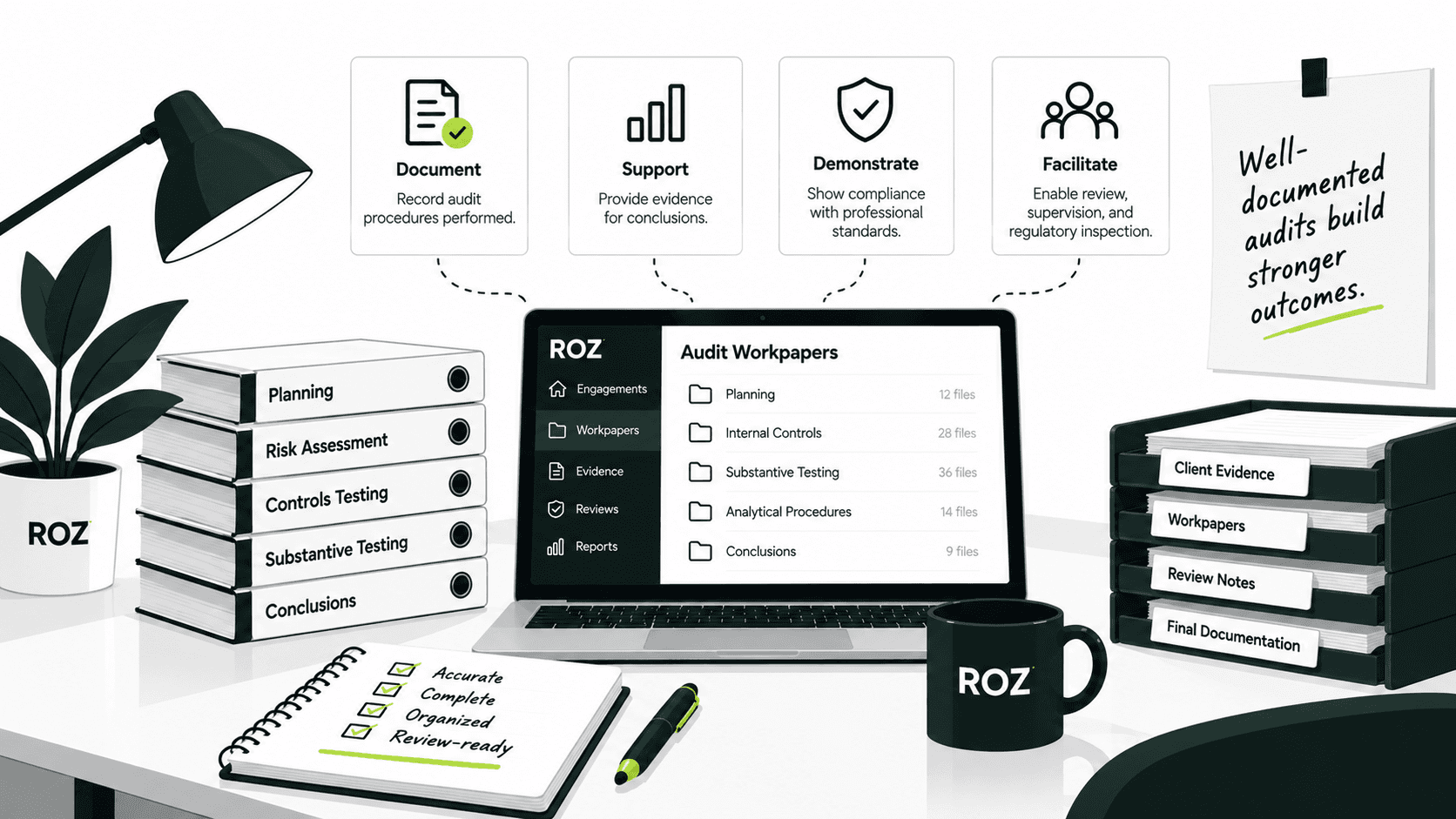
Workpaper preparation: Completed control activities can be exported as formatted workpapers while preserving testing context, evidence links, and audit trails.
Human-in-the-loop review: Auditors validate results, investigate potential exceptions, and retain responsibility for professional judgment and final conclusions.
Roz reports approximately 80% average time savings on control testing, reflecting the efficiency gains from AI-assisted first-pass testing and related fieldwork.
Conclusion
AI-assisted evidence review can help auditors organize large volumes of documentation, identify relevant information, and surface potential gaps before deeper testing and review. Its greatest value comes when these capabilities are connected to the control testing workflow rather than treated as a standalone review step.
Auditors remain responsible for evaluating evidence, investigating exceptions, exercising professional judgment, and reaching final conclusions. AI can provide a useful first pass, but it does not replace that responsibility.
For teams evaluating AI audit tools, Roz supports this workflow from evidence review and control testing through workpaper preparation, helping auditors spend less time on repetitive fieldwork and more time on review and judgment.
Frequently Asked Questions
Can AI review audit evidence?
Yes. AI has the potential to review audit evidence, classify it, identify key elements, links, and relationships, and help the auditor identify gaps and other flaws in evidence. While AI may assist in the first phase of evidence review, the ultimate responsibility to review the evidence and come to a conclusion rests with the auditor.
Can AI perform control testing?
AI can assist with first-pass control testing by applying defined testing criteria to evidence and sample sets, returning results such as PASS, FAIL, N/A, or INFO and surfacing potential exceptions. The auditor reviews the evidence and results, investigates exceptions where necessary, and exercises professional judgment before reaching a conclusion.
Can AI determine whether audit evidence is sufficient?
No. While AI can help identify inconsistencies and gaps in audit evidence, determining if there is adequate and appropriate audit evidence depends on the judgment of an auditor and several other factors, including the relevance of the evidence and the overall integrity of the audit.
What should auditors look for in AI audit software?
The emphasis should be on whether the AI audit software can assist the auditor in structuring and organizing control tests and assisting in producing workpapers. The AI audit software should provide auditors the ability to examine and assess the software’s findings and to retain the audit trail.