Many startups approach their first compliance audit with a strong technical security focus. Remote engineering teams can spend countless months fortifying their infrastructure, implementing multi-factor authentication, and setting up logging systems. They do all these tasks under the assumption that strong security controls will lead to a successful audit. What many teams overlook is that compliance audits focus on more than technical controls.
Security controls are important, but many first-time audits identify gaps in governance, documentation, and operational maturity. Organizations may have strong technical security controls but still face audit findings if policies, procedures, and control execution are not clearly documented and consistently followed. For many startups, organizational gaps are more common than technical weaknesses during initial audits.
In this article, we explore why startups struggle with compliance audits, highlight common non-security issues, and explain the difference between security and compliance maturity. We also discuss how startups can prepare more effectively and how platforms like Roz can help structure documentation and streamline audit readiness.
The Biggest Misconception: Compliance Equals Security
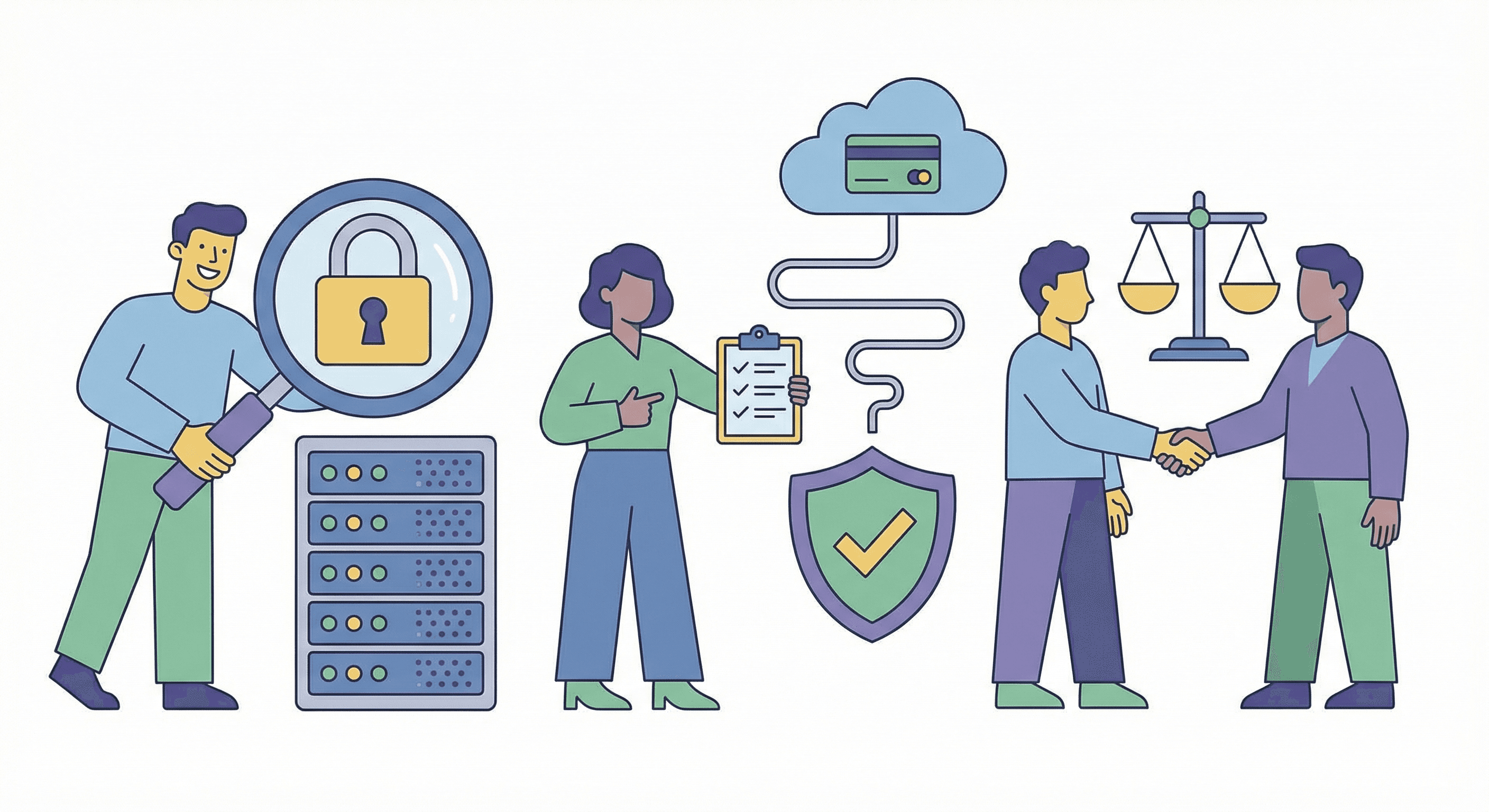
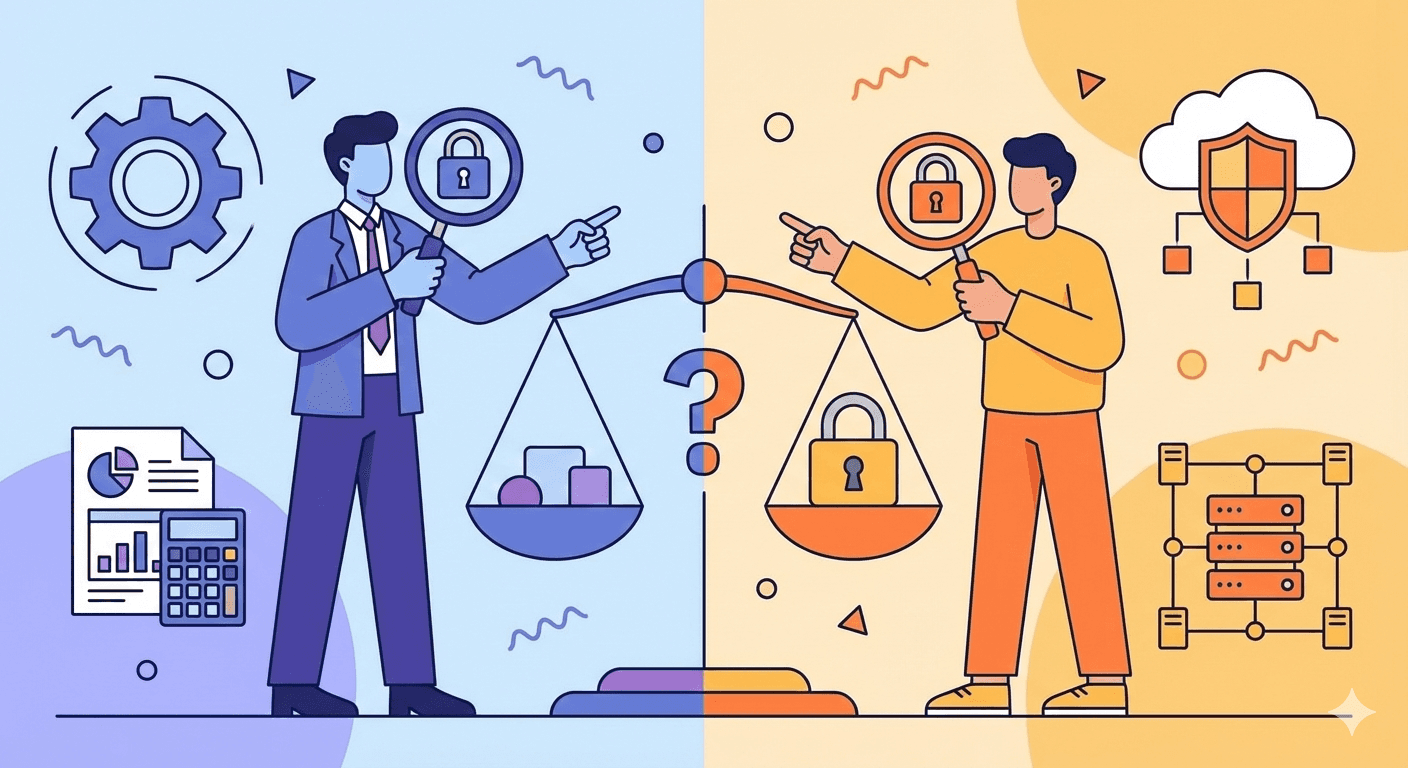
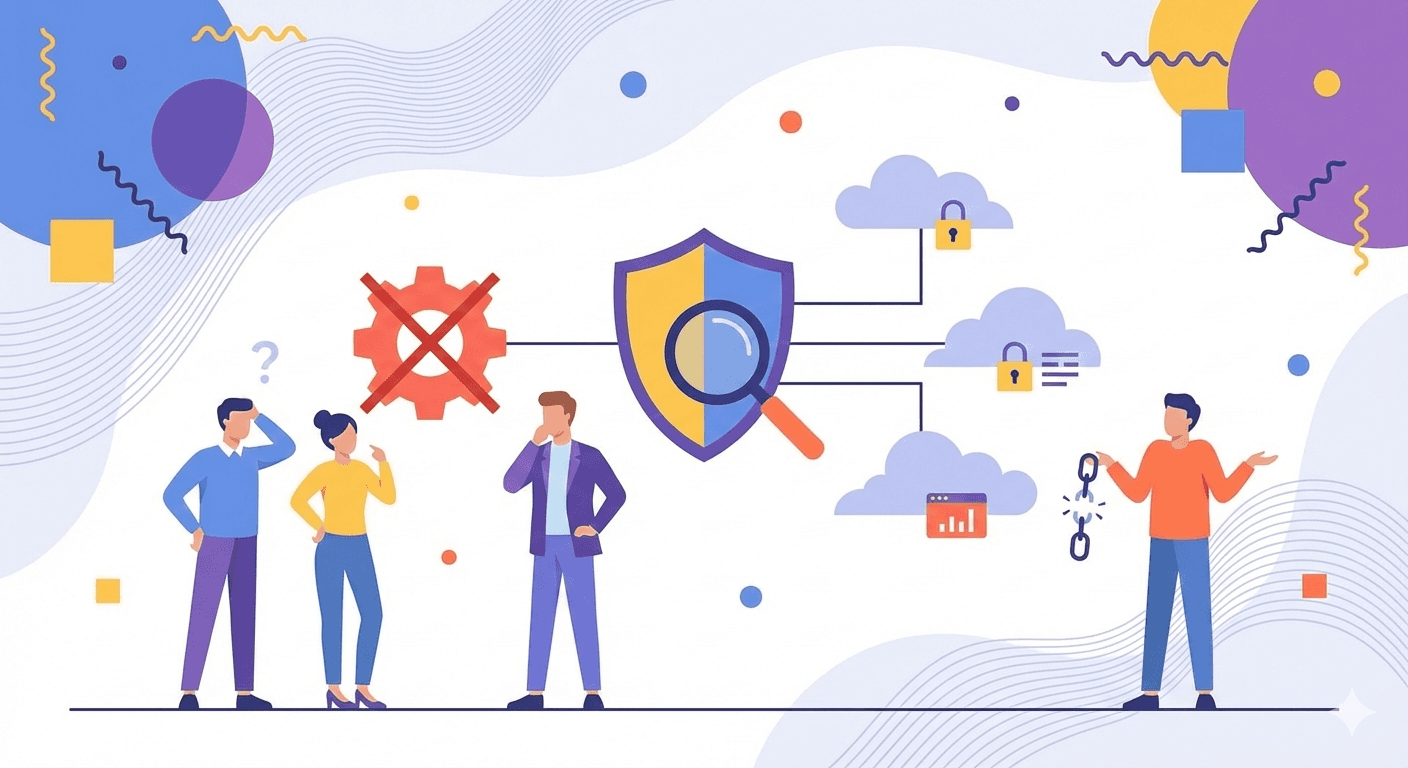
A common misunderstanding among early-stage companies is that security and compliance are the same concepts. Although there are similarities between the two, they are different. Security focuses on protecting systems and data, while compliance focuses on demonstrating that controls operate consistently and align with framework requirements.
The presence of advanced technical defenses does not guarantee success in an audit. Auditors thoroughly examine whether controls are implemented and whether they are sufficiently documented, approved, and reviewed. For instance, an auditor may require not just the presence of a securely configured firewall but also the configuration policy and records of the review and approval of the configuration. Technical security is only one component of overall compliance maturity.
Security vs Compliance — What's the Difference?
Understanding the difference between security and compliance is important for startups, especially when preparing for audits.
Security typically includes:
Multi-factor authentication (MFA)
Continuous logging and monitoring
Infrastructure hardening and vulnerability management
Compliance typically includes:
Documented policies and procedures
Risk management and tracking
Evidence collection and retention
Defined control ownership
Why Startups Fail Compliance Audits
When startups receive audit exceptions or have issues securing certification, audit findings are often related to governance and operational gaps rather than technical safeguards. Here are five common challenges startups encounter.
1. Missing Documentation
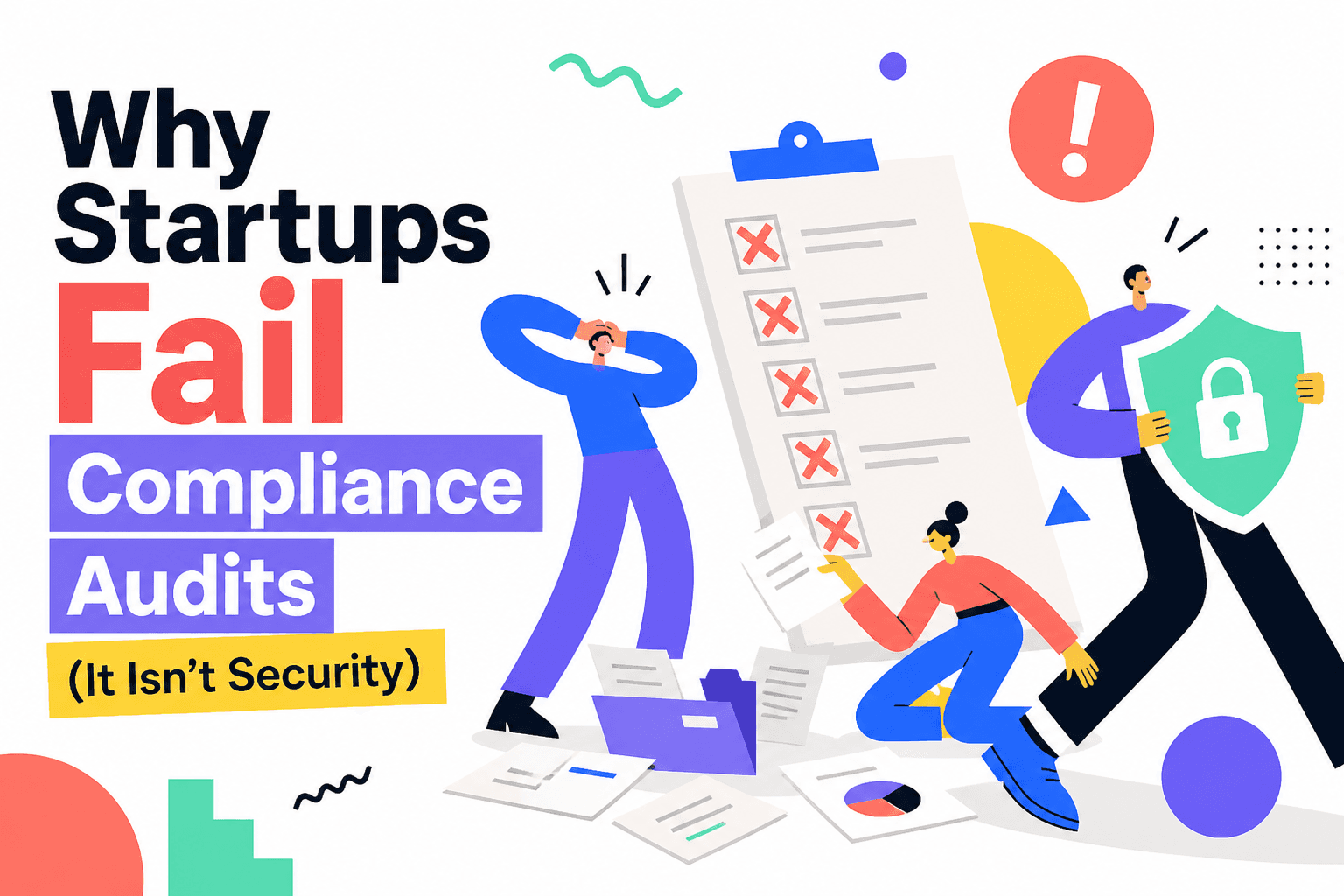
Auditors depend on documentation to verify how an organization is supposed to function. Many startups operate successfully but lack documentation supporting governance and control execution. Common issues are for startups to have a lack of acceptable use policies, no risk registers, and an absence of documentation on how changes are managed. These missing documents make it difficult for auditors to understand the true effectiveness of governance.
2. No Evidence of Control Execution
Even if a policy exists, it is not enough. Startups must demonstrate consistent implementation of the policy. Common issues include inadequate documentation of access reviews, vendor assessments, and employee training.
3. Lack of Governance & Ownership
Compliance frameworks need accountability. Startups lack a governance and operational owner for compliance, resulting in unclear assignments and inconsistent execution. Such a situation can mean that there are no management reviews, no defined responsible parties for established controls, and a lack of overall oversight.
4. Policies Are Outdated or Not Followed
Some organizations do create policies but are unable to put them into practice. Policies can be outdated, lack employee acknowledgment, or are not followed. Policies that are outdated, not communicated, or not acknowledged by employees are often considered ineffective during audits.
5. Poor Risk Management
Many compliance frameworks consider risk management as a starting point. This can be challenging for startups that lack formal risk assessments, risk tracking, and documented risk treatment plans.
Why This Happens Especially in Startups
Given their focus on speed and rapid iteration, startups often prioritize speed and product development over formal governance and documentation. For example, many compliance frameworks consider structured documentation and processes, along with step-by-step reviews, as a fundamental component.
In their first audits, these gaps in governance and operations are often the most visible. For many startups, transitioning from informal operating models to a formal compliance program can be challenging and is often the reason why initial assessments reveal multiple audit findings.
What Auditors Actually Look For in Startup Compliance Audits
Most startups still want to limit the scope of a startup compliance audit to technical security. In reality, auditors prioritize governance, documentation, and evidence of control execution over technical security.
Governance & Management
Auditors look to see whether there is clear governance structure and management oversight for compliance. This may include governance meeting records, risk reviews, and defined stakeholder responsibilities.
Documentation & Policies
Auditors evaluate whether policies have been approved at the appropriate level and whether there is periodic and appropriate policy review. They will also look for documentation to confirm that policies are operationalized in the manner described.
Evidence Collection
Auditors are seeking documented evidence that controls are operating as expected. Examples include access review documentation, training logs, incident response exercises, and vendor management documentation.
Common Startup Audit Failure Examples
Examining real-world scenarios can help clarify how process failures impact audit outcomes.
Example 1: Strong Security, Failed SOC 2
A SaaS startup had a well-secured cloud environment, with things like encryption, identity controls, and monitoring, and it had strong security practices from a technical perspective. But the organization got a qualified opinion in the SOC 2 audit because of operational controls that were not in place, including:
No documented controls for onboarding and offboarding.
No code deployment approval controls that were documented.
No incident response controls that were documented.
Control execution that was not documented.
While technical safeguards were present, the lack of documented governance and operational procedures resulted in audit findings. This case shows that SOC 2 audits look for control design and operational effectiveness beyond merely having a secure infrastructure.
Example 2: Failed ISO 27001 Despite Secure Infrastructure
An organization implemented strong technical security controls and did external penetration testing with positive outcomes, but the organization did not achieve ISO 27001 certification in the certification audit. The main gaps included:
No documented ISMS.
A risk assessment that was not complete.
No risk treatment plan documented.
No internal audit conducted prior to certification.
No management review documented.
ISO 27001 certification is aimed at assessing the effectiveness of the management system, not the technical controls. Therefore, even if an organization has a strong security infrastructure, they are likely to face audit findings if the governance and management system elements are not fully in place.
Example 3: Failed SOC 2 Type 2
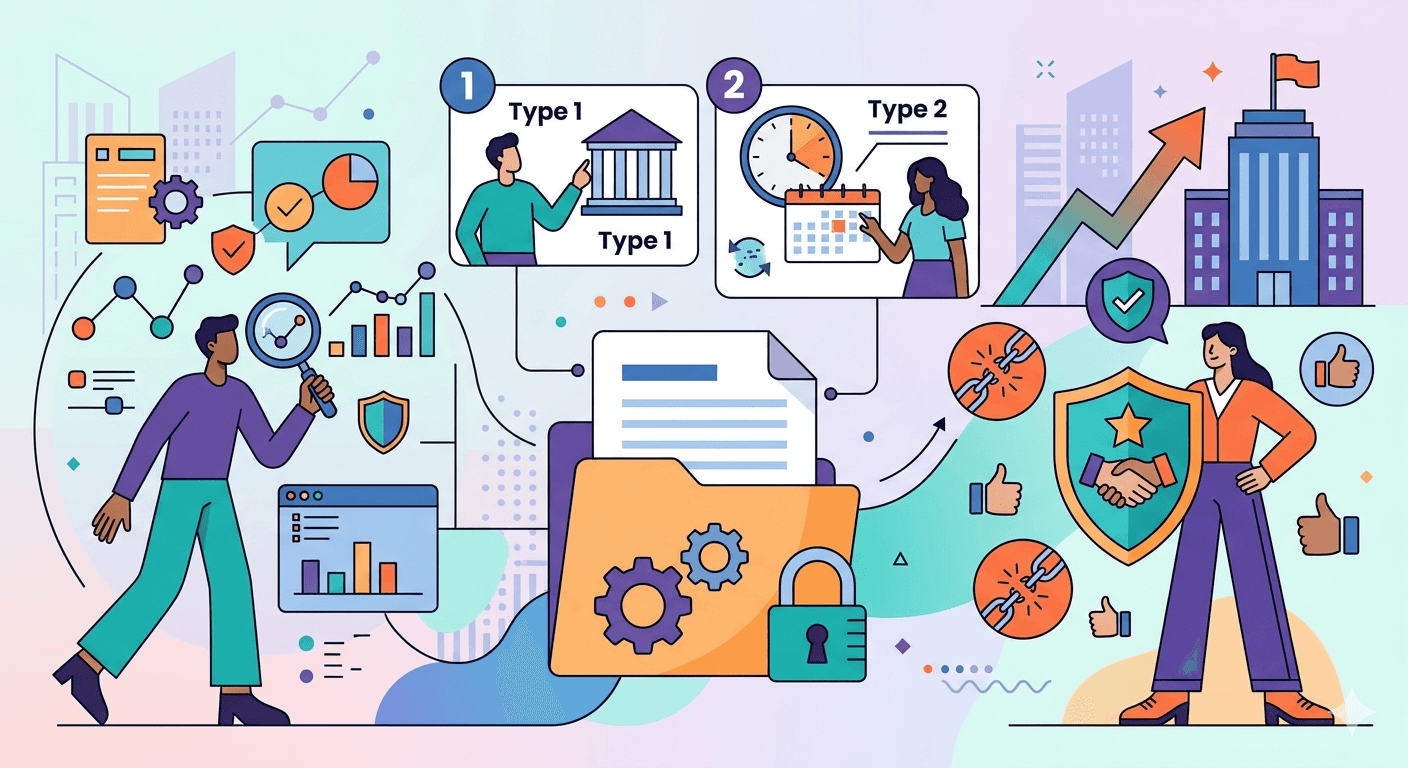
An organization completed a SOC 2 Type 1 audit for the first time. This demonstrated that controls were designed appropriately at a point in time.
However, for SOC 2 Type 2, during the observation window, the auditors found the following operational gaps:
No one performed the quarterly access reviews.
Vendor risk assessments were never done.
Some change management documents were not completed.
Records to show employees completed security training were not found.
For these reasons, the audit report noted exceptions pertaining to control operation. This is an example of SOC 2 Type 2 audits that examine the effectiveness of controls over time and require sustained implementation and collection of evidence.
Compliance Maturity vs. Security Maturity
It is crucial for startups to recognize the differences between security maturity and compliance maturity when preparing for compliance audits.
Security maturity focuses on technical safeguards used to protect systems and data. These measures may include infrastructure controls, the use of identity and access management systems, continuous monitoring, vulnerability management, and other technical security countermeasures to reduce security exposure.
Compliance maturity deals with the consistency of governance and operations and may include documented policies and procedures, defined ownership of controls, formalized risk management, and regular reviews along with the systematic collection of control implementation evidence.
Many startups prioritize security engineering early as they build scalable products. Building reliable and scalable offerings that include robust security and defensive engineering is the norm. However, governance, documentation, and compliance processes are often postponed until the final stages, particularly when organizations are preparing for their first compliance audits, such as SOC 2 or ISO 27001.
This means that some startups will show high levels of security maturity but will have immature levels of compliance. Understanding this imbalance allows those companies to improve governance, documentation, and operational processes in advance of a compliance audit.
How Startups Can Avoid Failing Their First Compliance Audit
Taking a structured, proactive approach can significantly reduce the likelihood of audit findings. Startups preparing for their first compliance audit may consider the following foundational steps to build a more resilient and audit-ready compliance program.
Step 1: Establish Compliance Ownership
Assign a designated compliance owner within the organization. This individual does not need to be a compliance expert on the team full-time, but their role in compliance needs to be defined. Compliance ownership will likely include:
Policy and procedure maintenance.
Evidence collection coordination.
Control execution tracking.
Communication to stakeholders and auditors.
Having someone in a clear leadership role reduces the gaps in accountability and improves the reliability and consistency surrounding compliance activities.
Step 2: Build Documentation Early
During first-time audits, there are many things to account for, and missing documentation to reflect things usually comes up as a common gap. Instead of waiting until the audit is in full swing, startups may be in a better position the earlier they can document. The types of things mentioned in policies and procedures may include:
Information Security Policy.
Risk Register.
Access Control Policy.
Vendor Management Process.
Incident Response Plan.
Control Ownership Matrix.
Early documentation helps ensure that controls are defined, communicated, and operationalized prior to audit review.
Step 3: Implement Evidence Collection
Auditors are not only looking to see whether control mechanisms are in place, but also whether those mechanisms have been put into practice. Designing evidence collection systems that are functional help demonstrate consistency in the control mechanisms. This can include systems to:
Schedule Reviews.
Maintain Employee Training Records.
Document Vendor Risk Assessments.
Record Incident Response Testing.
Track Change Management Approvals.
Creating repeatable processes for evidence collection can help support audit readiness and reduce last-minute preparation.
Step 4: Conduct Readiness Assessments
Before engaging a third-party auditor, many organizations perform a readiness assessment, internal audit, or gap analysis. These types of reviews serve to document and control gaps in the management process. Readiness assessments may serve to:
Identify missing controls.
Validate documentation completeness.
Evaluate operational consistency.
Reduce potential audit findings.
Before a formal audit, addressing these issues may help enhance overall compliance maturity.
How Roz Helps Startups Prepare for Compliance Audits
Preparing for compliance audits can be challenging for startups, especially when documentation and evidence are managed manually. Roz supports CPA firms and advisory teams working with startups by providing a structured, AI-native workspace designed to streamline audit preparation.
Centralizing Documentation & Evidence: Client-specific workspaces allow teams to organize policies, procedures, and supporting evidence in one place, improving traceability and accessibility during audits.
AI-Assisted Draft Workpapers: Roz can generate draft workpapers and control summaries from uploaded documentation, complete with audit trails and source links.
Gap Analysis & Readiness Support: Roz supports documentation review by highlighting potential missing materials and control gaps before the formal audit begins.
Questionnaire Assistance: Roz supports security questionnaires, vendor assessments, and compliance readiness reviews using source-linked documentation.
By structuring documentation and supporting first-pass analysis, Roz helps startups improve documentation maturity and prepare more consistently for their first compliance audit.
Conclusion
Startups face compliance audit challenges that do not solely stem from inadequate technical security. Governance, documentation, and operational maturity account for the majority of audit findings.
By recognizing the gap between applying security measures and achieving compliance, founders alongside engineering staff can better direct their efforts. Early preparation, clear ownership, and systematic evidence collection can help reduce audit risk and improve readiness.
AI-native platforms like Roz can further support this process by helping startups organize documentation, structure controls, and transition from informal operations to more structured, audit-ready environments.