Audit teams are adopting AI faster than at any point in the profession's history. According to Sage's 2025 AI in Accounting Report, 46% of accountants now use AI tools daily, up from 18% in 2023. Firms using AI report a 60% improvement in audit anomaly detection (Deloitte, 2025) and a 30% faster month-end close (CPA.com, 2025).
But adoption alone does not equal reliability. Firms that hand AI a generic prompt and a pile of client files are discovering that polished-sounding output is not the same as accurate output. The workpaper reads well. The citations point nowhere.
That gap almost always comes down to context, specifically, whether the model received the right information in the right structure before it answered. That is what context engineering addresses.
In this article, I will explain what context engineering is, why audit work demands it, and how to apply it in practice, from the six layers of context that shape AI-assisted engagements to the mistakes that undermine output quality when those layers are ignored.
What Is Context Engineering?
Context engineering refers to the meticulous design, structuring, and management of the totality of the information that an AI system processes prior to generating a response. It focuses on providing AI systems with the appropriate information, instructions, tools, and structure needed to perform a specific task reliably. Philipp Schmid, an AI researcher with Google DeepMind, describes context engineering as 'formatting, packaging, and provision of tools and information, at the most appropriate time to LLMs' to accomplish a specific task.'
Why Audit Work Requires Rich Context
Audit engagements have unique client profiles along with unique risks, evidence, control environments, and applicable frameworks. For these reasons, AI cannot reliably determine whether audit procedures were performed appropriately, whether evidence supports a conclusion, or whether documentation aligns with the firm's methodology.
This creates a well-documented risk. Research indicates that certain test conditions allow even the advanced language models to produce false citations in the absence of reliable source material (Zou et al., 2024). In auditing, unsupported workpapers are not trivial errors. They are the precise problems that professional review is meant to discover.
The PCAOB's 2024 inspection results provide additional support for this position. For the audits reviewed, the overall Part I.A deficiency rate was 39%, which indicates that the reviewers believed that the firms did not obtain sufficient appropriate audit evidence to support their opinions. Even though these reviews do not cover all audits, they highlight the critical importance of evidence-based documentation.
If AI is to be used in the audit process, the basis for relevant, supportable, and reviewable documentation must be rich and specific to the particular audit engagement. Without that basis, AI may produce very persuasive documentation that is unsupported by the evidence. This makes human review and professional judgment critical.
The Six Layers of Context Engineering in AI-Assisted Audits
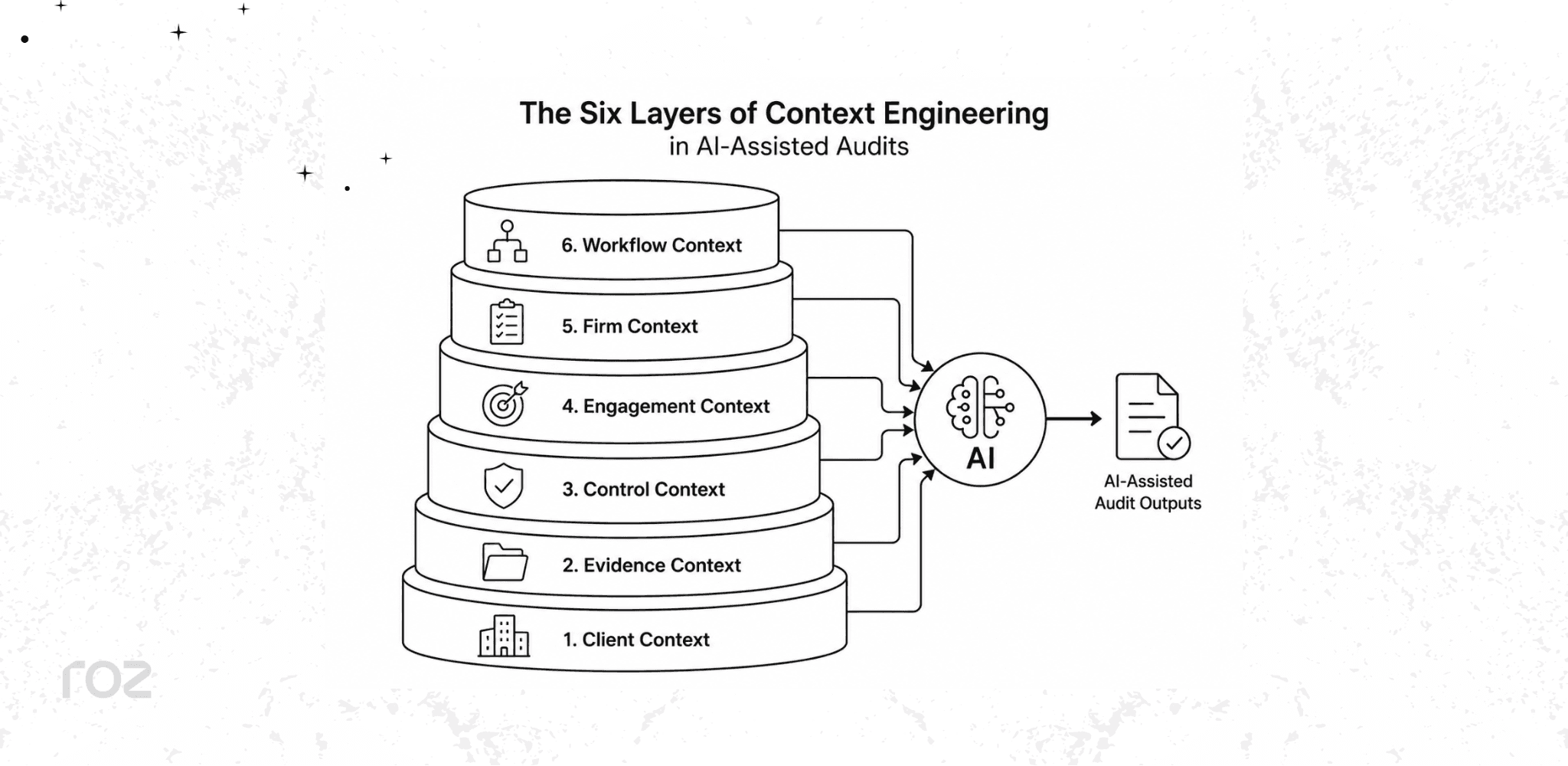
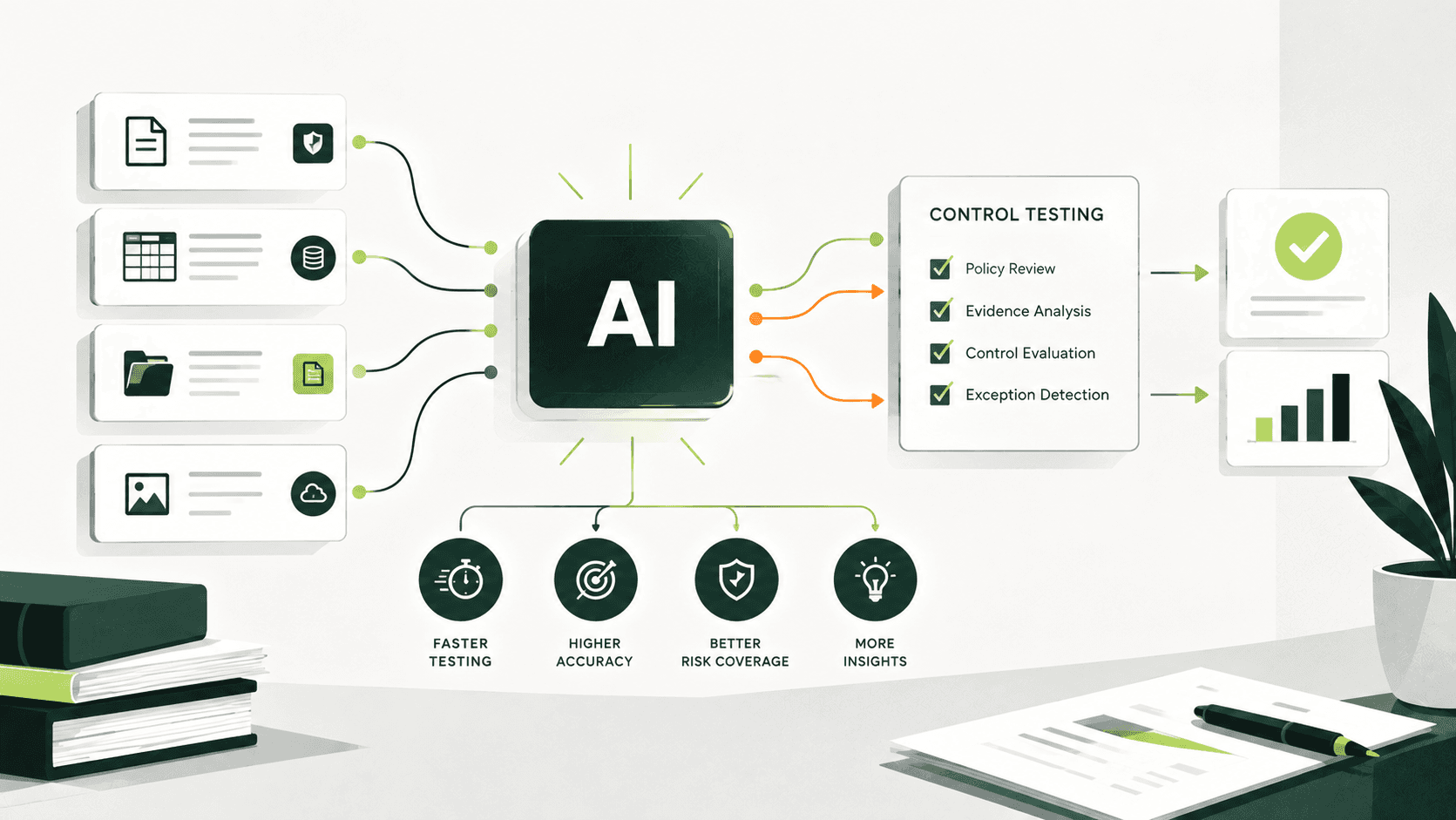
Structuring context for audit AI means managing six distinct layers. Each layer serves a specific function, and gaps in any one of them degrade the output in predictable ways.
1. Client Context
This layer includes the client's industry, organizational structure, prior audit history, and engagement background. Without it, the model cannot tailor its reasoning to the client's specific risk environment. Client context ensures that generated workpapers reflect this engagement, not a generic audit of a similarly sized company.
2. Evidence Context
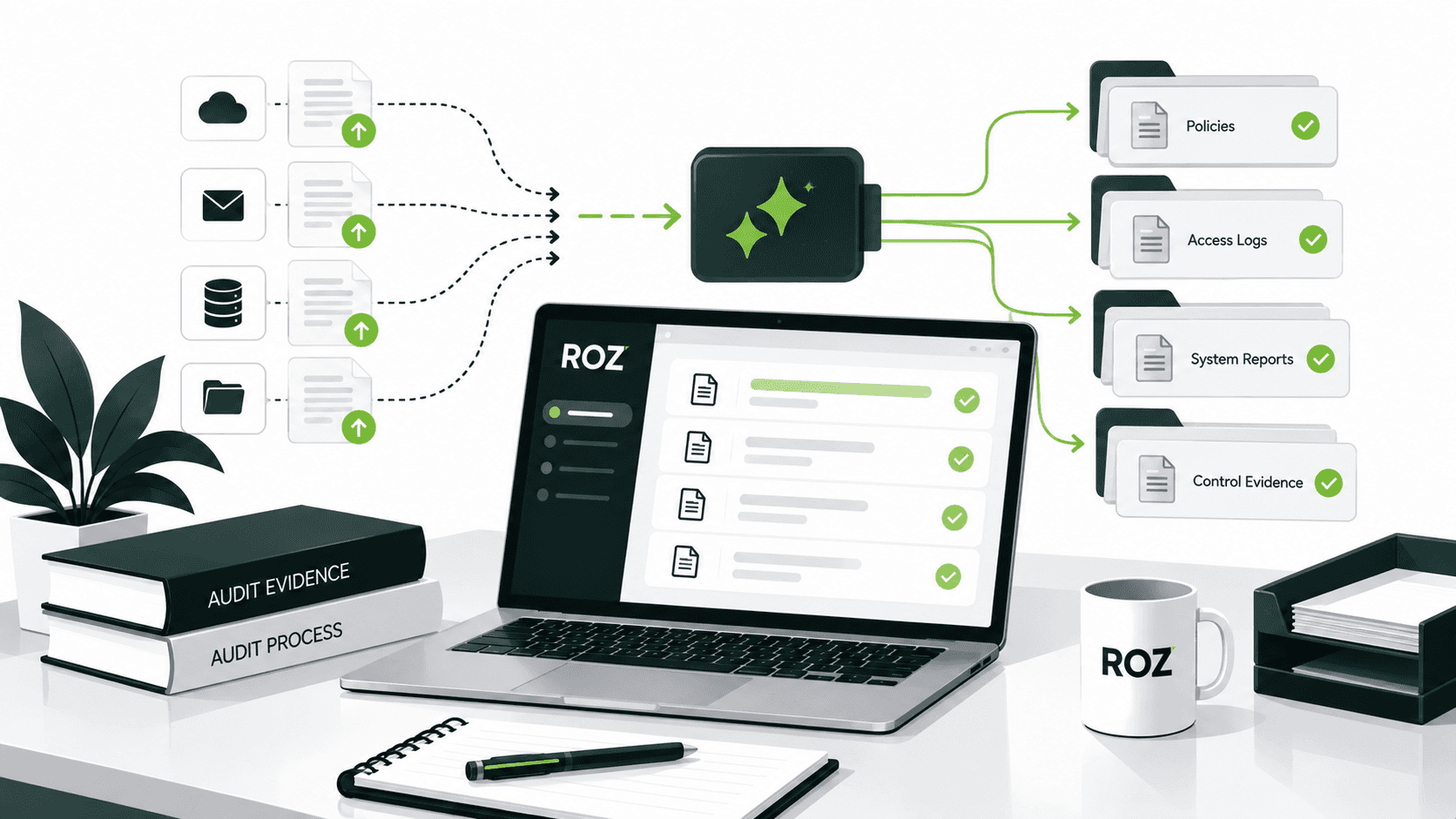
Evidence context encompasses the client-provided documents under examination: policies, procedures, system logs, screenshots, configurations, and agreements. This is the source material a reviewer will need to verify against AI-generated conclusions. When the model works from actual evidence files rather than memory, its output carries traceable citations, and the review motion changes from rebuilding the analysis to checking it.
3. Control Context
This layer includes the control library, framework requirements, and control descriptions relevant to the engagement. Without it, the model cannot determine what constitutes a complete test, nor can it match client controls to the applicable standard. Control context is what separates a compliant test from a plausible-sounding one.
4. Engagement Context
Engagement context covers the current scope, documented risks, materiality thresholds, and prior-year workpapers. Prior-year files matter because they give the model continuity, what changed, what is carried forward, and what the reviewer will expect to see reflected in roll-forward documentation. Removing this layer forces every engagement to start cold.
5. Firm Context
This layer includes your firm's methodology, documentation standards, approved templates, sampling approaches, and review expectations. Without it, the model defaults to a generic audit approach that may not match how your firm scopes work or draws conclusions. Firm context is what makes AI output consistent with your practice, not just consistent with auditing in general.
6. Workflow Context
Workflow context captures where the engagement currently stands, the active step, open requests, evidence gaps, and what action is required next. This layer supports agentic AI that moves through a workflow rather than answering isolated questions. Without workflow context, the model cannot make appropriate decisions about what to prioritize or escalate.
Common Mistakes When Using AI Without Structured Context
Firms that encounter unreliable AI output in audit settings typically share one or more of the following patterns:
Relying on generic prompts: If the question posed to the AI does not include relevant engagement material, the response will be based on training data, not the engagement. Generic responses may appear correct but are not factually correct for this client.
Uploading unstructured evidence: Just providing the entire client file to the model does not enhance accuracy. Studies have shown that adding irrelevant material to the context window is counterproductive to the accuracy of the AI model. There is also a "lost in the middle" problem, where evidence that is in the middle of a very large context is given less attention than evidence that is at the beginning or at the end. Therefore, curation is more important than quantity.
Ignoring firm methodology: If the firm’s methodology is not included in the AI’s context, the AI will default to a reasonable approach that is likely inconsistent with the firm’s methodology for sample size determinations, work scoping, or conclusion documentation. The gap between the generic methodology for auditing and your firm’s methodology for auditing is where the context for your firm’s methodology closes.
Missing engagement metadata: Leaving out work from the prior year, work in the current year, the risk assessment, and the current year’s scope will lead the model to reason in a vacuum. The result will be work that does not accurately represent what took place during the engagement.
Trusting AI output without review: AI output does not replace the professional judgment of the user and therefore should not be viewed as the final output. In this profession where and skepticism are the ethical and quality standards, automation bias, and the tendency to trust and rely on the technology are significant risks.
How AI Audit Platforms Apply Context Engineering
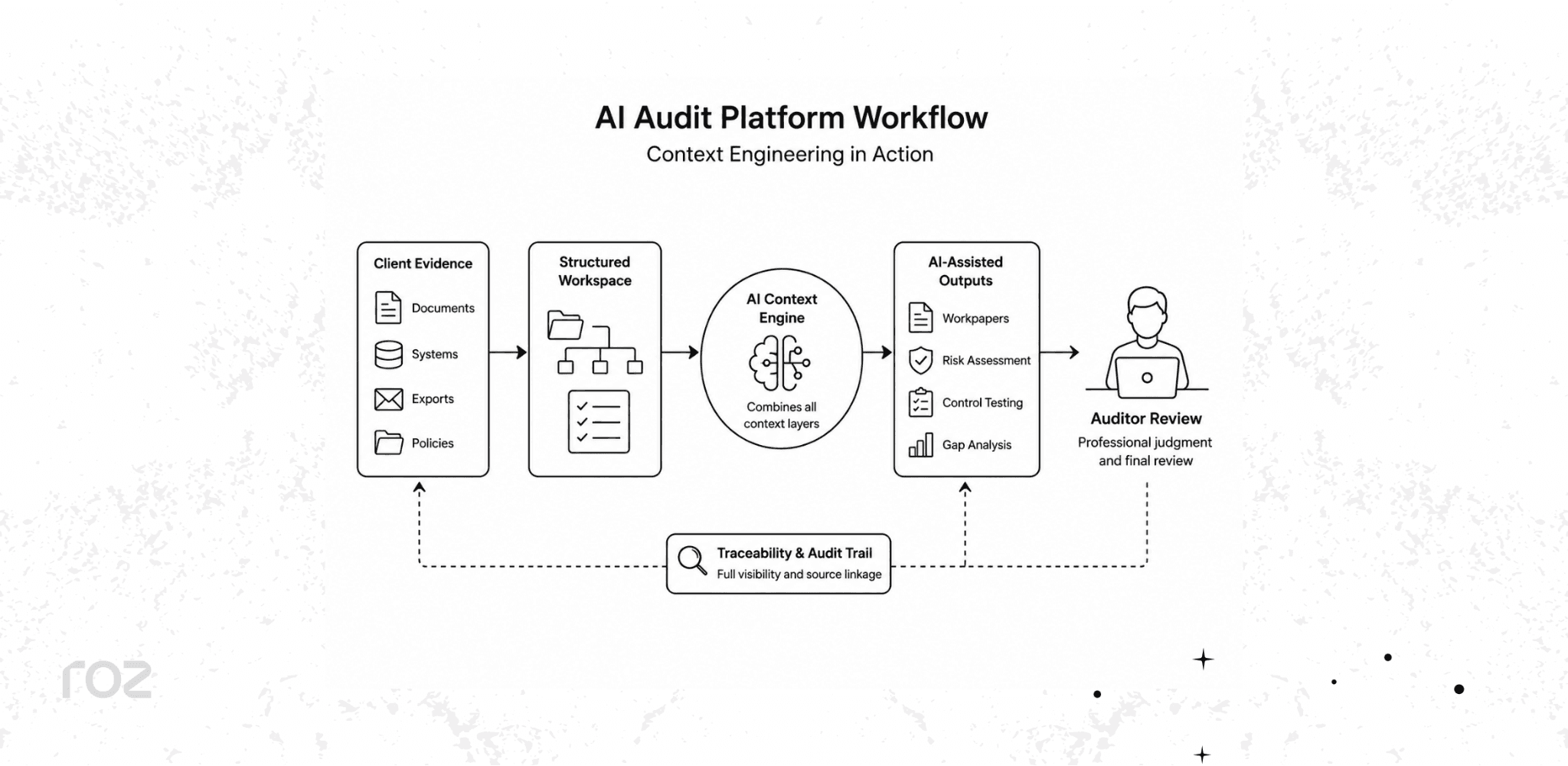
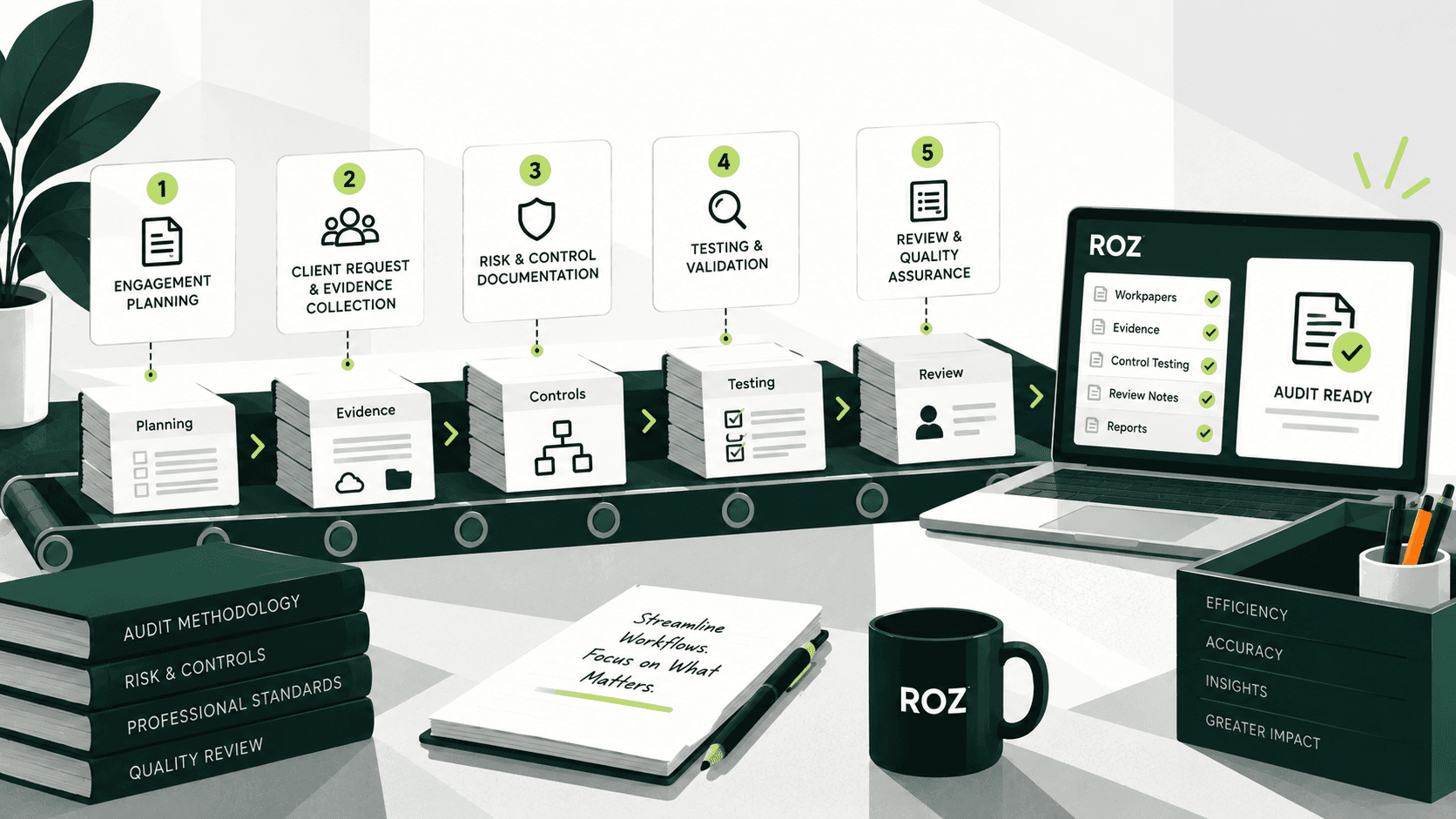
Purpose-built audit AI platforms operationalize context engineering by structuring the engagement environment before the model reasons, rather than relying on practitioners to configure inputs manually each time.
The core architectural pattern involves:
Engagement-specific workspaces: A structured workspace is created for each client engagement, which stores documentation, evidence, and work-in-progress separately from other engagements. This eliminates contamination of engagement context and makes it easy to assemble everything needed to perform an engagement.
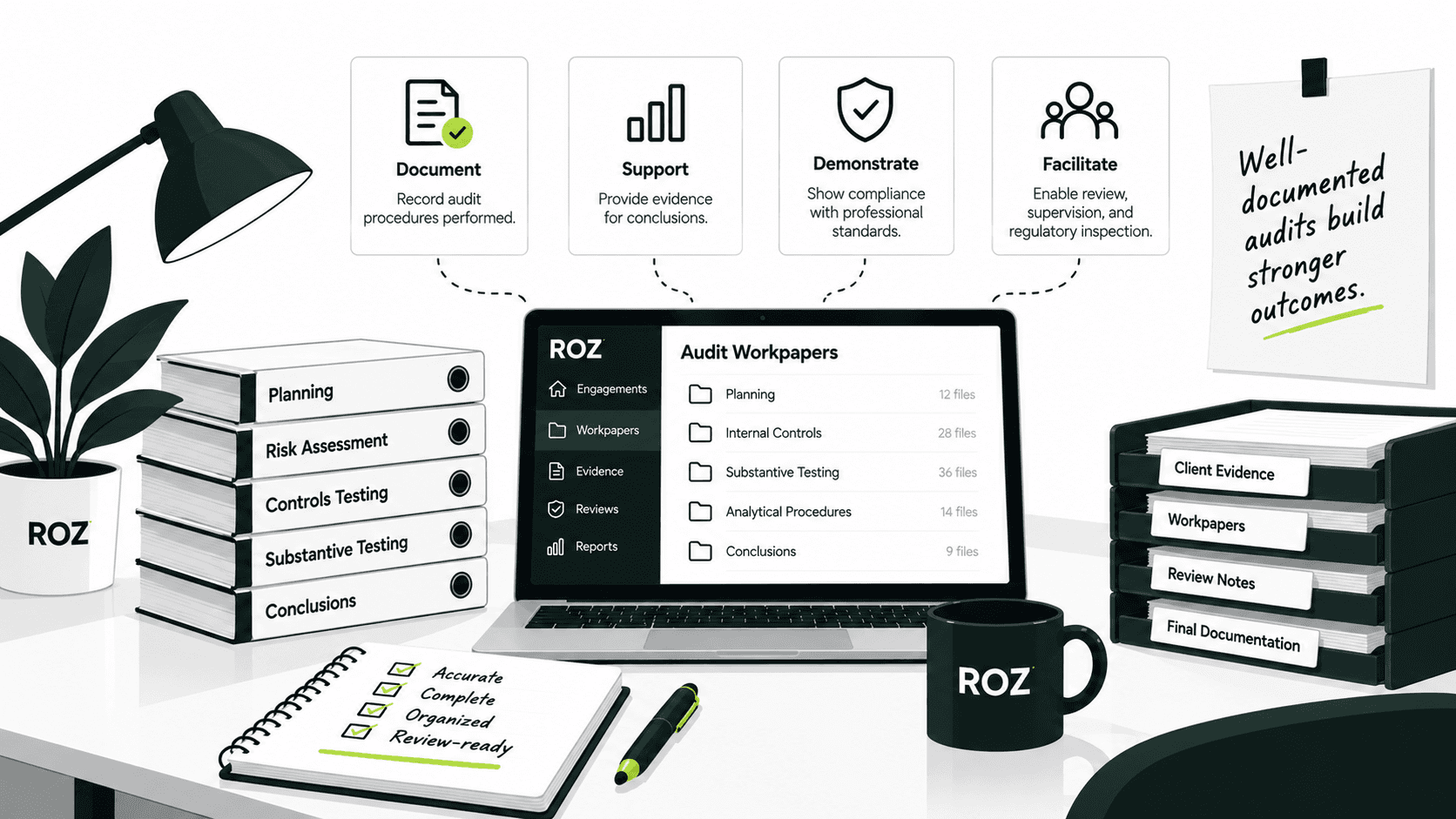
Connected evidence and controls: Uploaded evidence is linked to the controls, risks, and tests to which the evidence pertains. Consequently, AI-generated conclusions cite evidence to support a specific section of a document. This significantly improves review, since the analysis does not need to be reconstructed.
Firm-approved templates and methodology: The platform incorporates the firm's templates and methodologies, allowing the workpapers to incorporate the firm's methodologies.
Traceable, auditable outputs: Every AI design incorporates the reasoning and logic behind the conclusions. This is important for the review and quality control of the AI outputs.
Human review at every stage: AI will draft, analyze, and document. The practitioner will review, adjudicate, and assume ownership of the conclusion. The human practitioner will be embedded throughout the process as a standard and a necessity.
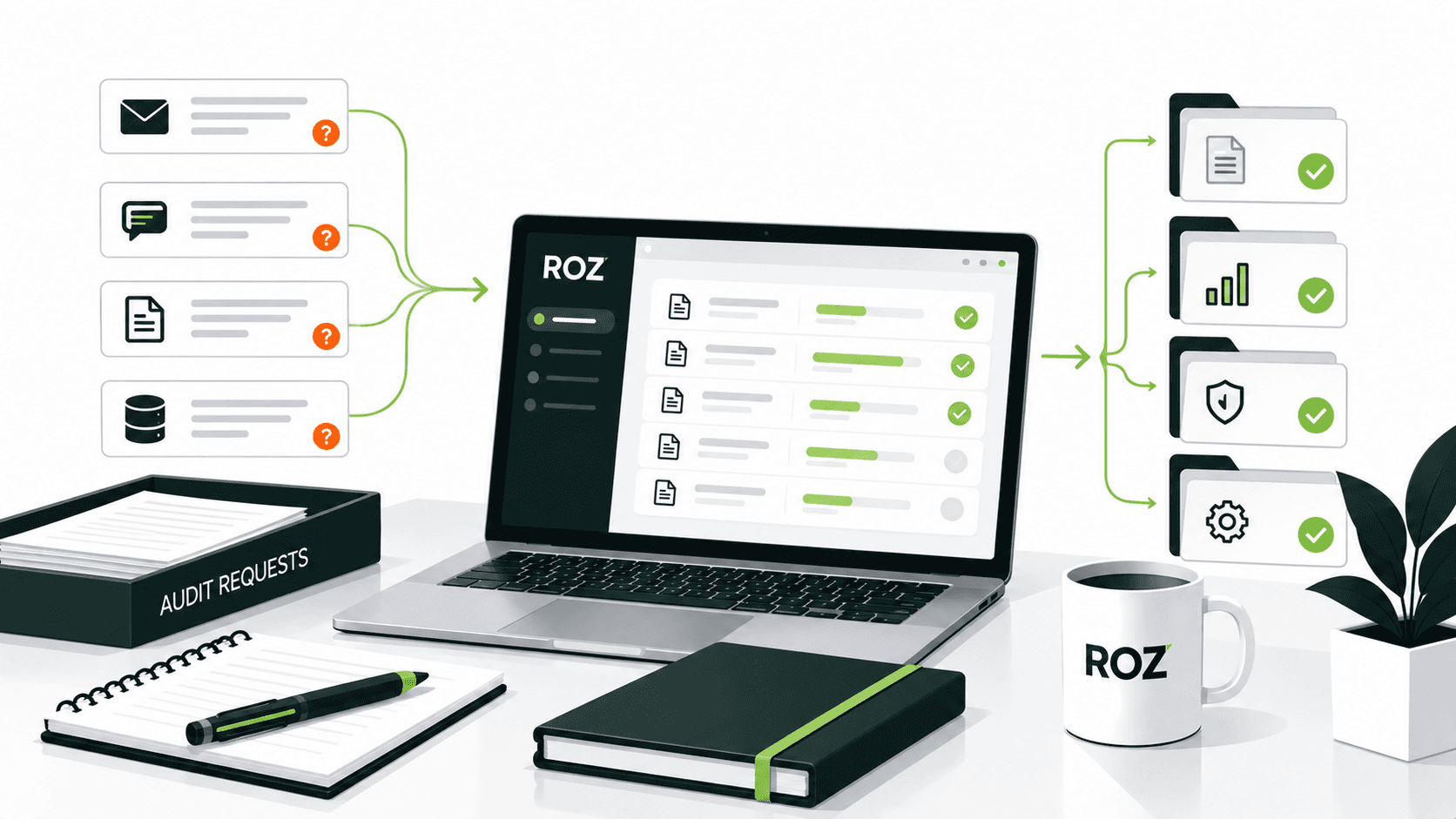
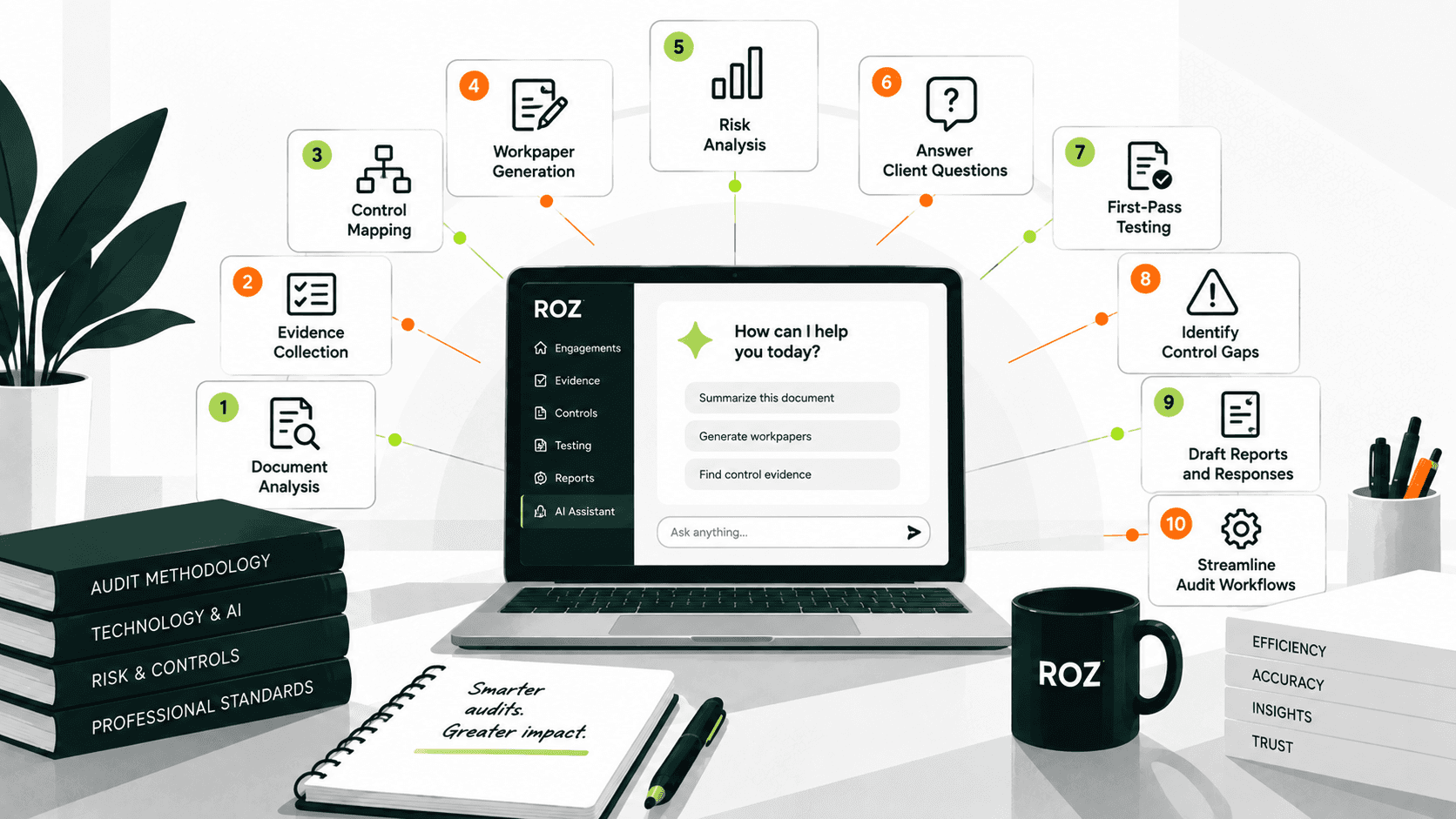
Roz is an AI platform built specifically for external audit and advisory firms. It creates a structured workspace for each client engagement, allowing teams to organize policies, procedures, evidence, and prior workpapers in one place. Using engagement-specific documentation, Roz generates AI-assisted first-pass workpapers from firm-approved templates, supports AI-assisted questionnaire responses with source-linked references, identifies documented controls, and supports readiness assessments by surfacing potential documentation gaps. Every output maintains source-linked traceability, making it easier for reviewers to validate documentation and supporting evidence while keeping professional judgment and final conclusions with the engagement team.
Best Practices for Context Engineering in Audit
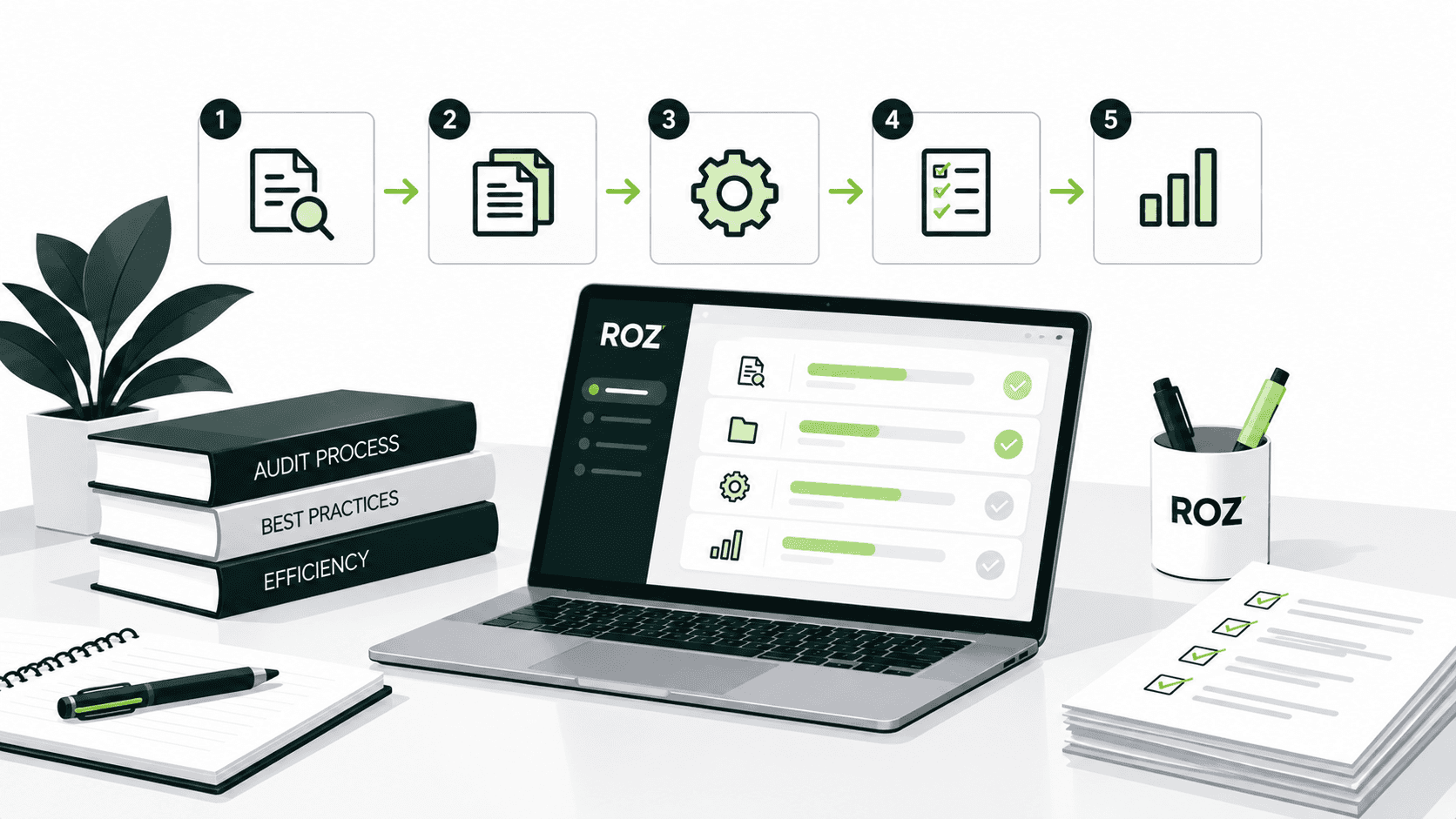
Applying context engineering in practice comes down to six operational disciplines:
Standardize engagement templates: Standard templates enable AI to reliably structure its outputs. They also ensure that the firm’s audit methodology is present at every engagement from the start.
Organize evidence prior to upload: Evidence is better provided in the form of curated, organized documents. Large, disorganized collections of documents provide less useful evidence.
Keep context current throughout the engagement: Engagement context must be updated with new evidence, reassessments of the risks, and changes to the scope. Outdated context will yield outdated or irrelevant results.
Traceability and auditability: AI results must be substantiated with evidence. Absence of evidence will indicate the output is not ready for review.
Validate AI-generated outputs: AI outputs should be assessed to ensure that evidence has been sourced, the proposed actions have been completed, and the conclusions and outputs align with the scope of the engagement.
Protect confidential client information: The AI process must maintain segmentation and control of client data. Engagement-specific locked workspaces must be built to ensure client confidentiality throughout the process.
Conclusion
AI output quality in audit work is a context problem, not a model problem. When a model has access to firm methodology, prior-year workpapers, linked evidence, and framework requirements, it produces documentation that reviewers can check. Without that material, it produces documentation they have to rebuild.
The profession is already moving in one direction. With 72% of top 100 firms operating with a dedicated AI strategy (Accounting Today, 2025), context engineering is no longer optional, it is becoming a professional standard. Firms that treat it as a discipline will produce consistent, defensible, reviewer-ready work. Those that treat it as an afterthought will continue generating output that looks complete but cannot withstand scrutiny.
AI supports auditor judgment. Context engineering is what makes that support reliable.
Frequently Asked Questions
How is context engineering different from prompt engineering in audit?
Prompt engineering focuses on how you phrase a question. Context engineering manages what the model knows when it answers, the documents, methodology, evidence, and history it can access. A well-crafted prompt without the right context still produces output grounded in generic training data, not your engagement.
Why does context engineering matter for auditors specifically?
Every engagement has its own client, risk environment, evidence set, and applicable framework. A model working from generic training data cannot distinguish between your firm's methodology and a textbook approximation. Context engineering ensures the model works from actual engagement material, which is what professional review requires.
Can context engineering reduce AI hallucinations?
Yes, significantly. When a model reasons from actual source documents rather than memory, its outputs carry traceable citations and are far less likely to contain invented references. Hallucinations are not fully eliminated, but structured, source-grounded context substantially reduces their frequency.
What information should be included in AI audit context?
The four inputs that most directly determine output quality are firm methodology, prior-year workpapers, source documents under examination, and applicable framework requirements. Client background, engagement scope, risk assessments, and workflow state further refine what the model produces.
How do AI audit platforms apply context engineering?
AI-native audit platforms structure the engagement environment in advance, creating client-specific workspaces, linking evidence to controls, and incorporating firm-approved methodology. Every output remains traceable back to its source, without requiring practitioners to configure inputs manually.