Audit engagements are getting harder to run at a pace. More data, more evidence, more compliance frameworks, and more client expectations, all while firms manage growing engagement volumes with constrained staff.
AI tools have helped, but most still require a person to trigger every step. You prompt the tool, the tool responds, and you decide what to do next. That model has value, but it doesn't reduce the number of steps landing on an auditor's plate.
AI agents work differently. Rather than responding to individual prompts, they accept an objective, plan the steps required to reach it, execute those steps across connected systems, and surface a finished output for auditor review. The work shifts from practitioner-driven to agent-driven, with human oversight built in at the right points.
In this article, I will explain what AI agents are, how they work across an audit engagement, the common types used in practice, and how purpose-built platforms like Roz support agent-assisted audit workflows.
What Are AI Agents in Audit?
An AI agent is an intelligent software system that can determine an appropriate sequence of steps, coordinate across connected systems, and execute multiple related tasks in support of a defined objective while operating within firm-defined boundaries and auditor oversight.
That definition has three parts worth unpacking:
Sequence: The agent determines an appropriate order of operations for a given objective rather than waiting for a human to define each step manually.
Coordinate: The agent manages handoffs across connected systems, documents, and workflow stages without requiring manual intervention at each transition.
Execute: The agent carries out the steps, organizing evidence, mapping documented controls, drafting documentation, and returns a structured output for review.
This is what separates AI agents from conventional AI tools. A standard AI assistant answers when prompted. An AI agent takes an objective and works through it.
In the audit context, this distinction matters because audit engagements are multi-stage workflows that involve large volumes of documents and require coordination across evidence, controls, testing, and documentation. Agents are built for exactly that kind of structured, repeatable complexity.
AI agents support, not replace, professional judgment and skepticism. Repetitive, process-driven tasks move off the auditor's plate. AI agents can support risk assessment activities by organizing relevant information, but evaluating risks and determining responses remain the auditor's responsibility.
Why Audit Firms Are Exploring AI Agents
Three compounding pressures are driving interest in AI agents across the profession.
Increasing audit complexity
Modern engagements involve more data, more disclosure requirements, and more overlapping compliance frameworks. According to a Caseware report on agentic AI in audit, firms face mounting complexity from expanding regulatory scrutiny and tighter margins, while operating with the same fixed capacity. Managing that volume manually can increase the risk of inconsistency and documentation gaps.
Auditor capacity constraints
Talent shortages and growing engagement volumes mean most firms cannot simply hire their way to higher output. The demand is there. The headcount often isn't. AI agents offer a way to increase throughput per engagement team without adding proportional staff, though they work best as a complement to auditor judgment, not a substitute for it.
Rising client and regulatory expectations
Clients expect faster turnaround, greater transparency, and better collaboration during engagements. Regulators expect consistent, traceable documentation. Both require standardization that is difficult to maintain at scale through manual processes alone.
AI agents help address each of these pressures by automating the repetitive, documentation-heavy portions of an engagement while keeping auditors in control of every decision that requires professional judgment and skepticism.
How Do AI Agents Work in an Audit Engagement?
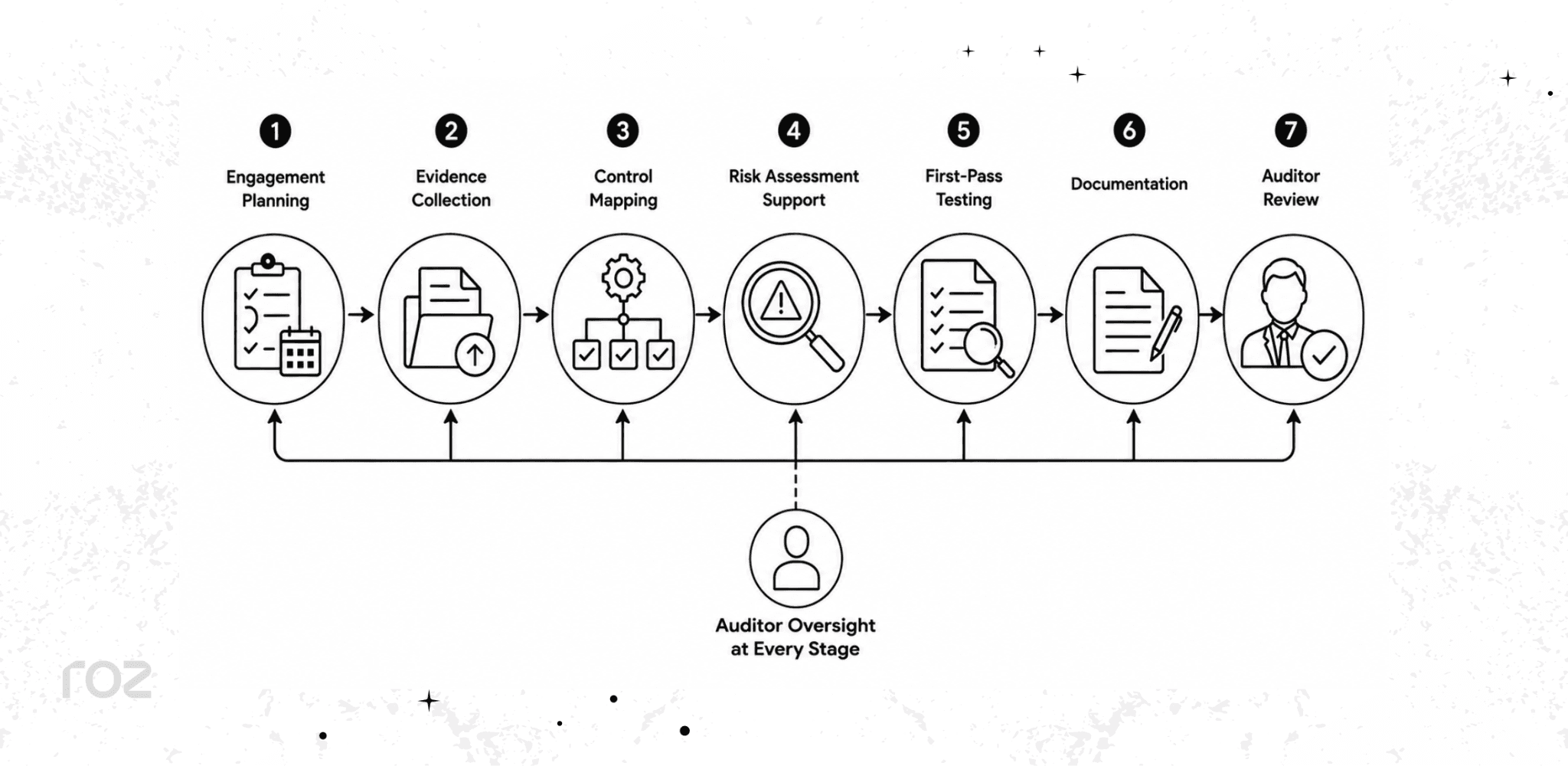
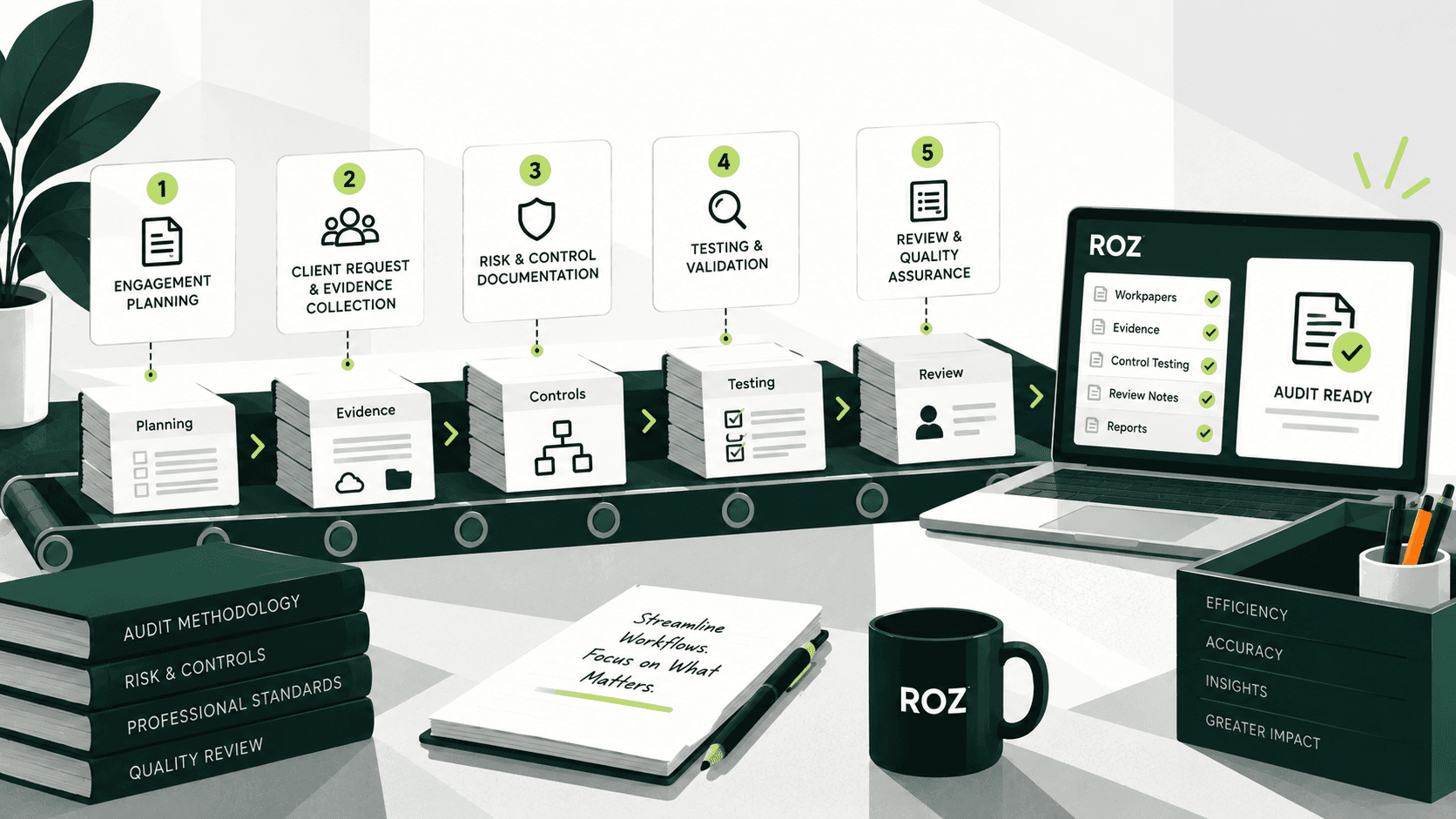
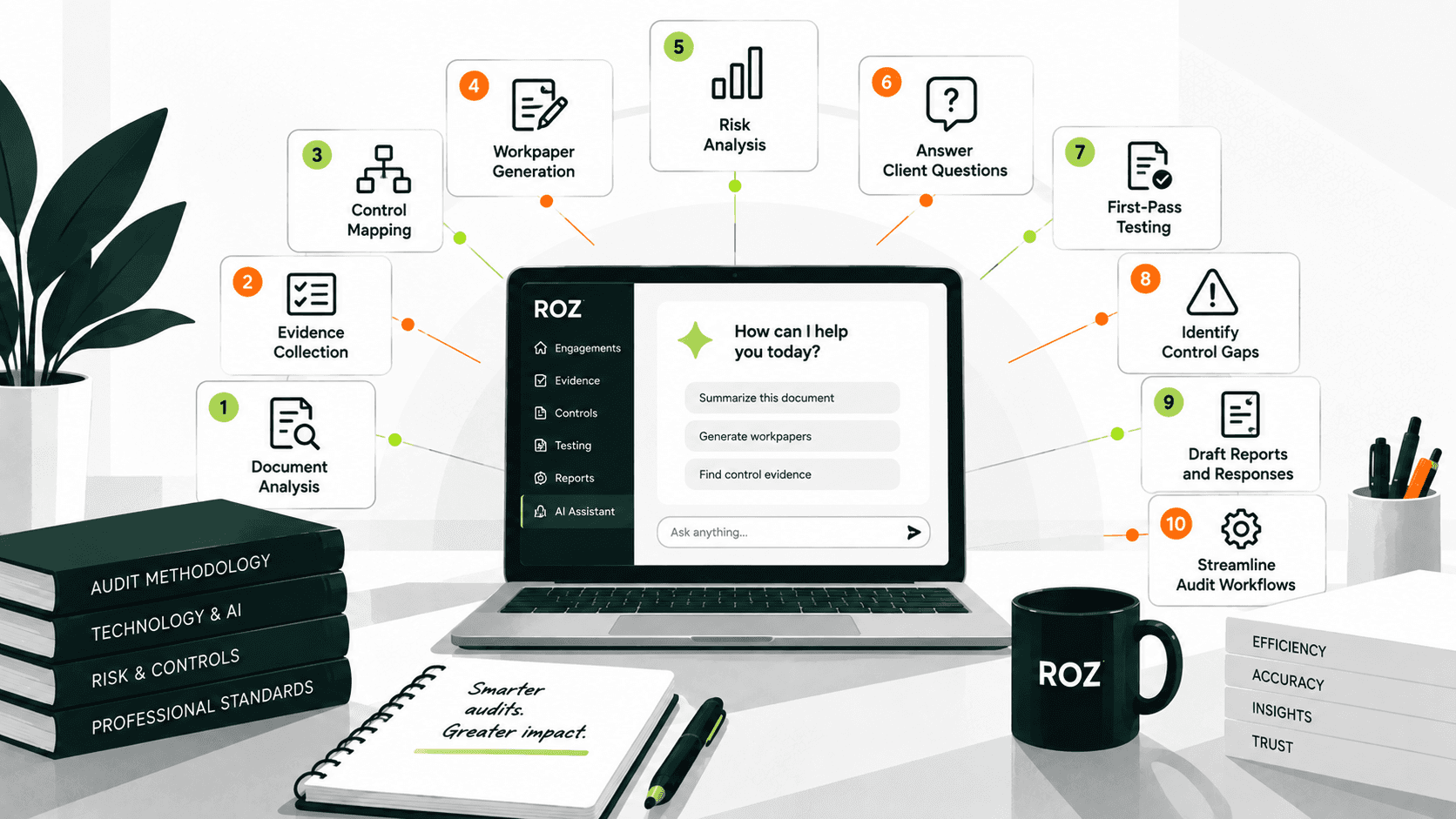
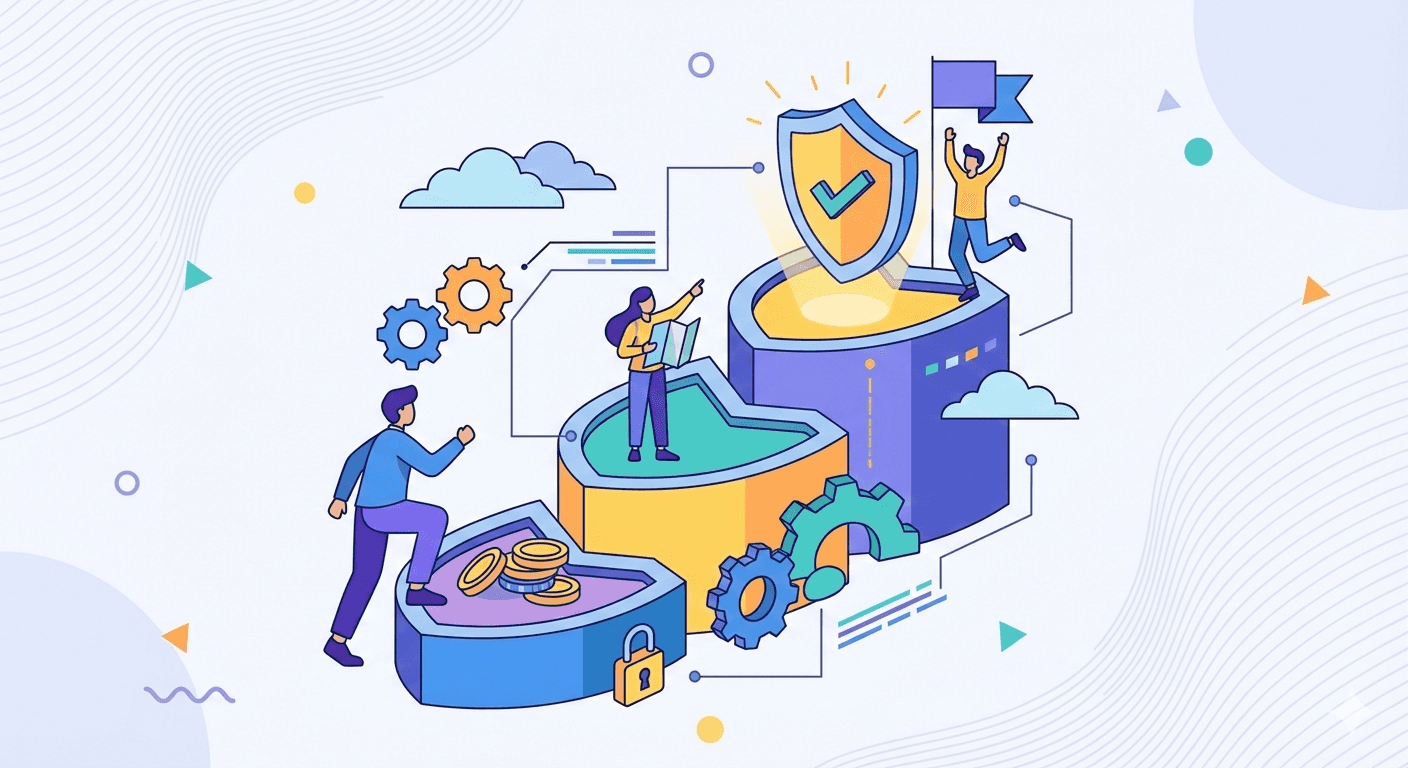
AI agents assist auditors in each stage of a control-based audit engagement, from planning to evidence gathering, from testing to documentation, while still enabling auditors to exercise control over their professional judgment and draw final conclusions. Here is how that typically unfolds:
Engagement planning: The planning agent arranges the information for the engagement, builds the client workspace, and prepares draft planning documentation using firm-approved templates, applicable standards, and prior-year information.
Evidence collection: The evidence agent organizes, categorizes, and tracks documentation uploaded by the client, along with policies, procedures, prior reports, and maintains a clear and organized view of the evidence collected and what is still missing.
Control mapping: The control mapping agent maps uploaded evidence to corresponding controls in the relevant framework (e.g., SOC 2, ISO 27001, CMMC, etc.) and draws attention to areas where controls may lack or have insufficient supporting documentation.
Risk assessment support: The agent provides the auditor with supporting documentation and highlights potential areas for auditor review that have inconsistent documentation, gaps in coverage, and testing anomalies. Under ISA 315 and PCAOB AS 2110, the assessment of risk is the auditor’s responsibility.
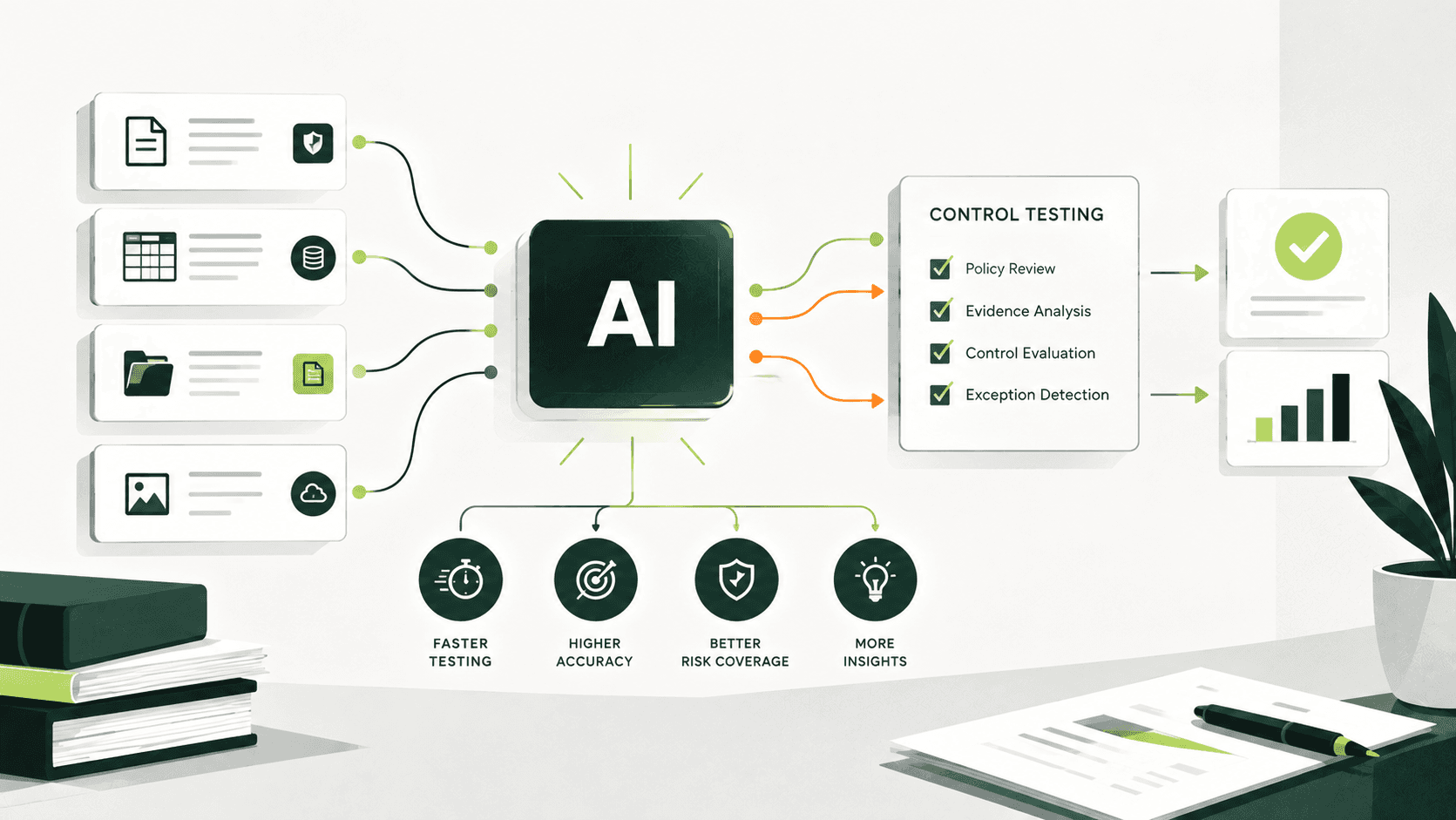
First-pass testing: The testing agent supports first-pass control testing by organizing evidence, applying defined testing criteria, and identifying potential exceptions for auditor review.
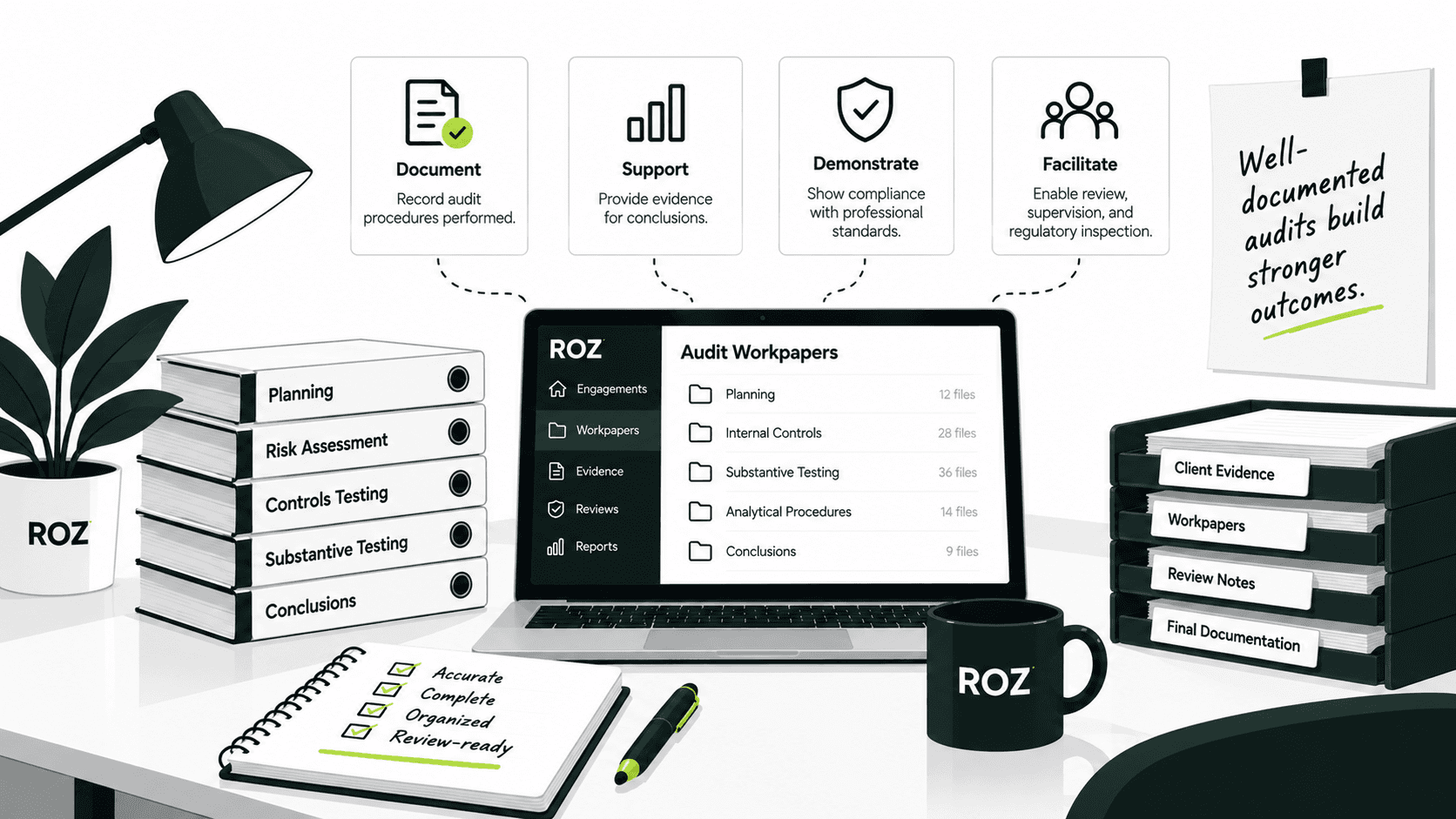
Documentation: An AI agent assists with drafting workpapers, testing documentation, and report sections using firm-approved templates.
Auditor review: Auditors review outputs at every step, including the application of professional skepticism, prior to making a final determination. The agent prepares an initial draft for review, while the auditor evaluates the output and reaches the final conclusions.
Common Types of AI Agents Used in Audit
Many modern audit software programs offer a range of designed agents, each geared towards specific components of the engagement workflow:
Planning Agent: Organizes engagement information, prepares first drafts of engagement workflow documents, and develops the engagement workflow document structure for the remaining team members.
Evidence Agent: Collects, categorizes, and tracks audit evidence uploaded by the client and maintains a clear record of what evidence has been uploaded vs. what is still pending.
Control Mapping Agent: Connects various evidence to the controls and compliance stipulations, and flags areas that are missing supporting evidence before controls are tested.
Testing Agent: Supports first-pass testing of evidence using the testing procedures and captures exceptions for the auditors’ review.
Documentation Agent: Uses source-linked evidence to draft workpapers and reports and summarize tests for the audit.
Review Agent: Reviews draft documentation for completeness, consistency, and formatting before auditor review.
Each agent is responsible for a specific task. The combined effort of these agents streamlines a workflow that is otherwise about coordinating actions at each step.
Practical Use Cases for AI Agents in Audit
AI agents have the potential to assist diverse tasks in virtually all assurance services and related advisory activities. Examples include:
Evidence collection and organization: Automatically classify client files by control and maintain evidence logs structured by control.
Audit documentation drafting: Draft audit working papers from approved templates, and populate the working papers with evidence and confidence indication.
Control mapping: Analyze firm policy documents and procedures to help evaluate coverage to control frameworks and indicate gaps.
Gap analysis: Compare the client’s documentation to requirements of the framework and provide a structured assessment of gaps along with an advisory pathway.
First-pass control testing: Assess controls against testing standards, and raise exceptions, which need to be reviewed by an auditor.
Questionnaire automation: Answer multiple compliance questionnaires or due diligence requests using the client’s documentation, populate the responses with confidence scores, and include the cited documentation.
Policy and procedure review: Assess the firm’s policies against framework requirements to determine if all policies are adequate.
Compliance readiness assessments: Identify potential documentation gaps in the client’s control framework prior to the audit and thereby provide the auditing firm with structured advisory gaps.
Audit report preparation: Using the evidence collected, draft sections of the audit report, management, and system descriptions. AI does not draft the Section of the Audit Report Opinion for SOC 2, and the auditing firm retains responsibility for that opinion.
In each example, the agent completes the repetitive, structured portion of the task. The auditor reviews the output and, due to a reliance on professional judgment, finalizes the conclusions.
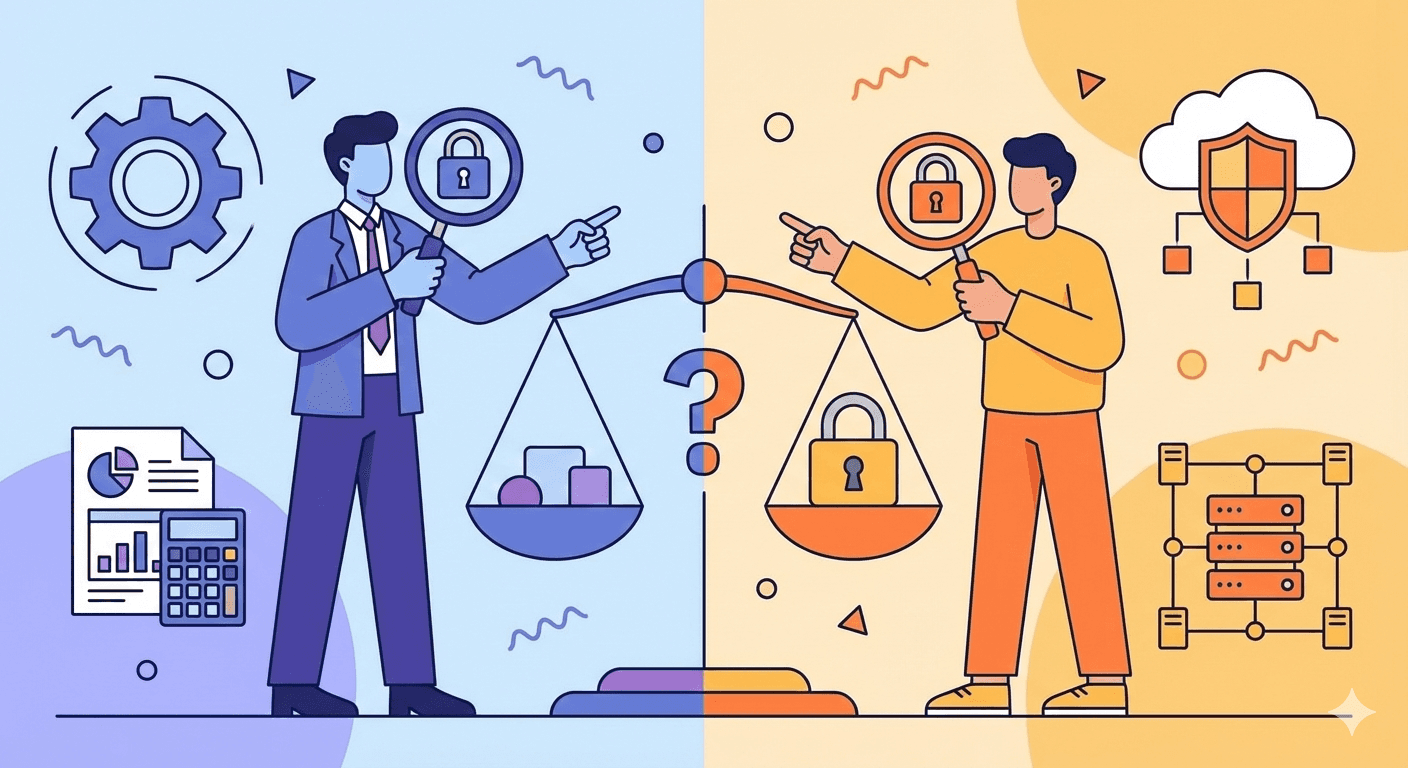
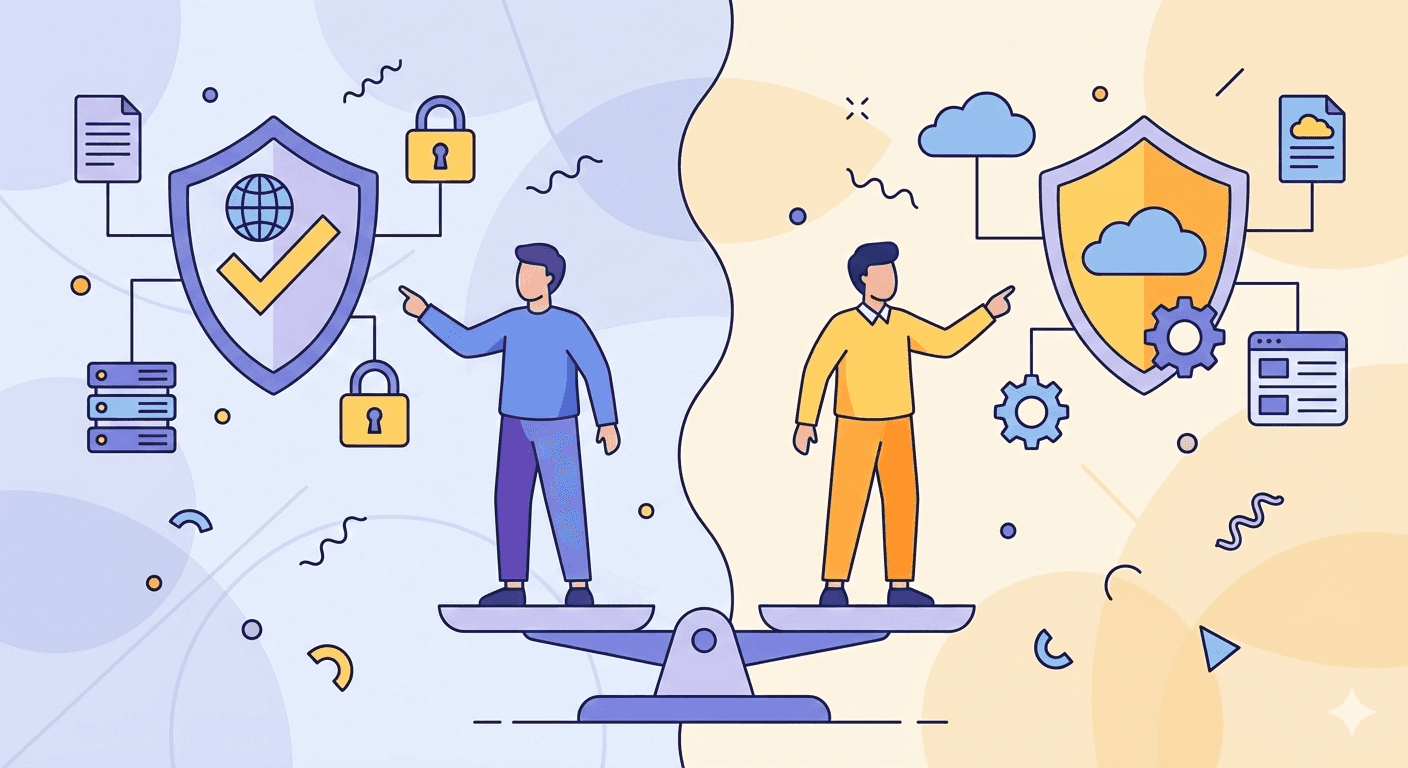
AI Agents vs. Traditional Audit Automation: What's the Difference?
Traditional automation in audit, rule-based workflows, data extraction scripts, and standardized checklists has been useful. But it has clear limits. It follows fixed instructions, cannot adapt when circumstances change, and requires frequent manual intervention when something falls outside predefined parameters.
AI agents extend automation by adding structured decision-making, multi-step coordination, and adaptability. Here is how the two compare:
Traditional Audit Automation | AI Agents | |
Workflow type | Rule-based, predefined | Goal-oriented, adaptive |
Task execution | Performs fixed, predefined tasks | Plans and coordinates tasks toward an objective |
Adaptability | Limited, breaks when conditions change | Responds to new information and adjusts |
Context | Minimal, each step is isolated | Maintains context across workflow stages |
Human involvement | Required at frequent intervals | Focused on review, exceptions, and final judgment |
The practical implication: traditional automation speeds up individual steps but leaves the practitioner responsible for executing each one. AI agents change which steps require practitioner involvement at all. The hours that shift depend on engagement complexity and control environment maturity, but in structured, documentation-heavy engagements, the reduction in routine fieldwork can be significant.
How Roz Supports AI Agent Workflows in Audit
Roz is an AI-native audit fieldwork platform built for auditors and advisory firms performing control-based engagements across frameworks such as SOC 2, ISO 27001, CMMC, and SOX. It helps teams accelerate evidence collection and control testing while keeping auditor judgment at the center of every engagement.
Within an engagement, Roz supports AI-assisted workflows by:
Organizing client evidence in secure, client-specific workspaces.
Supporting readiness assessments by surfacing potential documentation gaps.
Assisting with control documentation and first-pass evidence review.
Running AI-powered control testing using defined or suggested attribute checks.
Generating formatted workpapers from completed control activities with supporting evidence and annotations.
Maintaining audit trails that help reviewers trace testing results back to supporting evidence.
Roz streamlines evidence collection, control testing, and first-pass analysis, allowing engagement teams to spend more time reviewing results, applying professional judgment, and reaching well-supported audit conclusions.
Conclusion
AI agents represent a meaningful shift in how audit workflows are structured and delivered. They do not simply accelerate individual tasks; they change the operating model by coordinating multi-step workflows that previously required manual sequencing at every stage.
Firms that adopt AI agents effectively can help firms manage higher engagement volumes, standardize documentation quality, and redirect experienced staff toward work that requires professional judgment. The question is no longer whether AI agents will be part of audit delivery. It is how quickly firms move from experimentation to deployment.
Frequently Asked Questions
Can AI agents perform an audit without human involvement?
No. While AI agents can assist with procedural and process-related tasks, things like assessment of risks and internal control evaluations and conclusions remain the auditor’s responsibility. The assisting standards of the audit mandate that such tasks be done under the oversight of a human being.
What audit tasks can AI agents assist with?
AI agents can help with evidence collection, control mapping, gap analysis, first-pass control testing, workpaper drafting, and even assisting with the preparation of the audit report post the drafting. AI agents can help support these document-heavy, structured tasks faster and with greater consistency than what can be done manually.
Can AI agents generate audit workpapers?
Yes. AI agents can create workpapers as a first-pass draft. Agents utilize firm-approved templates and populate them with evidence, linking them with an audit trail. The auditors review the work and apply and make final changes before the workpapers become part of the engagement file.
Are AI agents secure for handling audit data?
The level of security will depend on the platform used. Firms should evaluate whether client data is isolated on the platform and if the platform clearly outlines its data policy and supports the data traceability requirement. Audit-specific platform builds generally do this.