Auditors spend considerable time testing whether controls operated over a period. They pull samples, review approvals, and inspect evidence trails. But that effort only produces reliable conclusions when the underlying control is well designed.
Control design testing answers a prior question: if this control were performed exactly as described, would it actually address the risk? The answer determines whether operating effectiveness testing is worth running at all. A control with vague ownership, no defined trigger, and no evidence path will not produce a clean sample, no matter how diligently the operating test is run.
In this article, I will explain what control design testing is, how it fits into the audit process, and how to execute it clearly and consistently across control-based audits and assessments.
What Is Control Design Testing?
Control design testing is the process of evaluating whether a control is appropriately structured to achieve its stated objective. It does not ask whether the control ran consistently over six or twelve months. It asks whether the control, performed exactly as described, is capable of preventing or detecting the risk it was designed to address.
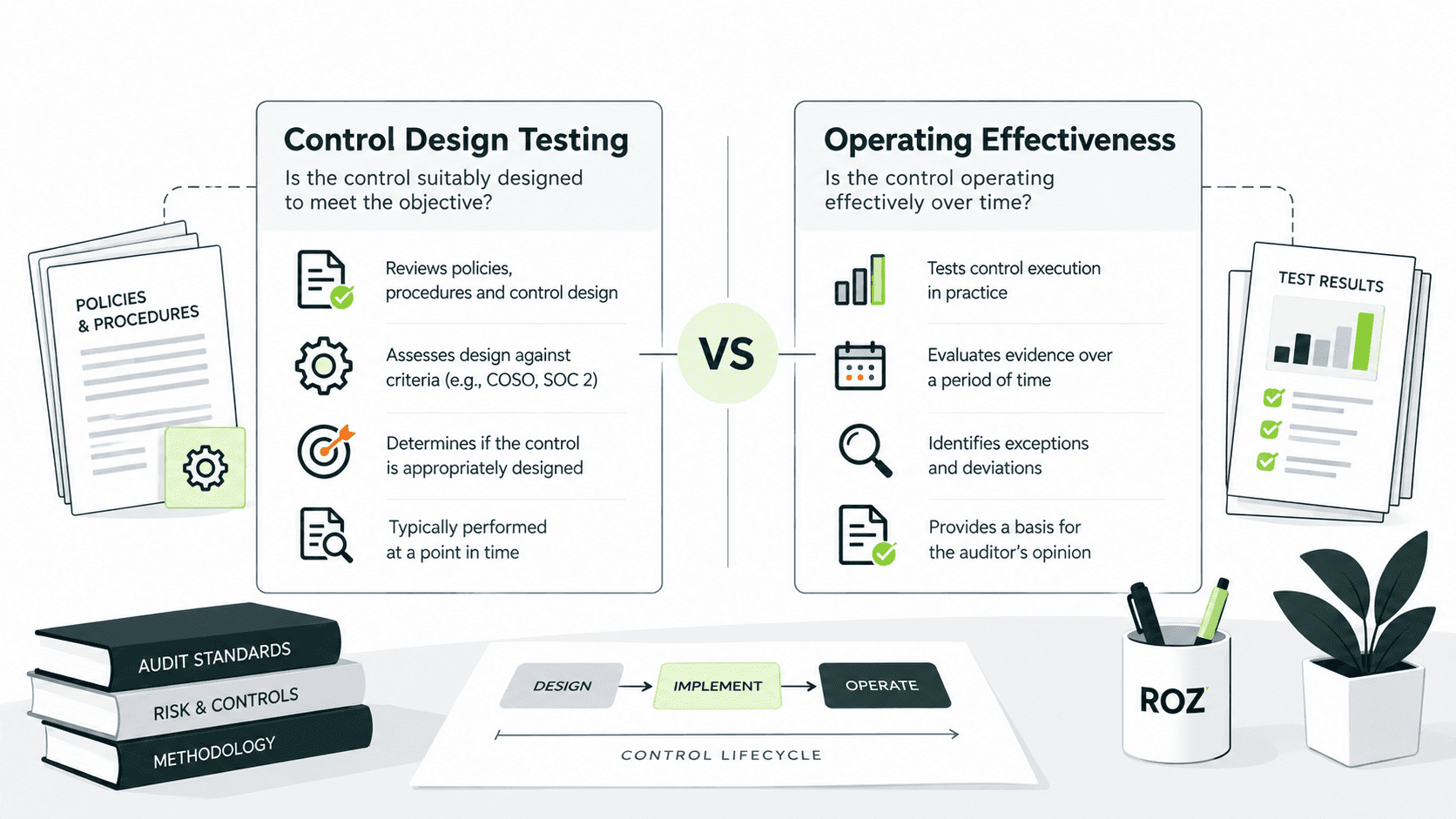
PCAOB AS 2201 discusses evaluating whether controls are suitably designed and implemented as part of internal control testing. A walkthrough combining these procedures is commonly used to assess whether a control is suitably designed. Design testing is point-in-time. Operating effectiveness testing looks across a period and requires sample-based evidence.
Three design questions guide this assessment:
Does the control address the specific risk it is mapped to?
Is the control structured in a way that could prevent, detect, or correct an error?
Is the control designed in a manner that could operate consistently if performed as described?
If the answer to any of these questions is "no" or "unclear," the control may have a design deficiency that requires remediation or further evaluation before you proceed to operating effectiveness testing.
How Control Design Testing Fits Into the Audit Process
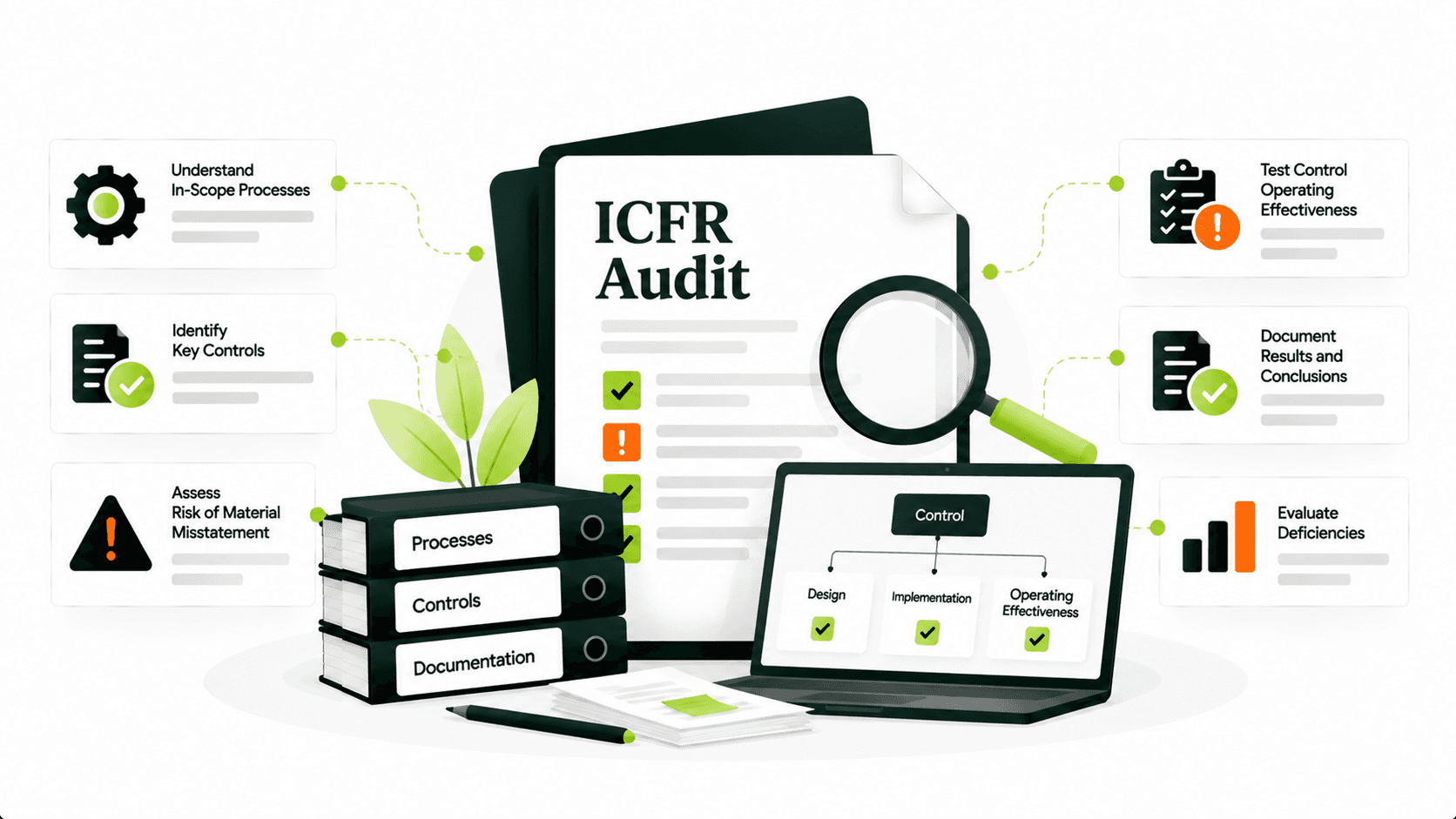
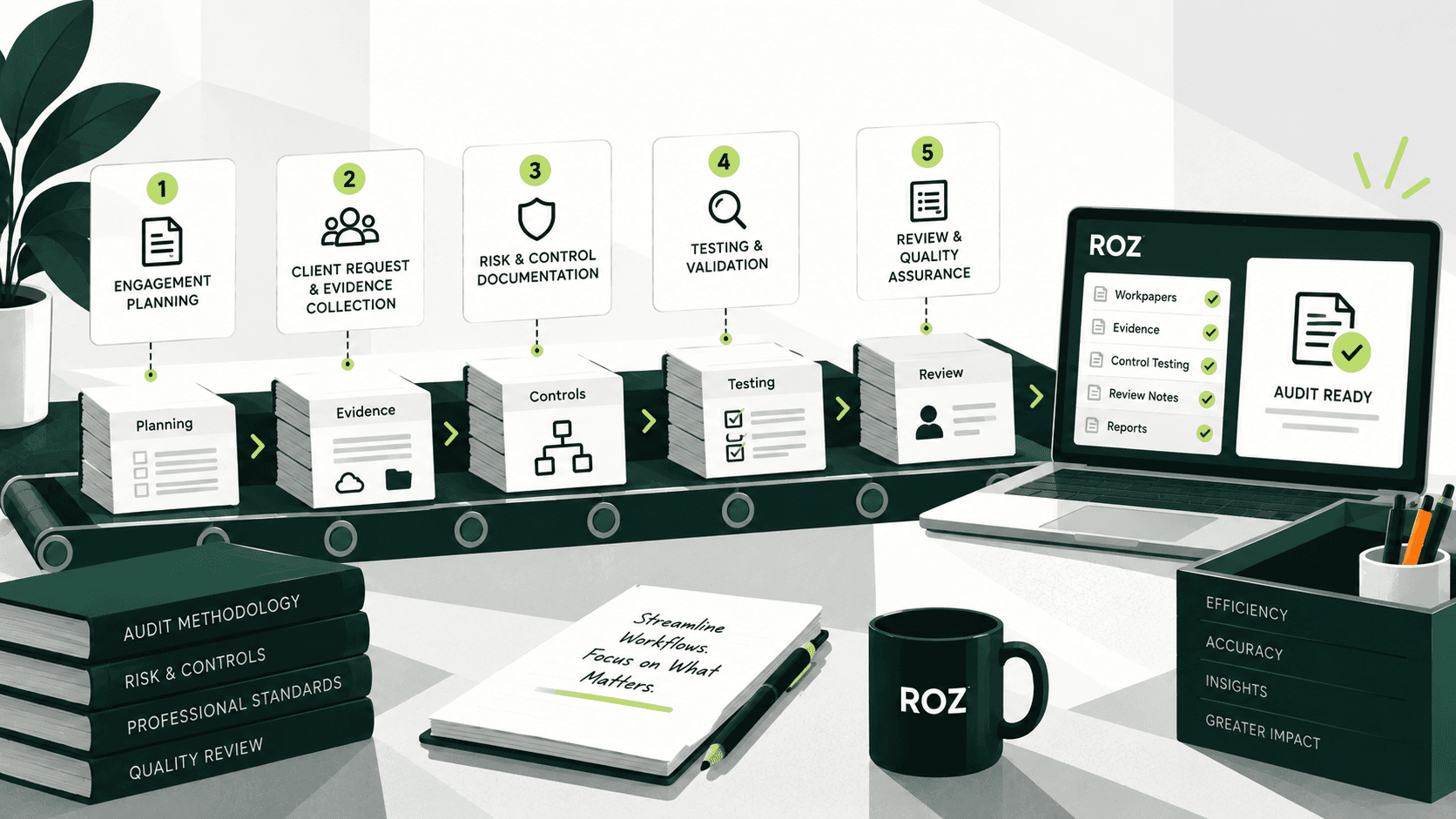
A standard audit workflow follows this sequence:
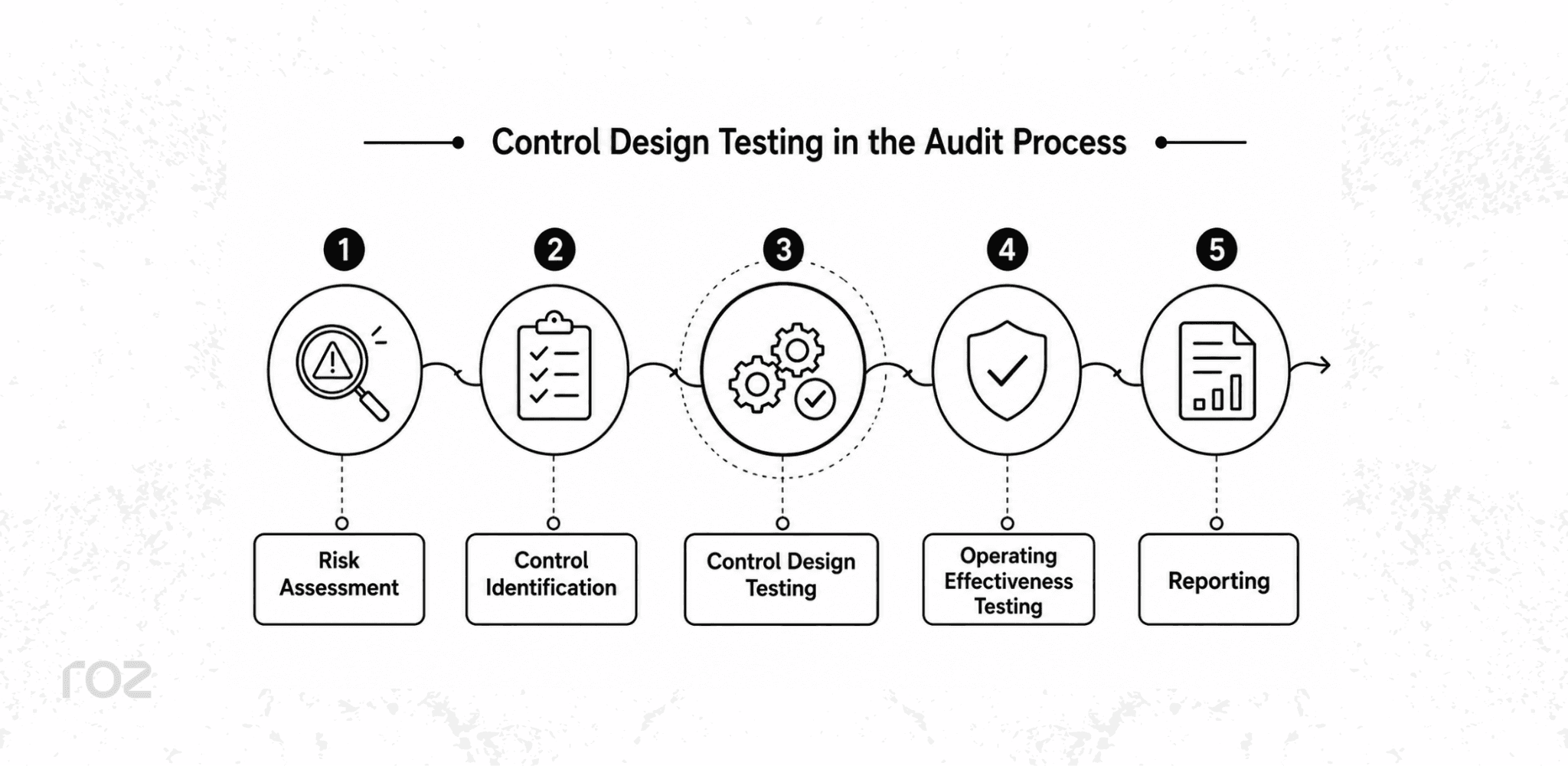
Design testing belongs to the planning and walkthrough phases, not the sampling phase. It occurs after the auditor has identified the risks and mapped controls to those risks and before any population-based evidence is gathered.
This sequencing matters because design and operation answer different questions:
Area | Control Design Testing | Operating Effectiveness Testing |
Purpose | Evaluate whether the control is structured correctly | Evaluate whether the control performed as designed |
Timing | Point in time | Across a defined period |
Evidence | Walkthroughs, inquiry, observation, one-transaction inspection | Samples, approval records, system logs |
Key Question | Could it work? | Did it work? |
When Performed | Planning and walkthrough phase | Testing phase |
A well-designed control that operates inconsistently may indicate an execution issue that can potentially be addressed through training, monitoring, or process improvements. Conversely, a control that operates consistently but contains design weaknesses may still fail to adequately mitigate the underlying risk. In these cases, the control design may need to be revised before auditors can place reliance on it.
What Makes a Control Well Designed?
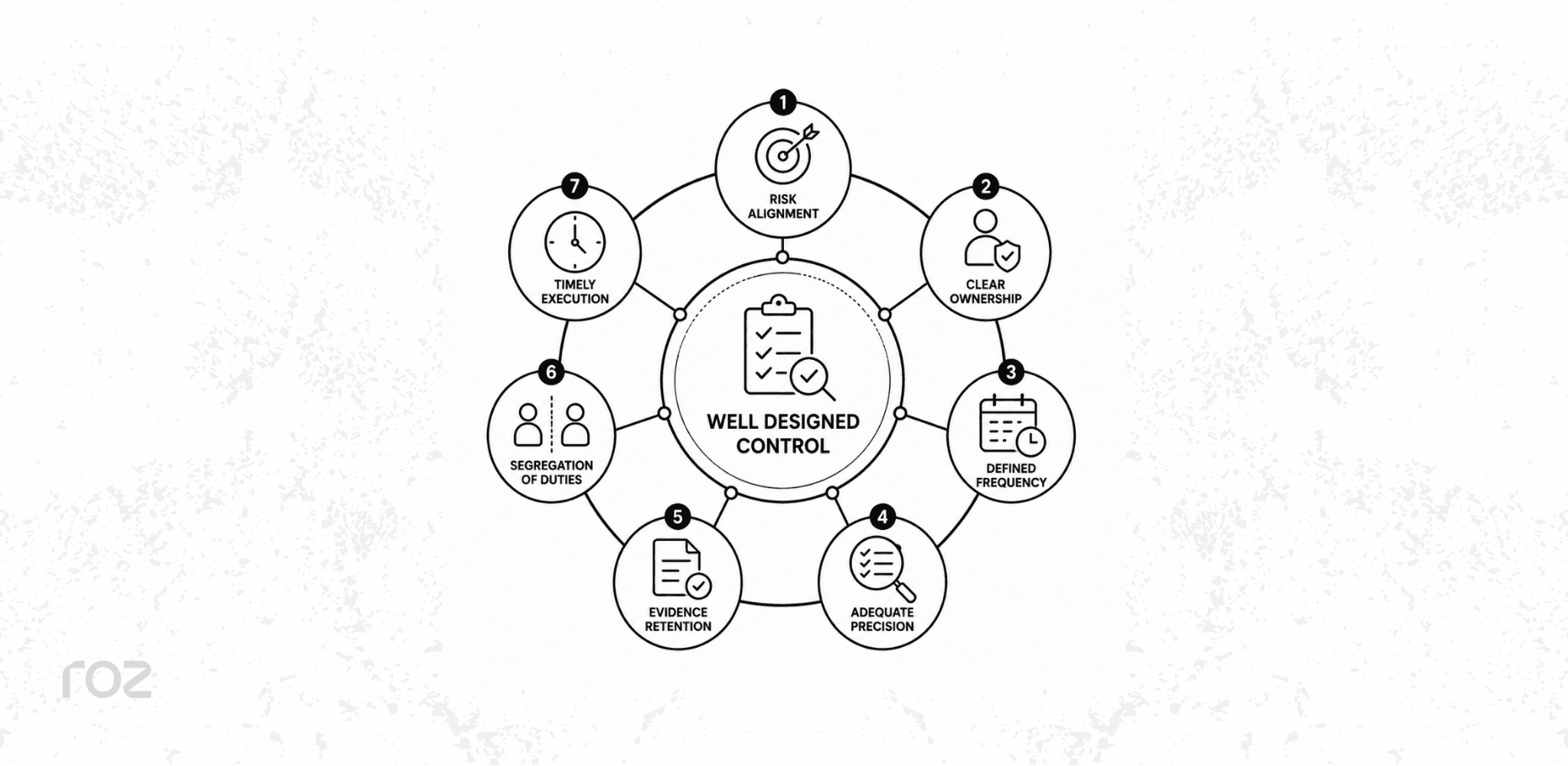
Auditors evaluate a control's design against several criteria. A control that meets these criteria may be suitable for operating effectiveness testing, while one that fails on one or more warrants remediation before testing continues.
Risk alignment: The control directly addresses a documented risk. Vague controls mapped to broad risk categories are difficult to assess and even harder to rely on.
Clear ownership: A named role or individual is accountable for performing the control. "The team" or "management" does not constitute ownership.
Defined frequency or trigger: The control occurs daily, weekly, monthly, quarterly, or upon a specific event. Controls described as occurring "as needed" cannot be tested for consistency.
Adequate precision: Review controls must be specific enough to identify exceptions. A manager reviewing a report without defined criteria may not provide sufficient precision to function as a control.
Evidence retention: The control produces evidence that can be inspected independently. Verbal approvals, undocumented reviews, and decisions recorded only in memory may not provide sufficient evidence for independent review and testing.
Appropriate segregation of duties: The person performing the control is not the same person whose work is being reviewed, where material risk depends on that separation.
Timely execution: The control occurs close enough to the risk event to prevent or detect the issue before it results in control failure or risk exposure.
Step-by-Step Control Design Testing Process
Step 1: Understand the risk
Determine what could go wrong and what the control seeks to mitigate or identify. If the risk is undocumented, the assessment will have no basis.
Step 2: Review the control description
Read the control as written. Assess whether the description is sufficiently clear that different people can consistently interpret and execute the control and if it contains the elements of the control owner, control frequency, control event trigger, and control evidence output.
Step 3: Identify the control objective
Describe in a single sentence what the control is aiming to achieve. If the objective cannot be articulated clearly, the control description may require further refinement.
Step 4: Evaluate design components
Consider control elements such as the risk it addresses, who the owner is, how often it is executed, and so on. Address each of the control design factors. Identify any missing control design factors.
Step 5: Perform a walkthrough
Follow a transaction through each process step. Follow the control through each process step from the event that triggered the control through control execution, approval, and evidence output.
Step 6: Inspect supporting documentation
Evaluate the control policies, process documentation, system configuration, and control ownership. Assess whether they are consistent with the control evidence and walkthrough results.
Step 7: Assess design effectiveness
Decide whether the control is designed appropriately to achieve the control objective. Justify your assessment. Document the basis for the conclusion and supporting evidence reviewed.
Step 8: Document findings
For each control you examine, note the control description, the review procedures taken, the evidence examined, and your conclusion. If you find a design deficiency, describe the deficiency and your suggested remediation.
Common Control Design Deficiencies Auditors Identify
Several control design deficiencies appear across many organizations:
Control Does Not Address the Risk: Some controls are documented but do not adequately address the risks they are intended to mitigate.
Control Activities Missing: A design does not contain a critical control step to prevent, detect, or correct the risk.
Poorly Defined Review Criteria: A control design requires a review, but no criteria, thresholds, or expectations are documented to specify what should be examined.
Inadequate Segregation of Duties: An employee performs control activities that should be performed by different individuals, resulting in an increased risk of either unintentional or unauthorized errors.
Incorrect Control Frequency: The control is designed to be performed infrequently relative to the risk.
Lack of Evidence Retention: The control design does not capture a mechanism to retain evidence that the control was performed.
Incomplete Population Coverage: Control design fails to include all transactions, systems, or activities that the control is intended to cover.
Weak Approval Processes: Controls may be performed without approval, approval may occur after the fact, or it may be granted by an individual who lacks the appropriate authority or understanding of the control objective.
Best Practices for More Effective Control Design Testing
Start With Risks, Not Controls: Start with the risk that the organization is attempting to mitigate. After understanding the risk, analyze whether the control can mitigate this risk. This makes sure that you are understanding the control in the context of risk.
Focus on Control Precision: Control descriptions should be sufficiently detailed and precise to support evaluation. Ensure the control describes who performs it, what is evaluated, and how outliers and breakdowns are found and managed.
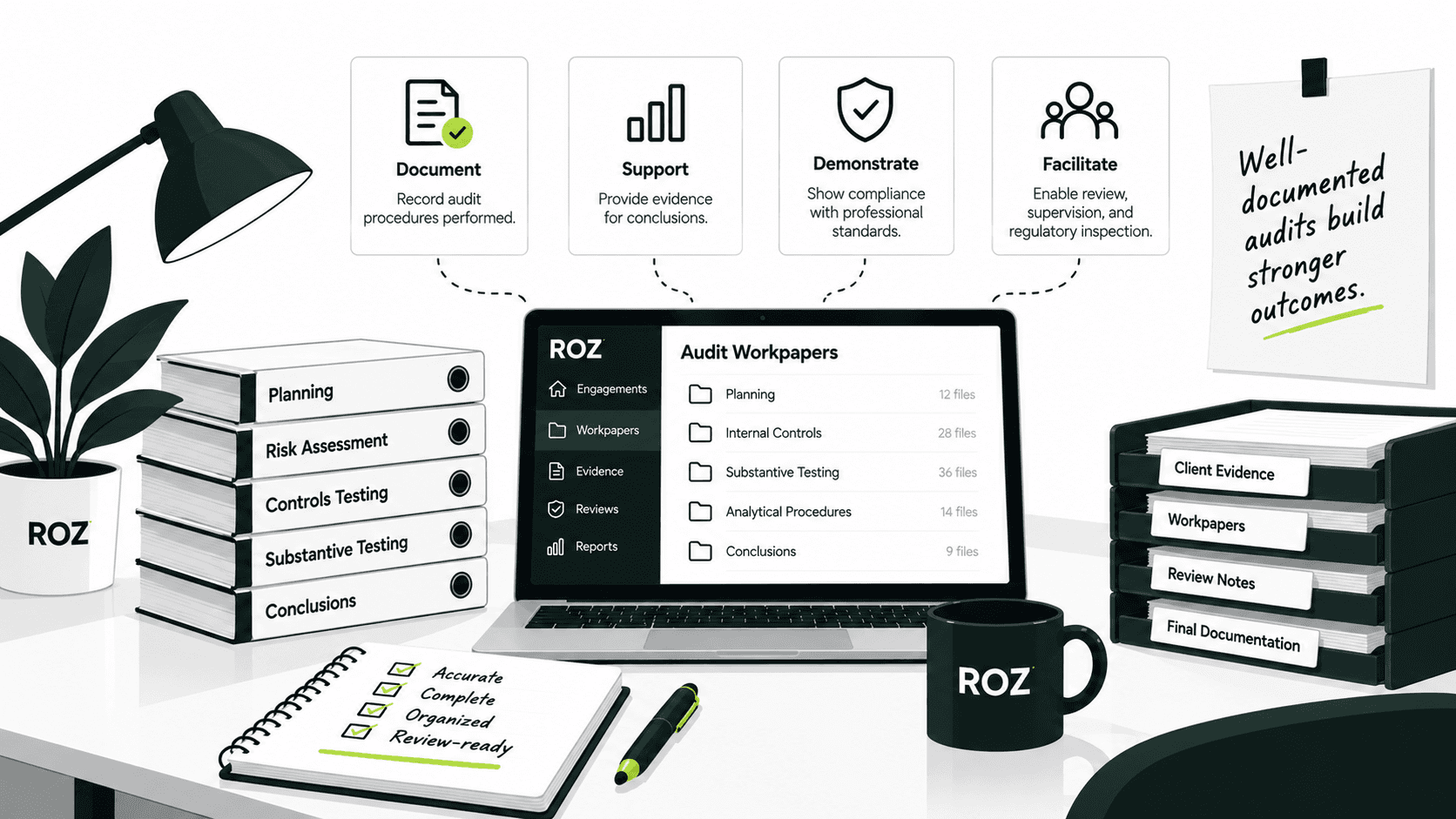
Use Standardized Workpapers: The quality of the audit improves, the review of the audit is enhanced, and assessments of design are easily comparable across different engagements when documentation is standardized.
Document Professional Judgment: When you analyze design effectiveness, the rationale and basis for your conclusion must be documented to support the assessment and any identified deficiencies.
Identify Deficiencies Early: If you find design gaps before the operational effectiveness testing, you can reduce the likelihood of control deficiencies progressing into later testing stages.
Maintain Strong Audit Trails: Your design testing should ensure that your conclusions are supported by evidence. Control design will be evaluated in light of policies, procedures, and evidence that will be collected in the course of the assessment.
How Roz Supports Control Design Testing
Assessing whether a control is properly designed requires auditors to review policies, procedures, supporting documentation, and control descriptions before operating effectiveness testing begins. Managing that documentation manually can slow engagements and make it difficult to identify design gaps early.
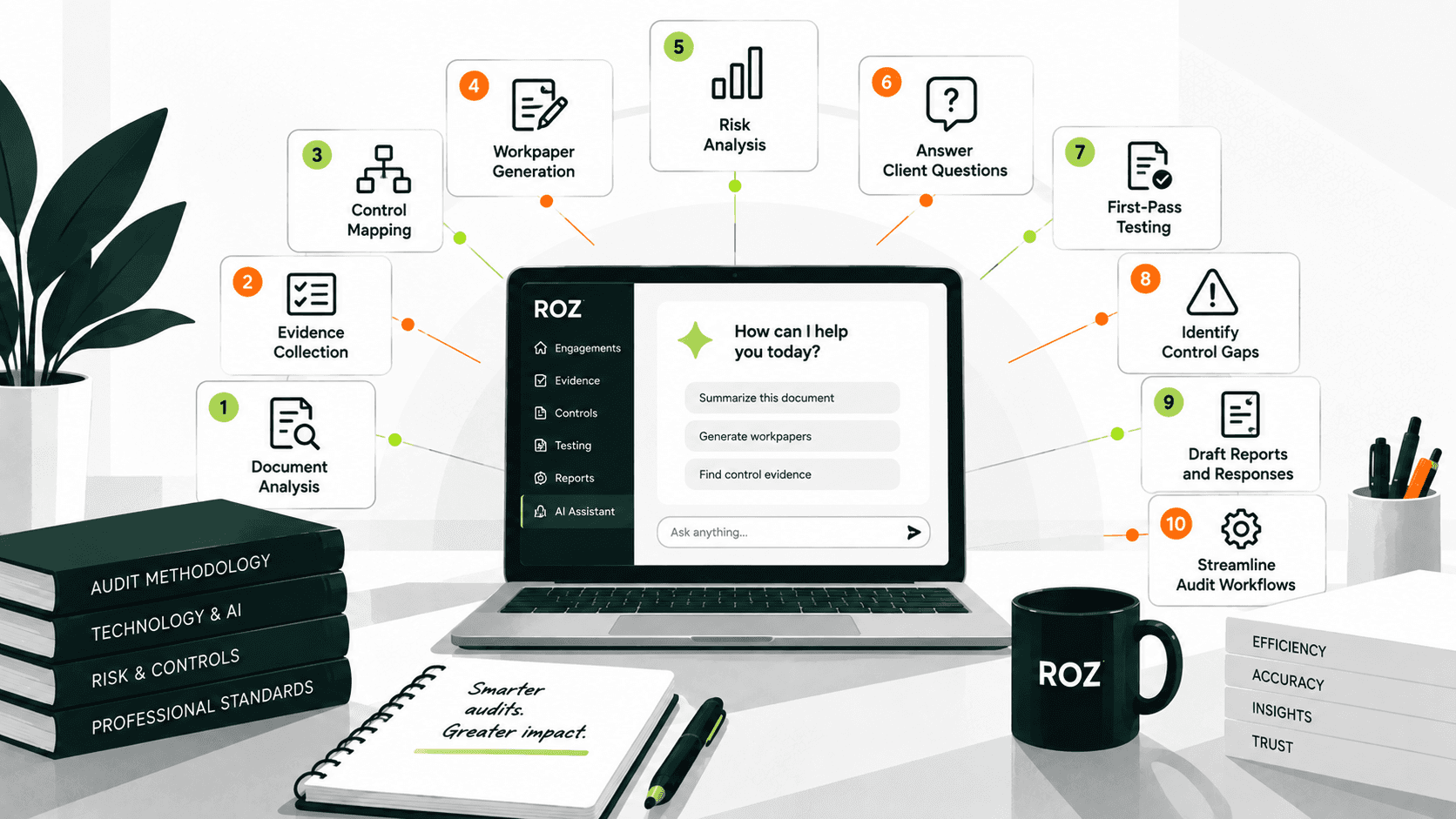
Roz is an AI platform built specifically for external audit and advisory firms. It helps teams accelerate evidence collection, perform readiness assessments, and execute control testing across sampled or full populations, with human-in-the-loop validation keeping auditor judgment at the center of every engagement.
For control design testing, Roz can help firms:
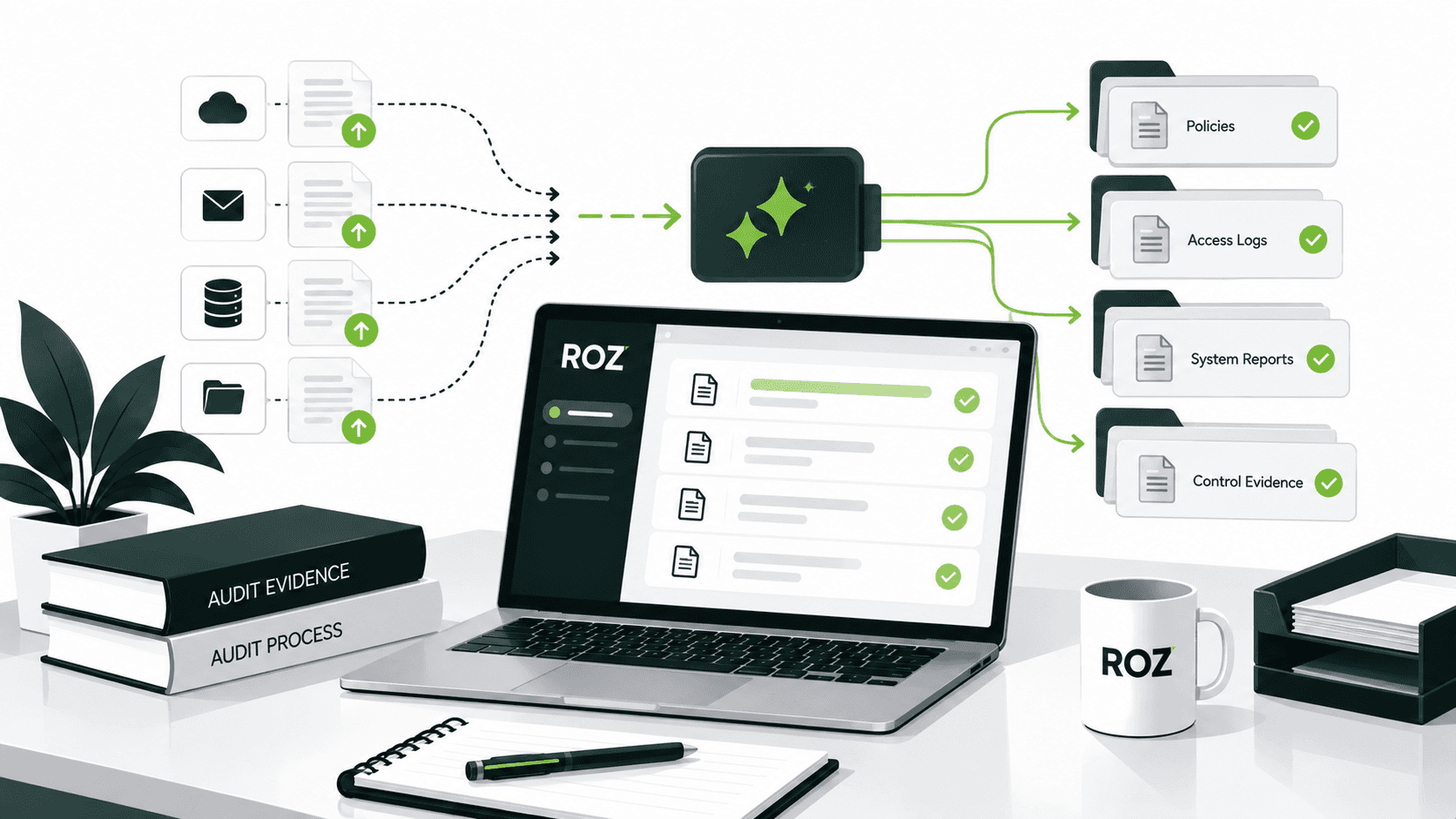
Organize policies, procedures, and supporting evidence in client-specific workspaces
Surface potential documentation gaps during readiness assessments
Extract controls from uploaded documentation to support testing workflows
Generate AI-assisted first-pass workpapers from firm-approved templates
Maintain traceability through source-linked evidence and audit trails
Roz supports control design testing by helping teams structure documentation and first-pass analysis more efficiently. Auditor review, professional judgment, and final conclusions remain essential to the engagement process.
Conclusion
Operating effectiveness testing relies on the quality of the work that comes before it. A well-designed control gives the operating test a clear objective, a defined population, and a reliable evidence path. A poorly designed control means the operating test simply documents a problem that was present from the start.
Control design testing is not a preliminary step to get through quickly; it is a critical stage in establishing the foundation for effective control testing and audit assurance. Completing it carefully reduces rework, supports audit quality, and gives management the information it needs to close gaps before they become findings.
Organizations evaluating AI-assisted audit workflows may explore platforms like Roz to improve documentation management and support control testing activities.
Frequently Asked Questions
What is the difference between design effectiveness and operating effectiveness?
Design effectiveness evaluates whether a control is capable of addressing a risk if it operates as intended. Operating effectiveness evaluates whether the control actually operated as designed over a period of time.
How do auditors test control design?
Auditors typically use inquiry, observation, inspection of documentation, and walkthroughs to determine whether a control is suitably designed to address the identified risk.
What evidence is needed for control design testing?
When testing control design, evidence can be control descriptions, policies, process documentation, system configurations, and the results of the walkthroughs. This evidence supports the auditor's assessment of design effectiveness.
Is a walkthrough required for control design testing?
A walkthrough is not required, but auditors frequently rely on walkthroughs when testing control design, as it helps them verify that the control functions as designed and addresses the associated risk.
How does control design testing support SOC 2 and SOX audits?
Control design testing helps identify design deficiencies before operating effectiveness testing begins. Addressing these issues early can reduce remediation effort, improve testing efficiency, and strengthen the overall effectiveness of the audit process.