Management closes a finding. A policy gets updated, a system configuration changes, or a new reviewer is assigned. But closing a finding in a tracker and actually addressing the underlying control problem are two different things. The auditor's role is to determine whether the identified issue was actually addressed.
That distinction drives the remediation testing process:
Management action completed → Remediation implemented → Control tested → Auditor conclusion
Remediation testing is a testing activity focused on a previously identified control issue. It is not simply an administrative box to check once management marks an action as complete. In this article, I will cover what remediation testing means, how auditors perform it, what evidence supports a conclusion, and how AI tools like Roz can reduce manual effort without replacing the auditor's judgment.
What Is Remediation Testing?
Remediation testing is the auditor's process for determining whether a corrective action has addressed a previously identified control issue, rather than simply confirming that management completed an action plan.
A few related terms are often used interchangeably, so it helps to separate them.
Remediation testing vs. remediation: Management performs the remediation. The auditor tests whether the actions taken address the identified control issue.
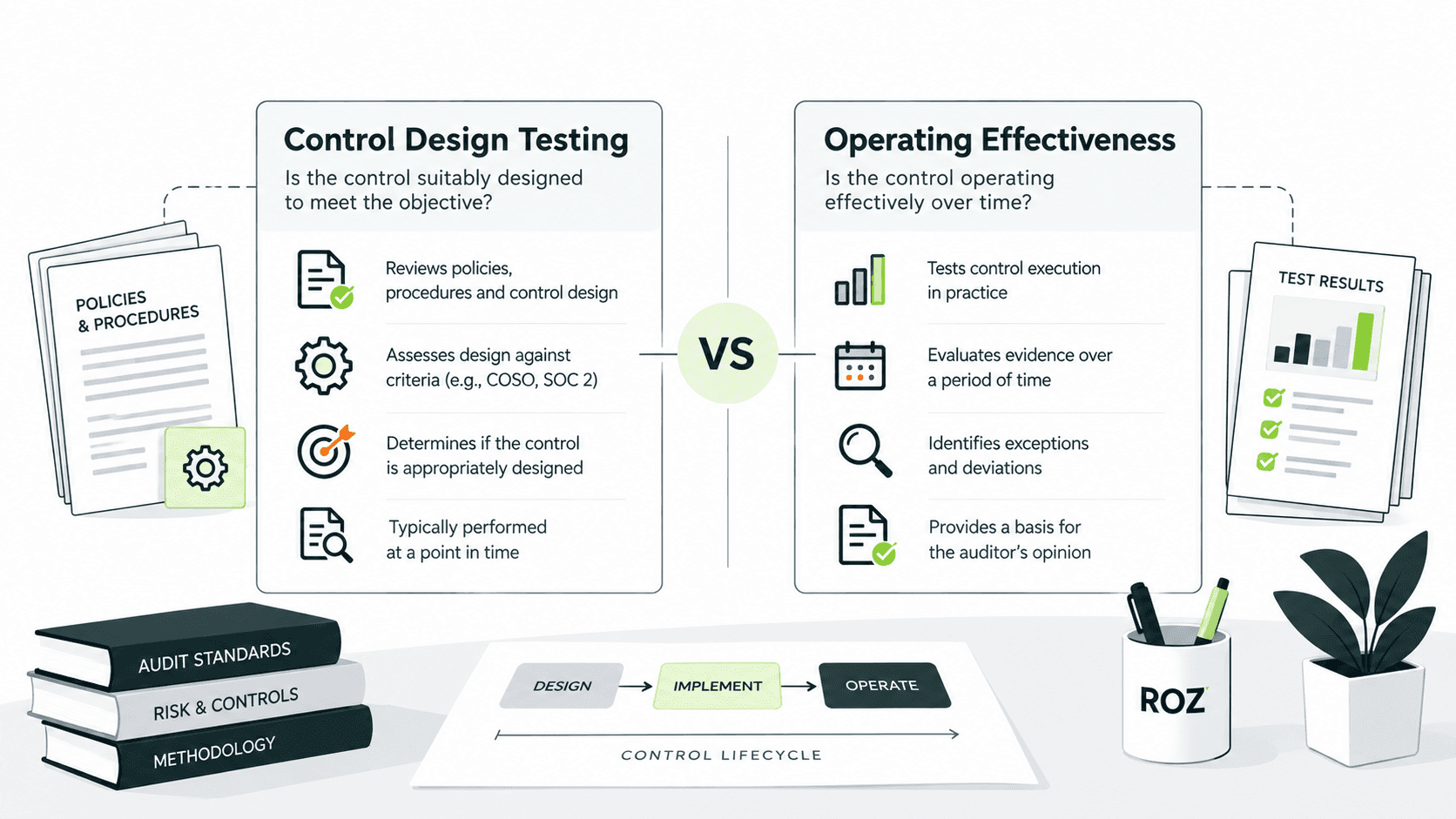
Remediation testing vs. control testing: Control testing evaluates whether a control is suitably designed and, where applicable, operating effectively. Remediation testing focuses on whether a previously identified deficiency has been addressed after corrective action.
Remediation testing vs. follow-up: In internal audit environments, these activities can overlap. The IIA addresses follow-up and confirmation of management’s implementation of action plans under Standard 15.2. This article focuses on the testing work used to evaluate remediation rather than the broader follow-up process.
How Auditors Perform Remediation Testing

This is the core of the process. Each step builds on the one before it, and skipping a step can lead to an unsupported conclusion.
1. Revisit the original finding: Start with what failed, not simply with what management says they fixed. Review the original condition, risk, affected control, evidence, severity, and root cause. Testing only against the remediation statement instead of the original deficiency can cause the auditor to miss whether the underlying issue was actually addressed.
2. Evaluate the root cause: Ask why the control failed in the first place. Remediation that addresses only the symptom, such as a one-time access cleanup rather than a change to the provisioning process, may leave the underlying risk unaddressed.
3. Understand what changed: Identify whether the remediation changed the control design, process, system configuration, access, personnel responsibilities, documentation, or monitoring.
4. Determine the remediation effective date: Establish when the remediated control became operational. Evidence generated before that date may help establish the original condition but does not demonstrate how the remediated control operated.
5. Reassess control design: Determine whether the new or modified control addresses the original risk. A control can be implemented and still be poorly designed or insufficient to address the original deficiency.
6. Define the testing objective: A practical way to frame the objective is to connect the original deficiency, associated risk, and remediation. For example, determine whether the revised access-review control operates as intended and addresses the identified risk during the post-remediation period.
7. Identify the post-remediation population: Isolate the transactions, users, approvals, or reviews that occurred after the remediation's effective date. Mixing pre- and post-remediation instances can make it difficult to determine whether the remediation operated as intended.
8. Select an appropriate testing method: Depending on the control and audit objective, testing may include inspection, reperformance, observation, inquiry, data analysis, configuration review, or sample testing. For PCAOB audits, inquiry alone does not provide sufficient evidence to support a conclusion about control effectiveness.
9. Test operating effectiveness: Evaluate whether the remediated control operated as intended, covered the relevant population, was performed by the appropriate person or system, occurred at the required frequency, and generated appropriate evidence.
10. Investigate exceptions: Not every exception has the same significance. Determine whether it represents an isolated deviation, recurring failure, incomplete remediation, a design issue, insufficient evidence, or a separate control issue.
11. Reach and document the conclusion: Determine what the testing evidence supports and whether the original deficiency has been addressed for the relevant audit objective. Document any unresolved issues, exceptions, limitations, or additional testing or remediation needed.
What Evidence Do Auditors Need for Remediation Testing?

Evidence for remediation testing can be grouped into three practical categories, each answering a different question.
Implementation evidence shows that the remediation was put in place. Examples include revised policies, approved procedures, system configuration changes, access changes, workflow changes, and training records.
Operating evidence shows the remediated control actually ran. Examples include completed reviews, approval records, system logs, reconciliations, exception reports, tickets, and transaction-level evidence.
Evidence supporting operating effectiveness helps the auditor determine whether the remediated control operated as intended during the relevant period. This requires more than confirming that management implemented a change; the auditor needs appropriate evidence from actual control operation.
Evidence sufficiency checklist
Question | What to verify |
Is it post-remediation? | Evidence was generated after the effective date |
Is it relevant? | It relates directly to the control objective |
Is the population appropriate? | It represents the period being tested |
Is the evidence reliable? | You understand the source and generation process |
Is the evidence complete? | The relevant population and operating instances are appropriately represented |
Is the result reproducible? | Another reviewer can follow the evidence, procedures, and reasoning supporting the conclusion |
7 Practical Tricks for Better Remediation Testing
Trick 1: Test the original failure path
Testing should determine whether the condition that caused the original control failure has been addressed and whether that failure can still occur. Testing should not be considered complete solely because the evidence of the control has been found.
Trick 2: Separate "implemented" from "effective"
Although a system or a policy may have been changed to indicate that remediation has been implemented, that does not necessarily mean the control is operating effectively.
Trick 3: Establish the effective date before testing
Establish the date on which the remediated control became operational, then define the testing population based on activity occurring after that date. Evidence from before the remediation effective date may help establish the original condition but generally does not demonstrate how the remediated control operated.
Trick 4: Look for gaps in remediation coverage
When gaps are identified in remediation coverage, investigate why they occurred and whether they affect the control being tested. Where the control operates across multiple systems, locations, or environments, consider whether the testing scope appropriately covers the relevant population and operating conditions. Confirm that the remediated control operates as designed within the scope being tested.
Trick 5: Validate the data behind the control
Evidence supporting a control may take the form of management reports, dashboards, and exception reports. The auditor evaluates whether the evidence is adequate before using it to support the control.
Trick 6: Define closure criteria before testing
Before reviewing a remediation action, identify the criteria and evidence that would demonstrate that the remediated control addresses the original deficiency and operates as intended.”
Trick 7: Document the reasoning, not just the result
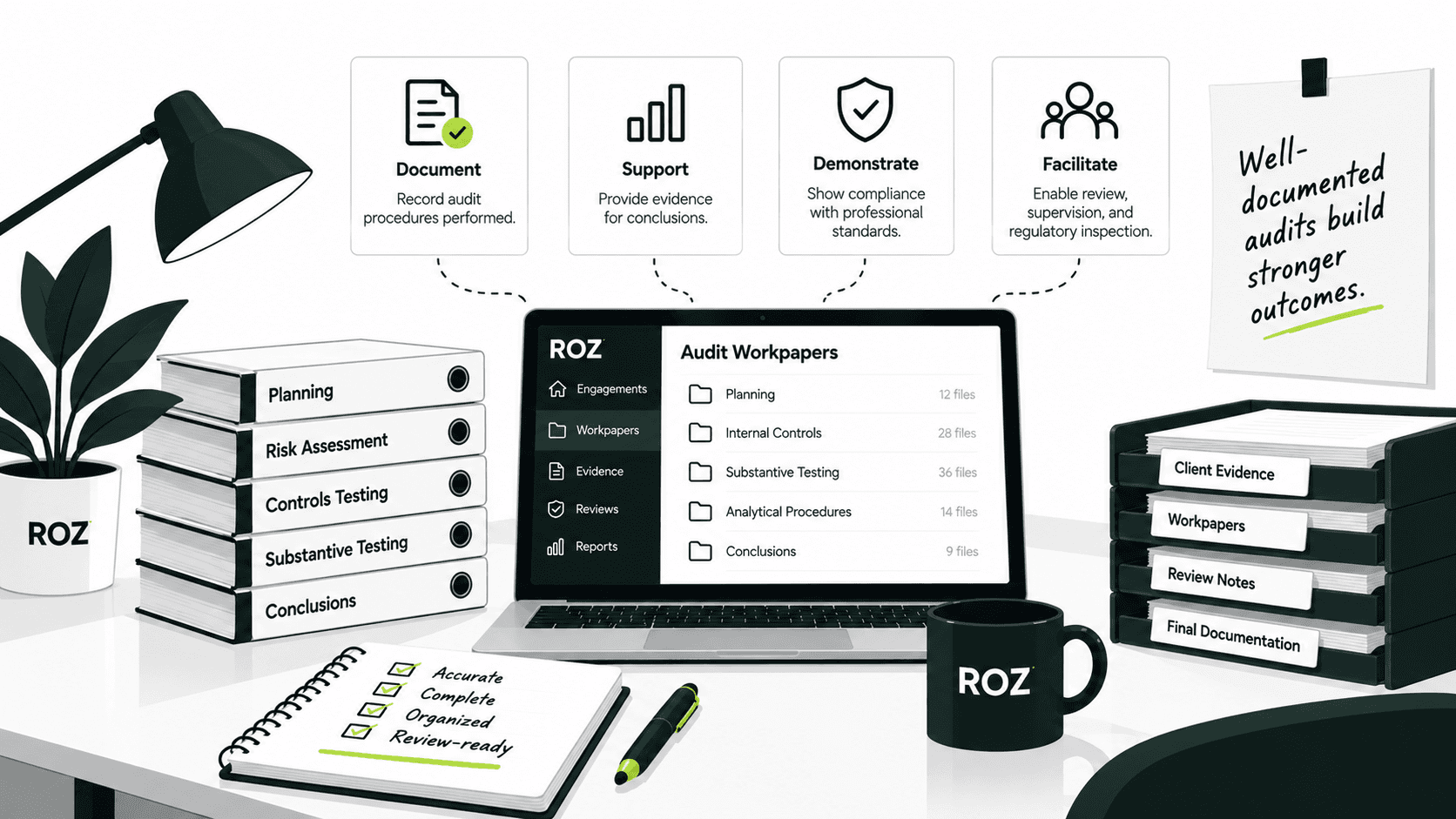
A workpaper should describe the control or remediation, state what was tested, give the outcome, and state the conclusion reached, as well as justify the conclusion by stating the evidence relied upon to reach the conclusion.
How Long Should Auditors Test a Remediated Control
There are no absolute rules, such as the 30/60/90-day rules, that apply to the testing of remediated controls. The duration of testing should align with the control, the risk at issue, and the audit objective.
Some factors that should be evaluated include:
Control frequency: How often the control operates and how many operating instances are available for testing
Risk level: The significance of the original deficiency and the risk associated with control failure
Period of reliance: The period for which the auditor needs to assess whether the control operated effectively
Nature of the deficiency: Whether the issue involved control design, execution, evidence, population completeness, or another factor
Available operating instances: Whether enough post-remediation instances exist to perform meaningful testing
Expected deviation rate: What is the expected level of exceptions given the control and the results of previous evaluations?
Evidence reliability: Is the available evidence sufficient and appropriate to achieve the testing objective?
For example, an access-review control may generate many post-remediation instances during a short testing period. A control that operates quarterly may generate fewer instances, meaning the auditor may need a longer period to obtain sufficient evidence.
A more appropriate question is, “Has the control been in operation for an adequate period of time to generate a sufficiently large amount of appropriate evidence?”
For SOX/ICFR procedures, PCAOB AS 2201 focuses on obtaining sufficient evidence to assess the design and operating effectiveness of the control. The appropriate testing period depends on factors such as the control, risk, timing, and evidence available rather than a fixed minimum number of days
Common Remediation Testing Mistakes
Closing the finding because management marked it complete.
Testing the new policy instead of the control itself.
Relying on pre-remediation evidence.
Relying on management inquiry alone when stronger evidence is needed.
Ignoring the root cause of the original deficiency.
Using a testing population that does not adequately address the audit objective.
Treating limited successful samples as proof of remediation.
Failing to document exceptions.
Losing the connection between the remediation and the original risk.
How to avoid these mistakes: Build the test around the original finding and root cause, not just the remediation summary provided by management. Define closure criteria before reviewing evidence, test the post-remediation population, and document exceptions even when they appear minor.
Remediation Testing Example: Access Review Deficiency

Original finding: Access reviews were not consistently completed for privileged users.
Root cause: Review ownership and escalation procedures were unclear.
Remediation: The organization introduced a defined review owner, an automated escalation workflow, and documented review criteria.
Auditor's remediation test:
Confirm the remediation was implemented.
Identify the effective date of the revised process.
Reassess whether the revised control design addresses the original deficiency.
Obtain the post-remediation privileged-user population.
Select appropriate review instances based on the control's frequency, risk, and audit objective.
Verify that required access reviews were performed.
Inspect evidence supporting the reviews, including reviewer approval, review criteria, and documented exceptions.
Check whether identified exceptions were appropriately resolved or escalated.
Evaluate whether the post-remediation results indicate that the control is operating as intended.
Assess whether the revised process addresses the original deficiency.
Document the testing procedures, evidence, exceptions, and conclusion.
This sequence applies the broader remediation testing workflow to a concrete access review scenario: finding → root cause → remediation → evidence → retest → exceptions → conclusion.
How AI Can Support Remediation Testing
AI tools can reduce the manual effort involved in remediation testing without replacing the auditor’s judgment. Practical support includes:
Centralizing the original finding and remediation details.
Mapping evidence to the remediated control.
Helping identify and organize the relevant post-remediation population.
Generating a first-pass testing procedure.
Surfacing missing or insufficient evidence.
Flagging potential exceptions for auditor review.
Maintaining an audit trail.
Producing workpaper-ready documentation.
How Roz Supports Remediation Testing
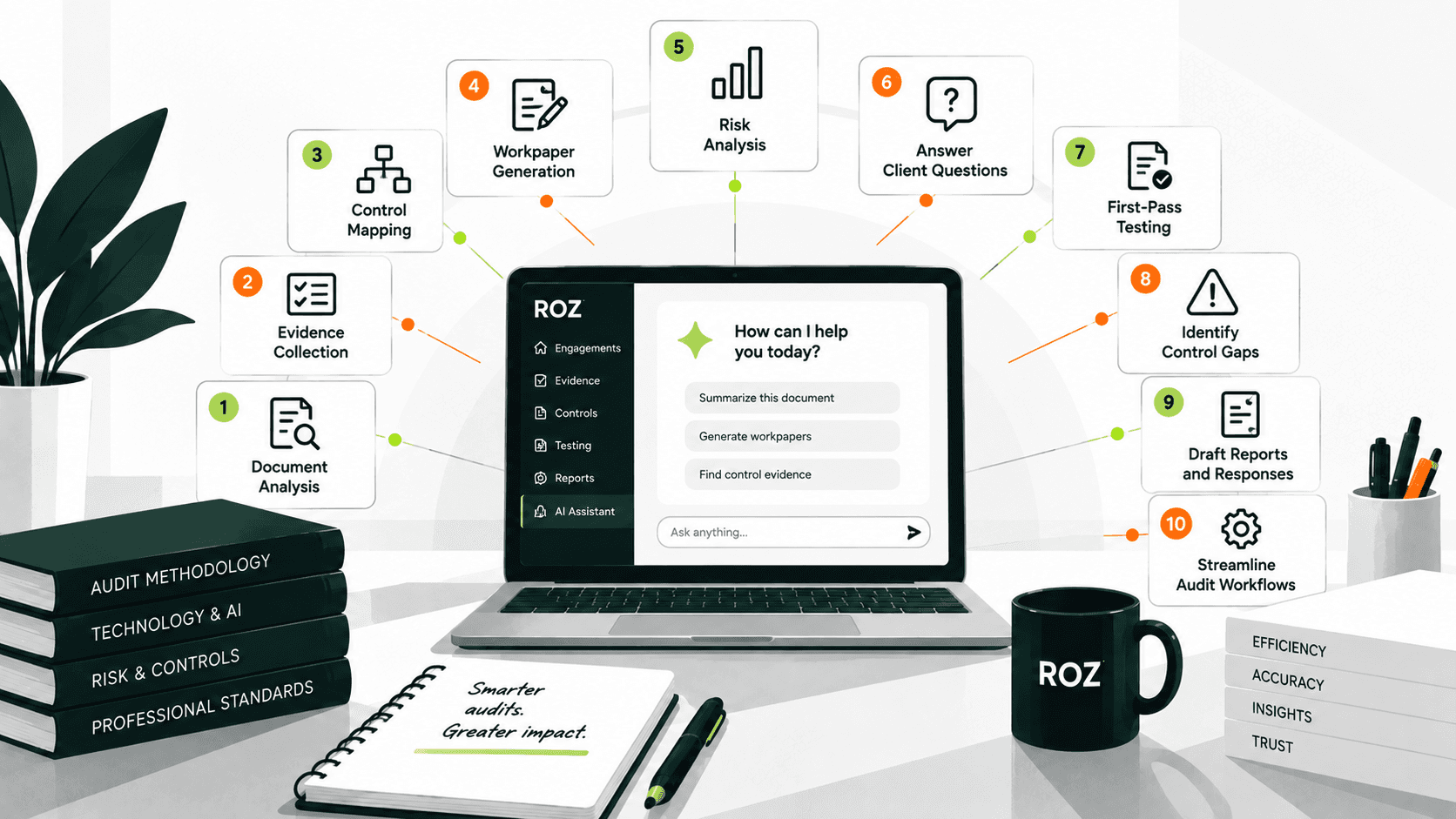
Roz is an AI-native audit fieldwork and control testing platform built for auditors, risk advisory firms, and internal audit teams. For remediation testing specifically, Roz helps auditors move from evidence to a first-pass test result: it connects evidence to the relevant control, runs defined or AI-suggested attribute checks against that evidence, and surfaces potential exceptions for review.
Each result can be traced back to the underlying evidence through quote highlighting, so the auditor can verify the source rather than accept an unexplained result. The auditor still reviews the result, reruns tests where needed, and makes the final judgment.
Conclusion
Remediation testing determines whether the actions taken by management have addressed a previously identified control deficiency and whether the remediated control provides sufficient evidence to support the relevant audit conclusion.
A sound remediation test connects the original finding to its root cause, the corrective action, the effective date, the post-remediation population, the testing procedures, and the resulting evidence. Auditors then evaluate exceptions and determine what the evidence supports.
The key distinction is simple: management is responsible for remediation, while the auditor is responsible for independently evaluating the evidence and reaching the appropriate conclusion. Remediation testing is most useful when that connection remains clear from the original finding through the final testing result.
Frequently Asked Questions
What is the difference between remediation and retesting?
Remediation refers to the actions taken by management to correct control deficiencies. Retesting is the work performed by the auditor to evaluate the correction of control deficiencies.
What is remediation testing in SOX audits?
In SOX/ICFR audits, remediation testing checks whether a new or modified control is properly designed and operating effectively after a deficiency was identified. The control must operate for a sufficient period to provide appropriate testing evidence.
What happens when remediation only partially fixes a control deficiency?
When remediation addresses only part of a control deficiency, the auditor should evaluate what portion of the original issue has been addressed and what remains unresolved. The auditor should document the testing performed, evidence reviewed, exceptions identified, and the basis for the resulting conclusion. Completing the listed corrective actions does not by itself establish that the underlying deficiency has been fully remediated.
How long should a remediated control operate before testing?
There are no predetermined periods. The appropriate period depends on the risk associated with the control, the period for which the control is intended to operate, the nature and frequency of the control, and the evidence available for testing.