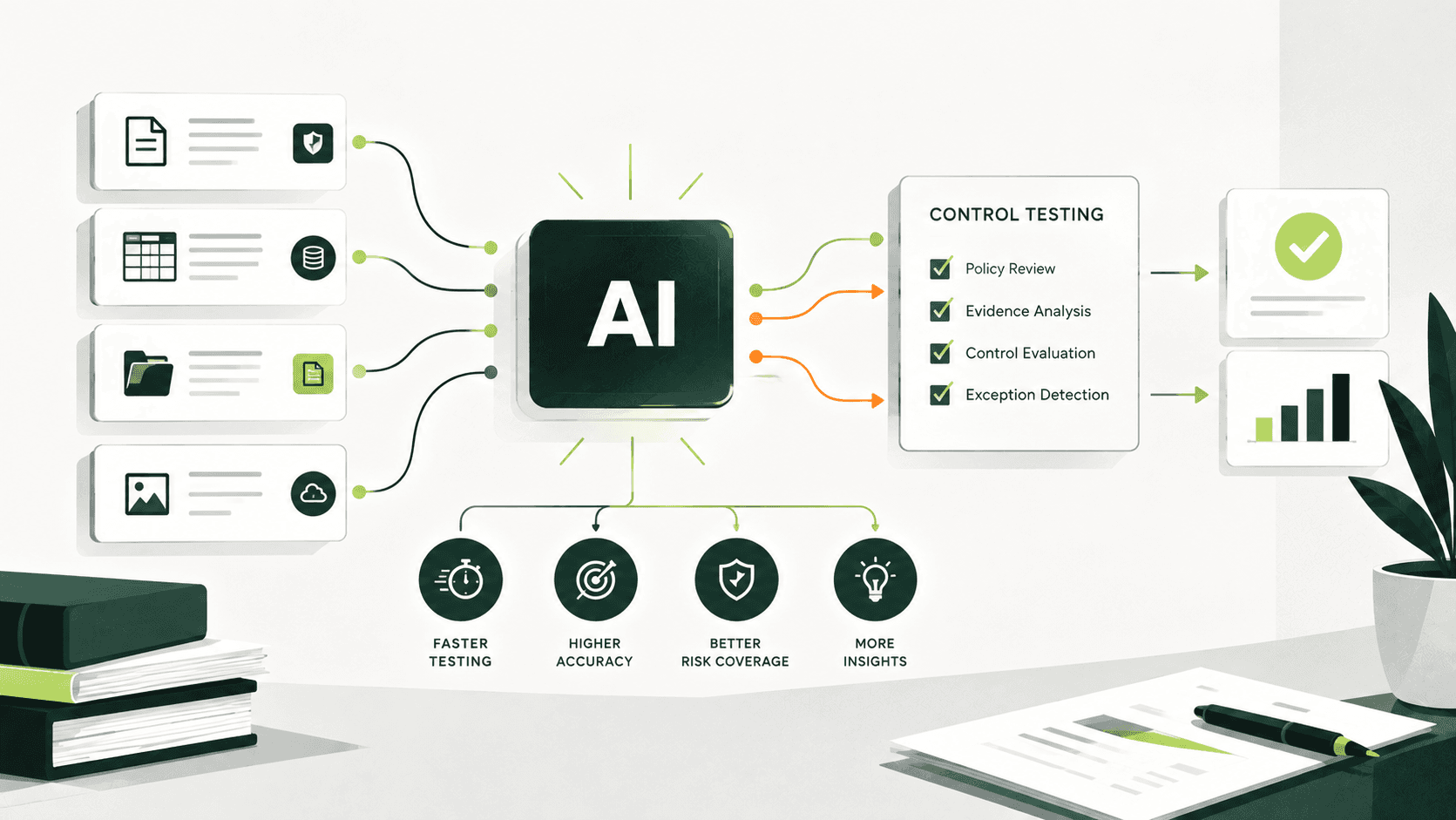
External audits have never been straightforward. Transaction volumes are growing, regulatory requirements are expanding, and documentation workloads continue to increase, all while firms face real pressure on capacity and turnaround times. AI is increasingly part of how audit teams are responding to that pressure.
In this article, I will explain what AI in external audit actually means, where it fits across the audit lifecycle, what it can and cannot do, and what responsible adoption looks like in practice.
What Is AI in External Audit?
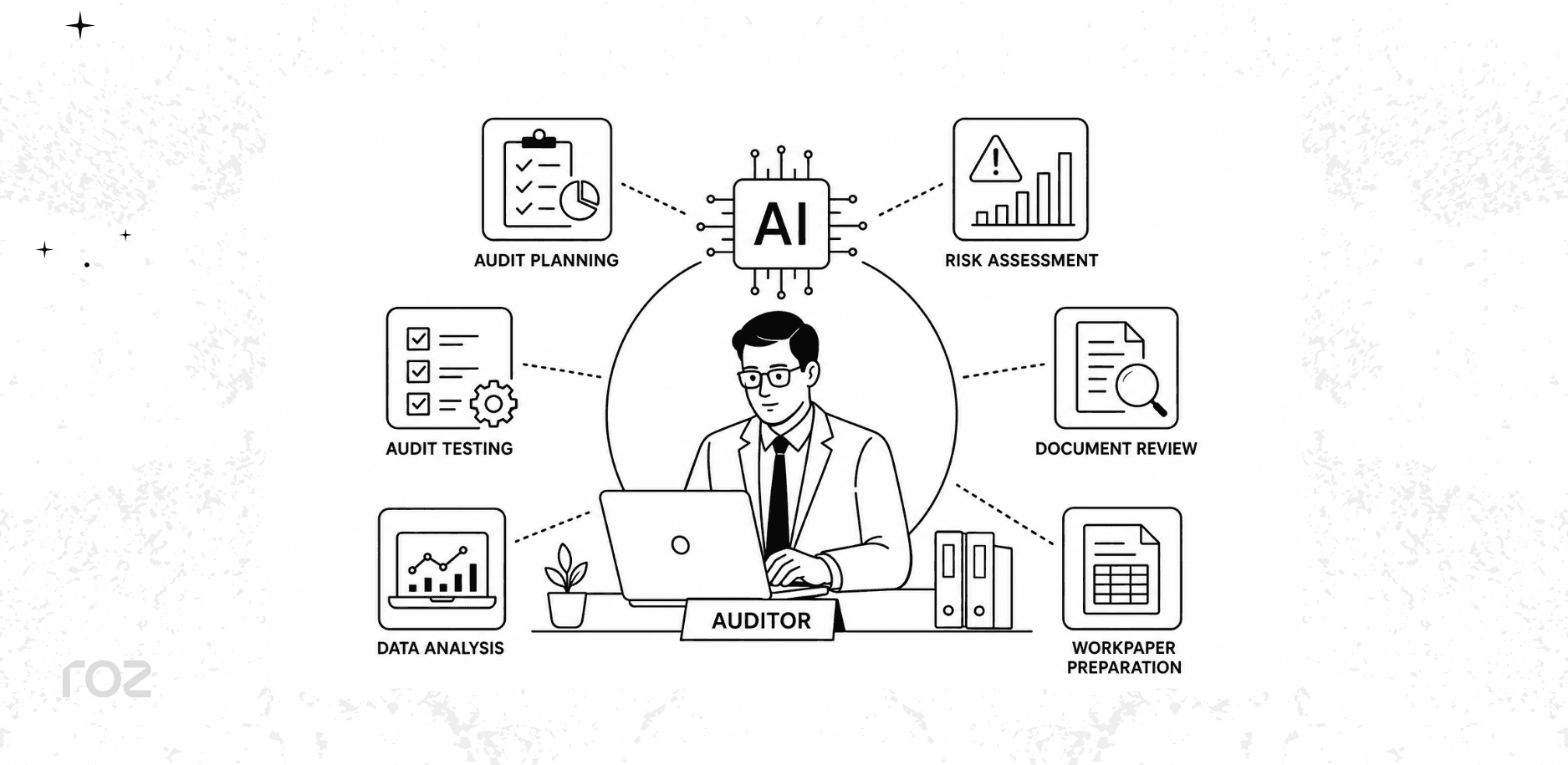
AI in external audit refers to the use of artificial intelligence technologies to support auditors in planning, executing, documenting, and reviewing audit engagements more efficiently. This is distinct from AI assurance, which focuses on the assessment of AI systems to ensure fairness or regulatory compliance. That is a separate field.
When it comes to external audits, the two most commonly used AI types are:
Generative AI supports the drafting of workpapers, planning memos, and summaries provided that they are based on known structured data or client documentation.
Machine learning best lends itself to the detection of anomalies and the identification of unusual patterns in transactions and helps in assessing the level of risk.
Natural Language Processing (NLP) helps in the extraction of information from contracts, board minutes, and policies.
AI in external audit is a decision-support tool. It assists in flagging exceptions and preparing draft outputs. The auditor assesses that information as audit evidence, exercises professional judgment, and sustains every conclusion in the audit file. That distinction doesn't change with any degree of AI involvement.
Why External Auditors Are Adopting AI
There are practical reasons behind the adoption of AI in external audits. According to a 2024 KPMG report, 82% of respondents believe that their auditors are either ahead or at the same level in AI adoption as their companies for financial analysis. This reflects the growing expectation that audit teams use AI to respond to increasing workload and tighter engagement timelines.
The primary reasons for this pressure include:
Transaction volume growth: Organizations create larger and more complex datasets than traditional manual approach-based reviews can efficiently analyze. AI allows auditors to understand larger transaction populations and find items that require further analysis.
Regulatory complexity: Financial statement audits and assurance engagements necessitate consistent, well-documented procedures to satisfy relevant auditing standards and requirements.
Documentation workloads: Audit files have become more complex, and manual workpaper preparation is time-consuming for senior staff.
Talent constraints: Experienced auditors are in short supply. AI helps existing teams cover more ground without proportional headcount increases.
Client expectations: Clients expect faster delivery and more substantive insights at the end of an engagement.
Where Does AI Fit in the External Audit Lifecycle?
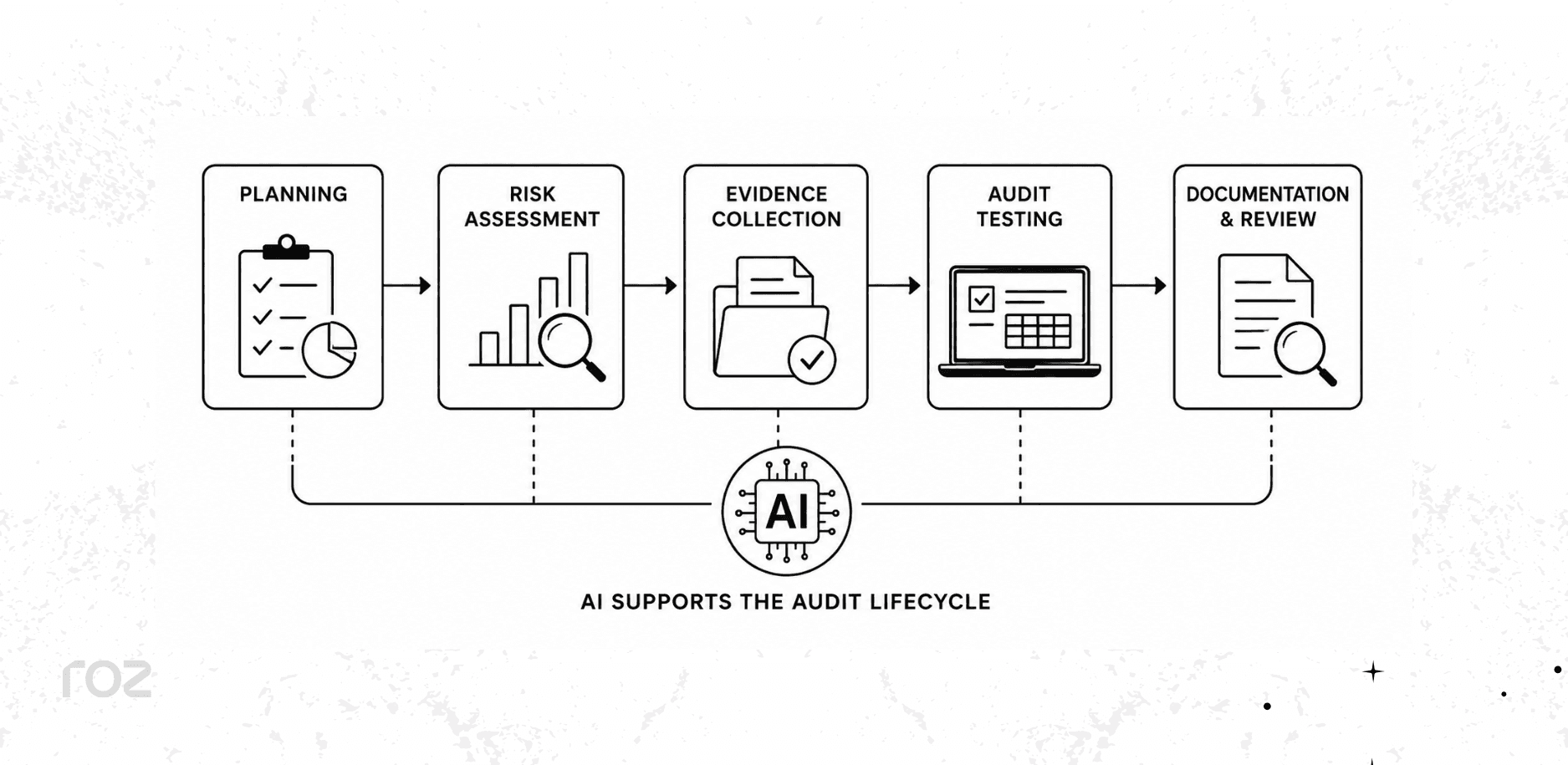
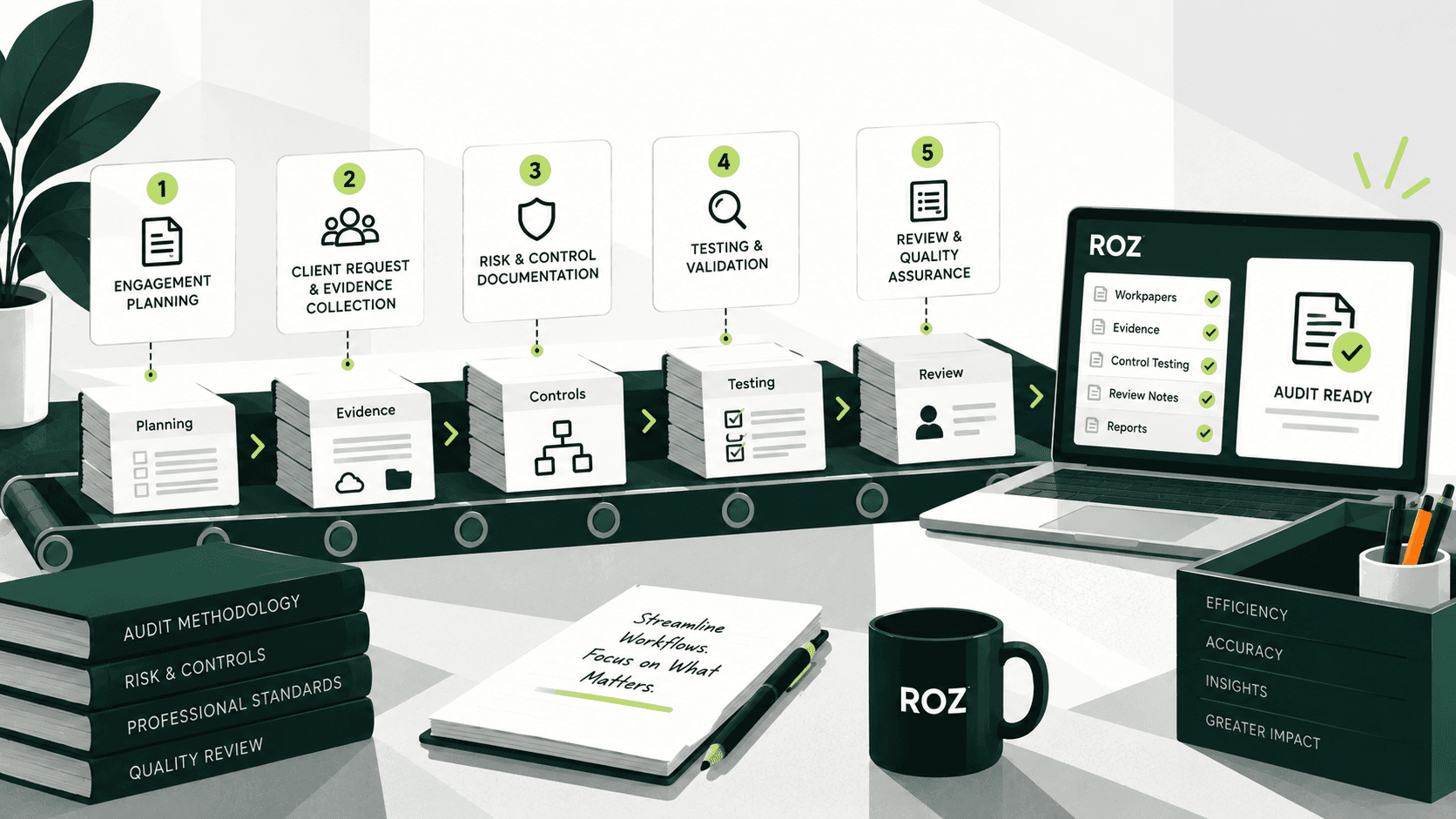
The audit lifecycle runs from planning through to final review. AI can play a supporting role at each stage.
Planning
AI can summarize industry information, organize engagement data, and generate first-pass planning documentation. AI can process company-specific data and industry benchmarks at the same time, giving auditors a helpful data-based starting point when deciding how to scope their work.
Risk Assessment
Machine learning can analyze complete transaction sets and surface anomalies, as well as identify unusual account balances and fraud indicators. The Journal of Accountancy noted in 2024 that AI tools can perform account reconciliations and review more extensive data sets, such as bank statements and legal contracts, than is possible to do manually, thus allowing auditors more time to evaluate results.
Evidence Collection
NLP-based tools can extract key terms from contracts, summarize policies, and organize supporting documents. This provides auditors with a structured starting point for reviewing evidence and defining audit procedures.
Audit Testing
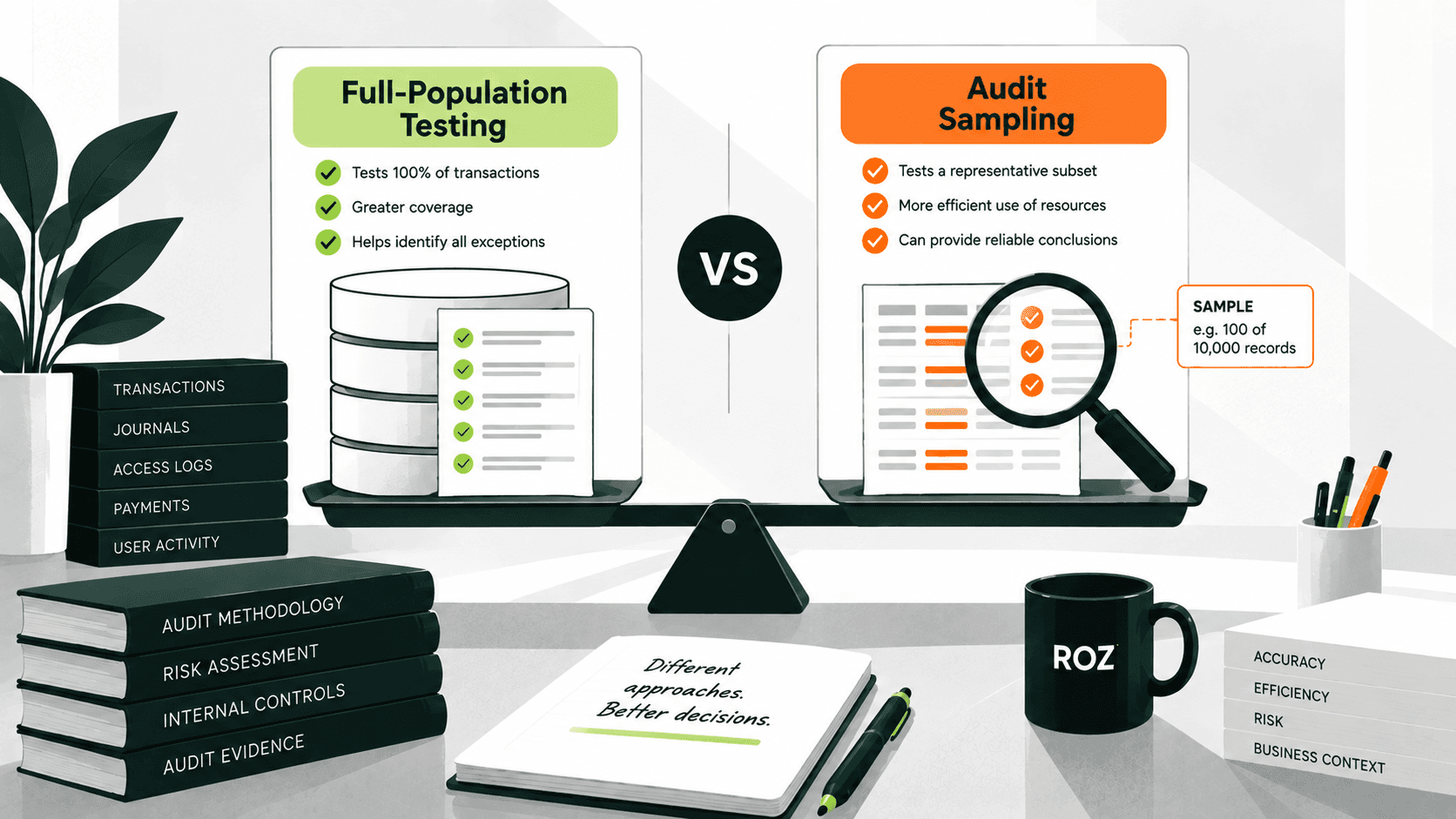
For journal entry testing and analysis of revenues and expenses, as well as for testing controls, AI-assisted workflows can analyze larger transaction populations than would typically be feasible through manual review alone. They can help identify unusual transactions or potential exceptions for auditor evaluation.
Documentation and Review
AI can create the first drafts of the working papers. It can also identify missing pieces of evidence and perform consistency checks across current and prior period financial statements. This reduces the documentation burden on auditors at the completion of the audit.
Practical AI Use Cases for External Auditors
Task | How AI Helps | Auditor Oversight Required |
Drafting audit planning memos | Generates first-pass drafts from structured inputs | Review, edit, and approve all final content |
Contract and lease review | Extracts key terms, flags renewal clauses | Validate extracted data against source documents |
Summarizing board minutes | Identifies key decisions and resolutions | Confirm completeness and accuracy |
Journal entry analysis | Flags unusual entries across full populations | Investigate flagged items and reach conclusions |
Analytical procedures | Identifies variances and trend anomalies | Evaluate causes and assess risk implications |
Workpaper preparation | Populates templates with evidence-linked outputs | Finalize, document reasoning, and sign off |
Audit evidence organization | Categorizes and structures uploaded documents | Confirm evidence is sufficient and relevant |
Control-to-risk mapping | Matches controls to risk areas from uploaded policies | Verify alignment and address gaps |
Engagement review support | Surfaces incomplete workpapers or missing sign-offs | Complete file before closing the engagement |
Prior-year file retrieval | Pulls relevant findings and procedures from past files | Apply professional judgment when using historical context |
What Are the Key Risks of Using AI in External Audit?
AI does bring efficiency to the table. It does, however, bring equal risks. Audit teams must account for all risks and potential efficiency gains that AI brings.
Data quality determines output quality: AI amplifies what it receives. If client data is incomplete or inconsistently formatted, AI outputs will reflect those problems, often at scale and with a misleading appearance of precision. Data validation before analysis is not optional.
Professional skepticism cannot be outsourced: The PCAOB and the GAAS both require auditors to maintain a questioning approach throughout an engagement. Accepting AI outputs as conclusions rather than treating them as inputs can undermine compliance with auditing standards. Ignoring the technology used, auditors are still required to evaluate the sufficiency and appropriateness of audit evidence and exercise professional skepticism throughout the engagement.
Black-box outputs create documentation gaps: Audit documentation requirements apply regardless of whether a procedure was performed manually or with AI assistance. An AI tool that produces results without clear results that cannot be traced to supporting evidence or documented processing steps. Every AI-generated output used in the audit file needs to be traceable back to its source evidence.
Parallel workflows add friction: AI that operates outside existing audit processes creates two documentation tracks rather than one. The efficiency case for AI depends on it being embedded in the audit workflow, not bolted on as a separate step.
Confidentiality and data security require direct oversight: Protect client data in keeping with your professional standards. The firm must directly approve the use of AI tools within the scope of the audit. The tools must also fulfill all applicable requirements related to confidentiality, security, and privacy. The responsibility of protecting client data resides with the auditor, not with the technology.
Best Practices for Using AI in External Audit
Responsible adoption is not complicated, but it requires deliberate decisions at the firm and engagement level.
Use AI to support professional judgment, not substitute for it. AI surfaces findings and drafts outputs. The auditor evaluates, decides, and signs off.
Validate AI-generated outputs before relying on them. Treat AI outputs as a starting point for review, not a finished product.
Maintain professional skepticism throughout. The fact that a tool flagged or did not flag something is not itself a conclusion.
Use approved tools only. Client data is confidential. Firms should establish which AI tools are permitted for engagement work and under what conditions.
Document AI-assisted procedures. Workpapers should reflect how AI was used and how its outputs were reviewed and validated.
Train audit teams on AI capabilities and limitations. Staff need to understand what the tool can and cannot do before applying its outputs to engagement conclusions.
Review AI governance policies regularly. The tools and their capabilities are changing. Governance frameworks need to keep pace.
How Roz Supports AI-Assisted External Audit
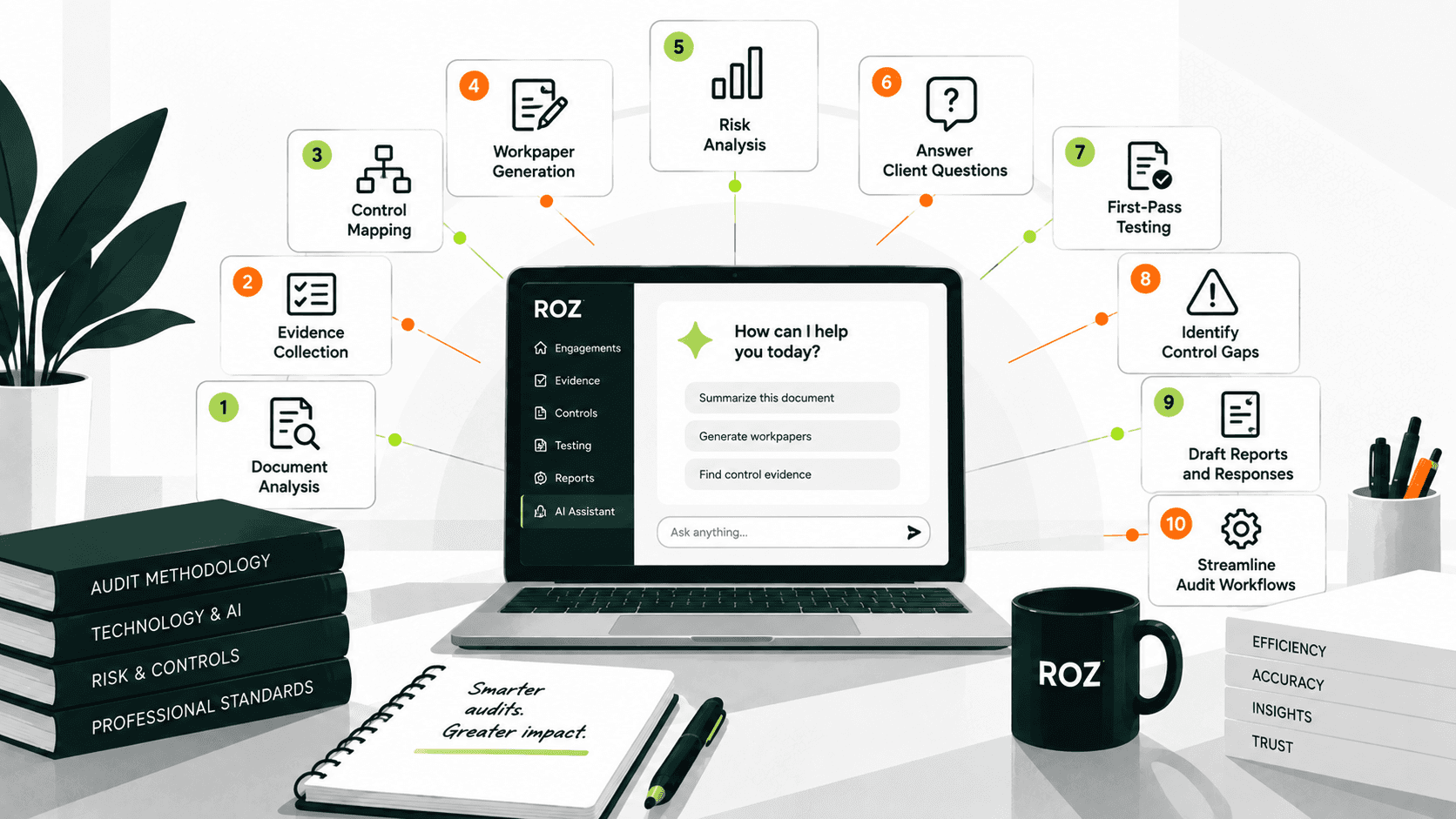
Roz is an AI-native audit fieldwork platform built for auditors and advisory firms performing control-based engagements across frameworks such as SOC 2, SOX, ISO 27001, and CMMC. It helps teams organize evidence, accelerate control testing, and streamline first-pass fieldwork while keeping auditor judgment at the center of every engagement.
For external audits, Roz can help firms:
Organize client documentation and evidence in secure, client-specific workspaces.
Run AI-powered control testing using defined or suggested attribute checks.
Support evidence requests and connect documentation to relevant controls and samples.
Surface potential gaps and exceptions for auditor review.
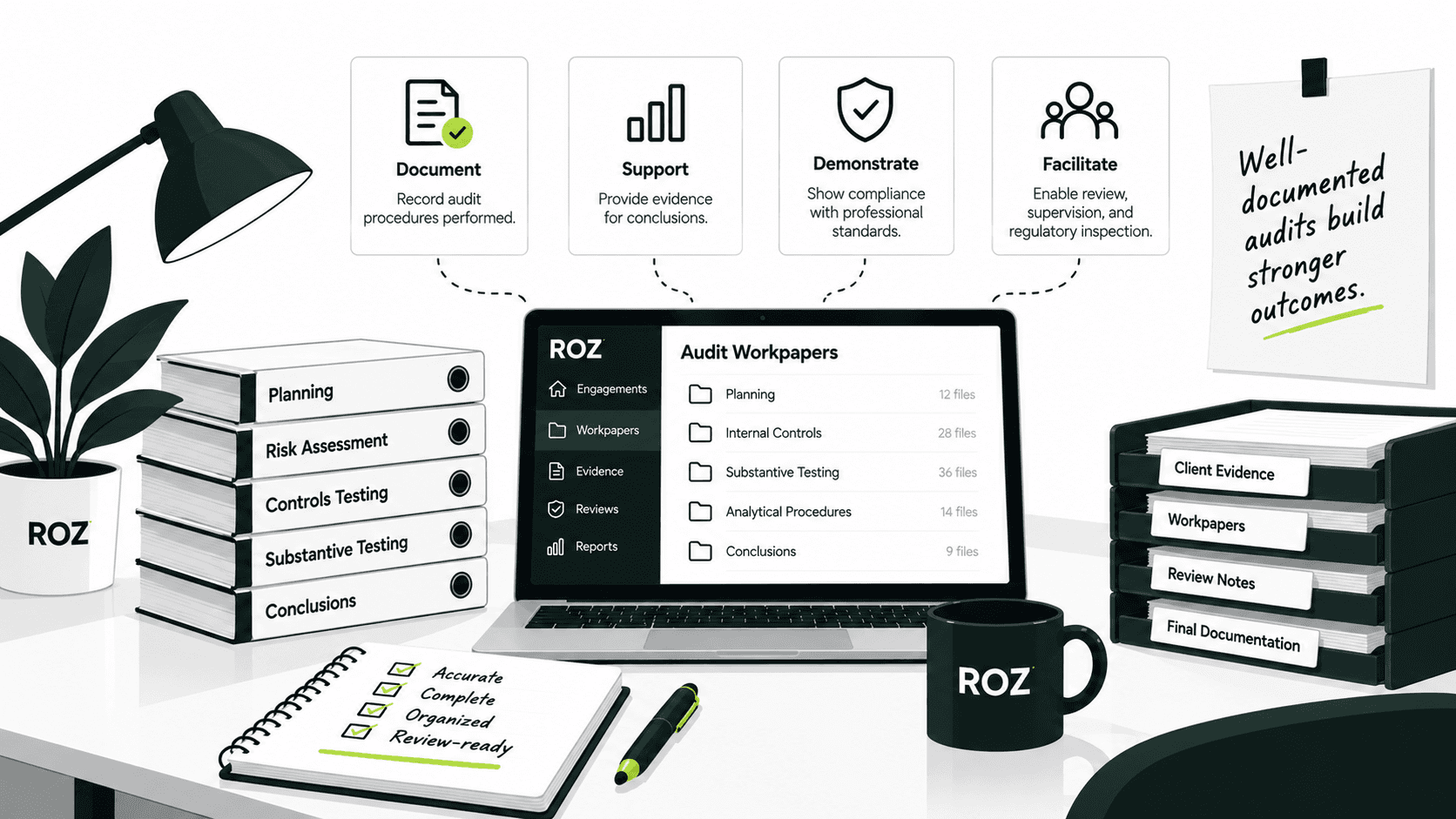
Generate formatted workpapers from completed control activities with supporting evidence and annotations.
Maintain audit trails that help reviewers trace testing results back to supporting evidence.
Roz supports audit workflows by streamlining repetitive fieldwork and first-pass control testing while keeping professional judgment, evidence evaluation, and final audit conclusions with the engagement team.
Conclusion
AI is a practical productivity tool within the external audit lifecycle. It assists the audit teams in analyzing large data sets and in the documentation and review processes so that the teams can focus on the audit quality work that is system-intensive.
These benefits are significant, but successful adoption requires thoughtful implementation. Firms need to establish clear governance, validate AI-generated outputs, protect confidential client information, and maintain professional skepticism throughout every engagement.
Responsible AI will create efficiencies and support audit documentation consistency and improvement to audit workflows and higher quality audit work. The auditor remains responsible for reviewing the presented evidence, exercising professional judgment, and reaching conclusions in audits.
Frequently Asked Questions
What are the risks of using AI in external auditing?
The main risks are over-reliance on AI outputs without sufficient auditor review, reduced professional skepticism, documentation gaps when AI reasoning is not traceable, data quality issues that produce unreliable results, and security concerns when unauthorized tools handle confidential client information. Each of these can be managed through firm-level governance, approved tool policies, and auditor training.
What audit tasks can AI help automate or accelerate?
AI can be used to accelerate the drafting of planning memos and workpapers, policy and contract review, journal entry analysis, analytical procedures, control-to-risk mapping, evidence organization, work engagement review, supporting auditor workflows, and more. Each output is time-stamped, auditors review each output for quality, and validate the outputs prior to use.
How is AI used in external audits specifically?
AI is used in external audits at five stages: planning (research, memo drafting, risk identification), risk assessment (anomaly detection, trend analysis), evidence collection (document extraction and organization), testing (journal entry analysis, control testing support), and documentation (workpaper drafting, consistency checks). In each of the steps mentioned above, AI supports repetitive, structured activities, while auditors evaluate the results, apply professional judgment, and reach the final conclusions.