Risk and control self-assessment programs are common across financial services, insurance, and other organizations with formal risk-management functions. Business units identify their risks, describe the controls that are meant to manage them, and rate how effective those controls are. On paper, this produces a tidy risk register with green, yellow, and red ratings.
The problem for auditors is straightforward. An RCSA reflects management's assessment of its own risk and control environment. It is a self-assessment, not an independent audit assessment. A control rated "effective" may not have been independently tested against evidence. A residual-risk score of "low" may not be supported by evidence beyond the process owner's assessment.
In this article, I will break down what RCSA is, how the process works, and how auditors should challenge ratings before relying on them. It also covers where RCSA fits next to risk assessment and control testing, common problems to watch for, and how RCSA output can strengthen audit planning.
What Is Risk and Control Self-Assessment (RCSA)?

RCSA is a process conducted by a business unit or process owner to identify the risks associated with the business unit or process and to describe the controls for those risks. The Basel Committee on Banking Supervision defines self-assessment as an evaluation to identify the risks, to assess the adequacy and effectiveness of controls, and to determine the residual risk.
The following three elements of RCSA are frequently misunderstood:
Inherent risk: Indicates risk level prior to the presence of controls.
Control effectiveness: How well a control addresses the risk, both in design and in operation.
Residual risk: Indicates the level of risk that is still present after controls have been taken into account.
Risk and controls are documented and rated by process owners, with the specific approach varying across organizations and processes. Process owners provide the business and operational context needed for the assessment, while auditors evaluate the assessment independently as part of their assurance work.
The auditor's role is different from management's role
Management or process owners perform the RCSA. Auditors independently evaluate the risks, controls, ratings, and supporting evidence rather than treating the RCSA as a substitute for independent audit assessment.
How Does the RCSA Process Work?

The RCSA process generally follows a consistent sequence, although the methodology can vary by organization, industry, and risk framework:
Identify risks: Business units document the operational, financial, compliance, and technology risks tied to a process or activity.
Assess inherent risk: Teams evaluate likelihood and impact before considering controls, often using a defined scoring scale.
Identify and map controls: Controls are linked to the specific risks they are intended to address, with a named owner and defined frequency.
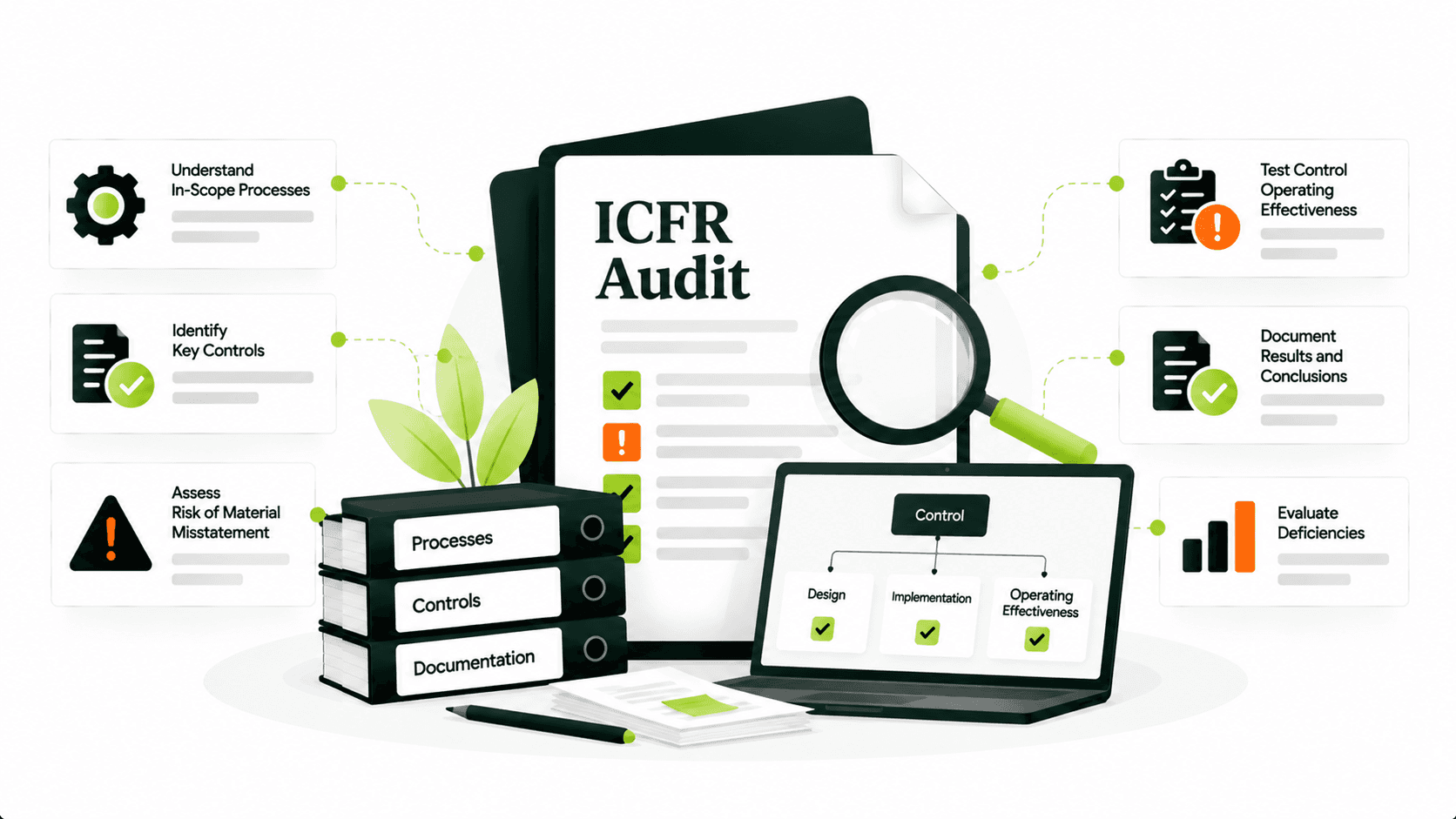
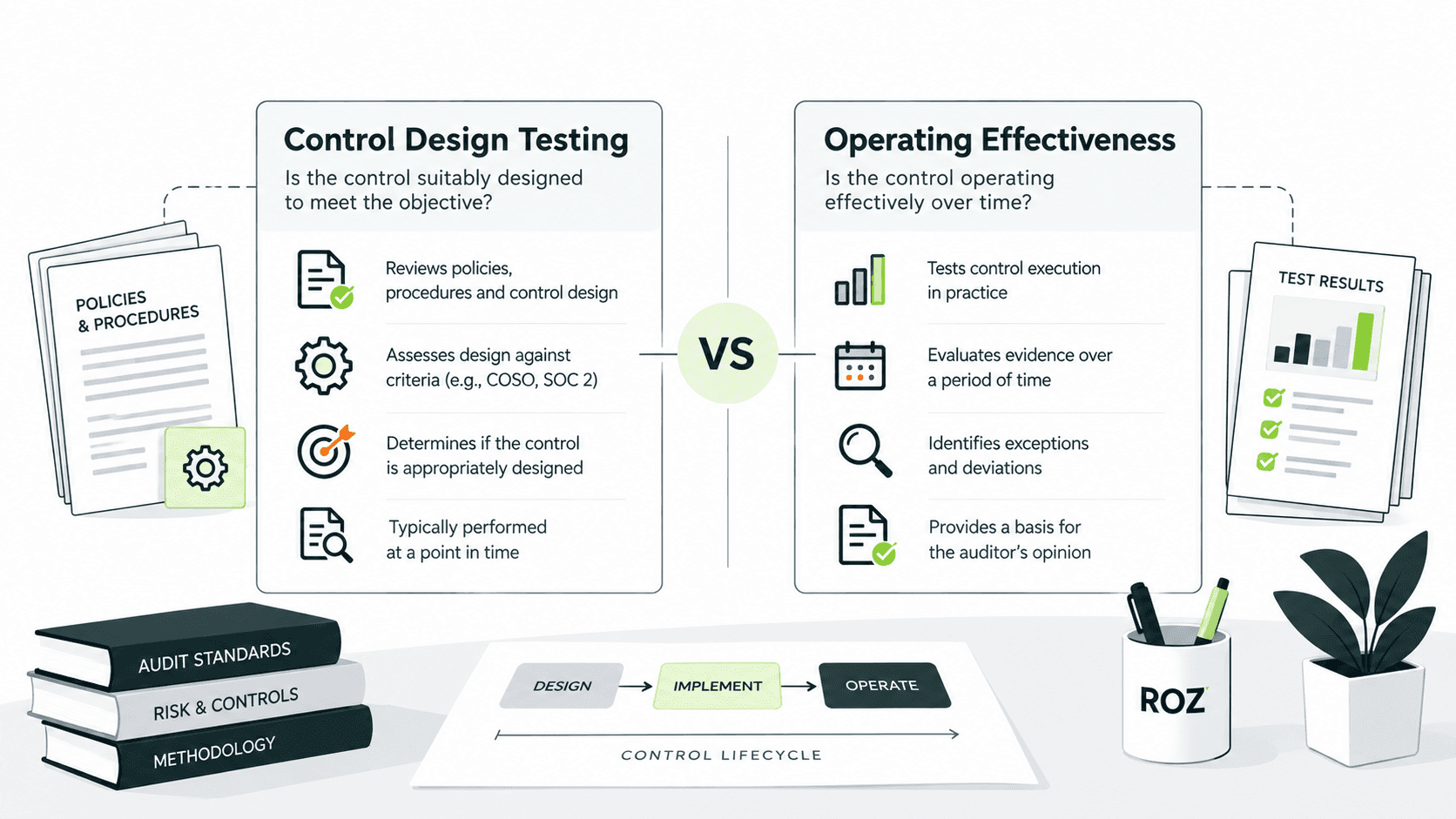
Assess control effectiveness: This step should distinguish design effectiveness (Does the control address the risk if it operates as intended?) from operating effectiveness (did the control actually operate as intended and consistently?).
Determine residual risk: The effectiveness of controls is considered when determining the level of risk that remains after controls are applied. A large gap between inherent and residual risk deserves closer scrutiny.
Document and track results: Ratings, rationale, evidence references, findings, and remediation actions are recorded and should be refreshed as the business changes.
The sequence looks clean in a workshop or questionnaire. The gaps often show up when auditors ask what evidence actually supports each rating.
How Auditors Challenge RCSA Risk Ratings

This is an important part of audit work. RCSA risk ratings represent management’s assessment and should be evaluated by auditors through independent review and challenge.
Compare RCSA ratings against independent evidence
Findings from previous audits, control testing, exceptions, loss events, reporting, key risk indicators (KRIs), and risk appetite breaches can be considered when evaluating management’s ratings. For example, a rating may indicate that a control is functioning properly, while testing identifies significant exceptions that warrant further review.
Challenge large reductions from inherent to residual risk
If management rates inherent risk as high but residual risk as low, auditors should ask what controls support that reduction and whether sufficient evidence supports the rating. A significant reduction from inherent to residual risk should be supported by an appropriate basis for the effectiveness of the controls involved.
Compare current and prior RCSAs
Identical risk descriptions, ratings, and narratives year over year can indicate an assessment is a copy-paste rather than a true evaluation. This is important when the business has undergone changes.
Review recent control exceptions
It is important to consider recent control exceptions when assessing control ratings. An exception may occur due to control weakness, and that may impact the rating.
Examine business changes
Any significant change in the business, including mergers and acquisitions and changes in the board, may warrant reassessment of control ratings. Significant changes may impact the business control environment and overall risk.
Back-test previous RCSA assessments
Comparing prior RCSA assessments with subsequent audit findings, incidents, control exceptions, or other risk events can help auditors evaluate whether previous ratings were supported by the information available at the time. For example, recurring vendor-related issues after a low vendor-risk assessment may warrant a closer review of how that risk was assessed.
How to Evaluate Control Effectiveness in an RCSA
Generally, “effective/ineffective” judgments do not contain enough information for an audit to determine control effectiveness. Therefore, it is necessary to analyze control effectiveness with more detail.
Evaluate design effectiveness: Does a given control address a specific risk? Is the control clear? Does the control address the risk in an appropriate manner?
Evaluate operating effectiveness: Did the control operate as described and consistently during the relevant period? Was sufficient evidence retained to support that it operated as intended?
Review supporting evidence: The types of evidence that management may retain and that support control effectiveness may include approvals, system records, logs, exception reports, and review documentation. Evidence may also include reconciliations. If evidence does not support control effectiveness, it may lead to the conclusion that a control failed.
Evaluate exceptions and deficiencies: When assessing the effect of deficiencies on control, consider the nature, extent, and frequency of the deficiencies, as well as the effect on the control.
Connect control effectiveness to residual risk: The effectiveness of a control should be reflected in the assessment of residual risk. An effective control may reduce the level of risk, but it does not necessarily mean that residual risk is low or eliminated.
RCSA vs. Risk Assessment vs. Control Testing
The three activities described (Risk Control Self-Assessment, Risk Assessment, and Controls Testing) are related but have distinct objectives and therefore should not be used interchangeably.
Activity | Purpose | Primary Focus | Typical Owner |
RCSA | Self-assess risks and controls | Management's view of risk and controls | Process owners / management |
Risk Assessment | Identify and prioritize risks | Risk significance and audit priorities | Risk or audit functions |
Control Testing | Evaluate design and/or operating effectiveness | Evidence and control performance | Auditors / assurance teams |
An RCSA does not replace independent control testing. It reflects management’s or the process owner’s assessment of risks and controls and is one input into the auditor’s work. Auditors should independently evaluate relevant risks, controls, and supporting evidence rather than relying on the RCSA rating alone.
Common RCSA Problems Auditors Should Watch For
Several recurring patterns show up across RCSA programs, and each one can affect how much reliance auditors place on a rating:
Subjective risk ratings: Different teams may interpret the same scoring criteria differently, making ratings harder to compare across the organization.
"Effective" ratings without strong evidence: A control may be described as effective without sufficient documentation to support that assessment.
Copy-forward assessments: Prior-year risk descriptions, control narratives, and ratings carry forward unchanged, even after meaningful business changes.
Weak risk-to-control mapping: A control exists on the register, but its connection to the stated risk is unclear or indirect.
Stale assessments: The RCSA is not refreshed after significant process, technology, organizational, or regulatory changes.
Inconsistent scoring: Similar risks receive materially different ratings without a clear rationale.
Poor remediation follow-up: Identified weaknesses remain open, or there is no evidence that remediation was completed.
RCSA as a checkbox exercise: The process focuses on completing the assessment rather than producing information that informs risk decisions.
How to avoid missing these: Use a consistent set of challenge questions during the RCSA review, while tailoring the depth of review to the risk, control, and available evidence.
How RCSA Results Can Improve Audit Planning
Used correctly, RCSA output becomes a useful input into audit planning. It should not replace the auditor's own independent risk assessment.
Identify higher-risk areas: RCSA results may highlight inconsistencies or areas that warrant greater audit attention for review of those processes and controls.
Inform audit scope: Risks, control ratings, and associated processes may help auditors identify areas of the control framework that warrant further assessment or testing.
Prioritize control testing: Information from RCSA and independent assessment of risks should be integrated to help determine the location and extent of control testing.
Identify areas of disagreement: Compare management’s self-assessment and the audit team’s assessment of risk. Differences may indicate areas that require further inquiry, evidence review, or reassessment.
Use historical RCSA results: Determine whether historical ratings changed over time and whether subsequent audit activities, incidents, or control testing were consistent with those earlier assessments.
Combine RCSA with other risk information: Considering the results of previous assessments, audit and inspection work, findings, control testing, incidents, and changes that occurred in the business may support and provide additional information to the RCSA.
RCSA should inform audit planning, not replace the auditor's independent risk assessment and professional judgment.
How Roz Supports RCSA Review and Control Testing
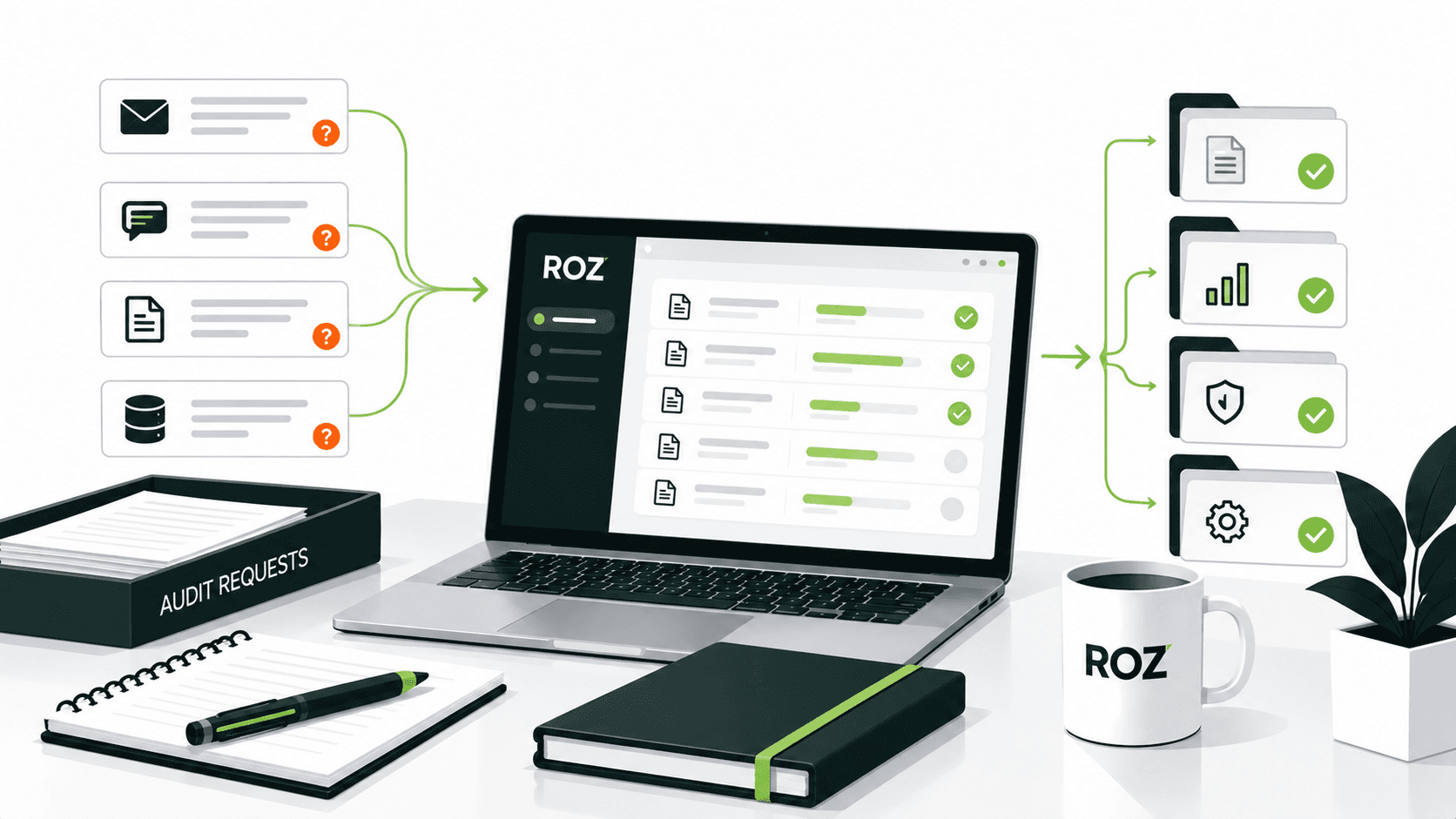
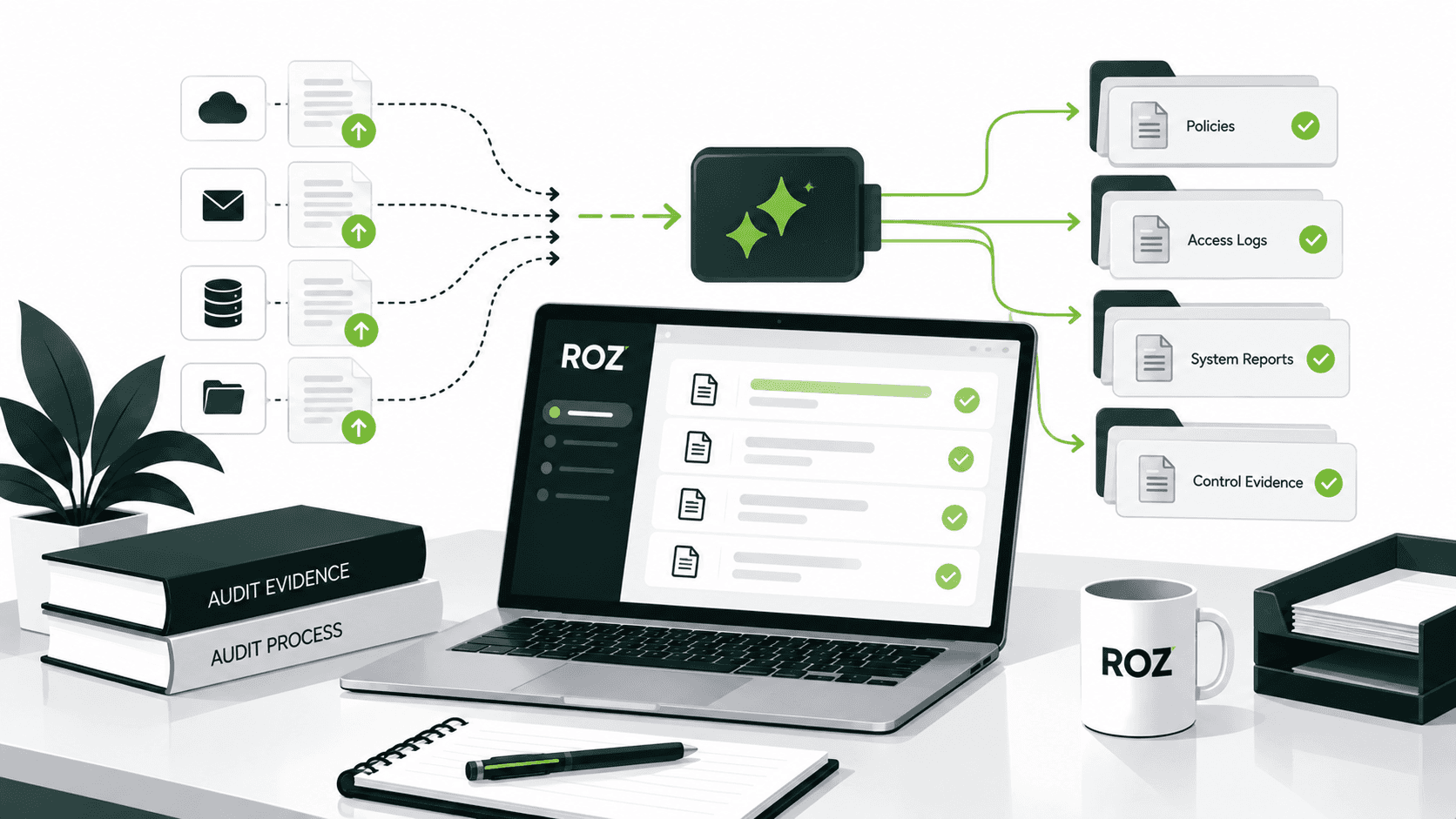
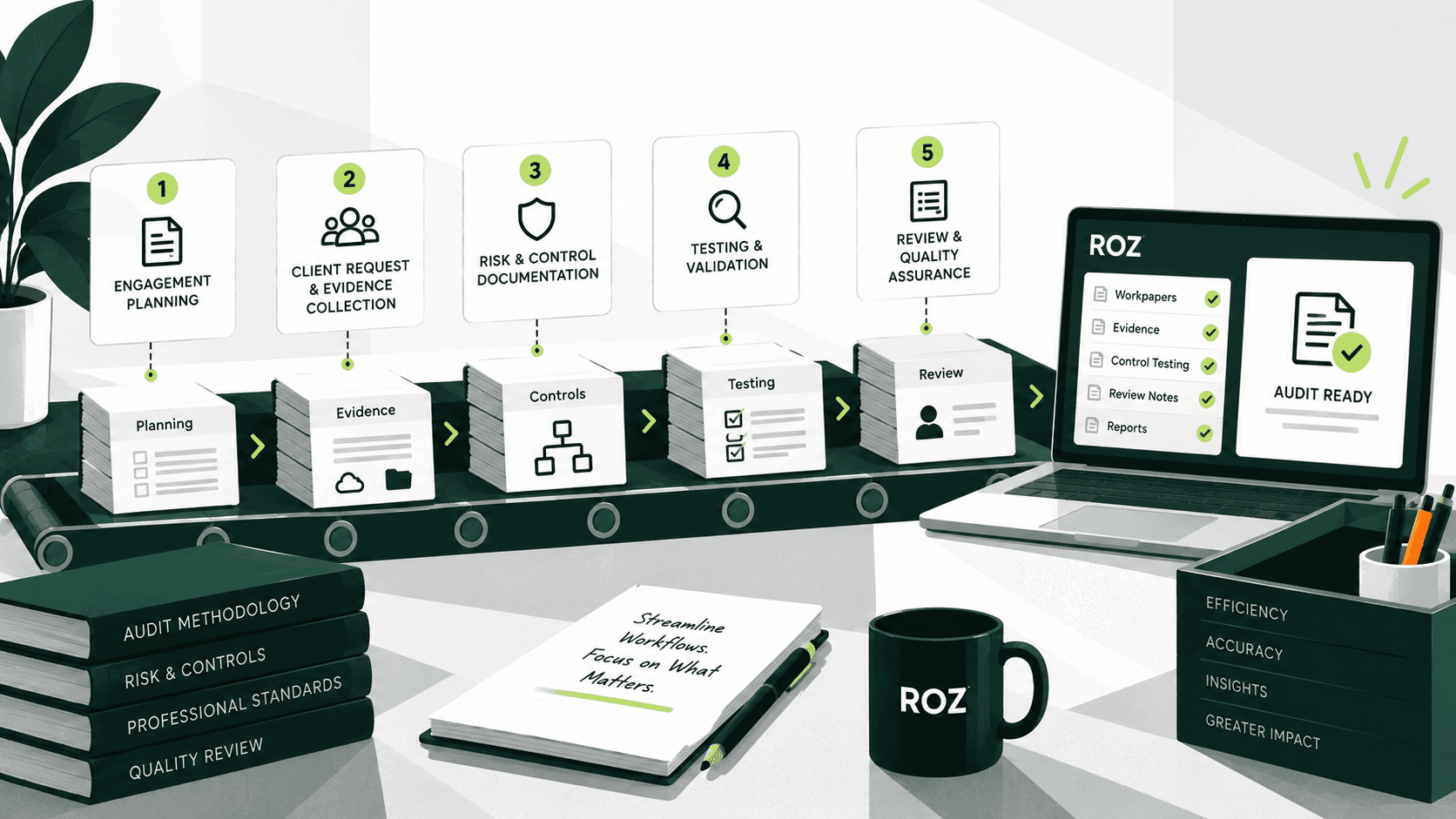
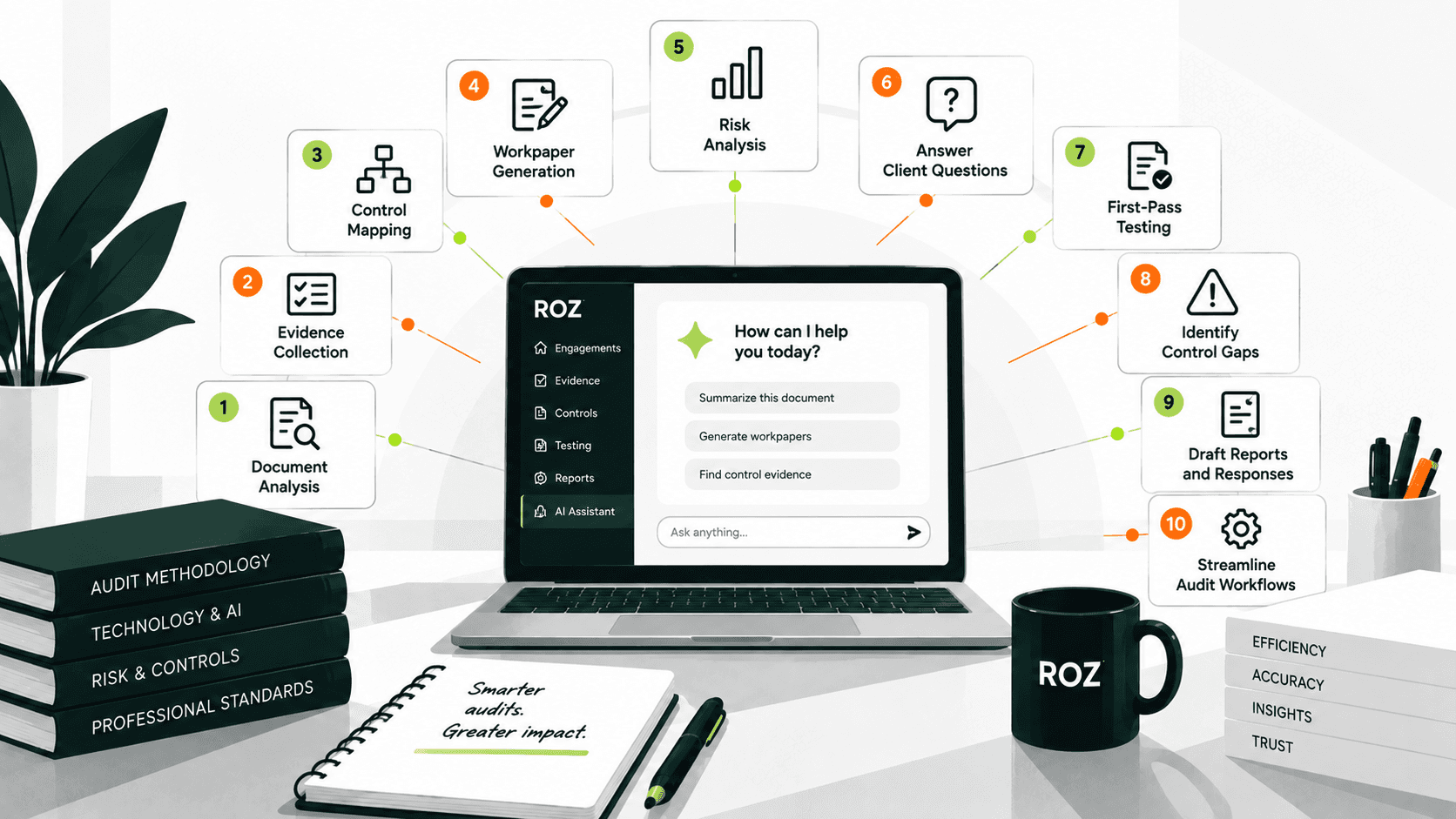
Roz is an AI-native audit fieldwork and control-testing platform built for auditors, not the companies they audit. It supports RCSA-related review and the control-testing work that follows without replacing auditor judgment. Each engagement has its own isolated workspace where auditors can organize controls, assessments, evidence, and supporting documentation. Evidence requests can be tied directly to relevant controls, creating a structured workflow from Control → Evidence Request → Evidence → Testing instead of relying on scattered email threads and spreadsheets.
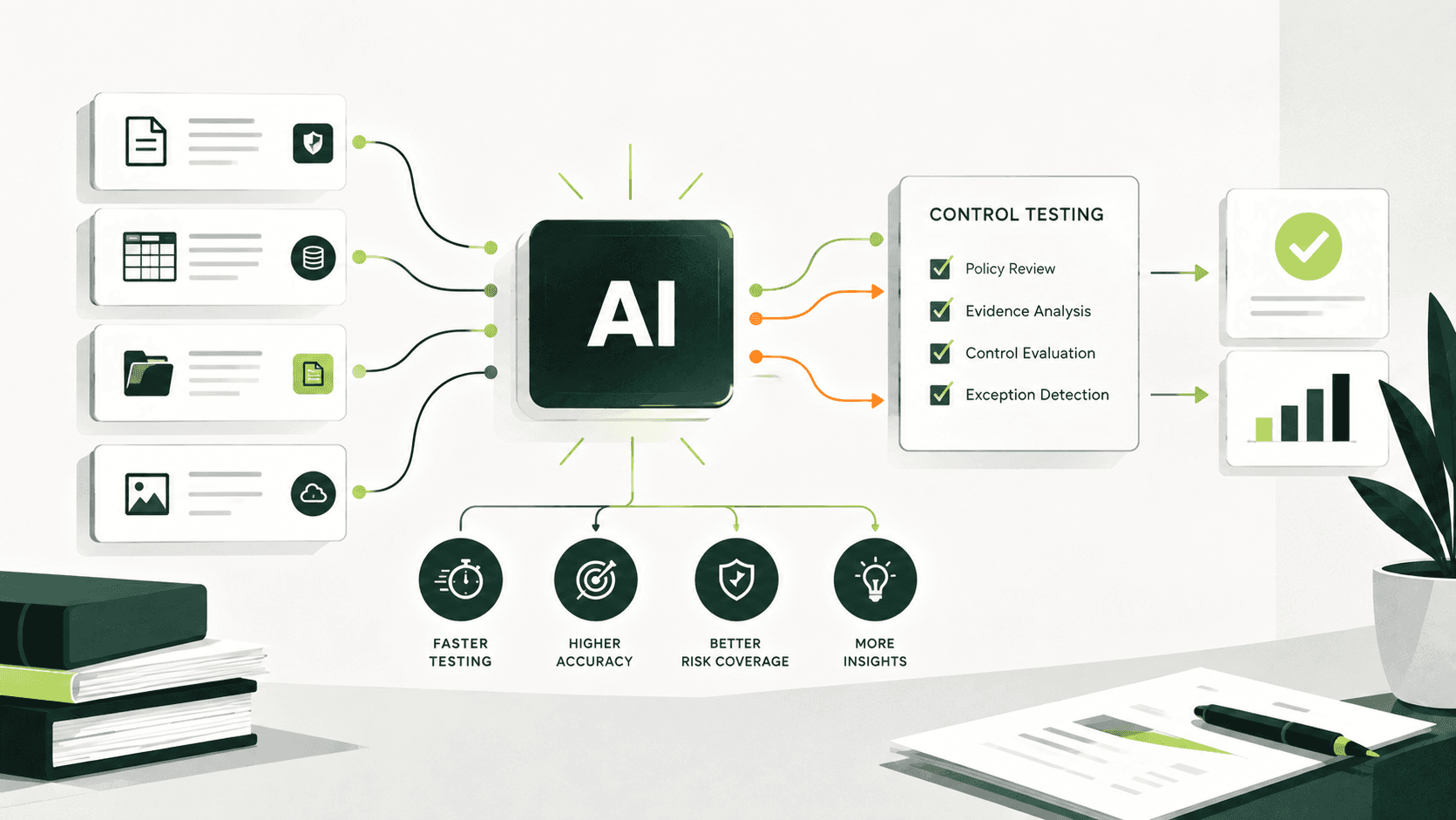
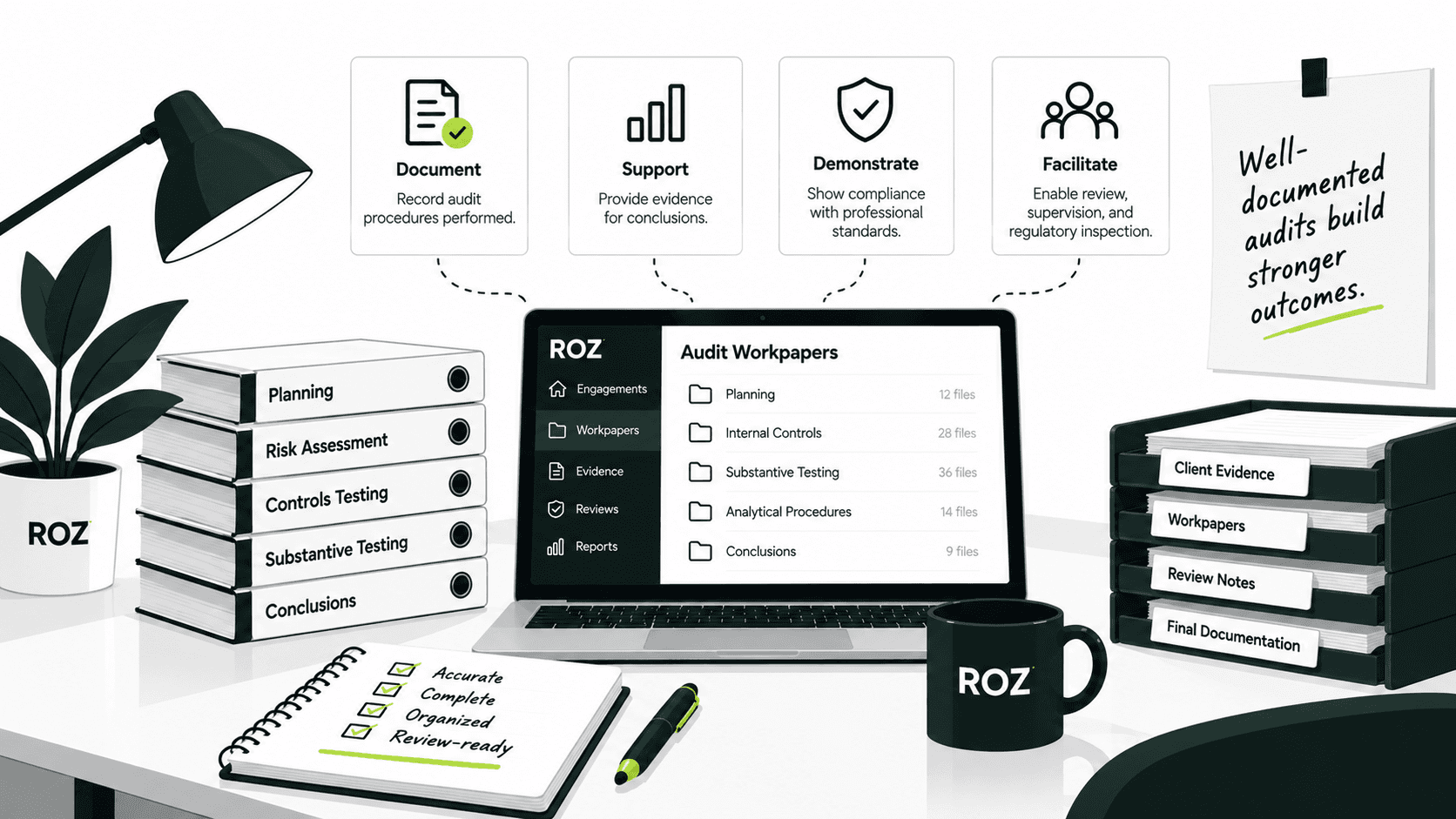
Once the evidence is available, Roz can help auditors assess whether it appears sufficient for the defined testing procedure and perform a first pass of control testing. Auditors can define attribute checks or use AI-suggested checks, which Roz runs against relevant evidence and sample sets to return PASS, FAIL, N/A, or INFO results with reasoning. Quote Highlighting lets auditors trace results back to the supporting evidence, while annotations, testing activity, and reviewer overrides are captured in the audit trail. Completed control activities can then be exported as formatted workpapers with supporting evidence and annotations.
Roz supports the auditor's review and control-testing workflow. It does not replace auditor judgment or issue an audit opinion.
Conclusion
An RCSA brings together management’s assessment of risks, controls, and residual risk. It can provide useful context for auditors, but an RCSA rating is not a substitute for independent evaluation of control effectiveness.
When management rates a control as effective, auditors should consider the basis for that assessment, review supporting evidence, and evaluate whether the control is appropriately designed and operated during the relevant period. Differences between management’s assessment and the auditor’s evaluation may warrant further inquiry or testing.
RCSA should therefore be treated as an input to audit planning rather than a conclusion in itself. The auditor remains responsible for independently evaluating evidence, applying professional judgment, and reaching the final conclusion.
Frequently Asked Questions
What is the difference between inherent and residual risk?
Inherent risk is the risk level before controls are considered. Residual risk refers to the risk level that remains after controls have been introduced. Generally, there is a stated rating against the risk controls, but control effectiveness may not be evident.
What are common RCSA problems?
These include subjective risk ratings, asserted control effectiveness without documentation, assessment copies without business process changes, inadequate risk-to-control mapping, and inadequate monitoring of remediation.
Can RCSA replace internal audit testing?
No. An RCSA outlines a control owner’s or a process owner’s assessment of controls and risks and therefore reflects management’s view. While the results of an RCSA may inform the Internal Audit Team of risks and controls, Internal Audit should perform independent testing.
How does RCSA support audit planning?
An RCSA assists management in identifying and prioritizing risks and may help auditors plan control testing. An RCSA, however, should not be relied on in place of the auditor’s judgment.
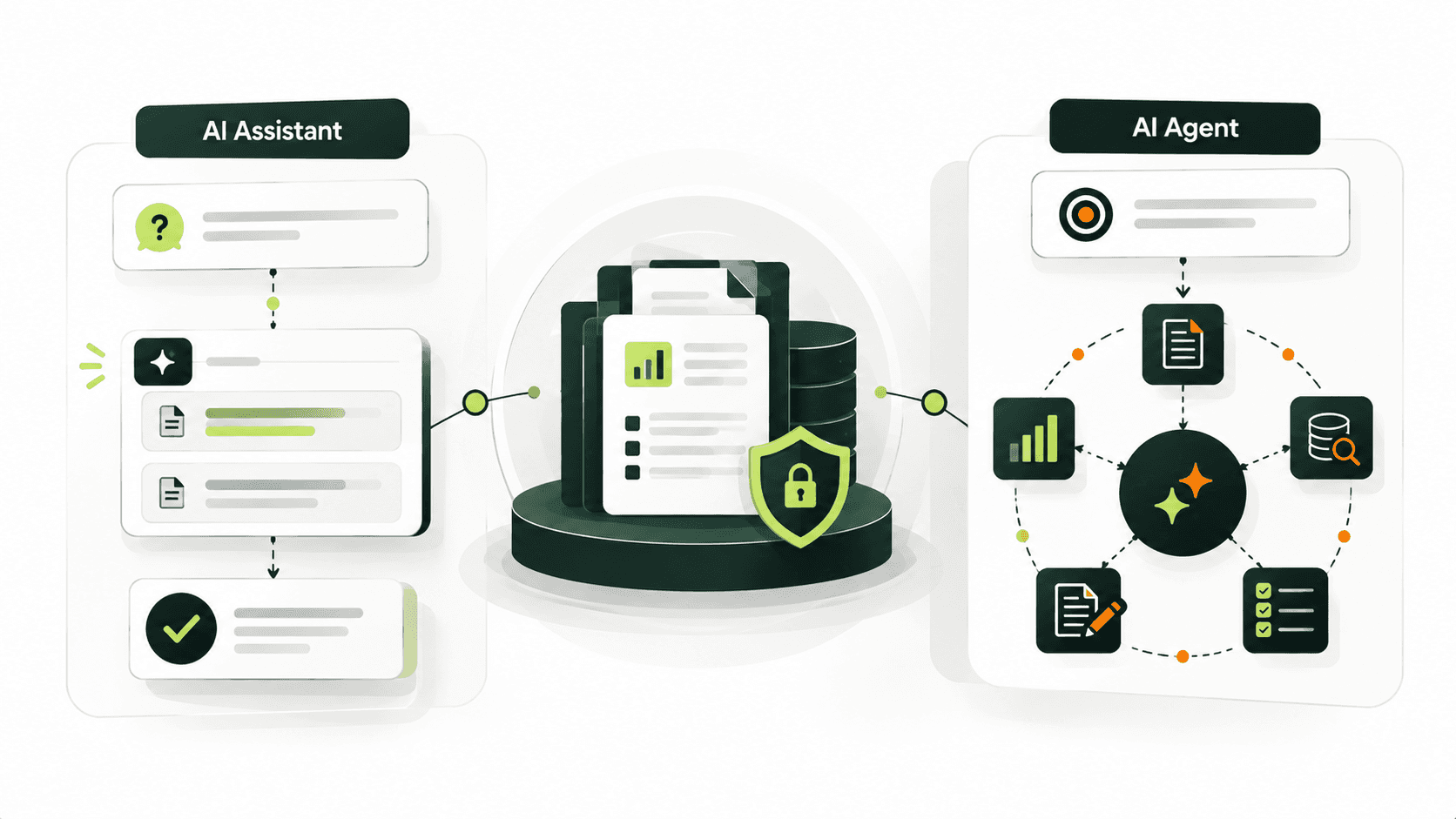
How can AI support RCSA review and control testing?
AI tools can help auditors connect evidence to controls, perform first-pass testing, flag potential exceptions, and draft workpapers. Auditors remain responsible for reviewing the results and forming conclusions.