Data privacy laws have been evolving quickly, and the California Consumer Privacy Act (CCPA) is a key player in this landscape. This law empowers California residents with more control over their personal data, specifically how it's gathered, utilized, and disseminated by companies. Any company that deals with the personal information of California residents and meets specific criteria may be subject to these regulations, regardless of where they're based.
CCPA compliance encompasses the steps and safeguards companies put in place to adhere to the law. This includes being open about how they handle data, allowing consumers to exercise their rights, and safeguarding personal information.
The California Privacy Rights Act (CPRA) took the existing law and broadened its scope, with a start date of January 1, 2023. This new legislation brought additional consumer rights and established the California Privacy Protection Agency (CPPA) to handle enforcement. Collectively, these changes are often called the CCPA, as amended.
In this article, I will explain who must comply, the rights consumers hold, and the key steps companies can take to build an effective compliance program.
What Is CCPA Compliance?
The California Consumer Privacy Act is California’s first statewide consumer privacy law. CCPA establishes privacy rights for California residents and obligations for certain companies that collect or process their personal information.
The law allows California consumers to exercise control over their CCPA-related consumer personal data. Personal information includes many types of data, such as names, email Addresses, online activity, location data, biometric identifiers, and other information that identifies, relates to, describes, or could reasonably be linked to a consumer or household.
CCPA Compliance in Simple Terms
Protect consumer data
Provide transparency about data use
Enable consumer privacy rights
Implement security safeguards
The CPRA made further adjustments to the CCPA to better protect consumer rights and privacy by creating the CPPA, which can enforce these rules independently along with the California Attorney General.
Who Must Comply With CCPA?
CCPA applies to for-profit businesses that meet specific thresholds related to revenue, data processing volume, or data monetization:
Companies With Annual Revenue Above $26 Million
A compliance requirement for companies with gross annual revenues greater than $26 million (this amount is adjusted for inflation periodically).
Companies With Large Consumer Data
The law applies to companies that buy, sell, or share personal information about 100,000 or more California residents or households in a calendar year. This law applies to even the financially smaller data-sensitive companies.
Quick Qualification Checklist:
Do you collect data from California residents?
Do you process data for 100,000+ California residents or households?
Do you have gross annual revenues greater than $26.6 million?
Do you have 50% or more of your revenue from buying, selling, or sharing personal data?
If the answer to any of these questions is yes, the CCPA may apply to your company.
Companies That Make Money Selling Data
The CCPA guidelines apply to companies whose annual revenue exceeds 50% from the selling or sharing of personal information belonging to California residents. The focus lies on the company model for data brokers.
The law primarily targets profit-making companies, generally excluding non-profit companies and the government.
Key Consumer Rights Under CCPA
The CCPA is built on the cornerstone of consumer rights that companies are obligated to comply with, as well as offer straightforward and easily actionable means to exercise these rights.
Right to Know
Consumers can ask what personal data was collected, where it came from, why it was used, and who it was shared with. This right can be exercised twice within a span of 12 months, and requests are generally provided free of charge, although limited exceptions may apply for excessive or repetitive requests.
Right to Access
Consumers have the right to request the specific personal information that a company has collected on them, and this request must be fulfilled in an easily usable and portable format.
Right to Delete
Consumers have the right to request that companies and service providers delete their personal information, with some exceptions, such as when the company is legally required to retain it.
Right to Opt Out of Data Sales
Companies that sell or share consumers’ personal information are required to provide consumers an easily actionable mechanism to opt out, typically via a “Do Not Sell or Share My Personal Information” link.
Right to Non-Discrimination
It’s against the law for companies to discriminate against consumers for exercising their rights, although the law allows certain financial incentive programs tied to the value of consumer data.
Additional Rights Added by CPRA:
Right to Correct: Consumers have the right to request that their personal data, which they claim is inaccurate, be corrected.
Right to Limit: Consumers can tell businesses to restrain the use and disclosure of their sensitive personal information for purposes other than providing the requested services.
Core CCPA Compliance Requirements for Businesses
To comply with CCPA regulations, several operational changes must be implemented.
Transparent Privacy Notices
Privacy notices must be provided to customers before or at the time of data collection. Notices must include details on the categories of data being collected, the purpose for collecting data, whether the data is being sold or shared, and a link to the company's privacy notice. Privacy policies must be kept current to ensure the information provided in the privacy notice remains accurate.
Consumer Request Handling Processes
Companies need to provide at least two different options for consumers to submit requests. For example, companies might provide a toll-free telephone number to consumers and a web form. The response time is crucial in this situation. For requests to know, requests to correct, and requests to delete, companies generally acknowledge consumer requests within 10 business days and provide a substantive response in 45 calendar days (although the response time may be extended for a period of 45 days). Requests to opt out of the sale or sharing of personal information generally must be processed within 15 business days.
Data Mapping and Inventory
Companies need to know what data is being collected, including where it is held, the time frame for retaining it, and how it is transferred throughout the organization (including to third parties).
Security Safeguards
The CCPA requires companies to implement reasonable security procedures and practices appropriate to the nature of the information. While reasonable security measures are not defined by the law, it is commonplace to consider measures such as encryption, access controls, and documented responses to incident plans reasonable.
Vendor and Service Provider Management
When companies provide personal data to third parties, they must establish appropriate contractual restrictions with service providers or contractors. Service providers must refrain from using personal information for any purposes not explicitly specified in the contract.
How Businesses Can Achieve CCPA Compliance
Step 1: Identify Personal Data Collected
You need to start with a data discovery. Determine what personal information your company collects from customers, employees, and other parties.
Step 2: Perform Data Mapping
You need to provide documentation identifying the flow of the personal data within your company, the people who have access to it, the location of data storage, and the duration of data retention.
Step 3: Update Privacy Notices
Your privacy policy and notice-at-collection disclosures should provide accurate information concerning data collection and sharing. Use plain language. If the average consumer does not understand the data policy, the notice fails to achieve its purpose.
Step 4: Establish Consumer Request Workflows
Build standard processes to handle consumer requests for access, deletion, opting out, and correction of their data. Assign ownership of each process. Train employees. Test the processes; review workflows to ensure they are complete.
Step 5: Strengthen Data Protection Controls
Collect and document data in accordance with the required and reasonable protective security control measures, as outlined in the policy data collection documents. Review contracts with vendors, control data breaches, and document control measures as required by audit guidelines.
CCPA Compliance Checklist
Use this checklist to assess your current compliance posture:
Maintain an updated, CCPA-compliant privacy policy.
Post a "Do Not Sell or Share My Personal Information" link if applicable.
Processes exist to receive and respond to consumer requests.
The personal data inventory and mapping exercise is complete.
Security measures to keep personal data safe are in place and reasonable.
Service contracts have the CCPA-compliant obligations signed by service providers.
Train employees who handle consumer inquiries or personal data.
You must retain consumer data requests and responses for 24 months.
Obtain affirmative opt-in consent before selling or sharing personal information about consumers under 16 (parental consent is required for children under 13).
Common CCPA Compliance Pitfalls (and How to Avoid Them)
Pitfall 1: Incomplete Data Mapping
Most companies underappreciate the wide expanse of personal information, especially when it comes to third-party tools and integrations. An incomplete data map means an incomplete compliance program.
How to avoid it: Mapping data is meant to be reviewed on multiple occasions. As internal and external vendors change. Continue to map data at multiple intervals
Pitfall 2: Weak Consumer Request Processes
Requests sent through manual and email systems often result in missed deadlines and inconsistent answers. Answering consumer requests beyond the deadline incurs additional risks for companies.
How to avoid it: Make sure to build an organized workflow clearly showing who is responsible, set up automated reminders, and create response templates.
Pitfall 3: Lack of Vendor Oversight
If third-party vendors who handle consumer personal information are not bound by contract to comply with CCPA, the sharing of data with them poses risks of noncompliance.
How to avoid it: Review all vendor contracts, and ensure that the contract documents each vendor’s rights to use the personal data and the responsibilities of the vendor to delete the data and to notify the company in the event of a breach.
Pitfall 4: Outdated Privacy Policies
It is important that your privacy policy accurately reflect your current data practices. The risk involved in the Privacy Policy is for the company, and your company’s current data use may differ from how it was reflected two years ago.
How to avoid it: Assign responsibility to specific roles for ownership of the privacy policy, and companies maintain regular privacy disclosure reviews to ensure that they reflect current data practices.
How Roz Supports CCPA Compliance Engagements
We are not a CCPA certification platform and do not determine legal compliance. Instead, we support CPA firms and advisory teams delivering CCPA-related assessments and compliance engagements.
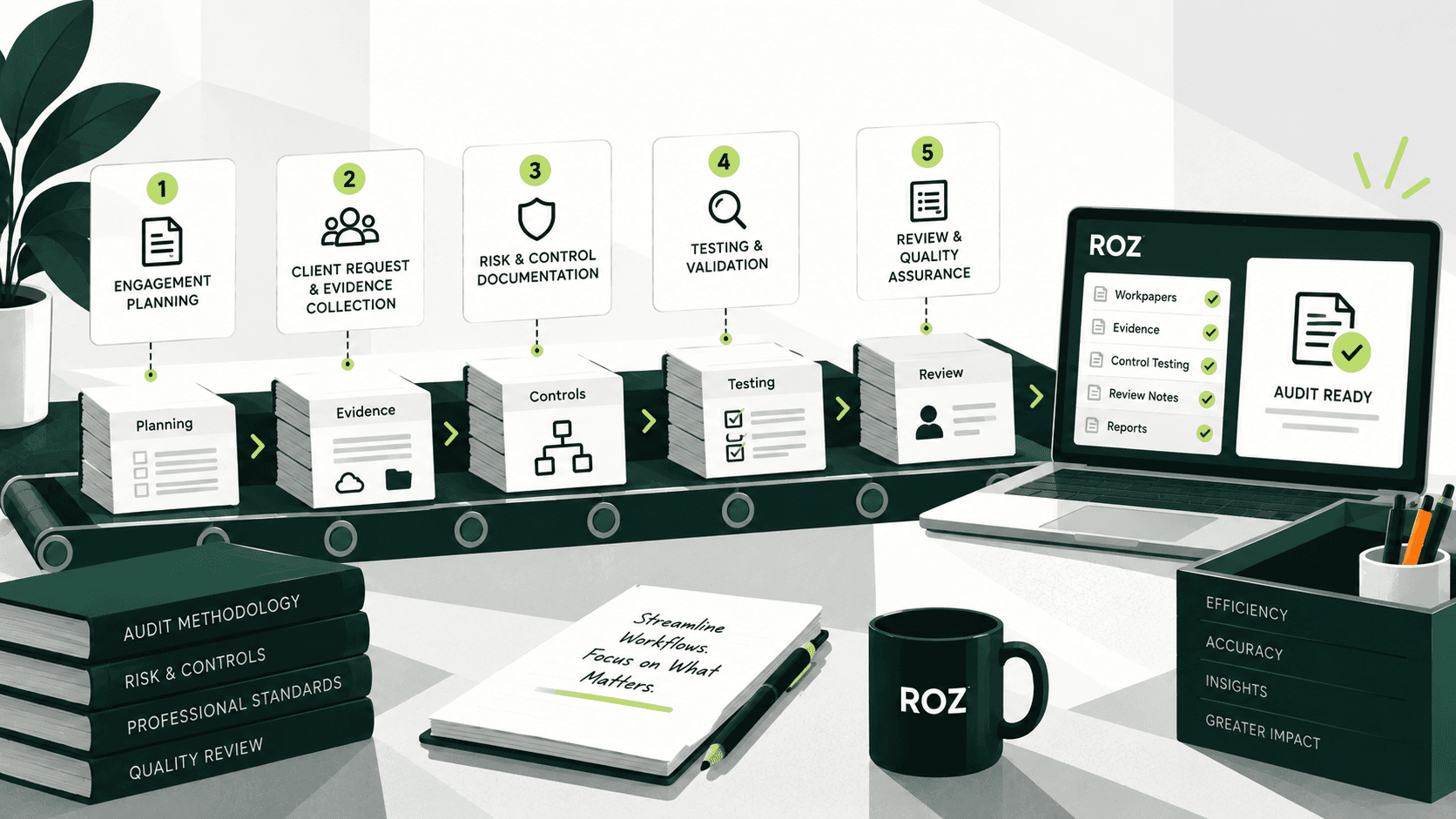
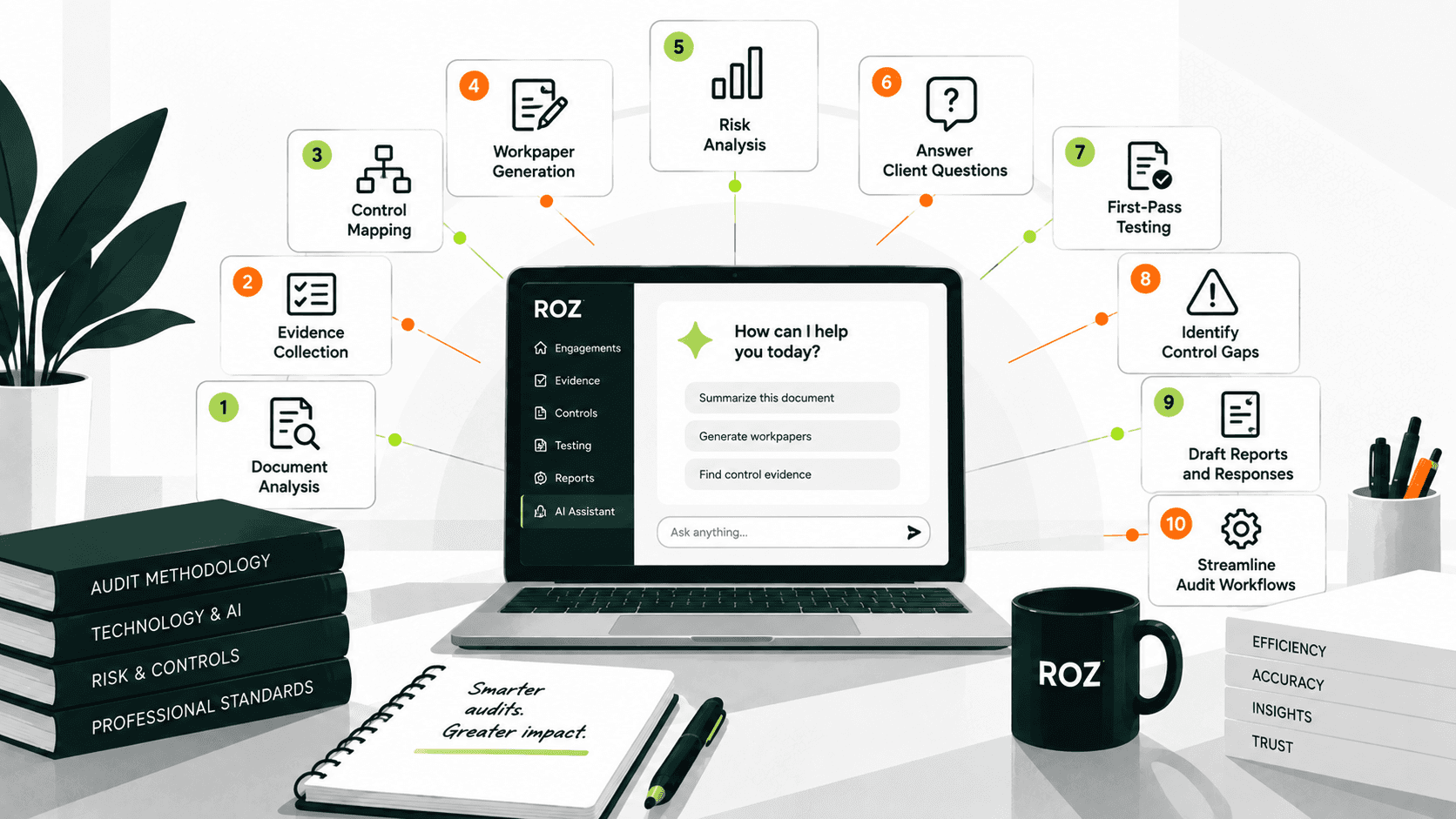
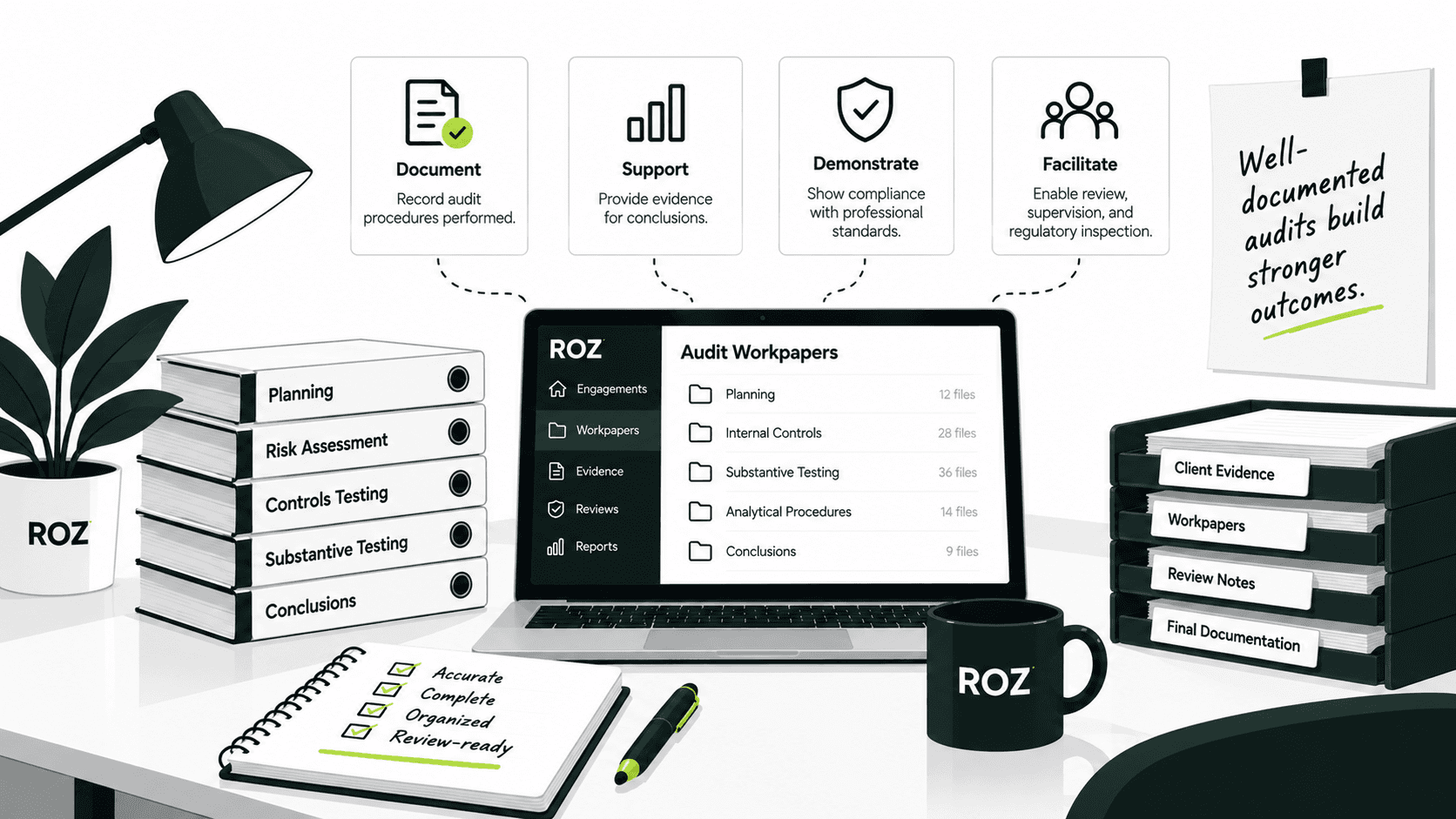
CCPA engagements involve significant documentation, evidence review, and structured analysis. Roz helps centralize and streamline this work so companies can deliver engagements more efficiently.
Our tool helps advisory teams:
Organize engagement documentation in client-specific workspaces for policies, evidence, and supporting materials
Assist with questionnaire responses using client documentation with confidence scoring and source links
Generate draft workpapers from firm templates with full audit trails and traceability
Structure evidence review workflows to support consistent engagement delivery
By reducing the manual overhead of documentation and analysis, Roz helps firms manage CCPA engagements more efficiently while maintaining clear documentation and traceability.
Conclusion
Compliance with the CCPA is a continuous process. The California Privacy Protection Agency continues to issue regulations, the CPRA established new rights, and on July 1, 2023, the updated provisions went into effect.
Companies that successfully handle these demands view privacy as a continuous operational discipline. A sustainable compliance program must include maintaining accurate data inventories, respecting consumer rights, evaluating vendor relationships, and updating documentation.
Companies should begin by evaluating their current privacy practices and finding any gaps in request processing, data mapping, and privacy disclosures.
I hope you learned everything you need to know about CCPA compliance and how businesses can begin building a stronger privacy program.