Audit scoping helps determine the areas of the business to be reviewed in an engagement. Effective scoping helps auditors focus fieldwork on relevant risks and controls rather than reviewing unnecessarily broad areas of the business. However, there is potential to miss assessment of significant risks if scoping is done too narrowly.
There is a tendency in the profession to describe work as 'risk-based,' but in practice many default to auditing the entire department or application. Broad risk assessments, stakeholder requests, and limited access to evidence can push an engagement beyond its original scope. Auditors may also default to reviewing an entire department or application instead of focusing on the specific risk scenarios relevant to the engagement.
In this article, I will guide you on how auditors can decide what to examine without overlooking significant risks. It offers a practical framework, a risk-prioritization approach, a scoping checklist, a copyable scope memo template, and a worked procurement audit example that you can adapt to your own engagements.
What Is Audit Scoping?

Audit scoping involves defining the bounds of an engagement and determining what will be included in that engagement. It addresses the question, “What will this audit examine, and what will be outside the scope of this audit?”
A documented audit scope typically specifies:
Processes and control activities: The operations and controls to be examined.
Entities and locations: The business units, legal entities, or locations included.
Systems and records: The applications, data, and documentation relevant to testing.
Review period: The time frame or reporting dates covered.
Exclusions and limitations: Areas outside the scope and any constraints that could affect coverage.
Documenting the above elements aids auditors, reviewers, and other stakeholders in understanding the coverage of the engagement, interpreting the findings of the engagement, and identifying areas that were not the subject of the engagement.
How Do Auditors Determine Audit Scope?
Step 1: Define the Engagement Objective
The engagement objective should state what the audit will evaluate and why the work matters to the organization. Avoid broad or vague objectives such as “review operations.” Instead, specify the intended outcome, such as “Evaluate whether vendor payment controls address the risk of unauthorized disbursements.” A clearly defined objective helps guide risk assessment, scope boundaries, and planned procedures.
Step 2: Understand the Process and Control Environment
Consider control and process documentation, as well as various dependencies, including the organizational structure and the systems in use. Reach out to process owners and stakeholders to get their perspective on control documentation, process flows, and other important details that may not be reflected in the formal documentation.
Consider changes to the systems, personnel, vendors, and operations that have occurred since the last risk assessment and could have affected risk.
Step 3: Review Existing Risk Information
Review existing risk assessments, unresolved findings, incident reports, prior audit reports, recommendations, complaints, and remediation logs, where available.
Identify the areas that have had audit coverage previously and are likely to have changed. For example, a control was tested before a major system change. The control may need to be reassessed.
Step 4: Identify Relevant Requirements and Evaluation Criteria
Distinguish between areas the engagement planning team can prioritize or exclude based on its objectives and areas that must be addressed under applicable professional standards, laws, regulations, contracts, or the engagement mandate. Document any limitations and escalate potential conflicts with mandatory requirements through the appropriate review process.
Step 5: Translate Objectives Into a Preliminary Scope
Determine relevant processes, systems, entities, and review periods. Decide on the risks and controls that require assessment, document reasoning, and obtain review and approvals.
Practical tip: Build an objective-to-risk-to-control mapping table before drafting the scope memo. This helps connect the engagement objective to identified risks, relevant controls, and proposed testing procedures.
How Do You Prioritize Risks in Audit Scoping?

Identify how each process could fail and the potential consequences. Connect each risk scenario to the affected business objectives and the controls intended to address the risk.
For example, “Unauthorized vendor bank-detail changes may result in payments being made to the wrong vendors" is more informative than “procurement risk.”
Evaluate Likelihood and Impact
Use qualitative or quantitative measures to compare risks. As an initial assessment, a simple likelihood x impact matrix may be beneficial.
Risk scenario | Likelihood (1–5) | Impact (1–5) | Initial score |
Unauthorized vendor bank changes | 4 | 5 | 20 |
Duplicate payments | 3 | 4 | 12 |
Low-value routine expense errors | 2 | 2 | 4 |
These ratings are illustrative. Apply the organization’s risk rating criteria and use professional judgment. Consider whether a large number of small errors could have a significant impact.
Consider Additional Risk Factors
Previous control failures and unresolved findings.
Fraud indicators and unusual transactions.
New systems, process changes, or third-party dependencies.
Regulatory significance and potential financial or operational consequences.
Control complexity, detectability, and existing assurance coverage.
Select Controls for Further Examination
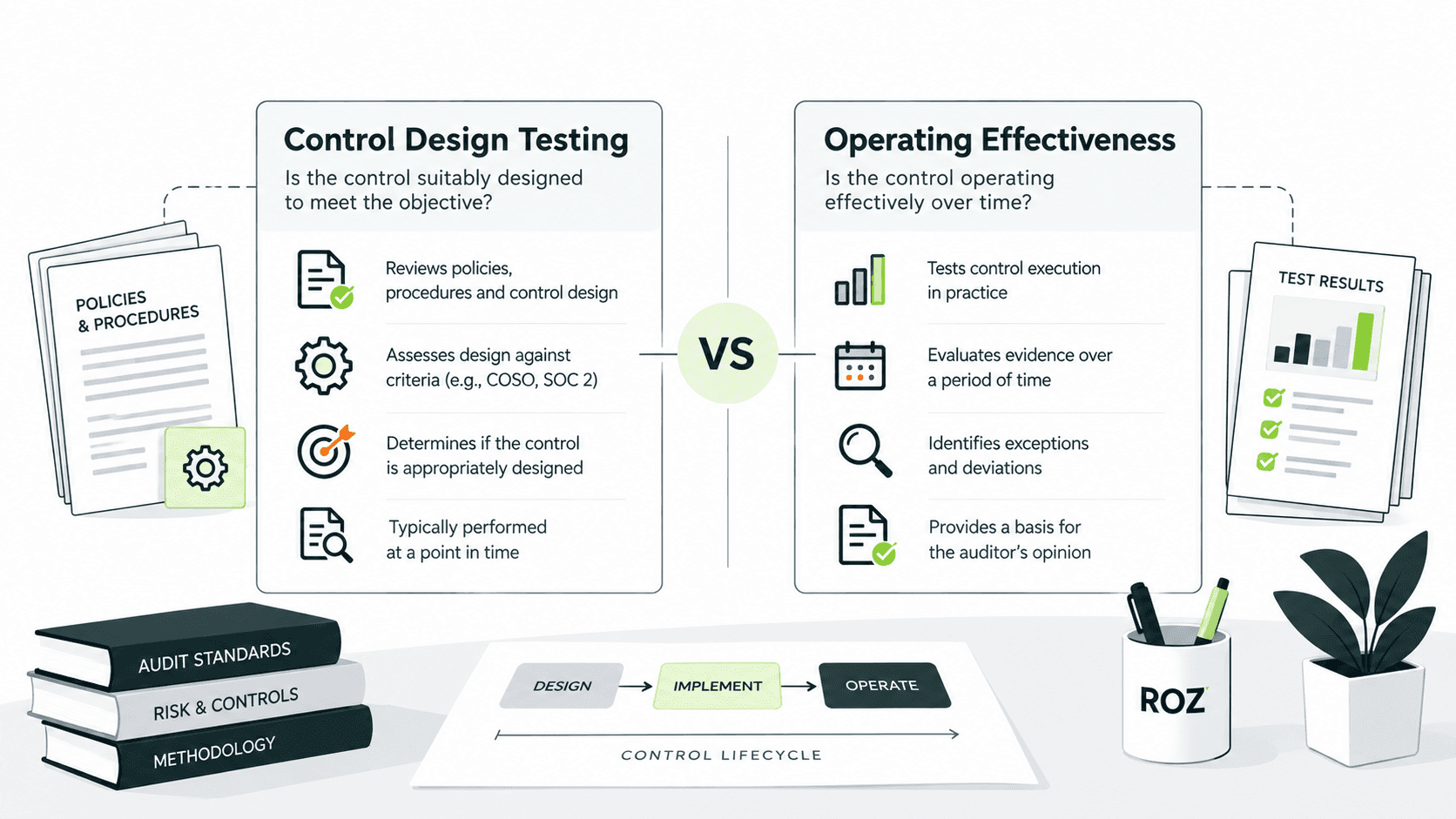
Map prioritized risks to the controls designed to address them. Identify relevant preventive and detective controls, including automated controls where applicable. Select controls for examination based on the engagement objectives, assessed risks, and the evidence needed to evaluate whether the controls are suitably designed and operating effectively.
Document Why Certain Risks Receive More Attention
Document the rationale for significant prioritization decisions, including the evidence and criteria supporting the ratings. Record relevant residual risks and reassess priorities when new information or changes in the business environment affect the original assessment.
How Do You Define Scope Boundaries and Exclusions?
Document five boundaries clearly:
Processes and activities: Which business processes and control activities will be examined.
Entities and locations: Which business units, subsidiaries, sites, or third parties will be included.
Systems and data: Which applications, interfaces, reports, and records will be included.
Review period: The dates or reporting period that will be covered by the examination.
Evaluation criteria: The requirements, policies, and control objectives that will be considered for the assessment.
How Do You Justify Out-of-Scope Areas?
Explain why an area is excluded and how the exclusion relates to the engagement objective. Assess whether it creates a significant coverage gap, document any remaining risks or assurance limitations, and identify circumstances that would warrant reconsidering the exclusion.
How Can You Prevent Scope Creep?
Establish a defined scope that has been approved prior to fieldwork. Explain why the scope is being expanded and how it relates to the goals of the engagement. Analyze the risk and resource impact. Document the change and update the work program.
Important distinction: Scope control should not prevent auditors from responding to emerging risks. Reevaluate the scope and audit plan when new evidence or changed circumstances warrant it, and document the rationale and required approvals for any revisions.
Audit Scoping Checklist and Scope Memo Template
Before fieldwork starts, auditors can use the following checklist to assess whether the scope is ready for review.
What Should You Include in an Audit Scope Memo?
A scope memo documents the parameters of an audit and explains the rationale behind those parameters. An effective scope memo will include the following elements:
Field | What to document |
Engagement objective | What the audit is intended to evaluate |
Key risks | Relevant risk scenarios and prioritization rationale |
Scope included | Processes, systems, entities, and locations |
Review period | Dates or reporting period under examination |
Scope exclusions | Excluded areas and the reason for each exclusion |
Testing focus | Relevant controls and planned procedures |
Evidence and resources | Required records, access, personnel, and expertise |
Limitations | Known constraints and potential coverage gaps |
Approval and changes | Reviewer, approval date, and revision history |
The memo will assist auditors and stakeholders in understanding what the engagement covers, why those boundaries were set, and how the work to be performed relates to the engagement objectives.
Example: Risk-Based Scoping for a Procurement Audit
Let us assume an internal audit team is reviewing the company’s procure-to-pay process.
The objective of the engagement is to evaluate if the selected vendor management and payment controls address the risk of unauthorized vendors, fraudulent bank-detail changes, and unauthorized payments.
Rather than auditing the entire procurement-to-pay process, the team has identified the following priorities:
Risk scenario | Relevant control | Potential evidence |
Unauthorized vendor creation | Independent vendor approval | Vendor setup records and approval logs |
Fraudulent bank-detail changes | Independent verification and authorization | Change logs and verification records |
Unauthorized payments | Payment approval and access controls | Payment records and authorization logs |
The team determines which business units, systems, and review periods are included. It also identifies the evidence needed and develops means to examine the controls in question.
Activities unrelated to the engagement objectives may be excluded and documented, and exclusions that create unacceptable coverage gaps remain in scope.
During fieldwork, the team identifies an unusual pattern of vendor changes that may indicate an additional risk. The team evaluates its significance and determines whether the existing scope remains appropriate. If a scope change is warranted, the team follows the engagement’s review and approval process and documents the rationale.
This example demonstrates the importance of risk-based scoping, including how to manage the implications of scope extension, engagement objectives, and the controls in testing. Scope remains responsive to new and relevant information.
Common Audit Scoping Mistakes and How to Avoid Them
Starting with a department instead of a risk: When a risk is too broad, it may encompass several processes and controls. It is important to decompose risk to lower levels to identify the underlying risk scenarios.
Treating every risk equally: Not every risk deserves the same amount of testing. Considering both the level and type of risk, as well as the controls and the environment surrounding them, can significantly help determine the level of testing required.
Failing to connect risks to controls: Identifying risks does not necessarily inform auditors of what needs to be tested. Significant risks need to be connected to relevant controls and the planned audit procedures.
Excluding areas without a rationale: Unsupported exclusions create gaps in the audit work and may leave some risks unaddressed. Explain the rationale for any exclusions and identify and describe any risks that remain after the exclusions.
Ignoring evidence availability: Before fieldwork begins, identify the evidence required for planned procedures and determine whether access constraints could affect the scope, testing approach, or ability to meet the engagement objectives.
Allowing uncontrolled scope changes: It may be necessary to document what changes are being made to the scope of the audit. Determine what changes need to be made to address concerns, and evaluate the impact of those changes.
Treating scope as fixed: Circumstances change, and the audit scope may need to be adapted as well. Document any changes made to the audit scope and explain the reasons for those changes.
How Roz Supports Audit Scoping and Control Testing
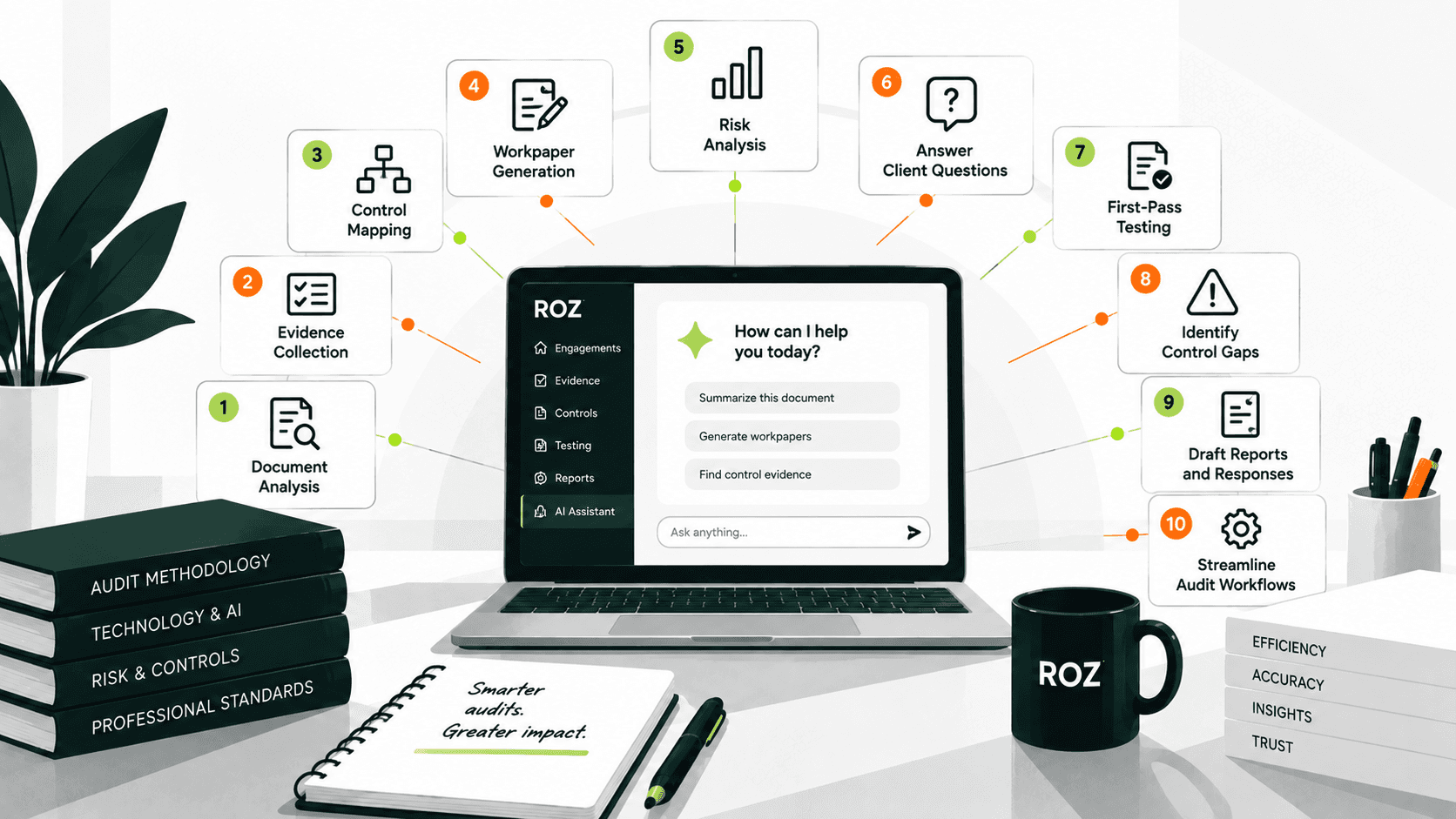
Roz is an AI-native audit fieldwork and control-testing platform built to help auditors and risk advisory teams accelerate fieldwork without replacing professional judgment.
Connect Evidence to Relevant Controls
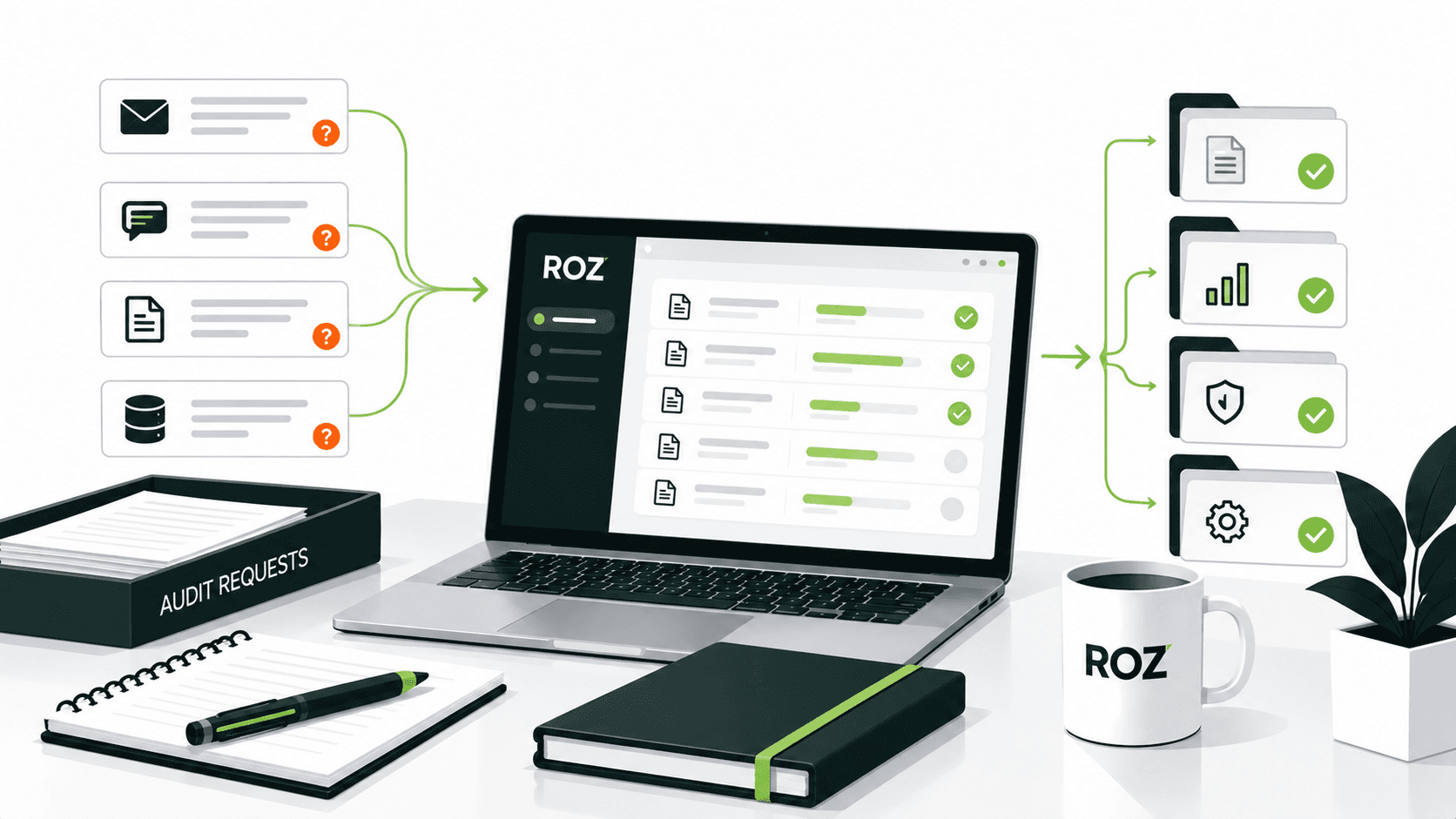
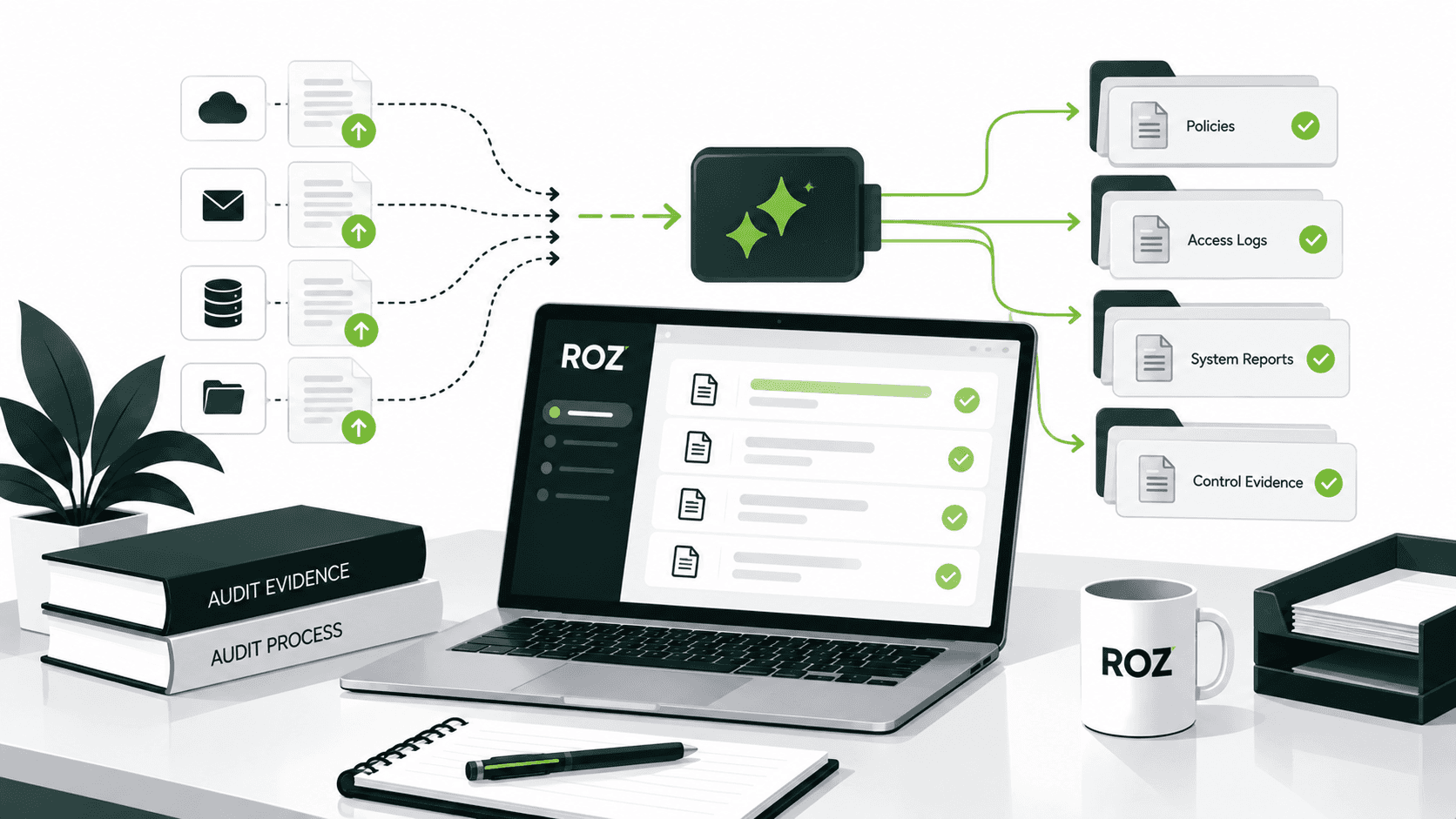
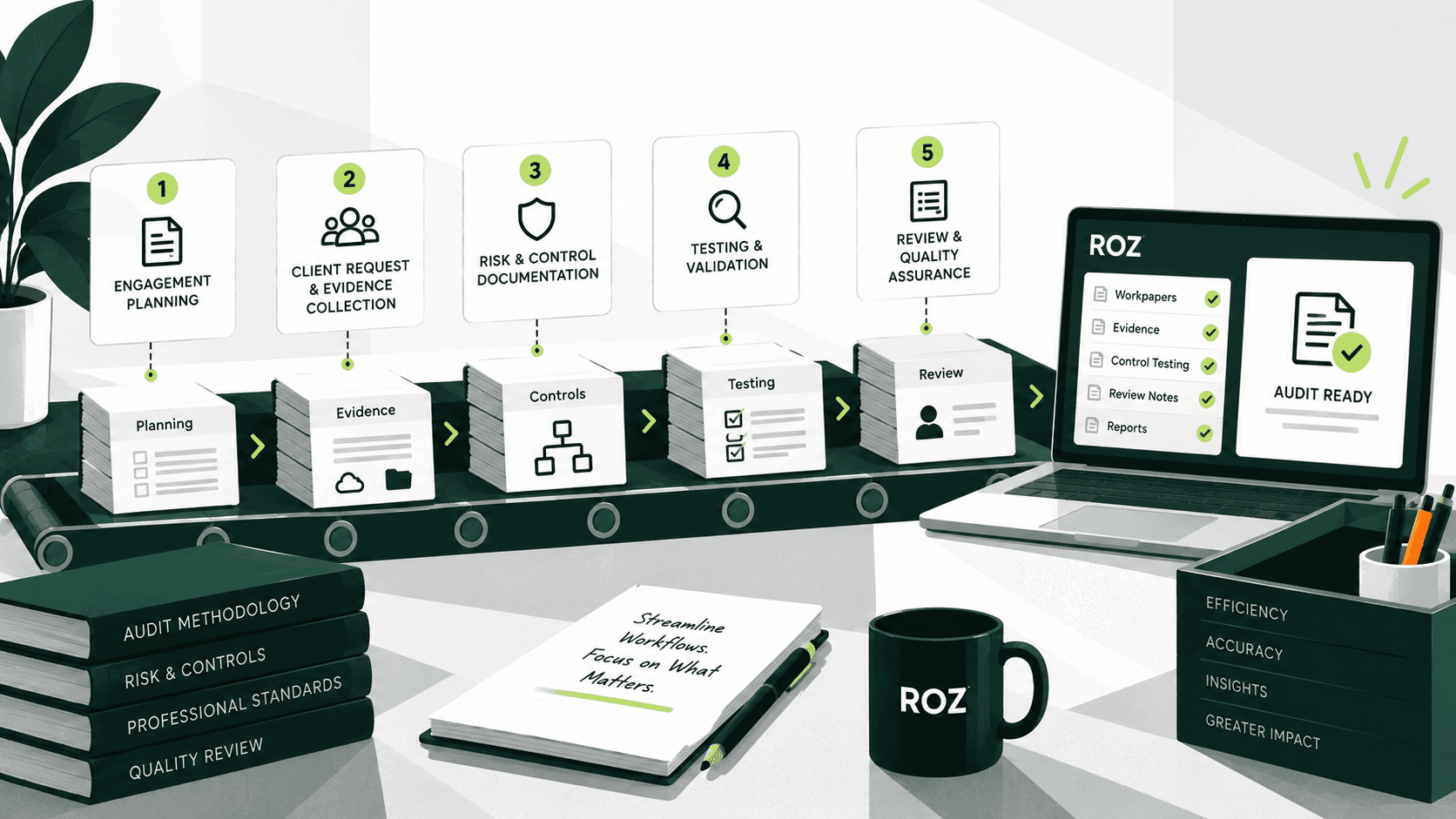
Roz organizes client evidence and connects it to relevant controls and testing criteria through a structured workflow: Control >> Evidence Request >> Evidence >> Testing.
Support Risk and Control Review
Structured risk and control documentation helps auditors trace identified risks to the controls intended to address them, supporting the mapping work described earlier in this article.
Surface Potential Evidence Gaps
Evidence sufficiency checks can help identify missing or potentially insufficient support for auditor review before testing proceeds.
Accelerate First-Pass Control Testing
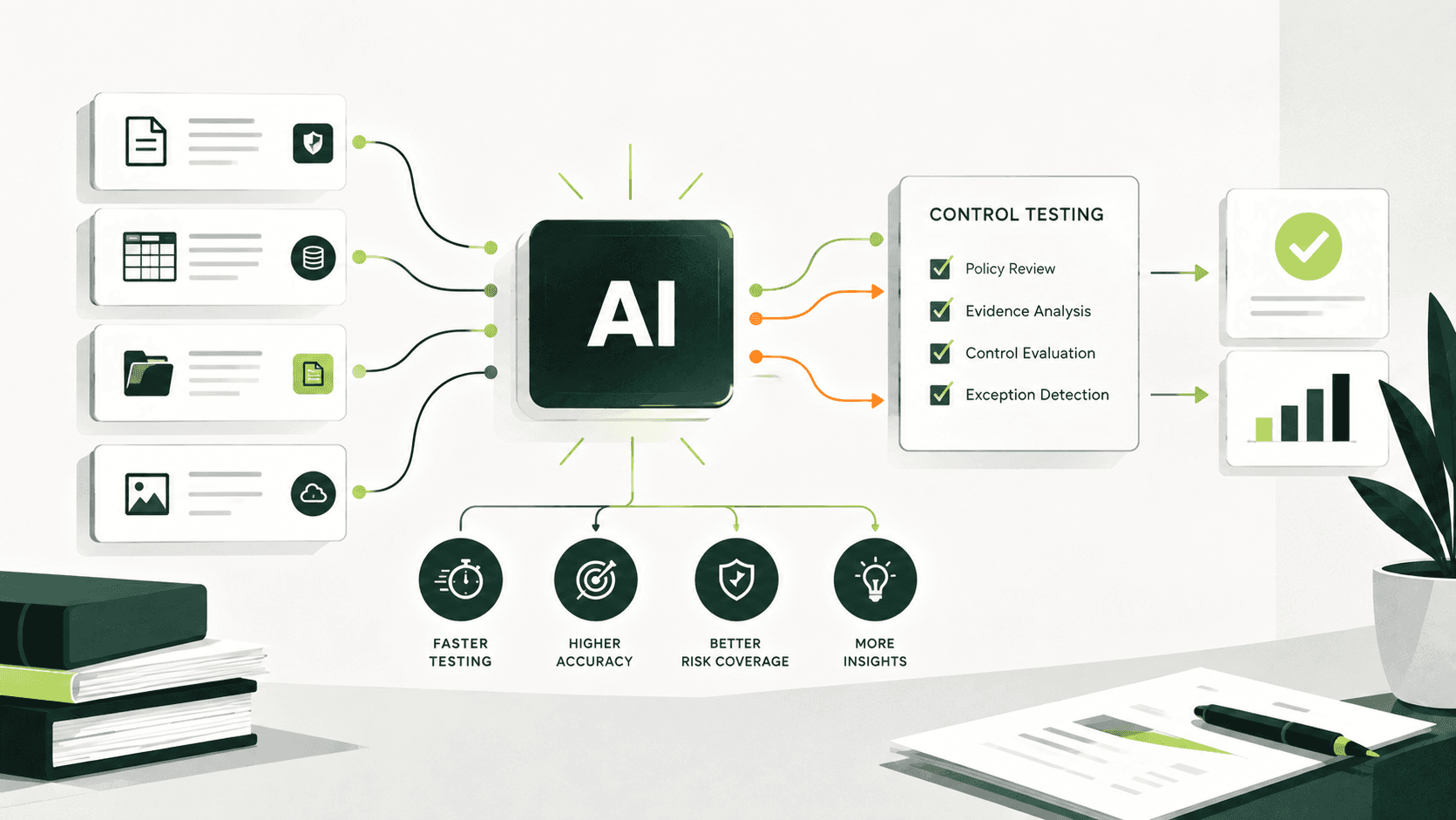
Roz runs defined or AI-suggested attribute checks against evidence and sample sets, returning PASS, FAIL, N/A, or INFO results with reasoning. Quote Highlighting helps auditors locate relevant passages in source evidence and verify AI-generated results. Auditors review the outputs, investigate exceptions, and determine the appropriate testing conclusions.
Keep Scoping Decisions With the Auditor
Auditors determine the final scope, select additional procedures, evaluate evidence, and reach conclusions. Roz supports an approved, risk-informed scope through evidence organization, first-pass control testing, and traceable workpapers. It does not independently determine audit scope or issue audit opinions.
Conclusion
Effective audit scoping starts with a clear engagement objective and a focused assessment of the risks that matter most. Auditors should connect prioritized risks to relevant controls, define scope boundaries, and document the rationale for exclusions and testing decisions.
Scope should remain controlled but responsive to new evidence and changing circumstances. A well-maintained scope memo helps explain why particular areas were examined, what limitations remain, and how changes affected the audit plan.
By connecting risk assessment to control testing, auditors can keep fieldwork focused on the engagement objectives while remaining responsive to significant emerging risks.
Frequently Asked Questions
What Should an Audit Scope Include?
An audit scope should define the engagement objectives, processes, systems, entities, locations, review period, evaluation criteria, planned testing, exclusions, and relevant limitations.
What Is the Difference Between Audit Scope and Audit Planning?
Audit scope defines the work covered by the engagement. Audit planning determines the strategies, resources, procedures, and timing to complete the work.
When Should an Auditor Revise the Scope?
Auditors should reassess scope when there are new, material risks or changes to previous, assessed risks. Revisions should follow the firm’s process and be documented.
How Does Roz Support Audit Scoping and Control Testing?
Roz supports evidence-to-control mapping, evidence sufficiency checks, and AI-powered first-pass control testing against defined or AI-suggested attribute checks. Auditors retain responsibility for determining audit scope, evaluating evidence, and reaching testing conclusions.