Audit failures rarely begin in the field. They start in the planning phase, when assumptions go unexamined, risks are underweighted, and documentation gaps go unaddressed until it's too late.
Audit complexity is increasing. Regulatory expectations are rising. Evidence volumes are growing. And most firms are absorbing this pressure with flat or shrinking budgets.
Planning is where an auditor shapes the engagement before the engagement shapes them.
In this article, I will cover what audit planning is, how it differs from an audit strategy, the seven-step process every auditor should follow, documentation requirements, common challenges, and how tools like Roz can reduce administrative burden without shifting professional judgment away from the engagement team.
What Is Audit Planning?
Audit planning involves defining an audit engagement's methodology, scope, and the preparatory steps in advance of the fieldwork. This defines the audit in order to maximize efficiency, identify risks, and prepare the engagement team to gain the necessary understanding of the client and the related industry to develop effective audit procedures.
Two standards dictate the planning requirements relevant to external auditors:
ISA 300 (Planning an Audit of Financial Statements): Issued by the International Auditing and Assurance Standards Board (IAASB), ISA 300 outlines the requirements surrounding the performance of the preliminary activities of an engagement, the articulation of the overall audit strategy, and the development of the audit plan.
PCAOB AS 2101 (Audit Planning): Issued by the U.S. Public Company Accounting Oversight Board, AS 2101 requirements relate to the planning of integrated audits and the financial statement audits of U.S. public companies.
Audit Planning Process: 7 Key Steps Every Auditor Should Follow
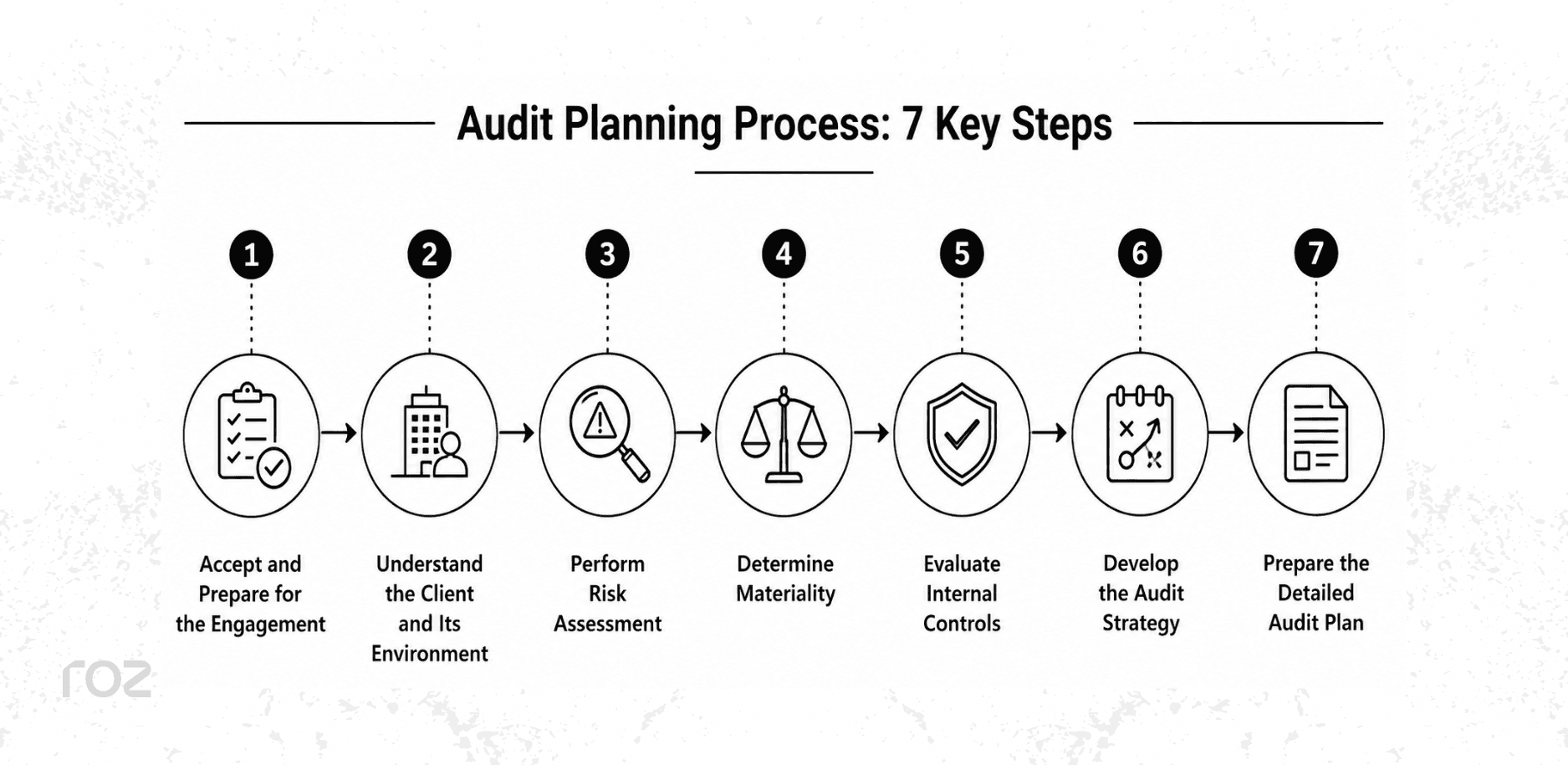
Step 1: Accept and Prepare for the Engagement
Planning can’t begin until the engagement is firm. The following steps are included:
Client acceptance and continuance: Evaluate whether the client relationship is proper within the context of the known risks, findings from prior years, and the integrity of management.
Independence confirmation: Verify that the firm and all engagement team members satisfy the applicable independence requirements.
Engagement letter: Establish the terms of the engagement in writing, which includes the engagement objectives, scope, and the responsibilities of management and the auditor.
Prior-year review: Review previous audit files, findings, and matters that were carried forward. These often indicate unresolved risk concentrations.
Step 2: Understand the Client and Its Environment
The degree of risk that an auditor evaluates stems from the knowledge that an auditor has of the operations of a client’s business. This includes the following:
Business model: The way a client operates its revenue-generating activities and manages its cost-curbing activities.
Industry: Sector-specific risks, seasonality, and competitive pressures.
Organizational structure: Legal entities, subsidiaries, and reporting lines.
Technology landscape: Core systems, data flows, and IT dependencies.
Regulatory environment: Applicable compliance requirements.
Significant changes: New products, leadership transitions, acquisitions, or restructurings that alter the risk profile.
Step 3: Perform Risk Assessment
Once auditors understand the business and its environment, they can assess where material misstatements are most likely to occur. Risk assessment exercises cover five major risk categories:
Financial reporting risks: Accounts or disclosures susceptible to error or manipulation.
Operational risks: Business process failures that could affect financial outcomes.
Fraud risks: Indicators of incentive, opportunity, or rationalization for fraudulent reporting.
IT risks: System vulnerabilities, access control weaknesses, or data integrity concerns.
Compliance risks: Potential breaches of regulations, loan covenants, or contractual obligations.
The outcome from this exercise serves as the basis for all subsequent planning steps such as materiality, control testing, and the nature and extent of substantive procedures.
Step 4: Determine Materiality
Materiality is defined as the threshold used by auditors and other users of financial information to determine whether misstatements, whether individual or aggregate, could reasonably be expected to impact the economic decisions of users of the financial statements.
Three thresholds are relevant in planning:
Overall materiality: Set at the financial statement level, typically calculated as a percentage of a benchmark such as total revenues or total assets. The percentage is not defined in professional standards and requires auditor judgment.
Performance materiality: Set below overall materiality to reduce the risk that undetected and uncorrected misstatements exceed overall materiality. While many firms use internal percentage ranges, the appropriate level depends on professional judgment and engagement risk.
Clearly trivial threshold: The amount below which individual misstatements do not need to be accumulated. This threshold supports efficiency without introducing unacceptable risk
Materiality has a significant impact on the scope of testing. Setting lower thresholds results in an increased number of accounts within scope and an increased number of items that are subject to an examination.
Step 5: Evaluate Internal Controls
As part of determining their audit approach, auditors evaluate whether the reliance on controls is warranted. This involves considering:
Entity-level controls: Governance, tone at the top, risk management, and monitoring activities.
Business process controls: Controls embedded in different transaction cycles such as revenue, procurement, or payroll.
IT General Controls (ITGCs): Access management, change management, and operations controls over the systems used for financial reporting.
Automated vs. manual controls: Automated controls can work consistently but always require reliable ITGCs. Manual controls always add human variability.
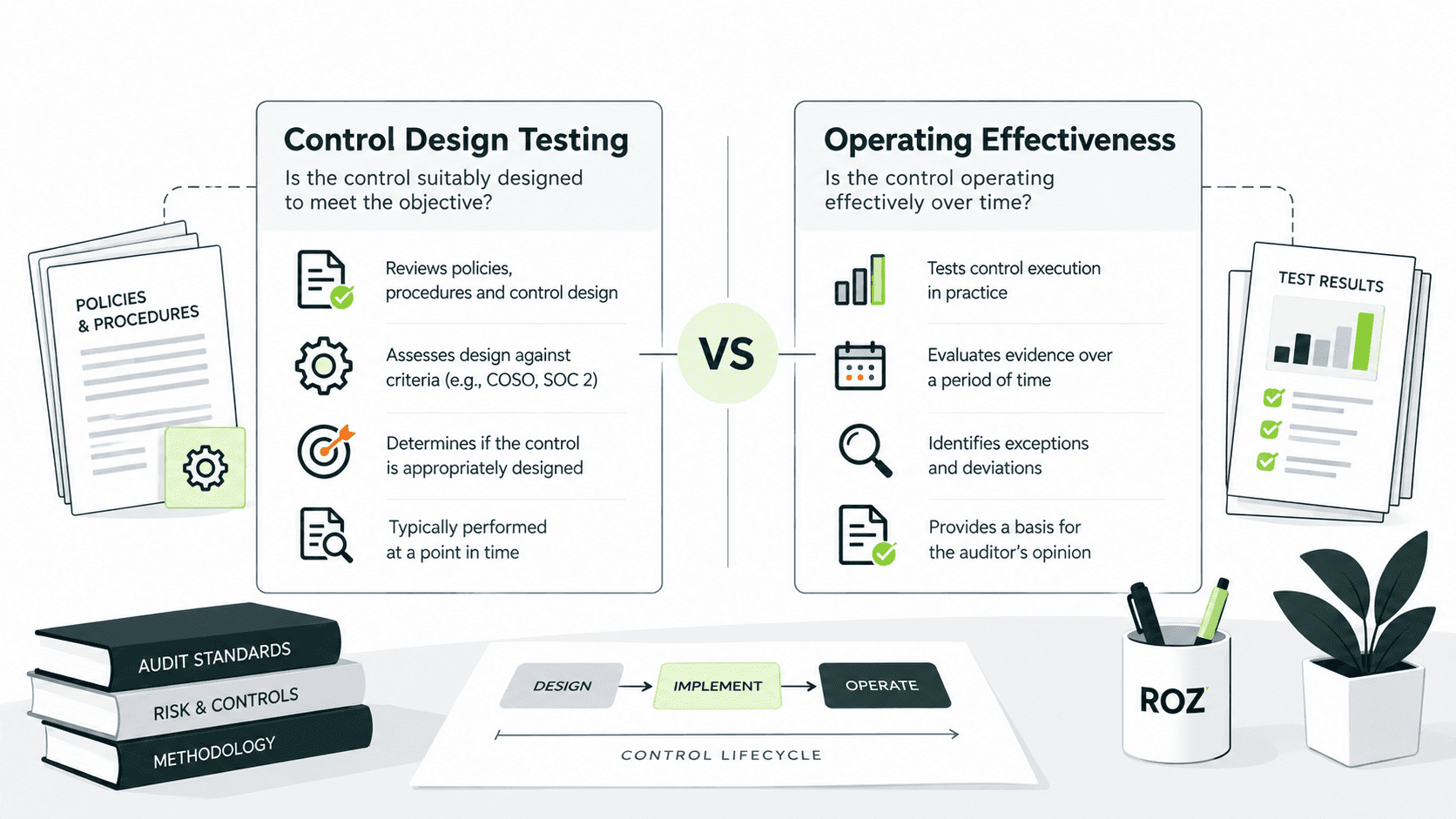
The scope of testing is directly determined by the decision to rely on the controls or to take a more substantive approach.
Step 6: Develop the Audit Strategy
The audit strategy provides an overview of the high-level engagement based on the risk assessment and materiality decisions. Key decisions include:
Scope: Which entities, locations, accounts, and disclosures will be covered.
Timeline: Key milestones, interim work, and fieldwork dates.
Staffing: Who will be assigned to the engagement and at what level
Specialists: Is this engagement a valuation-related engagement, an IT-related engagement, or an engagement requiring other professionals
Audit approach: Is the audit going to rely on controls, take a substantive approach, or use a combination?
Resource allocation: How time and budget are distributed across risk areas.
Step 7: Prepare the Detailed Audit Plan
The audit plan defines the strategies and describes key decisions for each important area. It provides the following:
Planned procedures: What the auditor will do and why.
Control testing: Which control will be subjected to control testing, and how and with what sample size.
Substantive testing: Analytical procedures, detail testing, and confirmations.
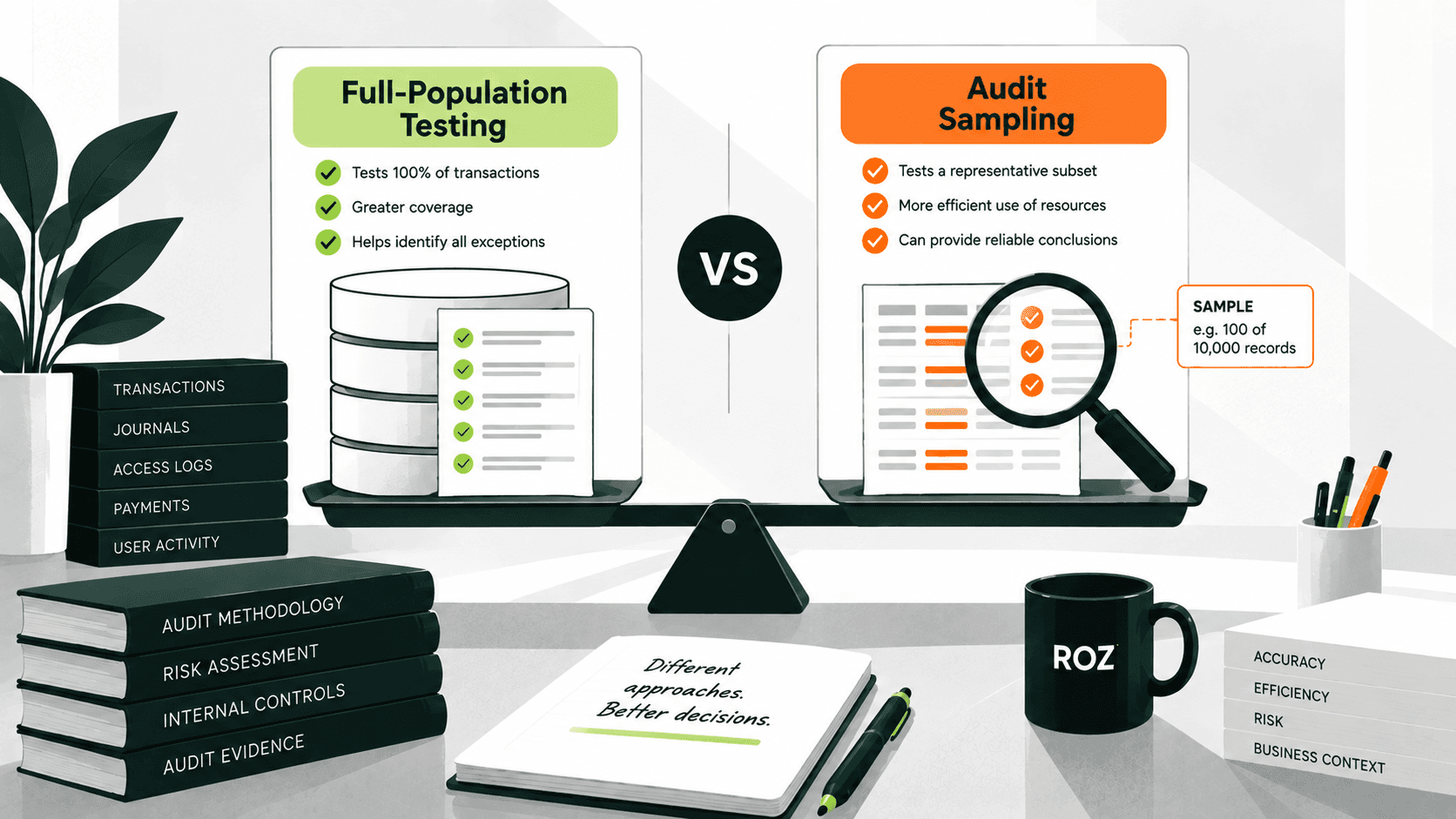
Sampling methodology: How will samples be selected, and what assurance level is expected.
Client request list (PBC): A client-prepared list that details every piece of documentation and evidence that the audit team will require from the client.
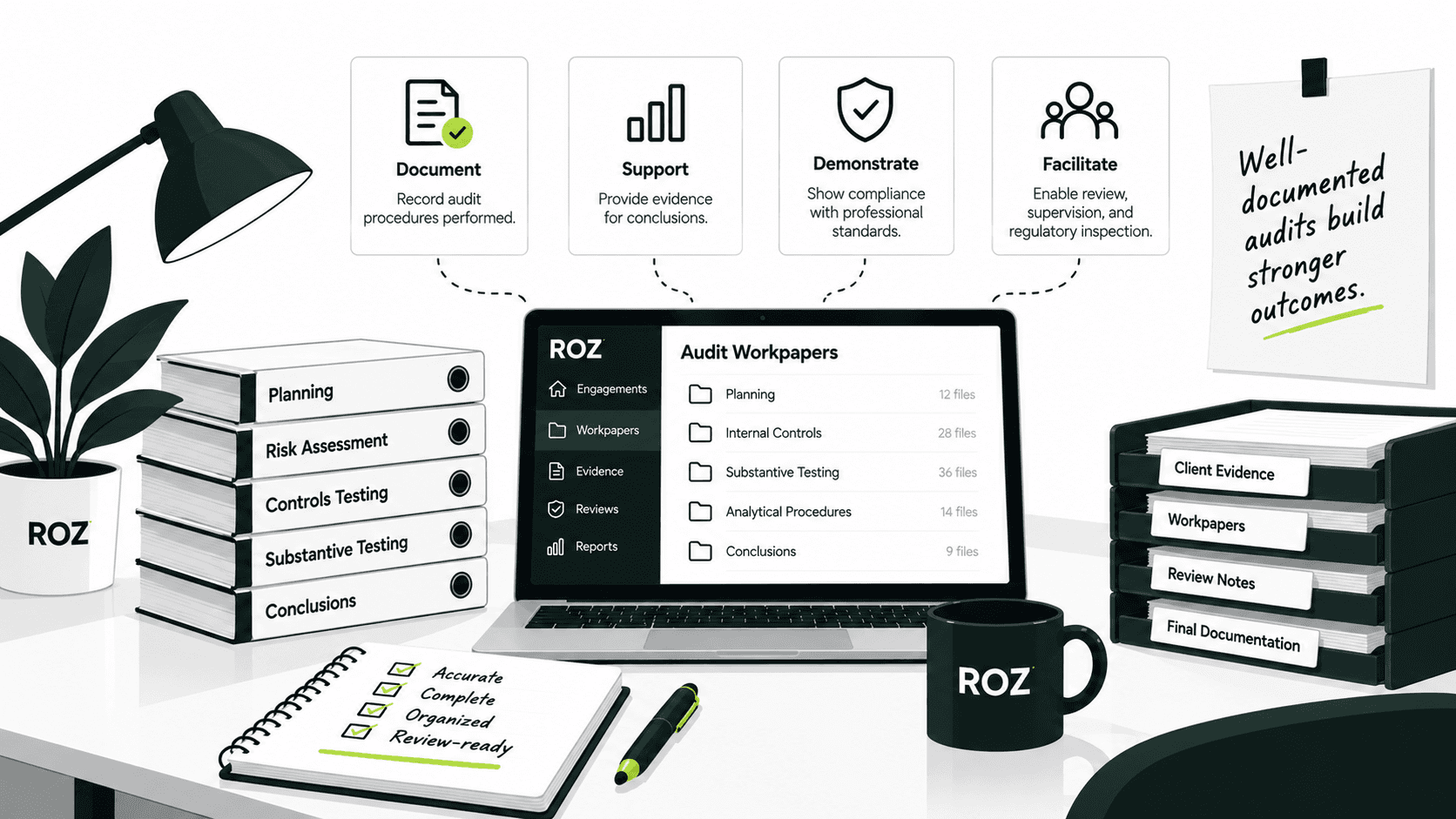
Planning documentation: How will planning documentation be retained, referenced, and referenced in the audit file
Audit Planning Checklist: Essential Tasks Before Fieldwork Begins
Use this checklist to confirm that all planning activities have been addressed before the engagement moves into fieldwork.
Engagement Preparation

Client acceptance or continuance decision completed
Independence confirmed for all team members
Engagement letter signed by management
Engagement scope defined and agreed upon
Client Understanding
Business model and operations reviewed
Industry-specific risks documented
Prior-year findings and carry-forward items reviewed
Significant changes since the last audit identified
Risk Assessment
Significant accounts and disclosures identified
Fraud risk considerations documented
IT environment and ITGC risks reviewed
Overall materiality, performance materiality, and trivial threshold established
Planning Activities
Audit strategy memorandum completed
Audit program prepared for all significant areas
Team assignments finalized and communicated
Client request list distributed
Planning meeting held with engagement team
Audit Planning Documentation: What Auditors Should Prepare
Planning decisions need to be documented to meet professional standards but also to protect the engagement if questions arise later. The table below highlights the key planning documents:
Document | Purpose |
Engagement Letter | Defines the objectives of the engagement, scope, responsibilities of management, and the auditor |
Audit Strategy Memorandum | Documents the strategy of the audit, including the scope, timing, budget, and principal planning decisions |
Audit Planning Memorandum | Records the rationale behind planning decisions |
Risk Assessment | Identifies significant risks and links them to planned responses |
Materiality Memo | Documents materiality thresholds and the basis for setting them |
Audit Program | Lists planned procedures by assertion and area |
PBC Request List | Specifies client evidence and documentation required |
Staffing Plan | Assigns team members to areas and tracks hours |
Planning Meeting Notes | Summarizes key decisions and open items from planning discussions |
Note: Documentation requirements vary by auditing standards and firm methodology.
Common Challenges for Audit Planning
Even well-run firms encounter recurring planning problems. The most common ones include:
Incomplete PBC items: When clients deliver incomplete, disorganized, or disorderly information, this results in delays in risk assessment and forces revisions on planning late in the cycle.
Tight timelines: Because of the severe time constraints, there are time pressures that affect the time available for proper planning. This, in turn, increases the risk of overlooking certain risks or not adequately identifying or covering risks.
Scope changes: During planning, a business may enter into a merger, acquisition, business combination, or transaction, integrating one or more new businesses. As a result, the audit strategy and the audit plan must be revised.
Poor process documentation: When clients lack documented policies, this adversely affects auditors' ability to understand clients' key processes and controls, increasing the risk of inadequate control and audit procedure design.
Multiple systems and data sources: Fragmented technology environments make it harder to trace transactions and assess IT controls consistently.
Manual PBC request management: Back-and-forth emails to collect client-provided information introduce delays, version control issues, and documentation gaps.
Resource constraints: A flat headcount against a growing workload leaves less time for planning quality and more pressure to begin fieldwork early.
Engagement team coordination: On larger audits, the need to align all the engagement team members, especially those working in different locations or different time zones, results in communication gaps and increases the risk of inconsistent execution.
Inconsistent documentation across engagements: Without the use of standardized templates, documentation quality varies by engagement team, increasing review time and quality control risk.
Standardized workflows and AI-assisted tools can reduce the administrative weight of these challenges and help keep auditors in control of the decisions that drive the planning of audits.
How Roz Helps Streamline Audit Planning
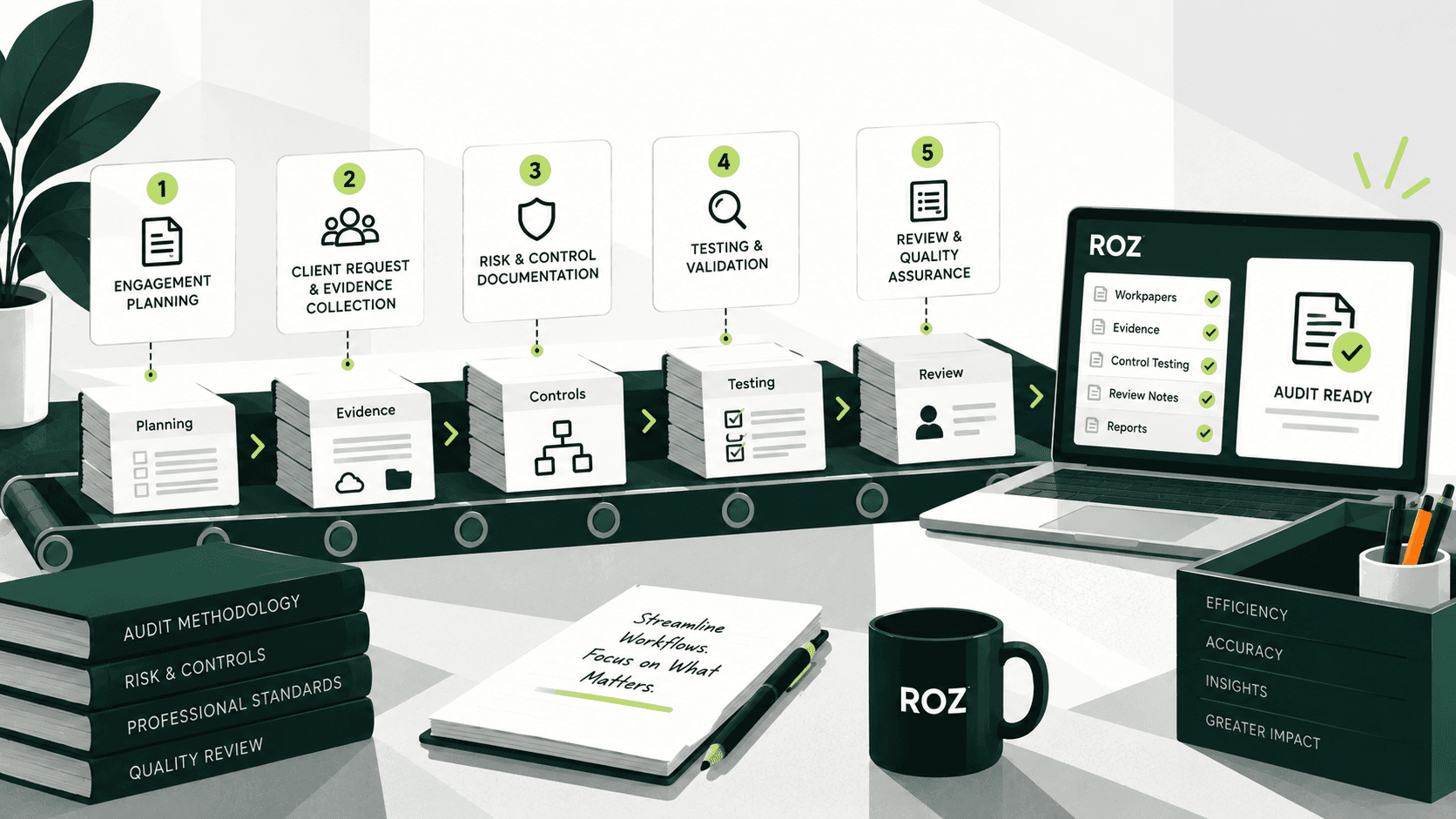
Roz is an AI-native fieldwork platform built for auditors and advisory firms performing control-based engagements across frameworks such as SOC 2, ISO 27001, CMMC, and SOX. It helps teams organize engagement information, accelerate evidence review, and support control testing while keeping auditor judgment at the center of every engagement.
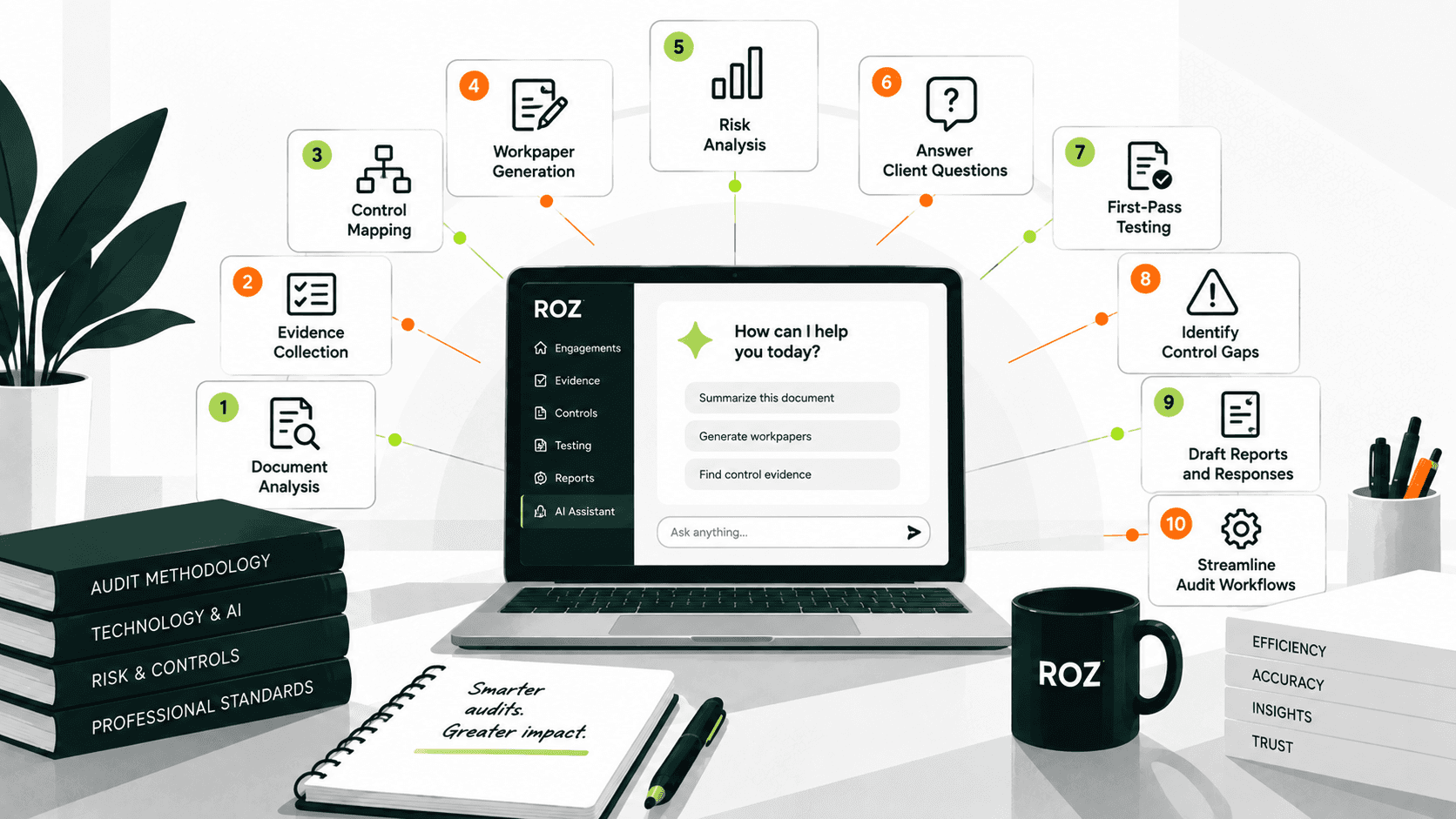
For audit planning, Roz can help firms:
Centralize engagement information in secure, client-specific workspaces.
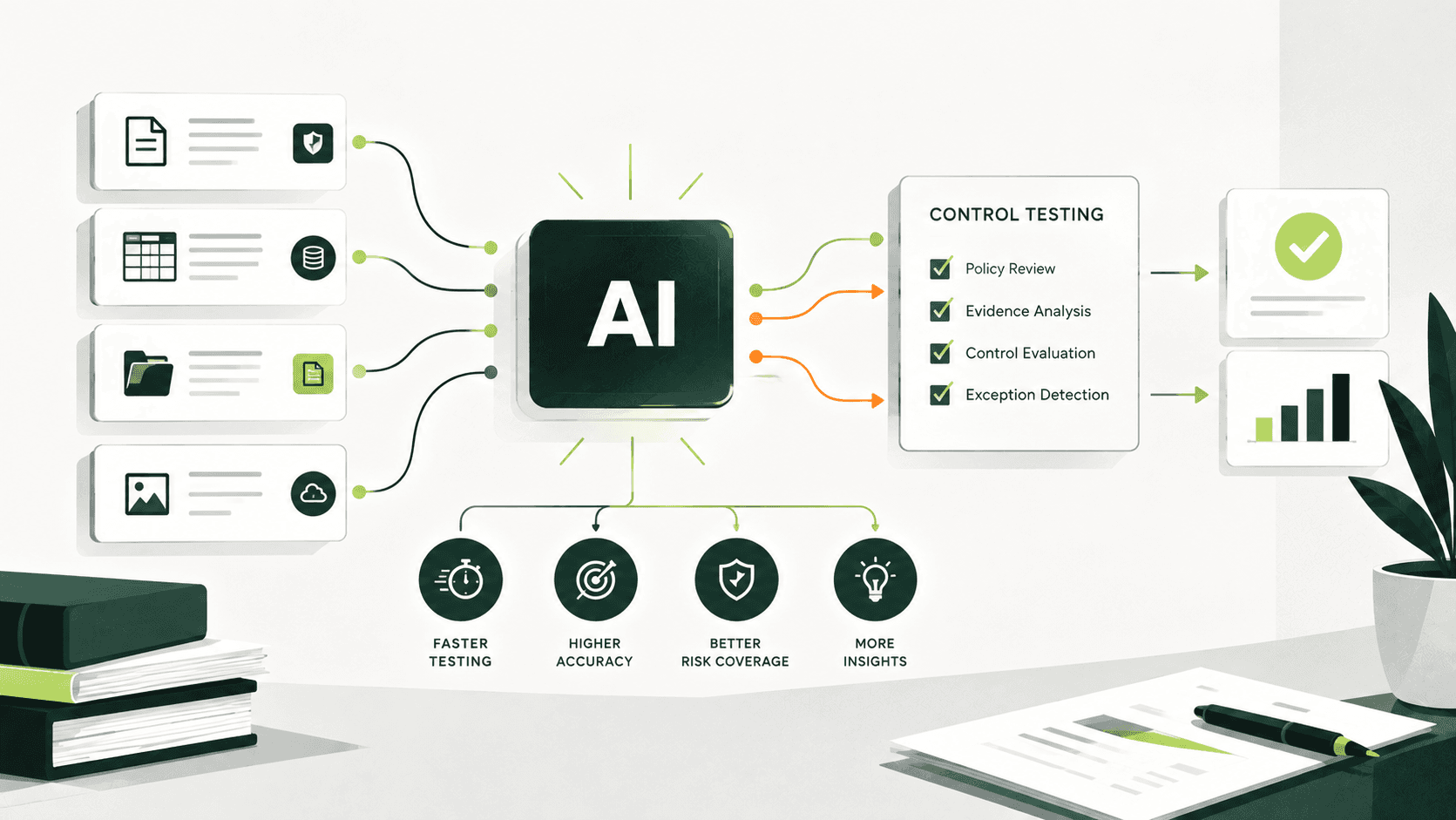
Accelerate document review with AI-assisted analysis of client documentation.
Support risk and control planning by highlighting potential documentation gaps during readiness assessments.
Organize evidence requests and relevant documentation around controls and testing workflows.
Maintain traceability between engagement documentation, evidence, and audit activities.
Roz streamlines planning documentation and first-pass analysis, allowing auditors to focus on risk assessment, planning decisions, and professional judgment throughout the engagement.
Conclusion
Practical audit planning is not a formal requirement. It is the groundwork on which quality fieldwork is built. The absence of adequate planning leads to best guess risk assessment, processes that fall out of scope, gaps in documentation, and other quality issues where fieldwork should be carried out to mitigate the risks charged.
The standards are clear. ISA 300 and PCAOB AS 2101 all require a documented risk-based planning process prior to fieldwork commencing. Despite the challenges that AI tools present, they have the potential to streamline review time of documentation, develop working papers, and trace evidence. AI tools can be a great source to develop tools to work alongside practitioners.
The proper planning and scheduling of work takes time; it also saves time. Poorly planned audits typically run over budget and often fail to identify significant risks. These are the audits where planning was compressed or treated as a checkbox rather than a foundation.
Frequently Asked Questions
What documents are prepared during audit planning?
Core planning documents include the engagement letter, audit strategy memorandum, risk assessment documentation, materiality memorandum, audit program, and the PBC request list. Specific requirements are based on either ISA 300 or PCAOB AS 2101.
What is the difference between an audit strategy and an audit plan?
An audit strategy defines the scope, the timeframe, and the approach. An audit plan describes the specific procedures that execute that strategy. Documentation of both is required by ISA 300 prior to significant fieldwork.
How can AI help with audit planning?
AI tools are able to perform document review as well as flag missing client document gaps. AI is also able to create first draft workpapers. Professional judgment will always be harbored for assessing risk, the materiality level, and evaluation of controls, as AI technology will never replace the human brain.