Every time a customer swipes their card, they initiate a series of security expectations. The Payment Card Industry Data Security Standard was developed to protect customers. Companies that store, process, or transmit cardholder data are typically required by payment brands to comply with PCI DSS.
The PCI Security Standards Council develops and maintains the PCI DSS standard. PCI DSS 4.0 was released in March 2022, and as of March 31, 2024, PCI DSS v3.2.1 will no longer be valid. The first date to adhere to the PCI DSS 4.0 requirements was March 31, 2025.
So, companies need to be prepared for ongoing evaluations and to be able to show evidence of these evaluations. This is where PCI compliance software comes in. It helps companies stay organized and manage compliance activities.
In this article, we explore what PCI compliance software is, why businesses use it, and eight tools that help companies manage PCI DSS compliance activities more effectively.
What Is PCI Compliance Software?
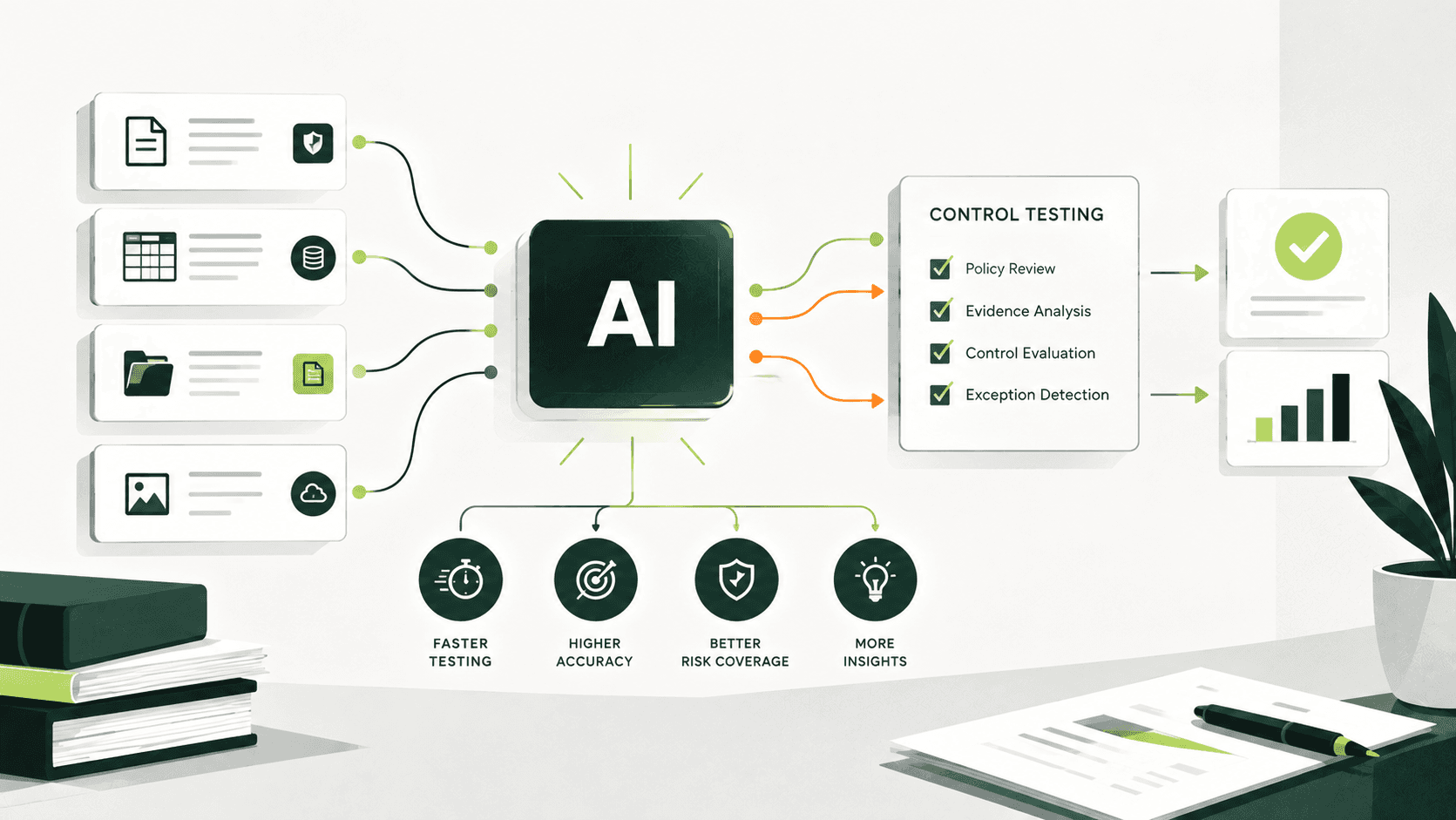
PCI compliance software refers to tools that help companies manage activities associated with meeting the requirements of the Payment Card Industry Data Security Standard. Most of these tools help in the security control monitoring, evidence collecting, security policy management, and the documentation prep for the assessments.
What These Tools Typically Help With
Control monitoring and alerts: Monitoring whether the security controls required are active and working as intended.
Evidence collection and documentation: Collecting logs, configurations, and records that provide evidence of control implementation.
Policy management: Creating, storing, and maintaining security policies and procedures.
Risk and vulnerability tracking: Detecting possible gaps in controls and prioritizing the actions needed to fill them.
Compliance reporting: Preparing dashboards and reports for the internal teams and for the purposes of audits.
Audit preparation workflows: Streamlining documentation and evidence preparation for an assessment cycle.
These tools help in PCI DSS readiness by helping teams in documentation and compliance management. However, just using these tools doesn't mean a business is PCI DSS compliant, and they can't replace the official assessment done by a qualified security assessor. Companies seeking a formal PCI DSS assessment must engage a QSA approved by the PCI Security Standards Council.
Why Businesses Use PCI Compliance Software
Complexity of PCI DSS Requirements
PCI DSS includes multiple security domains, such as network security, access security, and governance. Without central tools to track requirements across an expanding infrastructure, the chances of documentation gaps and discrepancies are high.
Continuous Compliance Monitoring
Compliance activities must be maintained continuously, and companies must maintain their controls continually beyond just prepping for an audit. Automated monitoring streamlines the process of tracking control status for security teams so that they do not have to rely on manual reviews as much.
Centralized Documentation and Evidence
Assessments are evidence-based and require such evidence as policy documentation, system logs, access records, and configuration documentation. Without a system that centralizes the control documents, collecting and organizing everything before an assessment will be a time-consuming process.
Reduced Audit Preparation Effort
Teams can rely on automation to collect and organize documents daily throughout the year, and as a result, audit prep becomes much easier than when they had to complete everything last-minute.
Improved Security Visibility
Many compliance platforms have visibility into security controls and can integrate with cloud and identity systems as well as other infrastructure tools. Rather than having to rely on spot-checking control statuses, the visibility into control status helps security teams track compliance posture more effectively.
8 Best PCI Compliance Software to Secure Payment Data
Below, tools help companies in operations relating to PCI DSS readiness and compliance. Each serves different company sizes, compliance maturity levels, and operational contexts.
1. Drata
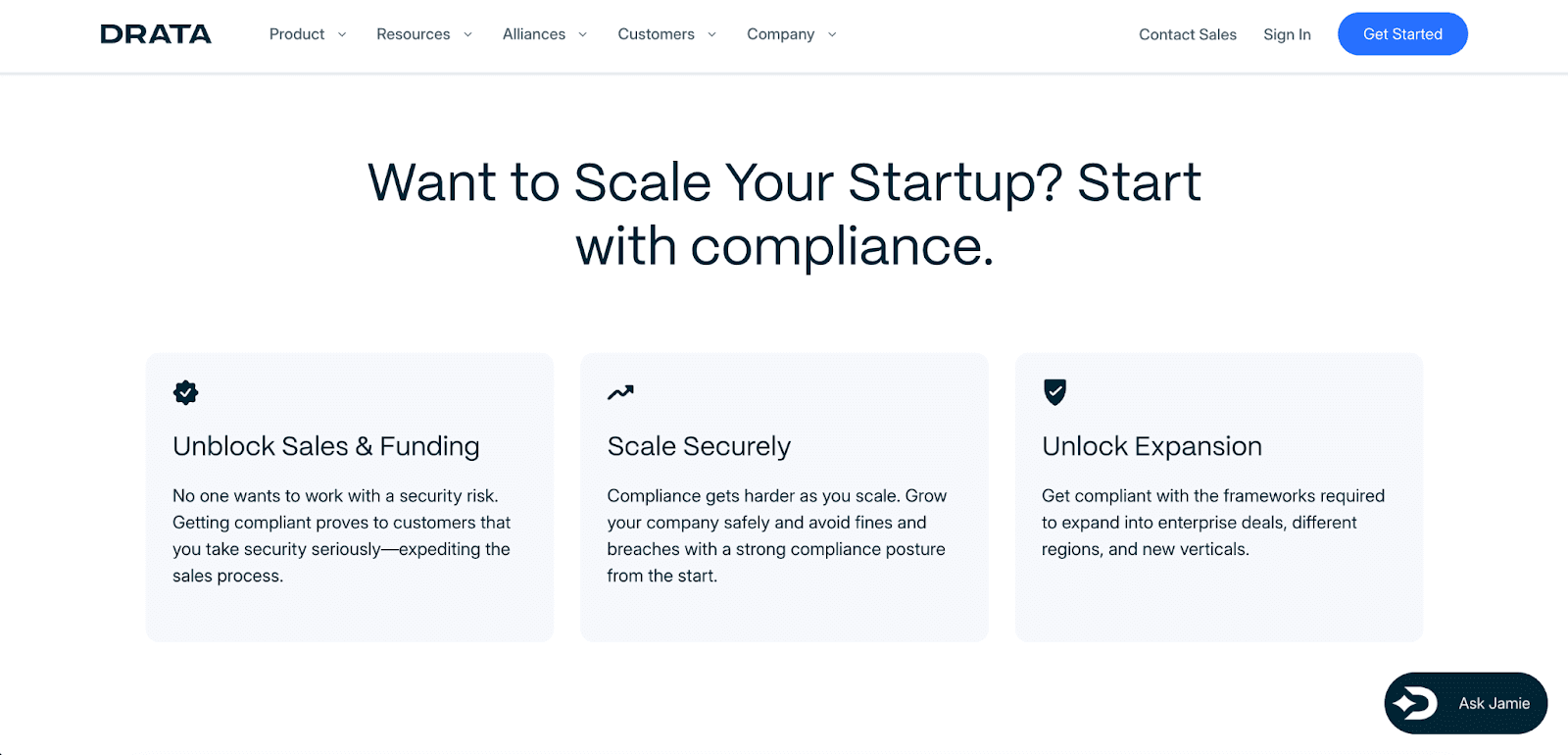
Drata is a widely used compliance automation platform for SaaS and technology companies. It centralizes control management, evidence collection, and compliance reporting.
Key Features
Continuous monitoring of compliance through cloud infrastructure.
Automated evidence collection associated with pre-mapped controls.
Real-time compliance dashboard.
Risk scoring and vendor risk profiling.
Support for multiple compliance frameworks in addition to PCI DSS.
Best For: Companies aiming for automated compliance monitoring across multiple frameworks at the same time.
2. Vanta
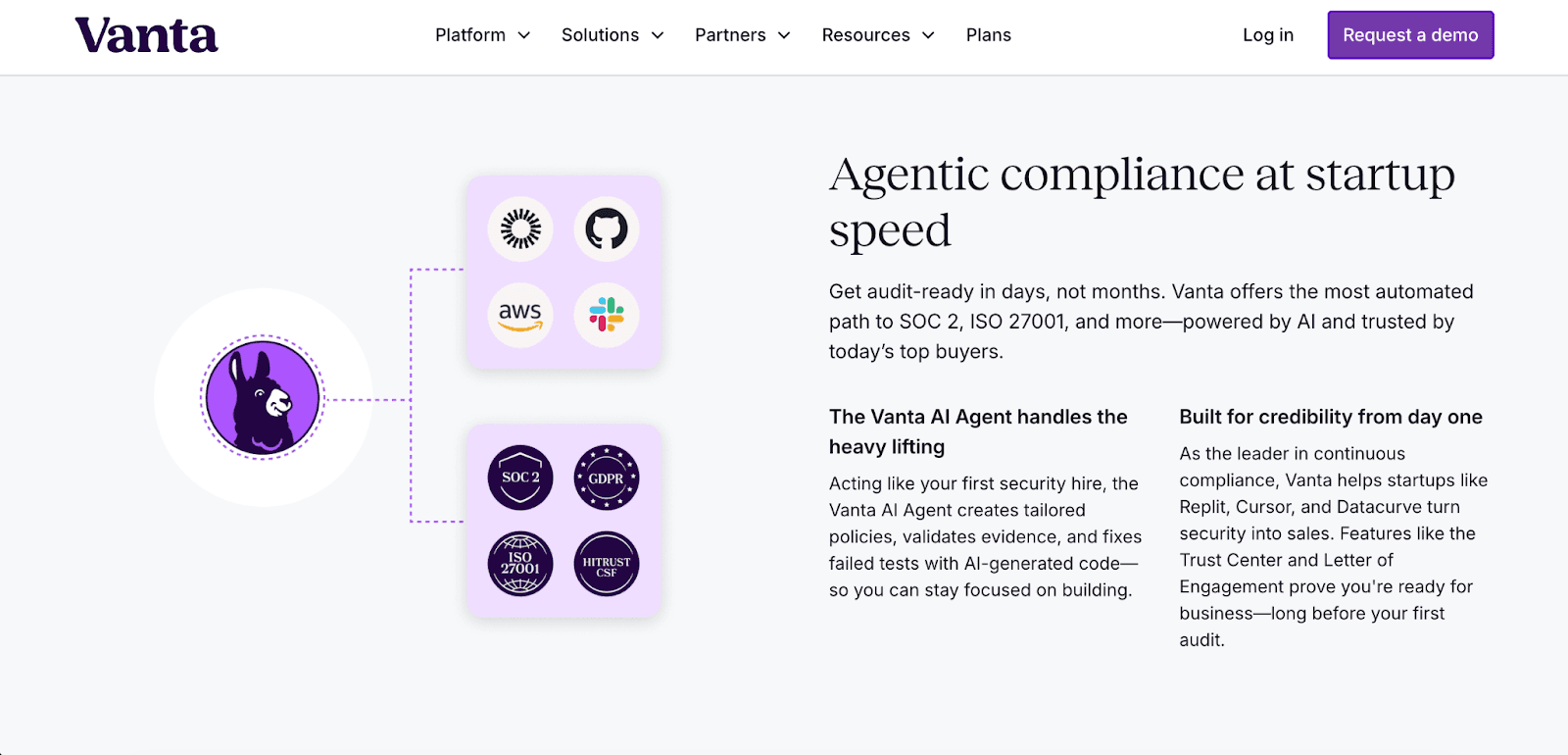
Vanta is one of the most commonly used compliance automation tools in the industry of fast-growing companies that are building their first compliance program to a certain level of structure. They offer pre-built integrations, which means they will connect to any systems that you already have in place and perform ongoing checks on your security posture.
Key Features
Automated rules-based control monitoring.
Automated evidence collection is linked to pre-mapped controls.
Compliance dashboards are provided in real time.
Risk scoring and risk profiling for vendors.
Compliance with multiple frameworks, in addition to PCI DSS.
Best For: Growing companies that are establishing foundational compliance structures for the first time.
3. Secureframe
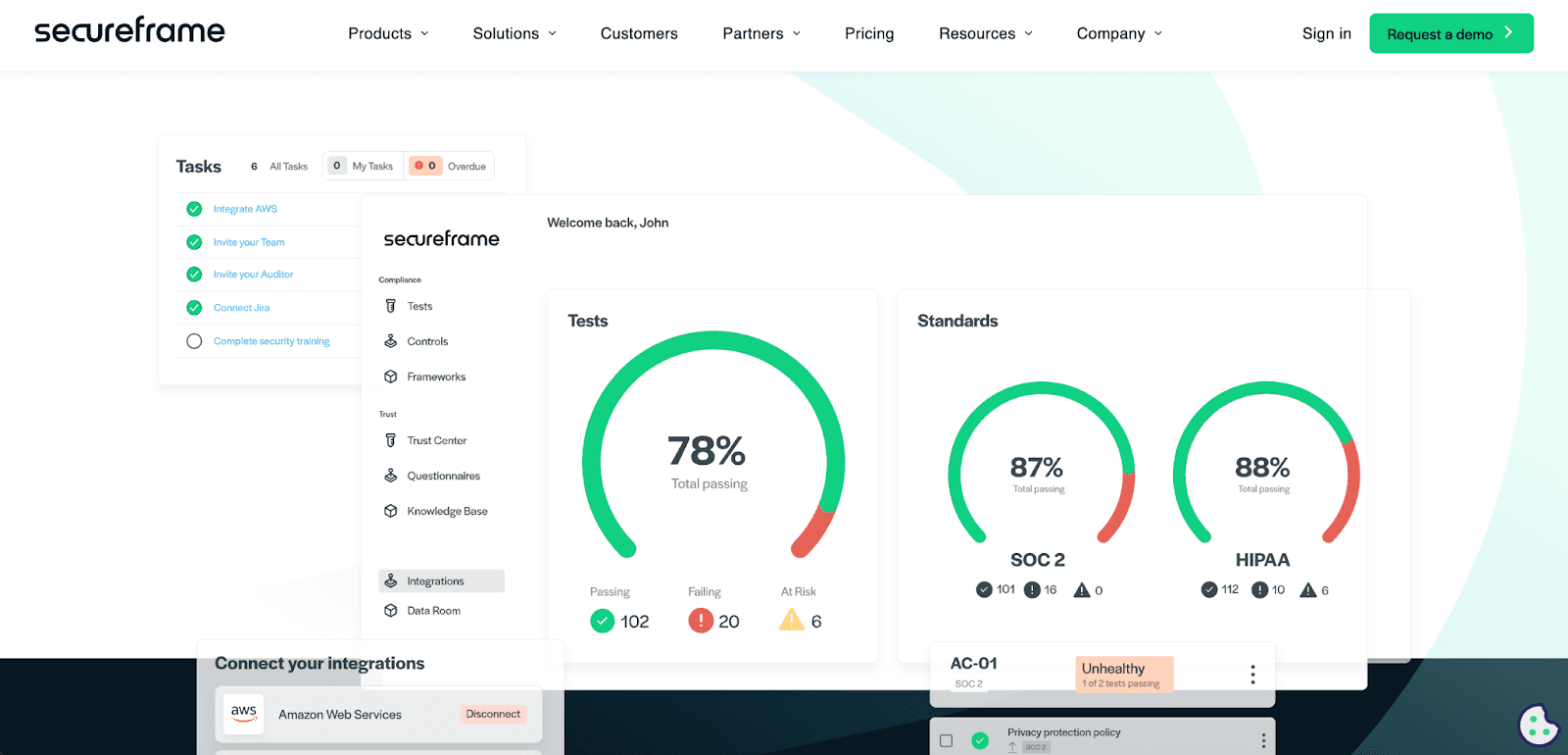
Secureframe helps companies prepare for PCI DSS assessments by automatically gathering evidence, offering security training, and providing ongoing monitoring all in one place.
Key Features
Automated compliance alerts and evidence collection.
Management of security training.
Asset inventory monitoring.
Policy enforcement & risk assessments.
Compliance analytics dashboards.
Best For: Companies looking for an all-in-one solution for compliance and security management.
4. Sprinto
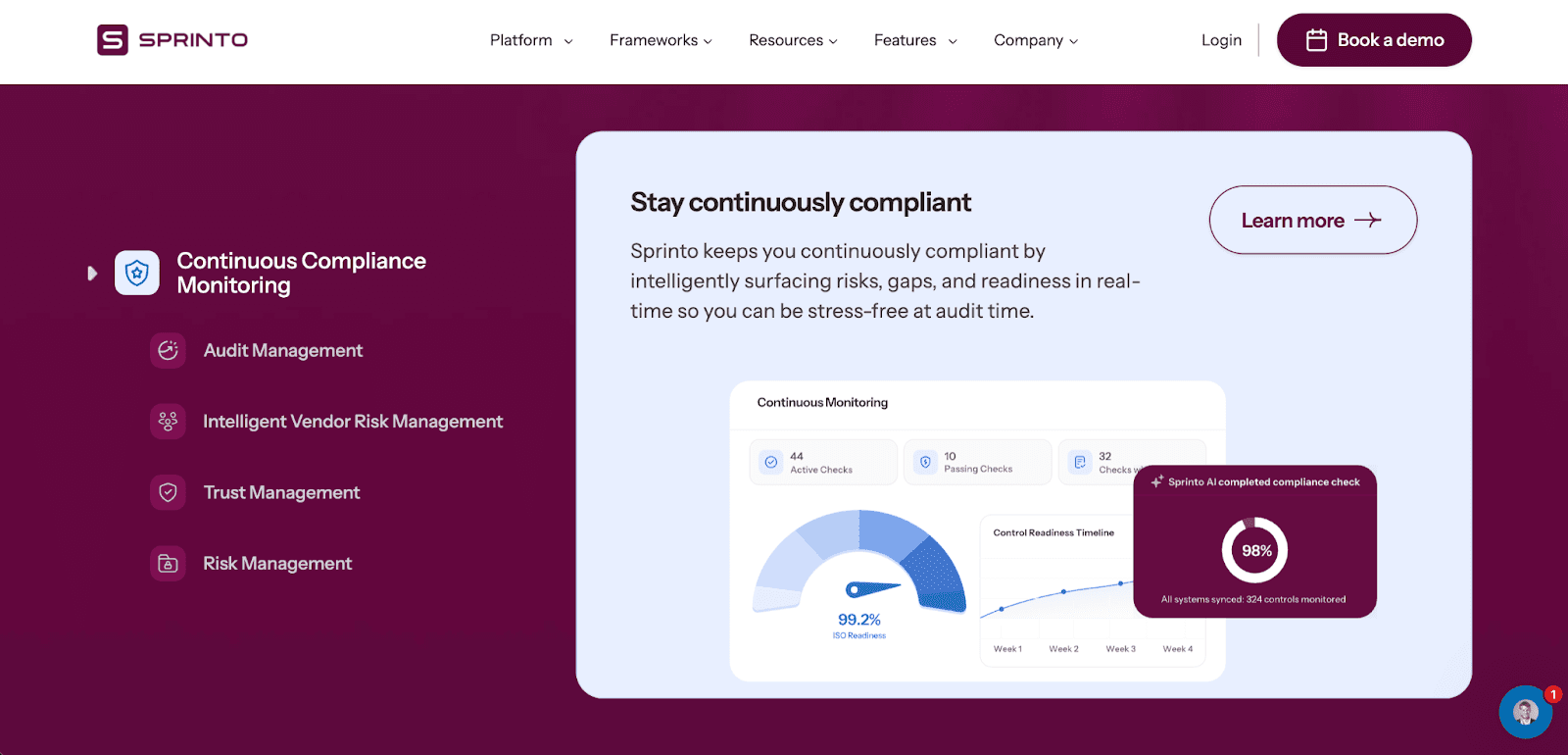
Sprinto is a compliance automation platform made for cloud-native businesses and startups. Its automation controls and ongoing monitoring make basic readiness for PCI DSS easier for smaller and leaner teams.
Key Features
Continuous compliance monitoring and control automation.
Policy documentation and risk tracking.
Evidence capture workflow automation.
Expert compliance guides.
Support for limited compliance frameworks.
Best For: Startups and SaaS companies managing multiple compliance frameworks with few compliance resources.
5. Hyperproof
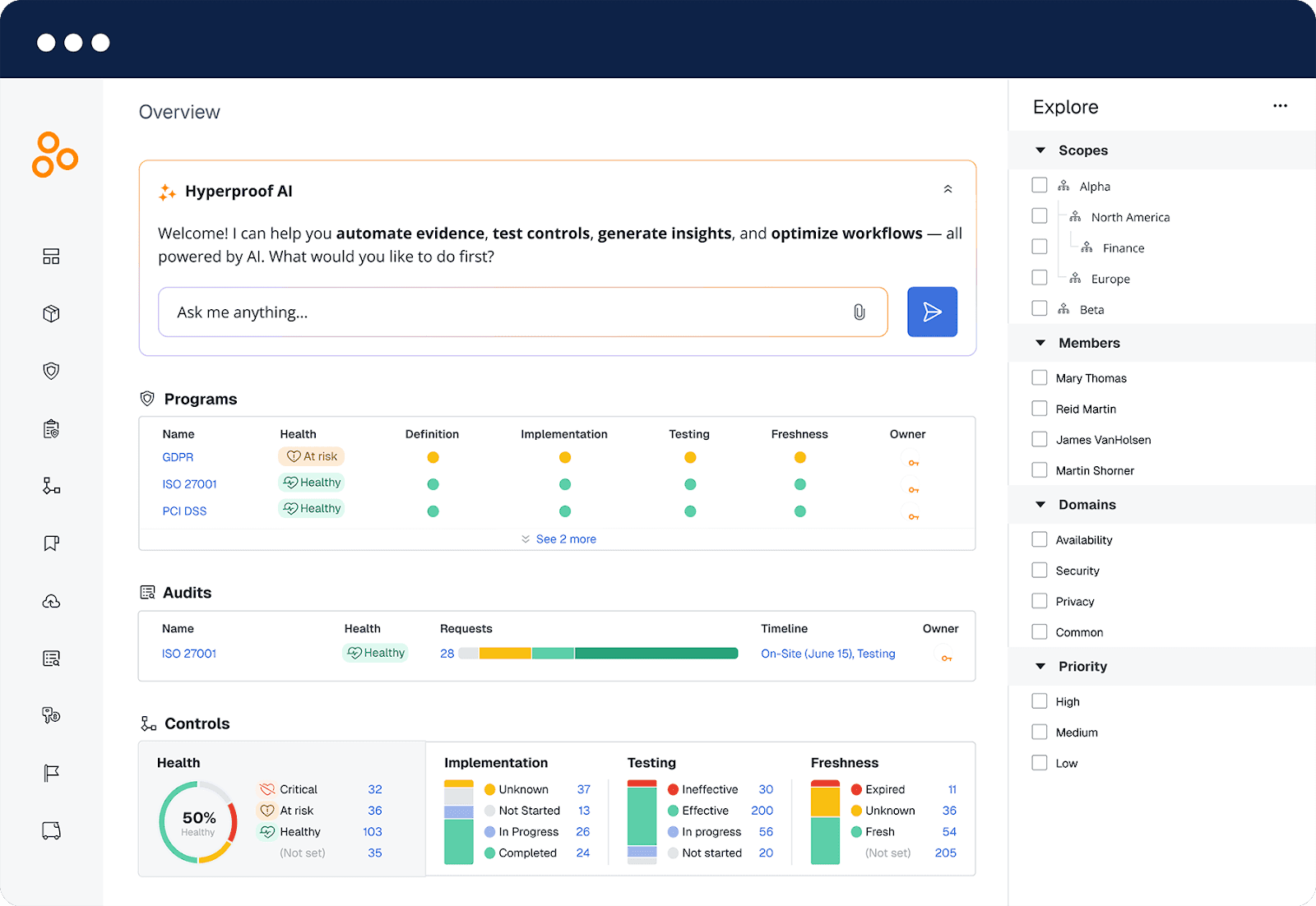
Hyperproof is a compliance operations platform specifically designed for companies with compliance programs that have reached a more advanced level of development. Their risk registry, evidence management, and audit workflow features assist in achieving compliance in a structured and repeatable manner.
Key Features
Governance, risk, and compliance management.
Risk register tracking and risk owner assignment.
Control testing and evidence collection automation.
Audit workflow management.
Framework cross-mapping to reuse PCI work across ISO 27001, GDPR, and others.
Best For: Companies that have developed compliance programs and are simultaneously dealing with numerous frameworks and internal audits.
6. Optro
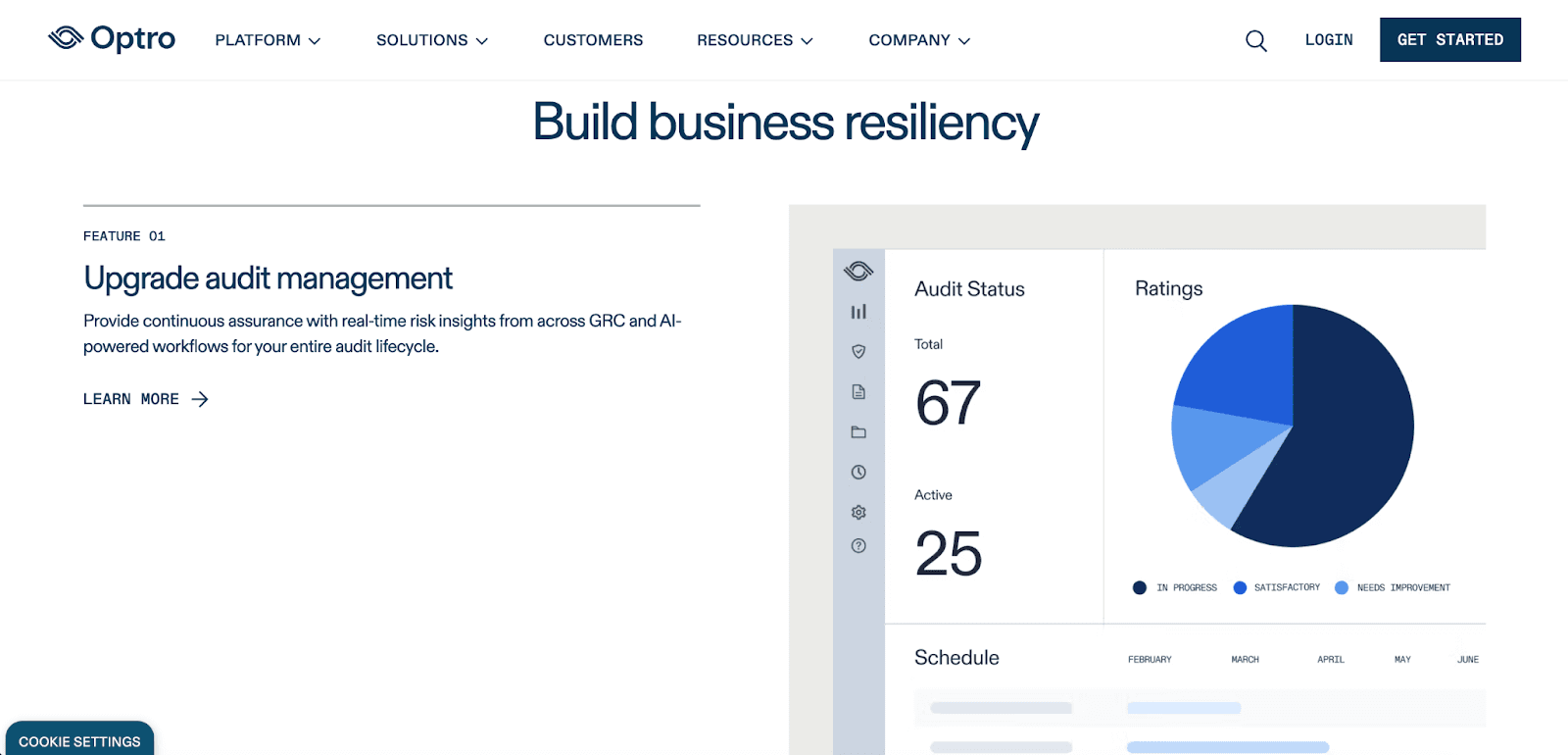
Optro (formerly AuditBoard) is a risk management and audit management platform made for the enterprise. It also supports large-scale internal audit programs, risk management, and control testing workflows.
Key Features
Automatic audit workflow.
Documentation of control testing.
Tracking and scoring of risk assessments.
Asset inventory management.
Enterprise reporting dashboards.
Best For: Large enterprises managing internal audits, risk programs, and compliance requirements at scale.
7. Scrut
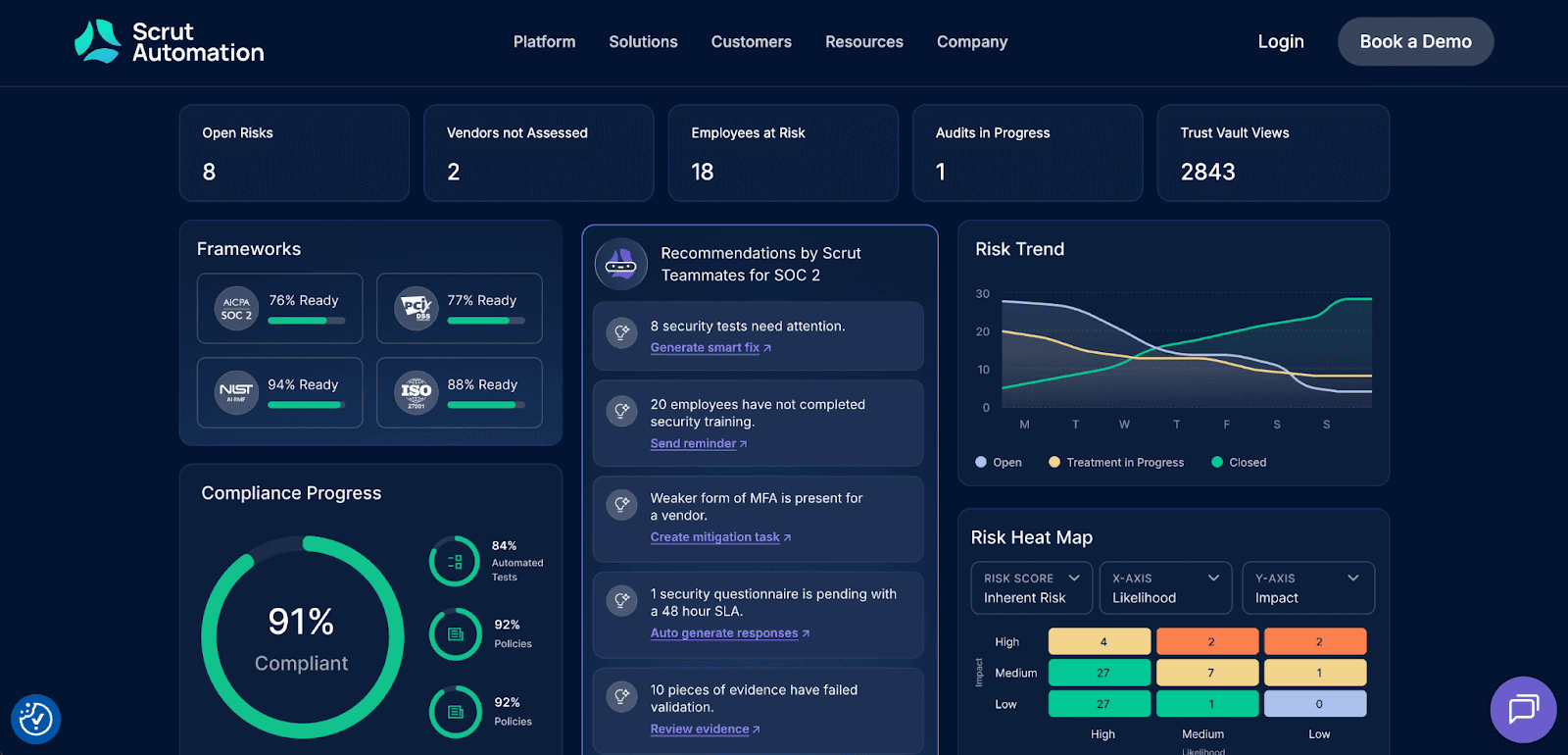
Scrut is a compliance automation service that monitors infrastructure and compliance controls, compiles evidence of security controls, and helps in keeping companies audit-ready. Its continuous monitoring and preset compliance controls capture a growing compliance operation.
Key Features
Compliance automation with real-time monitoring and alerts.
Automated evidence collection across infrastructure.
Risk monitoring and vendor management.
Asset and audit readiness report tracking.
Pre-built policy templates and controls.
Best For: Developing enterprises establishing organized compliance activities from the basics.
8. OneTrust
OneTrust is an enterprise GRC platform that integrates compliance, privacy, and third-party risk management within a single environment. Large enterprises typically use it to manage complex, multi-jurisdictional compliance workflows.
Key Features
Enterprise GRC functions.
Risk management and risk register workflows.
Third-party risk monitoring.
Policy lifecycle management.
Integration of privacy and compliance programs.
Best For: Large enterprises dealing with complex compliance, privacy, and risk management issues across several company units or jurisdictions.
PCI DSS Compliance Software Comparison
Tool | Best For | Key Capability | Ideal Company Size |
Drata | Compliance automation | Continuous monitoring | Startups / SaaS |
Vanta | Compliance readiness | Automated control tracking | Growing companies |
Secureframe | Security + compliance | Evidence automation | Mid-size teams |
Sprinto | Compliance automation | Control monitoring | Startups |
Hyperproof | Compliance operations | Risk tracking | Mid-enterprise |
AuditBoard | Internal audit management | Audit workflows | Enterprise |
Scrut | Compliance automation | Risk monitoring | Mid-size |
OneTrust | Enterprise GRC | Privacy + compliance | Large enterprise |
How to Choose the Right PCI Compliance Tool
Integration Capabilities: Consider your current technology stack. Does the platform integrate with your cloud service providers (AWS, Azure, GCP) and identity providers (Okta, Azure AD) and monitoring solutions? Missing integrations can cause missing evidence and visibility gaps in compliance.
Automation Capabilities: Evaluate how much evidence collection and control monitoring can be done with little human intervention. The available evidence collection and control monitoring automation vary greatly from one platform to another. Some require extensive manual configuration, while others can be configured to automate the majority of evidence collection.
Framework Support: Most companies have to meet more than one compliance requirement at the same time. Find tools that work with PCI DSS and other standards like SOC 2, ISO 27001, or HIPAA. Control mapping and crosswalk features let teams use the same compliance work in more than one framework, which cuts down on duplication.
Reporting and Audit Preparation: Choose tools that generate structured documentation auditors can review efficiently. Pre-formed templates for audit reports, control test records, and well-organized repositories for evidence can mitigate the communication that slows audit prep.
Scalability: Compliance requirements will constantly evolve in line with a company’s growth. Choose software that can handle additional controls, more compliance frameworks, and more audits without the need for a different platform.
How Roz Helps Companies Deliver Compliance Engagements
Most compliance tools are built for companies managing their own internal programs. Roz serves a different audience: CPA firms and advisory teams delivering compliance and assurance engagements for clients.
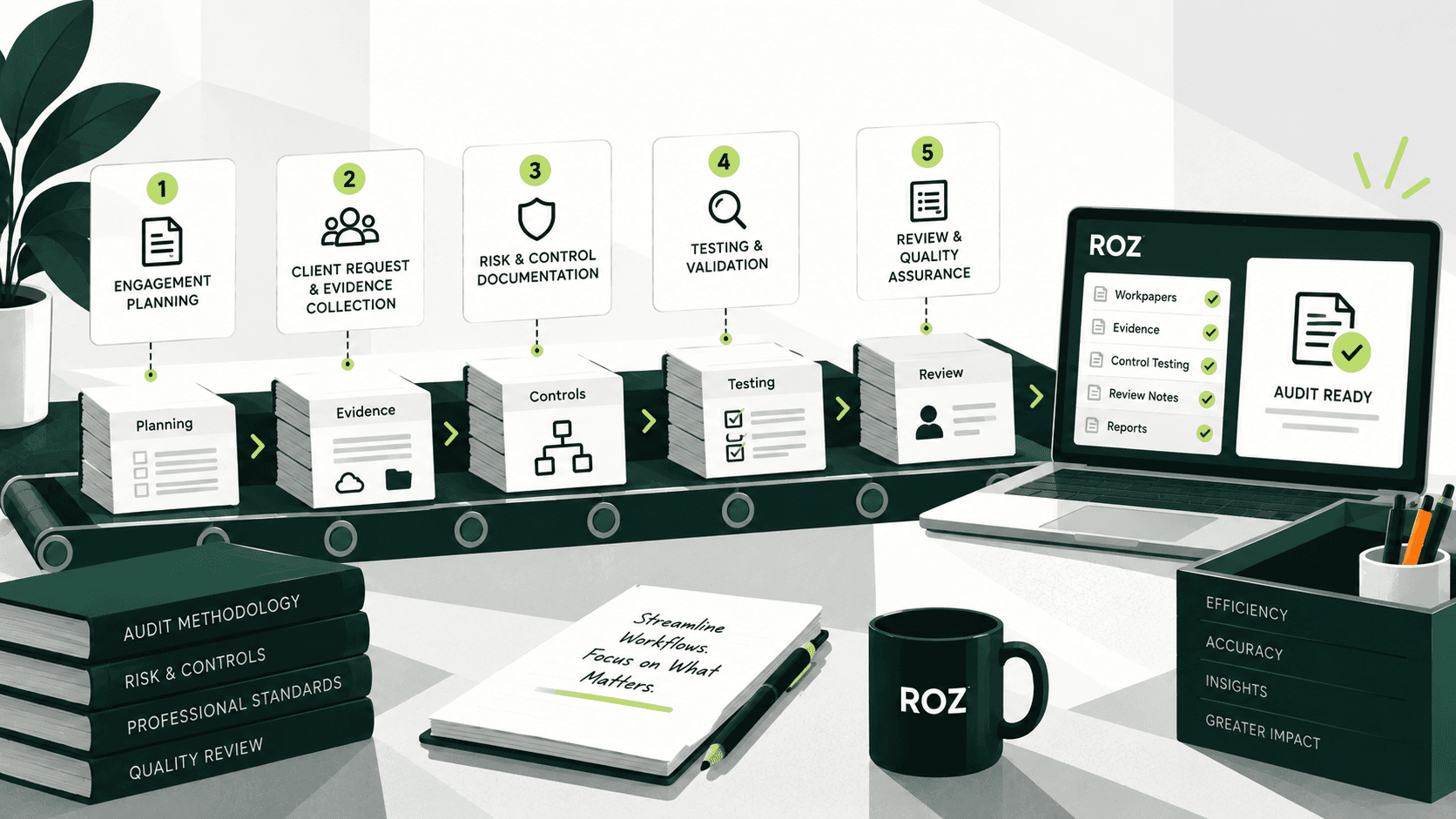
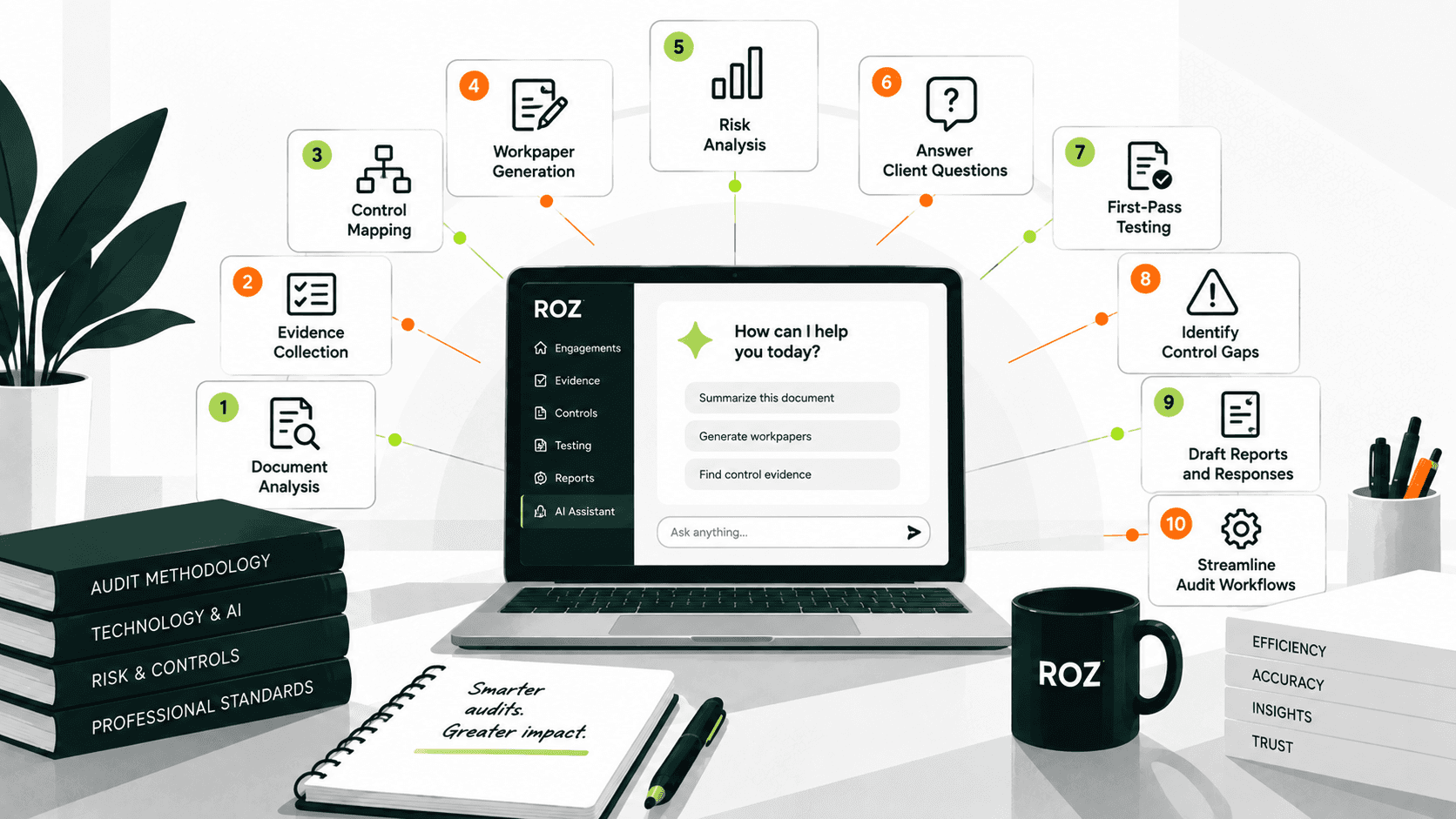
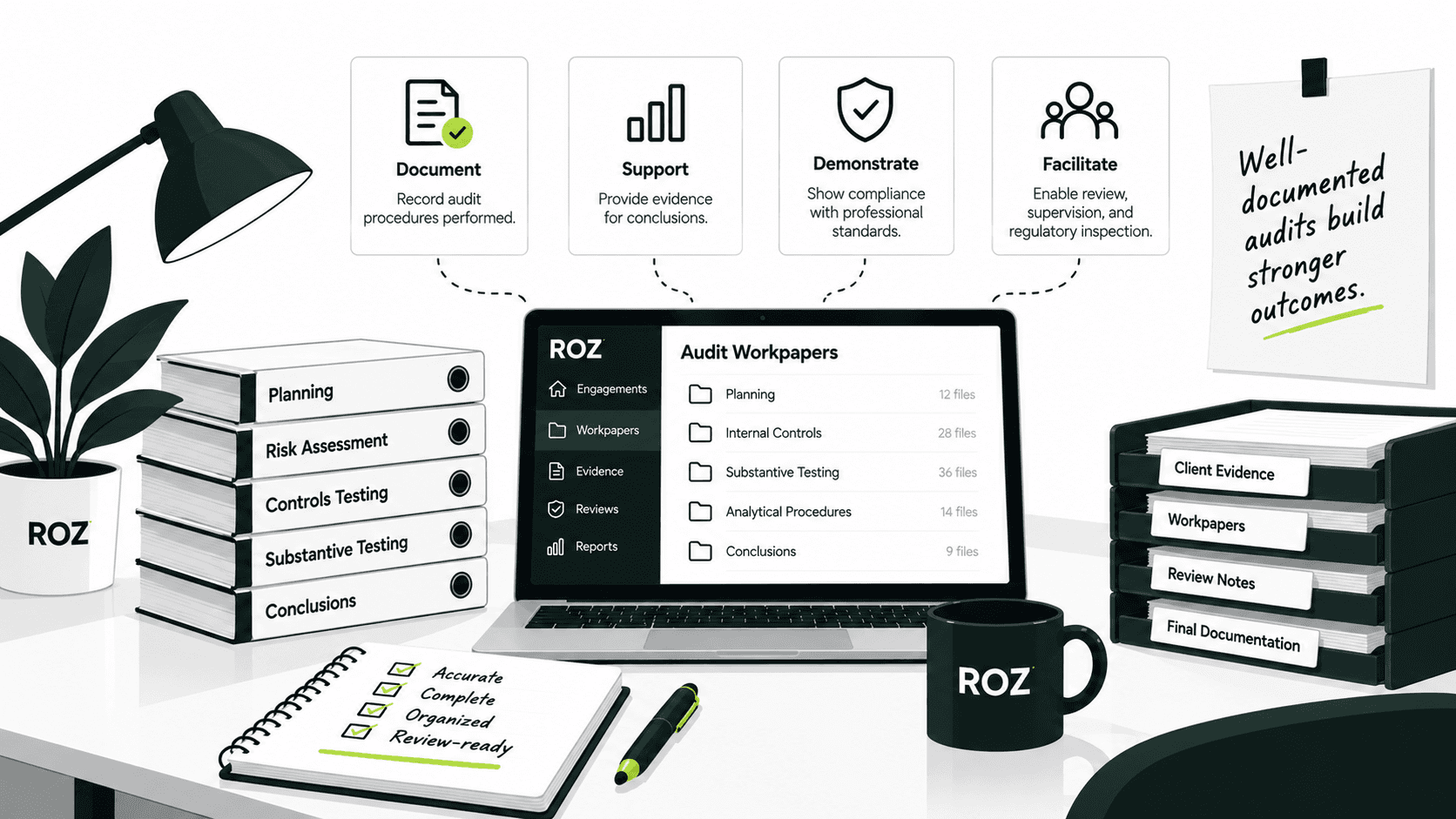
We are an AI-native engagement and advanced audit-delivery platform that helps companies organize documentation, structure evidence review, and streamline the workflows that turn client materials into audit-ready deliverables.
Key Capabilities
Client-specific workspaces for organizing policies, evidence, and engagement documentation
AI-generated draft workpapers with audit trails and source traceability
Questionnaire automation with confidence scoring and source links
Control extraction and gap identification from client documentation
Risk and control matrix views for tracking engagement progress
Where Our Tool Fits
When companies prepare clients for compliance assessments like PCI DSS, much of the effort goes into organizing documentation, drafting workpapers, and managing engagement workflows. Our tool streamlines these repetitive tasks so practitioners can focus on professional judgment, client guidance, and final review.
The end result is that compliance services are more scalable, more efficient, and have better documentation consistency.
Conclusion
Continuous security control monitoring, documentation, and validation are necessary for PCI DSS compliance. Companies can manage these activities more effectively by using the tools discussed in this article, but the best option will depend on several factors, including the number of compliance frameworks involved, infrastructure, and company size.
Platforms like Roz help deliver engagements by helping teams organize documentation, generate workpapers, and streamline evidence collection. As their clientele expands, this can lessen manual labor and help companies in managing compliance engagements more effectively.
Book a demo to see how Roz can support your practice.