Enterprise buyers frequently ask vendors for proof of security during the procurement process. You might receive a long security questionnaire, or you might simply be asked to provide a SOC 2. People often use the phrase "SOC 2 compliance" informally, but in the accounting and auditing world, there is no such thing as a SOC 2 certification. Instead, you undergo an examination that results in a formal SOC 2 report.
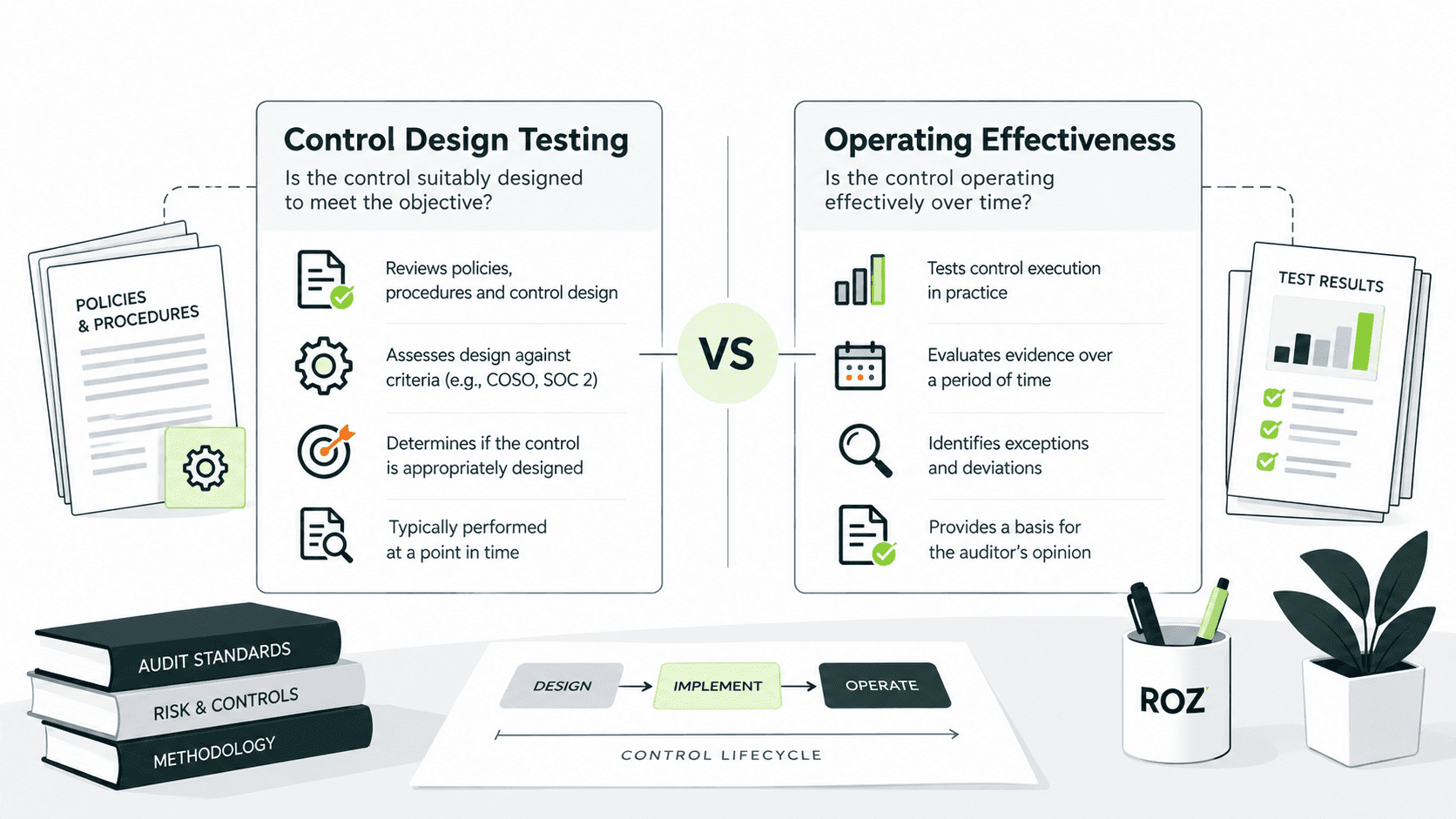
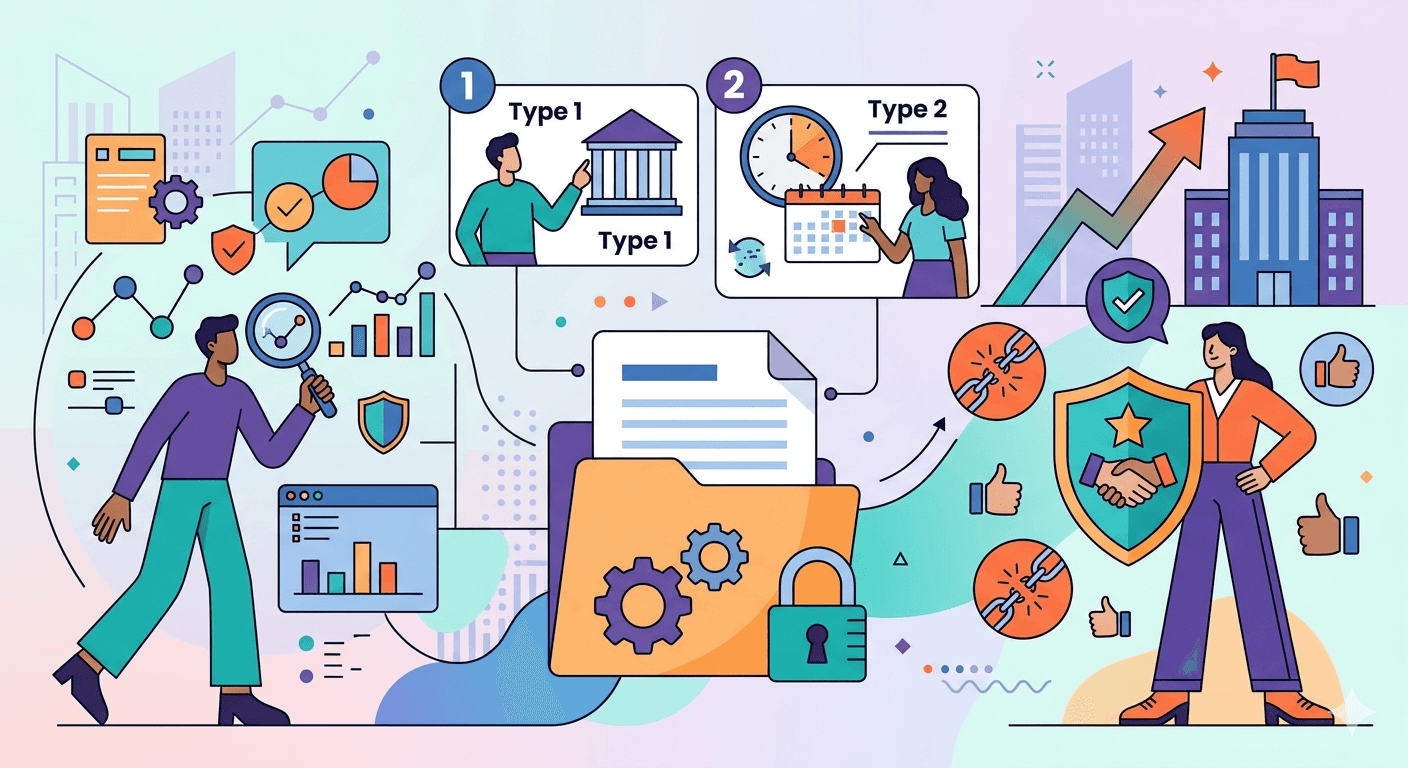
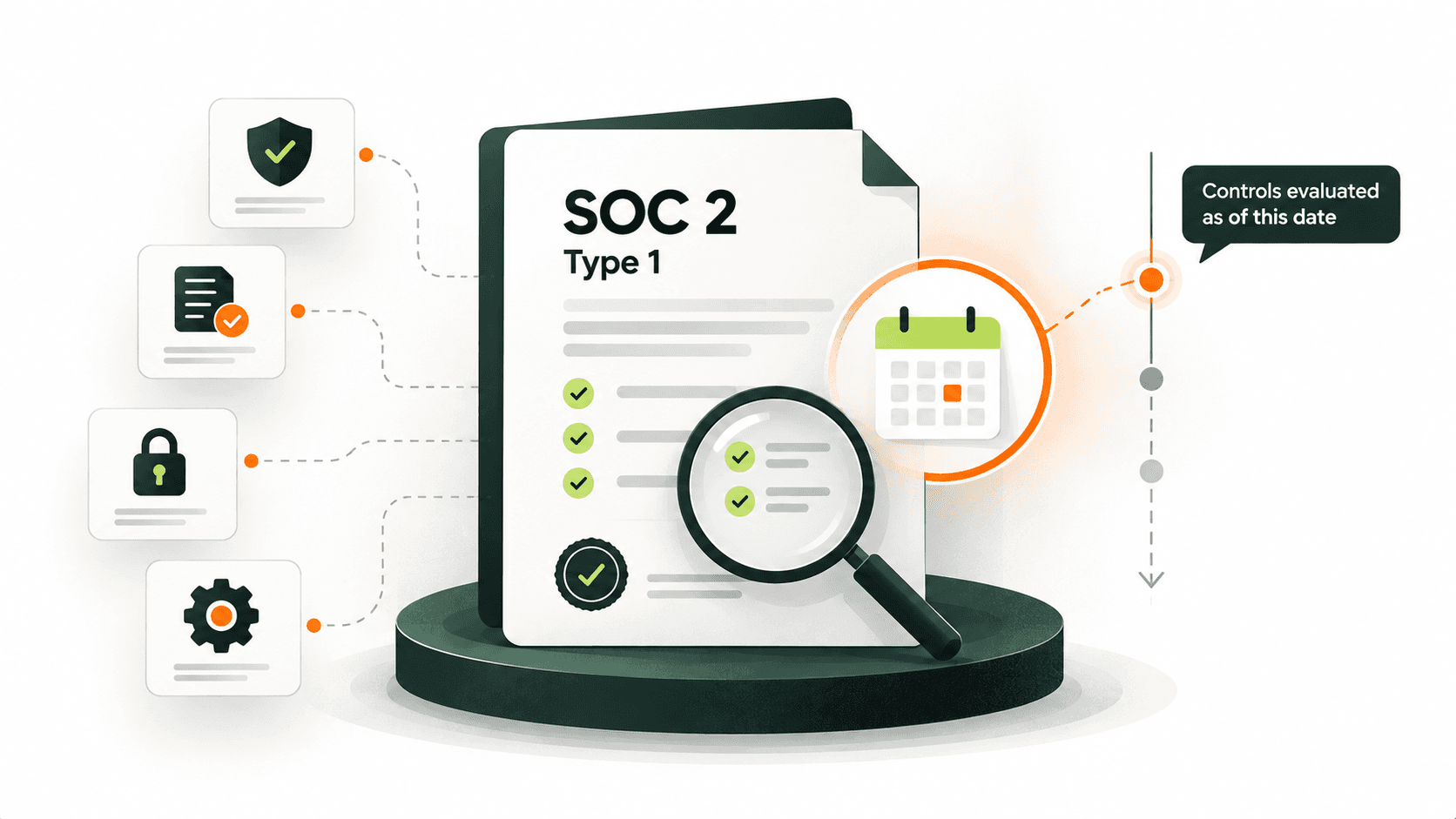
In this article, we will focus specifically on the SOC 2 Type 1 report. A Type 1 examination looks at the design of your controls against the Trust Services Criteria at a specific moment, rather than tracking their operating effectiveness over a long period. This means it provides a helpful point-in-time view of your control environment, but it does not provide assurance regarding ongoing operating effectiveness over time.
Understanding the mechanics of a SOC 2 Type 1 report can support vendor risk assessment processes and prepare your organization for more rigorous audits in the future.
What Is a SOC 2 Type 1 Report?
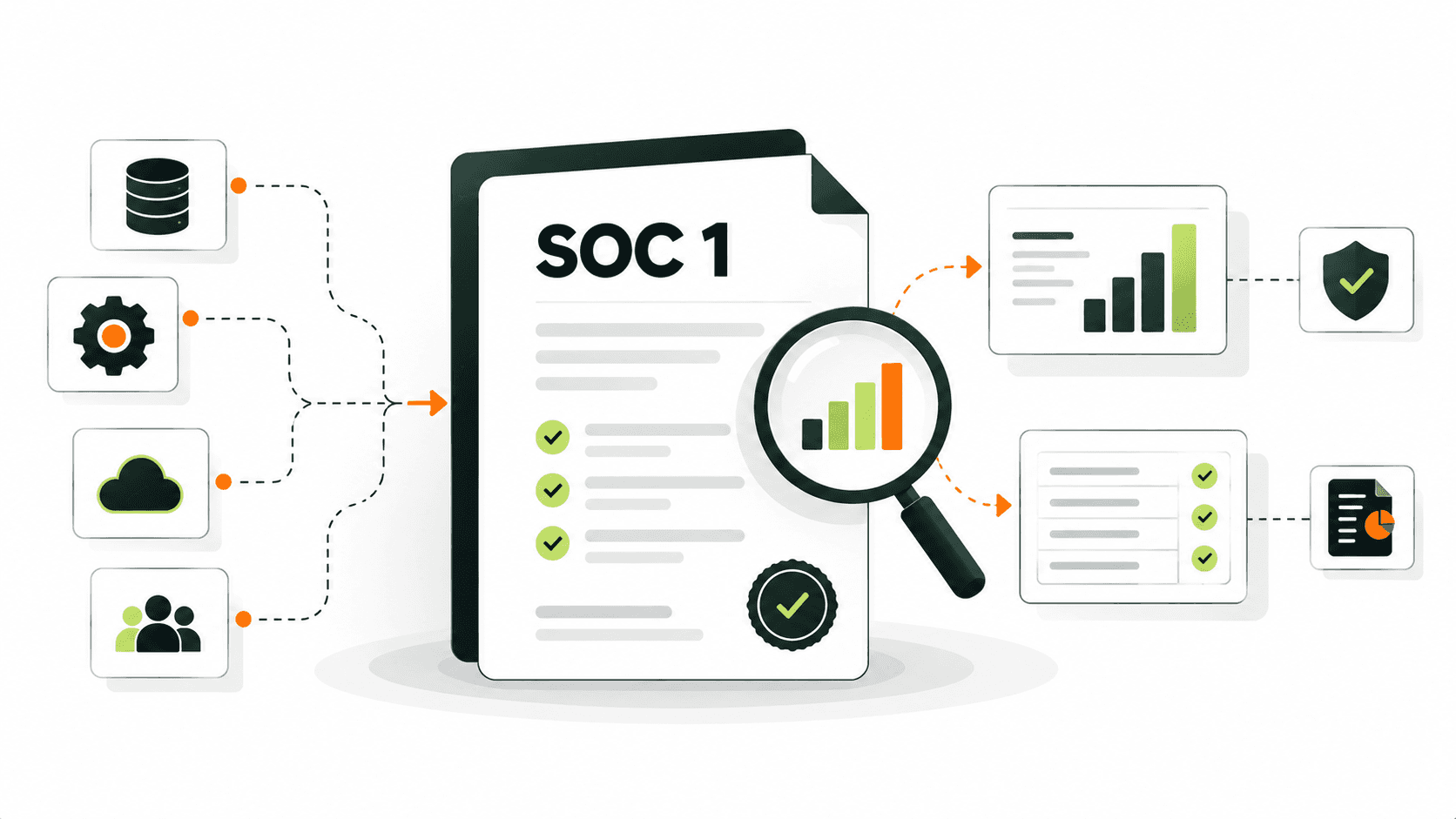
A SOC 2 Type 1 report is an independent examination conducted by a Certified Public Accountant (CPA) firm. It evaluates whether a service organization's security controls, based on criteria from the American Institute of Certified Public Accountants (AICPA), are suitably designed at a specific point in time.
During this engagement, the auditor evaluates three main elements:
System description fairness: The auditor reviews whether your written description of your system accurately reflects the actual infrastructure, software, people, and procedures you use.
Control design suitability: The auditor assesses if the controls you have designed are capable of meeting the relevant security criteria.
Implementation: The auditor checks whether these controls actually exist and are implemented on the specified date of the examination.
This assessment analyzes the current status of selected components of your control environment. It will show that your controls are in place and designed to meet the described criteria without many months of evidence that they are operational.
SOC 2 Type 1 vs Type 2: Key Differences
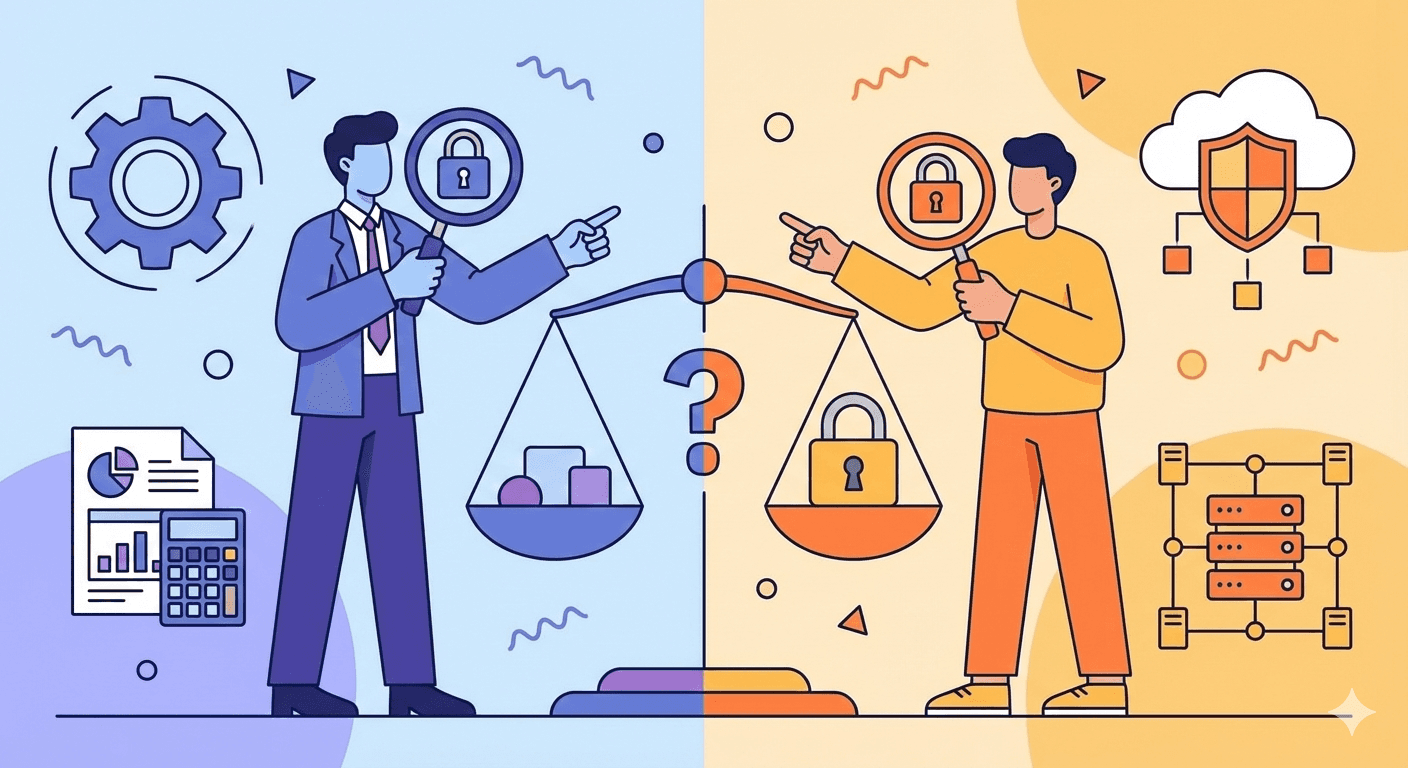
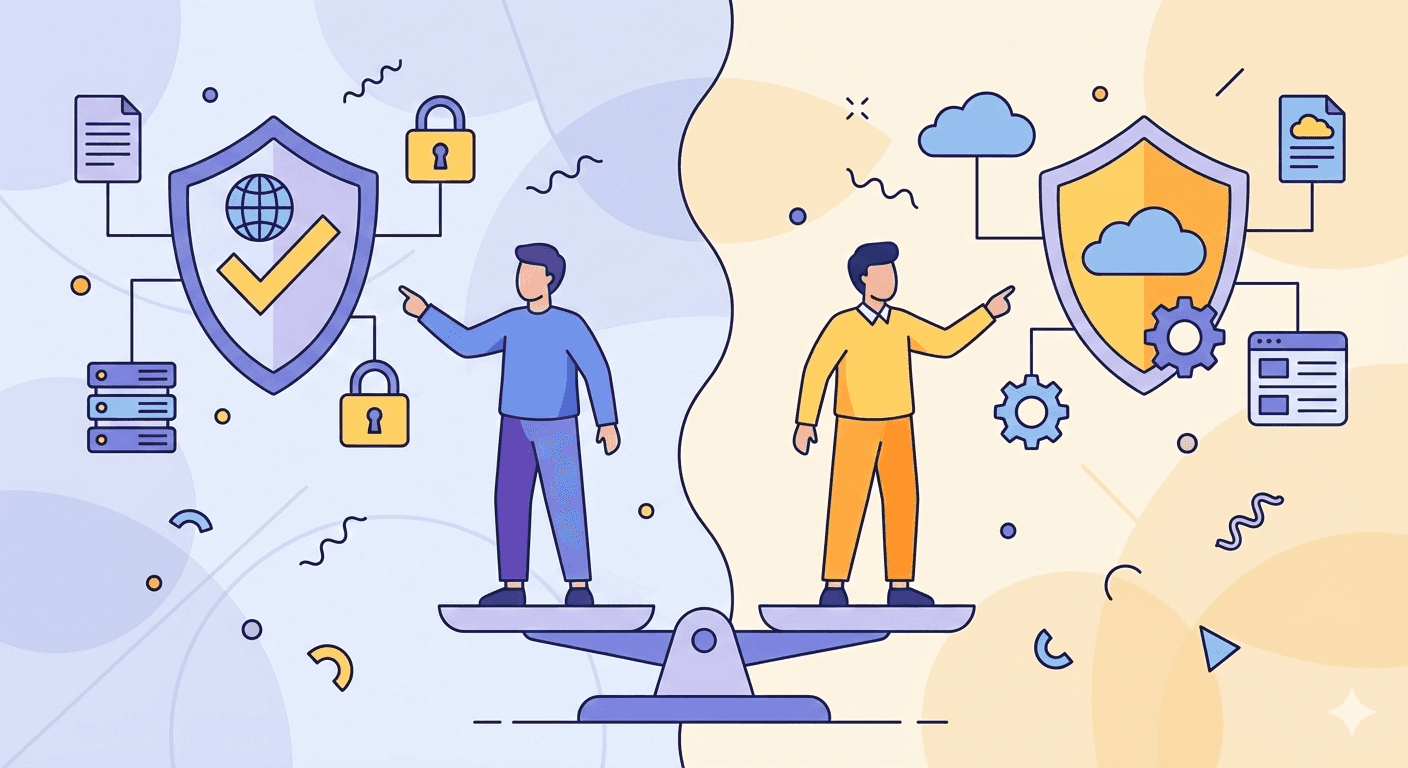
Users of SOC 2 reports generally prefer Type II reports because they provide evidence of control performance over time. However, when you know the essentials of each category, you can better communicate your compliance posture in early-stage engagements.
Core Differences Table
Criteria | Type 1 | Type 2 |
Scope | Design | Design + Operating Effectiveness |
Timeframe | Point-in-time | 3-12 months |
Assurance Level | Limited | Higher |
Buyer Acceptance | Moderate | High |
When Type 1 Is Appropriate
You generally pursue a Type 1 report under specific strategic conditions:
Early-stage companies: Startups that need to demonstrate a foundational security posture to close initial enterprise deals often start here.
Pre-sales readiness: Organizations with imminent customer demand can obtain a Type 1 to demonstrate a defined control environment, thus minimizing the need for long and tedious gap analyses.
Recently implemented controls: When controls have been recently implemented and historical evidence is not yet available, a Type I report may be appropriate.
What Does a SOC 2 Type 1 Audit Evaluate?
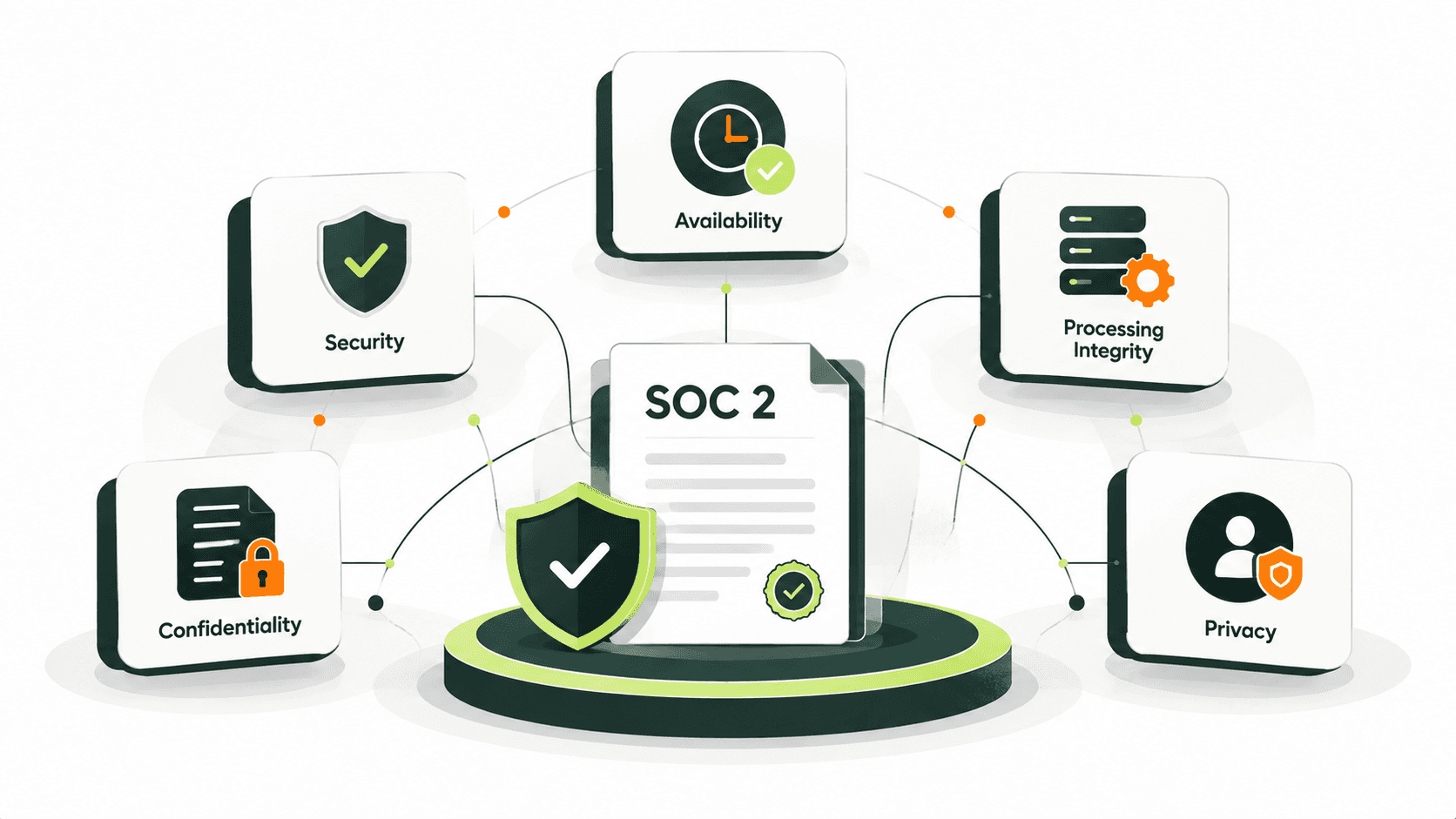
SOC 2 audits use Trust Services Criteria (TSC) to evaluate security controls in a company. The TSC has five categories:
Security: The protection of systems against unauthorized access and misuse. This is the only mandatory category to evaluate.
Availability: This checks your system’s accessibility to ensure it remains operational.
Processing Integrity: This evaluates whether the processing of a system is complete, valid, and accurate in a timely fashion.
Confidentiality: This asks what methods you employ to ensure the protection of your client’s confidential information.
Privacy: This evaluates your system’s protocol regarding the management of personal information.
Control Areas Typically Reviewed
As per the security criteria, certain core SOC 2 controls are reviewed by auditors. These controls are:
Access controls: Procedures that outline how system users are granted and managed access.
Change management: Processes that ensure that system changes are tested and approved.
Risk assessment: The process of identifying and evaluating risks to the organization and then deciding the best approach.
Monitoring activities: Procedures used to monitor and analyze systems and processes.
What Is Included in a SOC 2 Type 1 Report?
A finalized SOC 2 Type 1 report is a structured, formal document. It is typically formatted to give readers a clear understanding of your environment and the auditor’s findings.
Standard Report Sections
Independent service auditor’s report: The formal opinion provided by the CPA firm stating whether your system description is fair and your controls are suitably designed.
Management’s assertion: A written statement from your leadership team claiming that the system description is accurate and the controls are designed effectively.
System description: A detailed narrative written by your organization explaining your services, infrastructure, data flows, and security procedures.
Control objectives and controls: A matrix detailing the specific criteria evaluated and the internal controls mapped to them.
Tests of design: A summary of the procedures the auditor performed to evaluate the design of your controls and confirm they were implemented as of the specified date.
Restricted Use Explanation
SOC 2 reports contain sensitive information about your internal security architecture. Therefore, they are restricted-use documents. They are intended to be shared only with existing customers, prospective buyers under a non-disclosure agreement (NDA), and your own internal stakeholders. They are not intended for public distribution and should not be published on a public website.
SOC 2 Type 1 Requirements (What You Need to Prepare)
Before your organizational audit gets underway, you need to get some work done. Showing up to an audit without documentation will prolong the process and add unflattering notes to your final report.
Core Requirements
Defined system boundaries: For purposes of an audit, scope refers to the defined boundaries of the audit. Which products, services, and locations fall within the scope of the audit?
Documented policies and procedures: Your organization should formalize its approach to security and access and its approach to incident management.
Control mapping to TSC: You will connect your internal activities to the TSC (Trust Services Criteria) your organization is attempting to satisfy.
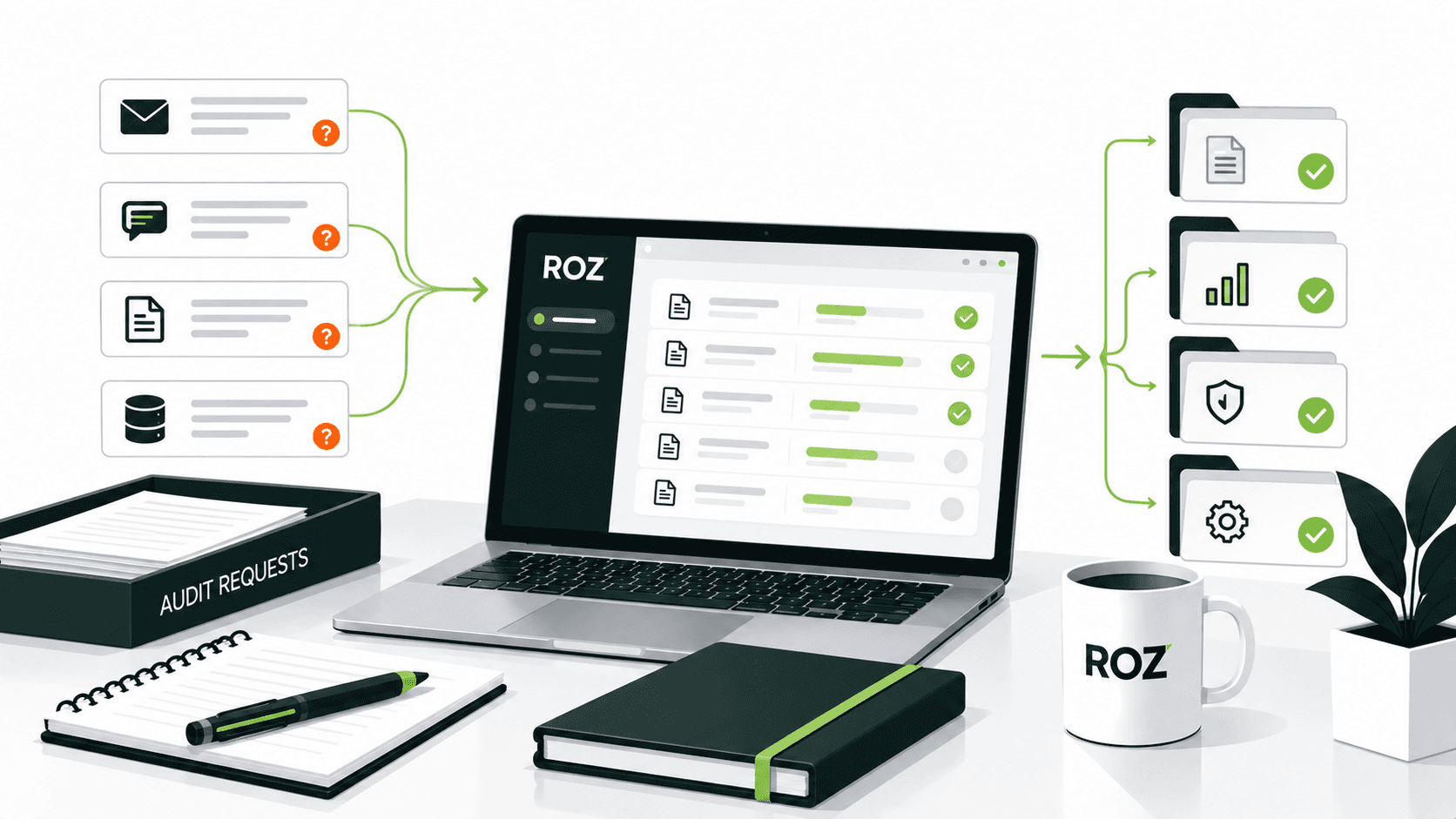
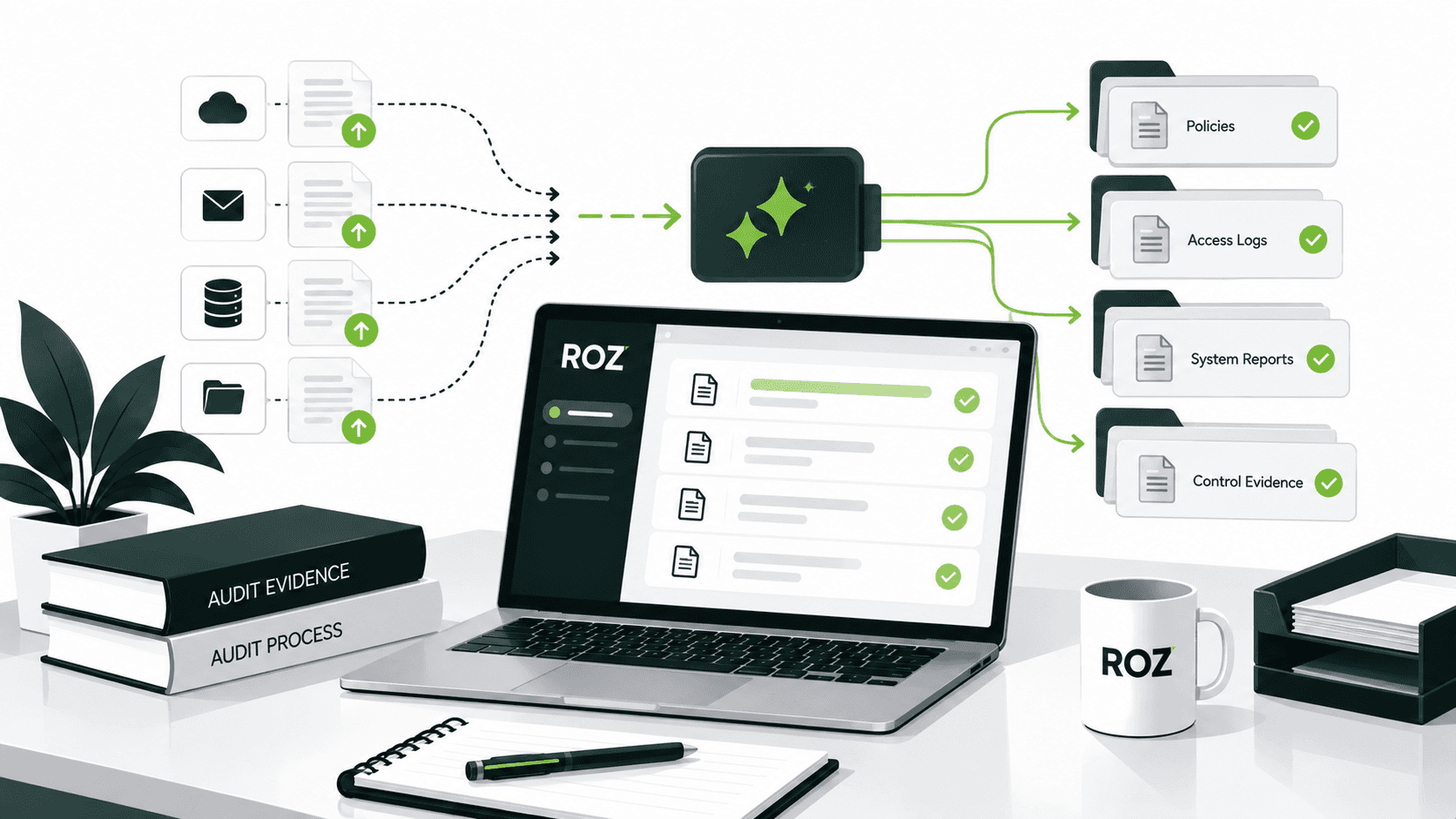
Evidence readiness: You will need to compile supporting evidence such as screenshots, system configurations, and logs to show that the controls have been put in place.
Common Preparation Artifacts
The first phase of preparation for a SOC Type I audit includes the finalization of the following:
Access control policies: These are rules regarding password security, multi-factor and adaptive authentication, and role-limited access.
Incident response plan: A comprehensive plan that explains your architecture for detecting, reporting, and recovering from an incident.
Vendor management documentation: Documentation about the infrastructure of your organization’s vendor evaluation process.
Risk assessment documentation: Your internal assessments of your threat in relation to the environment.
SOC 2 Type 1 Audit Process
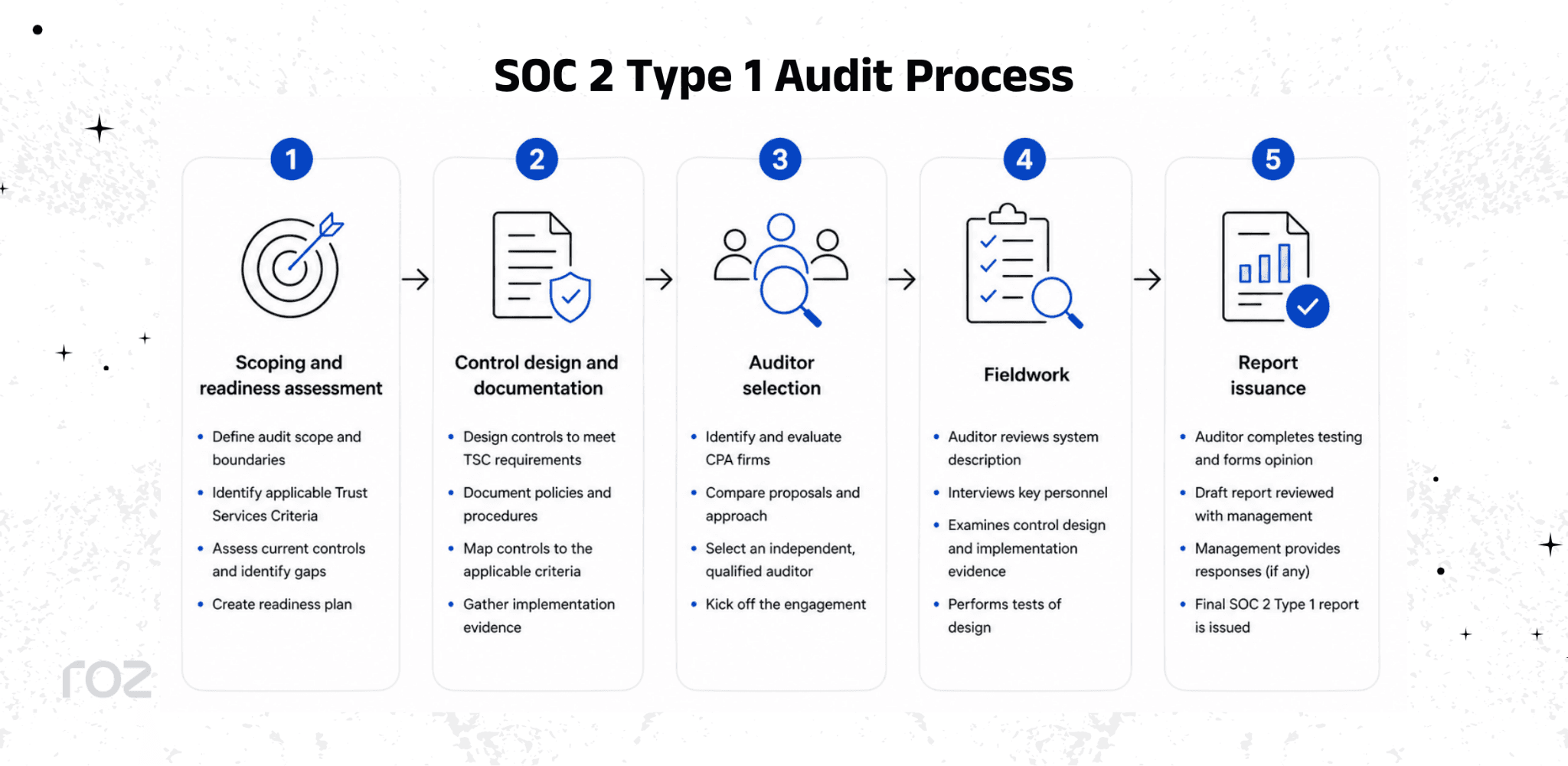
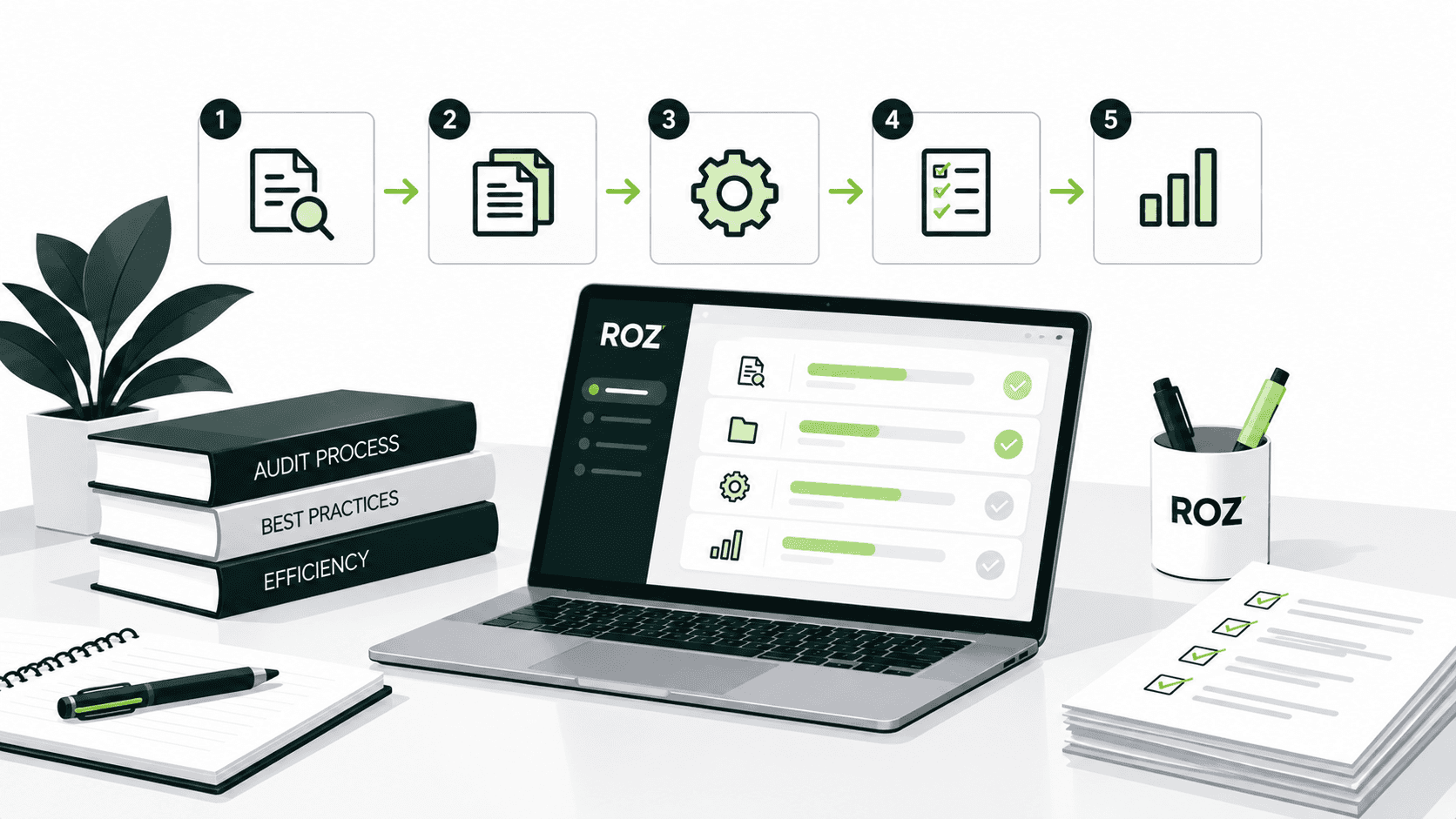
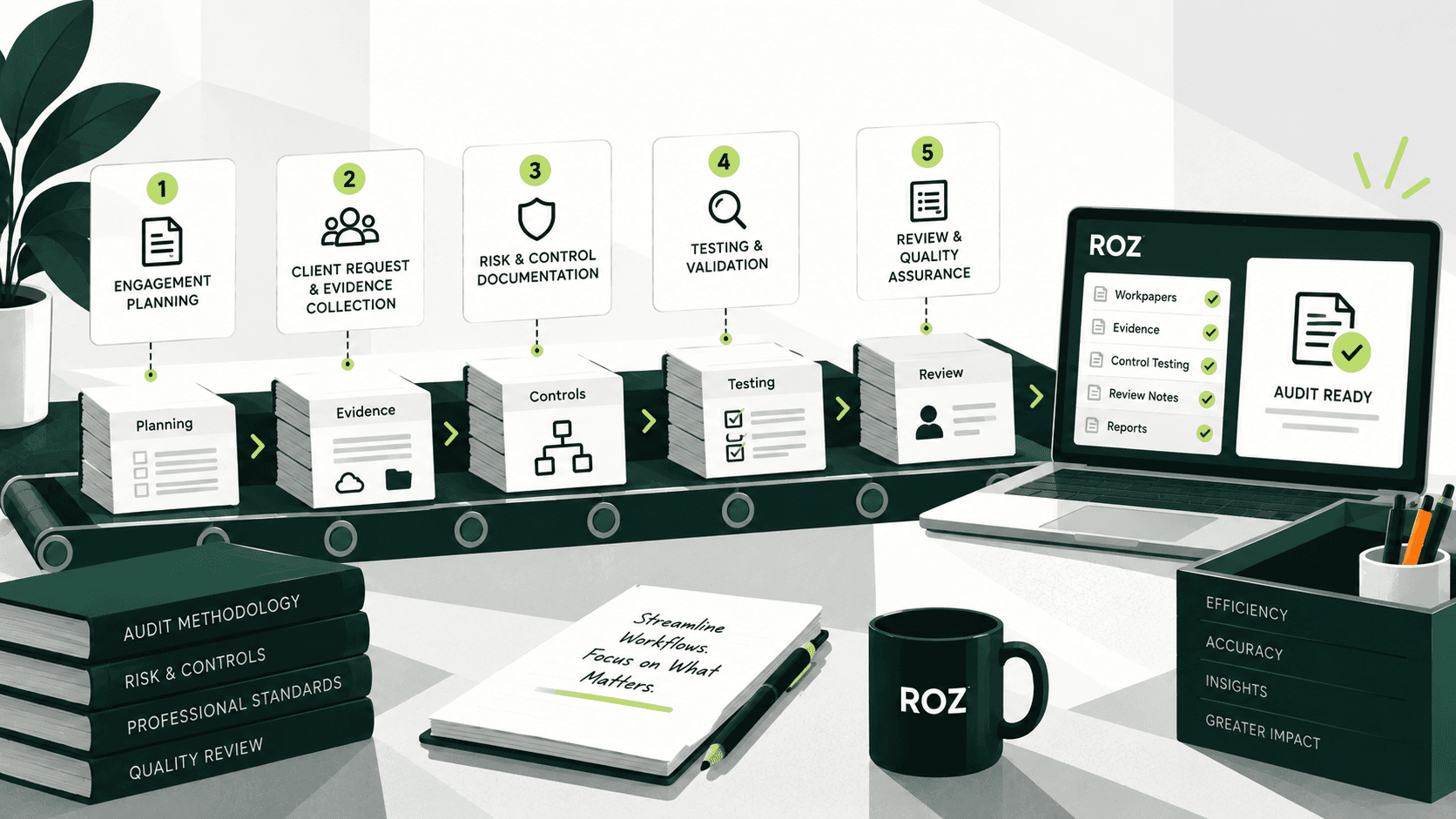
Executing a SOC 2 Type 1 engagement involves a predictable sequence of events. Understanding this flow helps you manage internal resources efficiently.
Scoping and readiness assessment: You set the parameters of the audit and do a gap analysis to find controls that are missing.
Control design and documentation: You design and write the necessary policies, set up your security tools, and align your activities with the TSC.
Auditor selection: You choose the independent, licensed CPA firm to do the examination.
Fieldwork: The auditor examines your system description, conducts interviews, and analyzes your evidence to validate the design of your controls.
Report issuance: The auditor completes final testing and issues the SOC 2 Type I report.
SOC 2 Type 1 Cost Breakdown
You need to factor more than just the auditor’s invoice when budgeting for compliance. The total cost of the engagement is highly dependent on the complexity of your systems and the size and security maturity of your organization.
Cost Component | Typical Range |
Readiness / Gap Assessment | $5,000 - $20,000 |
Audit Fees (CPA firm) | $10,000 - $30,000 |
Tools / Automation | Varies |
Internal Resources | Variable |
Note: The audit costs vary greatly based on the number of systems, locations, criteria in scope, technical complexity, and specific CPA firm constraints.
How Long Does a SOC 2 Type 1 Take?
The SOC 2 Type 1 timeline typically ranges from 4 to 8 weeks, assuming your organization has already implemented its foundational security controls. If you are starting from scratch, the process will take longer.
Timeline Breakdown
Preparation: 2-4 weeks. During this time the company must confirm the policies and set the security environment that it is audited in. Evidence must also be collected.
Audit fieldwork: 1-2 weeks. During this time the auditor must conduct audits and evaluate the existing workflow and the existing security protocols
Report finalization: 1-2 weeks. This is the time in which the auditor must produce the documentation and report the results to the company.
Common Challenges in SOC 2 Type 1
Navigating an audit can be complex, and teams frequently stumble over common administrative hurdles.
Undefined scope: If you do not define the systems you are auditing, it will lead to scope creep and rising expenses.
Incomplete documentation: If you do not have a formal policy, or if informal policy procedures only exist in your employees’ minds, the auditor may identify design deficiencies.
Weak control design: Implementing controls that do not actually satisfy the underlying AICPA criteria.
Misalignment with TSC: Selecting Trust Services Criteria that do not apply to your business model, creating unnecessary audit burdens.
Confusion between Type 1 and Type 2: Gathering historical evidence when the auditor evaluates controls as of a specific date, not over a historical period.
How Roz Supports SOC 2 Report Engagements
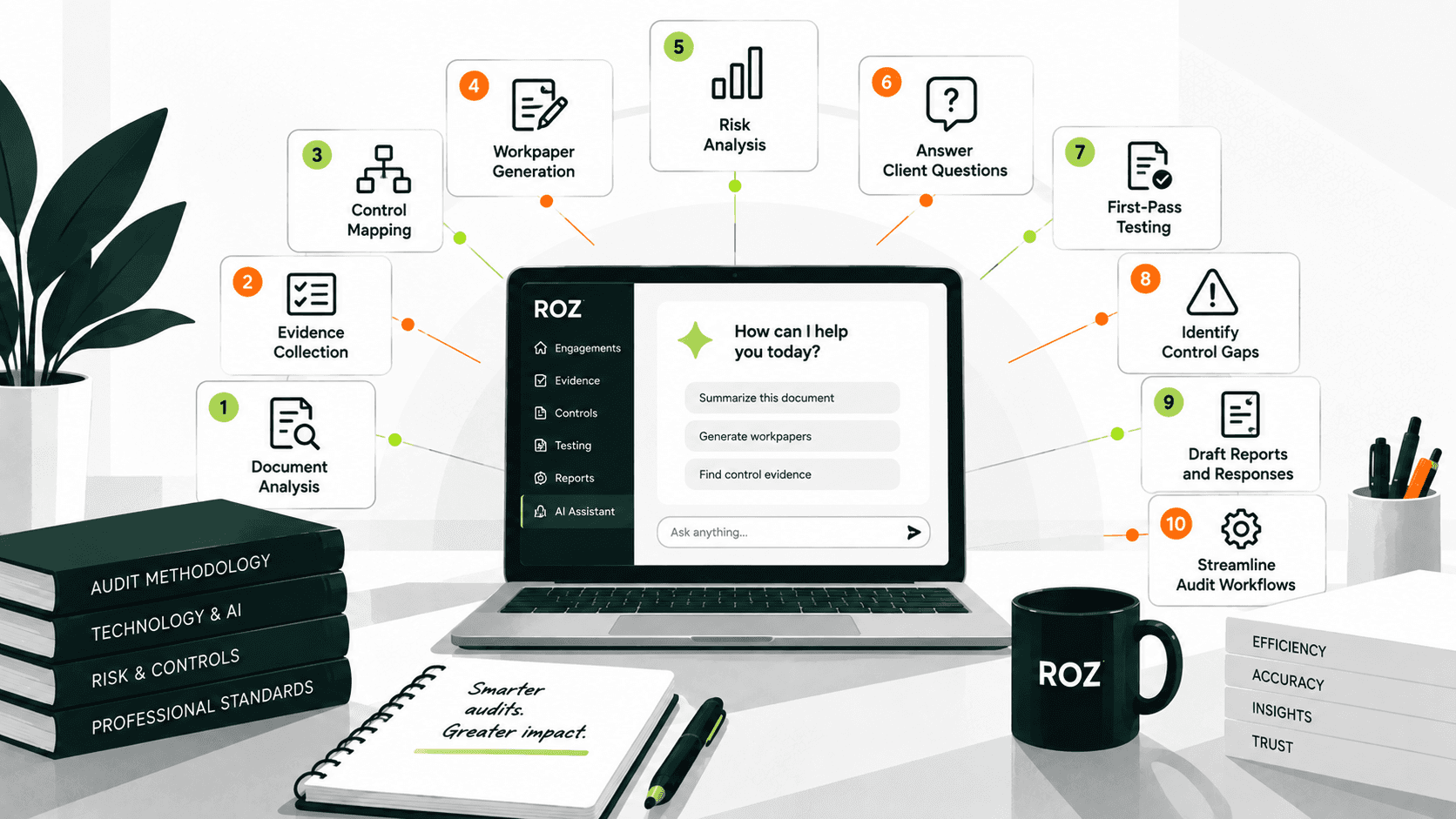
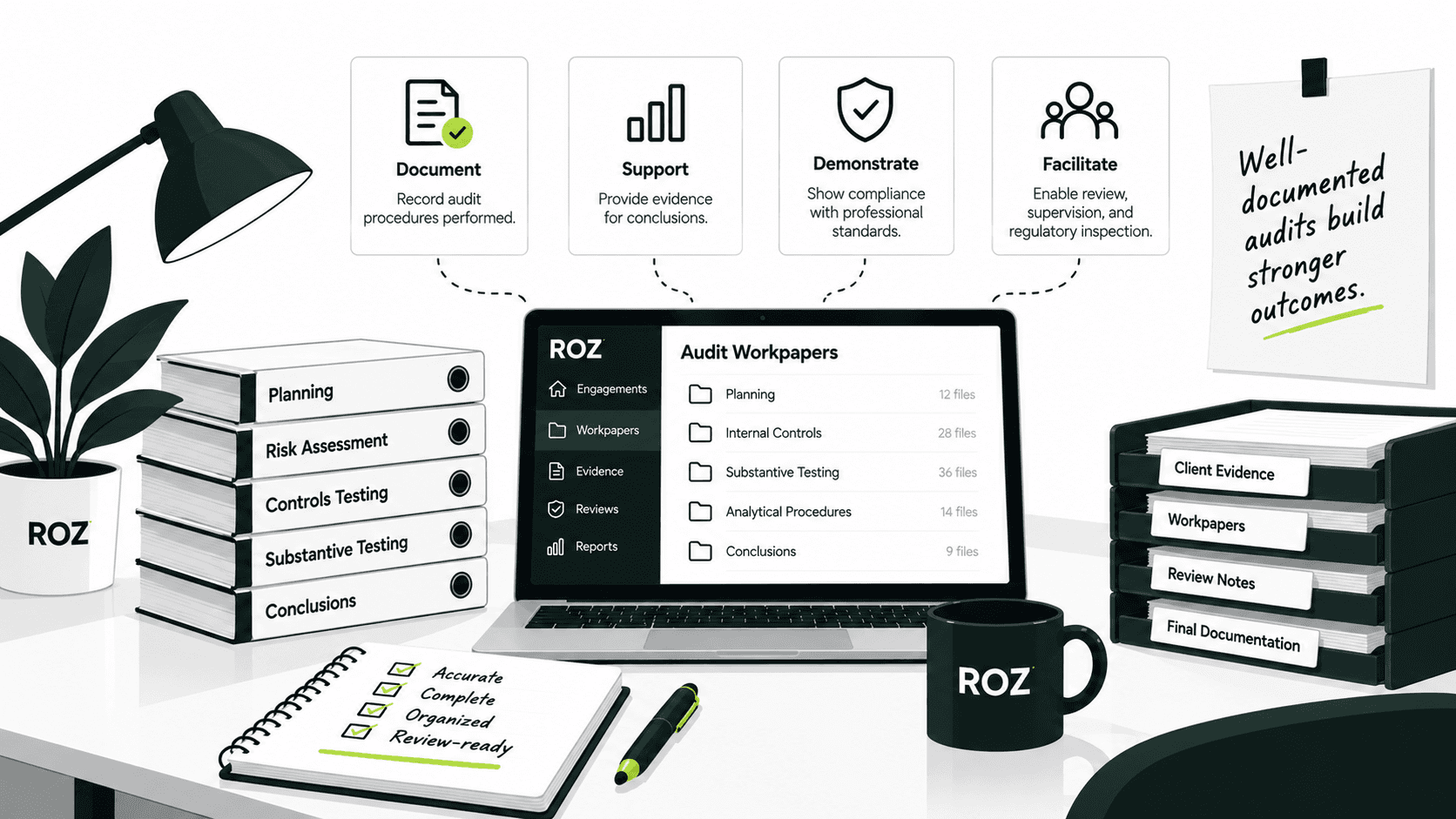
Managing SOC 2 documentation and workflows can be time-consuming. Roz supports CPA firms and advisory teams with a structured, AI-native engagement workspace that helps streamline audit preparation.
Roz helps teams:
Centralize evidence and documentation in secure, client-specific workspaces.
Generate AI-assisted draft workpapers with audit trails and source links.
Extract and map controls to support gap analysis.
Structure engagement workflows using risk and control views.
By organizing documentation and supporting first-pass analysis, Roz helps reduce manual effort and improve consistency across SOC 2 engagements, without replacing auditors or certification processes.
Conclusion
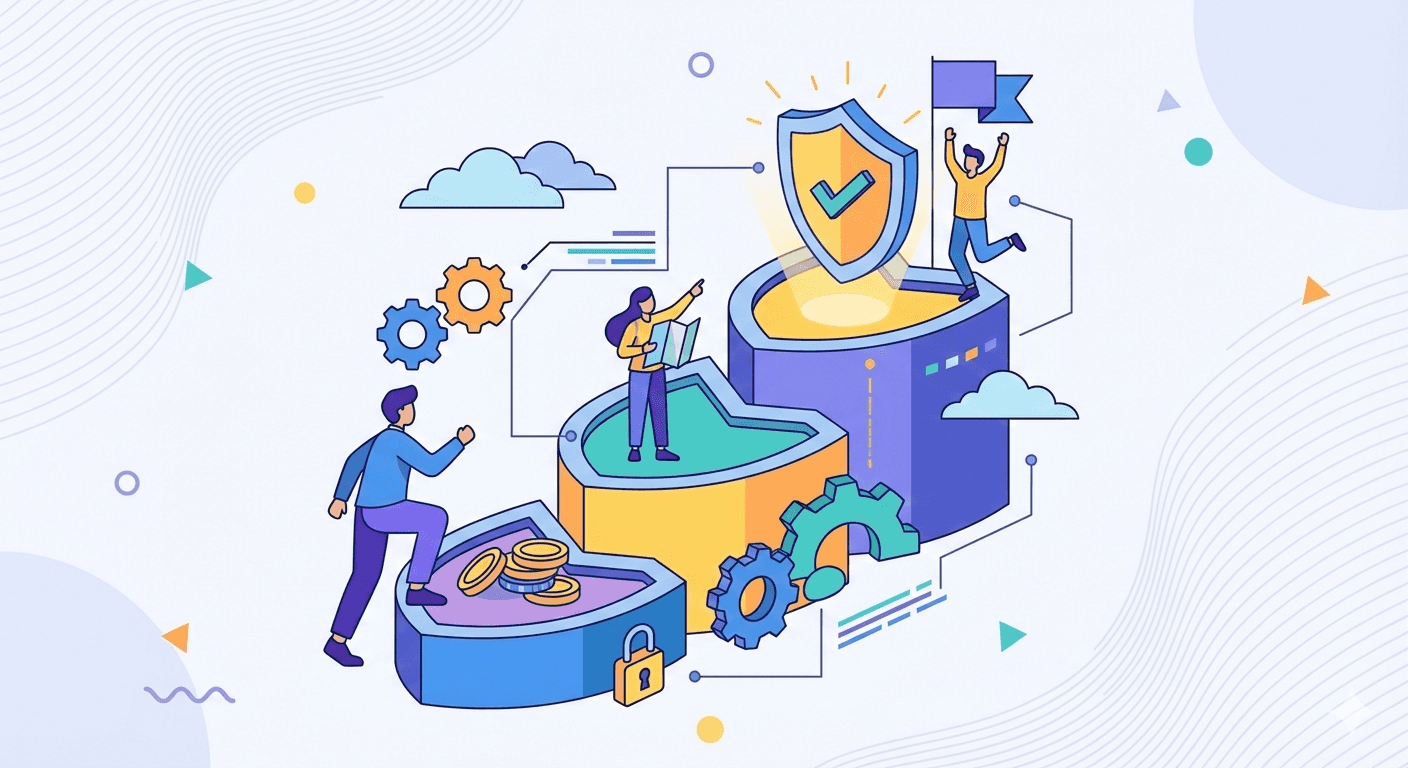
A SOC 2 Type 1 examination provides valuable point-in-time assurance regarding the design of your security controls. While it is not a formal certification, it serves as an initial assurance for early-stage enterprise engagements and a necessary stepping stone toward a more rigorous Type 2 audit.
Buyers expect service organizations to handle data in accordance with defined controls and expectations. By defining your scope, implementing sound controls, and preparing your documentation effectively, you can help your organization approach audits more efficiently, shifting them from a burdensome requirement to a structured process.