AI is showing up in more audit workflows every year, including evidence analysis, control testing, workpaper preparation, and reporting. That's largely a good thing. But knowing that AI was used on an engagement is not the same as knowing what it did, what evidence it relied on, or whether its output was appropriately evaluated and supported before a human signed off on it.
That gap is the auditability problem. And it's where a well-designed AI audit trail earns its place.
In this article, we will cover what an AI audit trail is, what it should include, and eight practical best practices for building one that holds up under scrutiny. If you use AI-assisted tools to generate workpapers or test controls, this is worth your time.
What Is an AI Audit Trail?
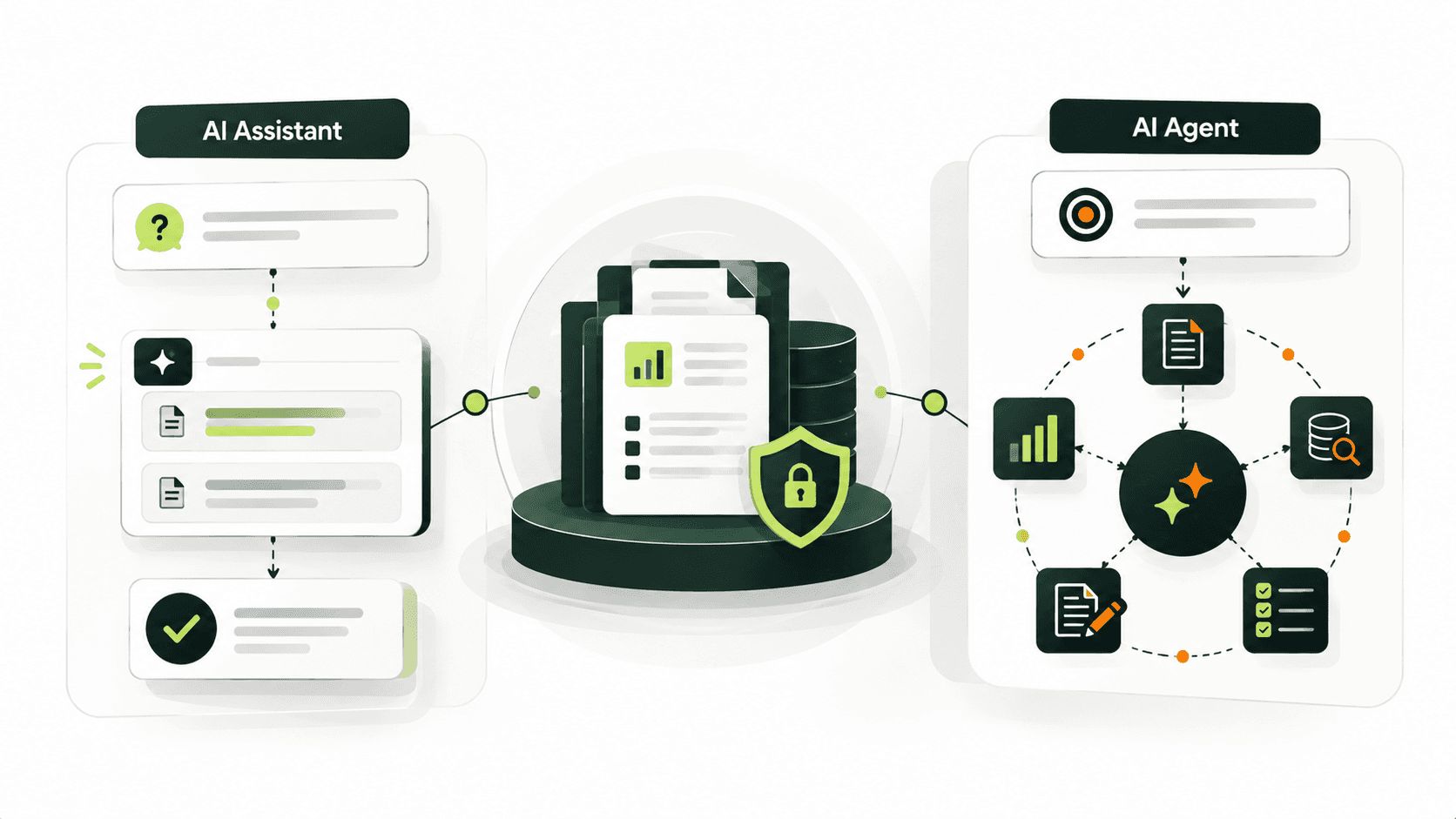
An AI audit trail is a record of the AI and human activity associated with a process, enabling a review team or independent reviewer to understand how the process was performed and how the output contributed to the final draft. An audit trail for AI is not simply a log of inputs and outputs. An effective audit trail connects:

This chain of evidence helps differentiate a record of system activity from an audit trail designed to fulfill accountability, transparency, and review.
What Should an AI Audit Trail Include?
Every AI system and every engagement will have a unique audit trail. You can't expect an AI audit trail to have a standard set of fields. The level of detail will depend on the risk, requirements of the engagement, the profession, legal, and regulatory frameworks.
AI-assisted audit workflows include the following elements:
Category | What to record |
User and AI agent identity | Human user, AI system/agent, role, engagement context |
Timestamps and workflow IDs | Timestamp, engagement ID, run ID, event sequence |
Prompts and instructions | Task instructions, template version, input context |
Source evidence and provenance | Source document, version, evidence ID, page reference, control linkage |
Model and workflow information | Model version, AI workflow version, relevant configuration |
AI outputs and actions | Generated analysis, classifications, workpaper content, and control-testing results |
Human review and modifications | Reviewer identity, approval or rejection, edits, escalation, final disposition |
Final outcome | Connection from AI output → reviewer action → final workpaper or conclusion |
When tracing the audit trail for workflows and documentation, some elements relating to source evidence and provenance are of particular importance. The reviewer of the workflow must be able to identify the documentation that was the basis of an AI-generated output and examine whether that documentation truly supports the analysis or conclusion.
As such, the audit trail does not need to have all source evidence. The audit trail should allow the reviewer to reconstruct or analyze the AI-generated output.
8 Best Practices for Building an AI Audit Trail
1. Design the trail around the auditor's questions
Most systems are built around what an AI can log. Instead, begin with the questions an auditor would have to reconstruct the work.
What happened?
Who initiated it?
What evidence was used?
Which AI system performed the task?
What did it produce?
Who reviewed it?
What changed?
What became the final result?
If your audit system doesn't provide answers to these questions for AI-assisted workflows, create more context or design more controls.
2. Link AI outputs to source evidence
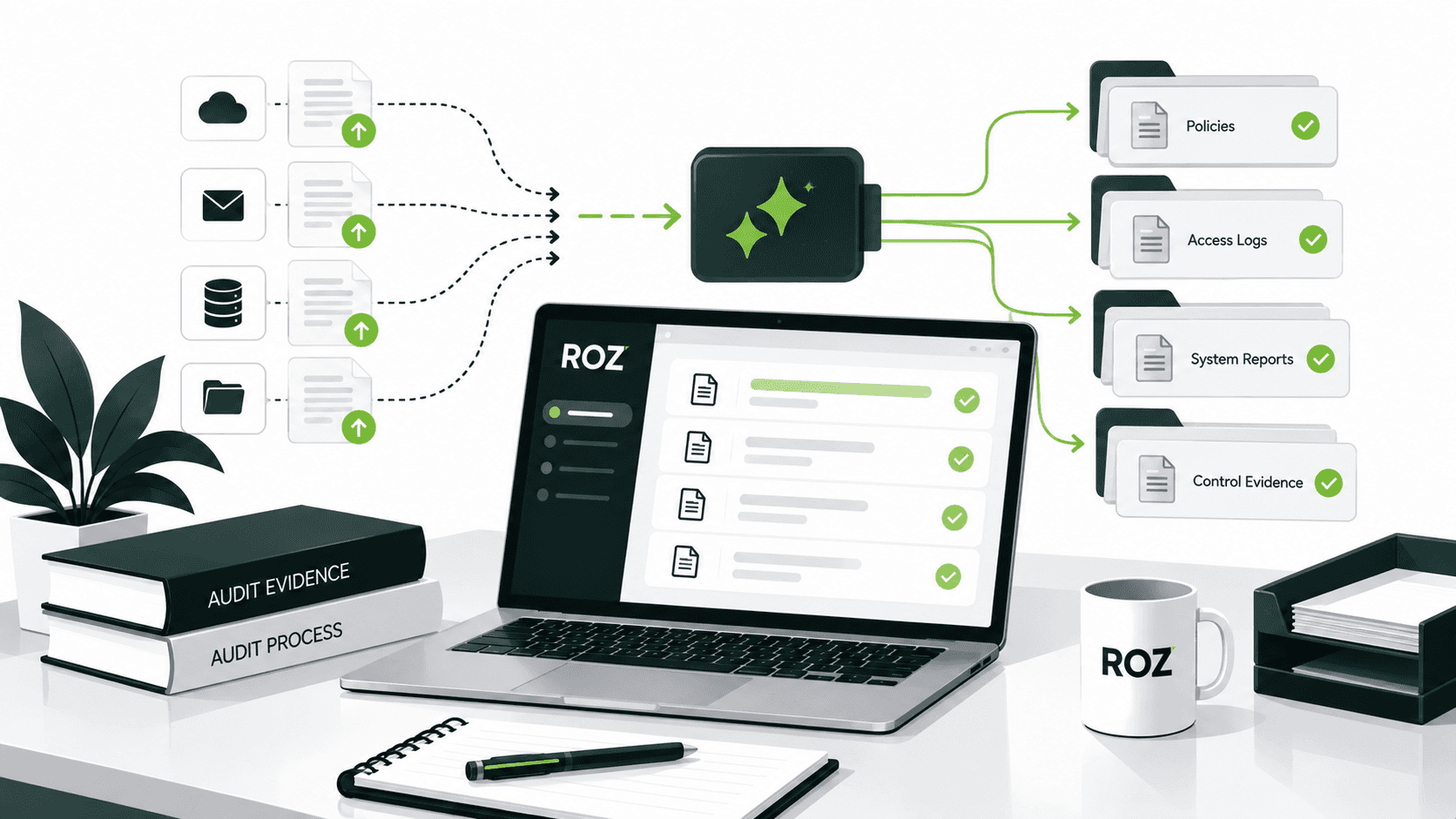
For AI-generated workpaper content that supports an audit conclusion, the underlying evidence should be identifiable and the analysis should be documented. The chain looks like this:
Source evidence → AI analysis → generated output → workpaper → final conclusion
A citation does not by itself verify that an AI interpretation is correct. The audit trail provides the link, while the auditor determines whether the evidence and analysis are sufficient.
3. Record human review and overrides
The audit trail must be used to capture the work moved from AI-generated output to workpaper. Possible elements of this workflow include:
Reviewer identity
Whether the output was approved, rejected, or modified
The specific edits made
Any escalation or override decisions
Final disposition
Reviewer participation should be recorded clearly enough to show how the AI-generated output became part of the final workpaper and what changes or decisions were made during review.
4. Maintain version history
Workpapers go through many changes during an engagement. Evidence gets updated. AI workflows and prompt templates get updated. Version history matters because the version of a document used in testing may not be the version on file when the engagement concludes. Your trail should capture versions of:
Source evidence
AI workflows and templates
Generated workpapers
Final outputs after reviewer edits
5. Protect the integrity of audit records
Audit records must be trusted to maintain accuracy. The system must allow you to identify and possibly reconstruct changes. This can be achieved by implementing the controls below.
Role-based access permissions
Encryption at rest and in transit
Append-only or write-protected storage where appropriate
Retention policies aligned with applicable requirements
Controlled modification processes with logged justification
Access logs for the audit trail itself
Retention requirements vary by the applicable engagement, jurisdiction, industry, and record type. For example, the EU AI Act requires certain providers and deployers of high-risk AI systems to retain specified automatically generated logs for at least six months, subject to applicable law. PCAOB AS 1215 requires audit documentation to be retained for seven years, while FINRA Rule 4511 establishes a six-year default period for certain books and records where no other retention period applies. These requirements do not establish a universal retention period for an AI audit trail.
Organizations should determine applicable retention requirements before establishing their AI audit-trail policies and workflows.
6. Separate operational logs from audit evidence
While these two items serve very different purposes, they are often confused.
Operational log | Audit trail | |
Primary purpose | Troubleshooting and system operations | Accountability, traceability, and reconstruction |
Audience | Engineering and DevOps teams | Auditors, reviewers, regulators |
What it captures | Runtime events, errors, latency, performance | Evidence linkage, human decisions, governance context |
Retention | Short-term, operational window | Long-term engagement or regulatory lifecycle |
Operational logs do not completely replace an audit trail, but they can contribute. Turning on technical telemetry may show what a system did, but without corresponding audit or business information, it may be impossible to understand what that system did and why it was relevant.
7. Make the audit trail searchable and exportable
Auditors should be able to fetch data and construct a particular workflow without the aid of an engineer. A trail should be filterable by the following:
Engagement or client
Control or audit objective
Workpaper
Evidence item
User or reviewer
AI workflow
Date range
Review status
Relevant records should be exportable for review, inspection, investigation, or engagement documentation.
If retrieving a specific trail requires a custom query or support ticket every time, the audit process becomes unnecessarily dependent on technical teams.
8. Test the audit trail itself, the "Cold Replay" test
This exercise is typically overlooked by teams.
Provide an AI-assisted workpaper for independent review to a reviewer who was not involved in the original work. Ask the reviewer to check the recorded audit trail and cited evidence to answer the following:
What evidence was used?
Which AI system performed the work?
What output was generated?
What did the auditor change?
Who reviewed it?
What became the final workpaper or conclusion?
If the reviewer can diagram or describe the workflow used to prepare the workpaper and it has no important gaps, then the traceability is sufficient. If there are gaps that the reviewer is unable to complete, then that indicates the workflow may need additional audit-trail entries, evidence links, documentation, or controls.
Rather than waiting for an investigation, inspection, or other similar event, perform this review on a recurring basis.
AI Audit Trail vs. AI Audit Log vs. AI Observability
Though these three terms are often used interchangeably, contexts of their use by organizations differ. When you design a system meant to withstand an audit scrutiny, understanding these distinctions is critical.
AI audit trail: Focused on accountability and reconstruction. Connects a given AI activity to the relevant source evidence and human decisions and outcomes. Auditors and reviewers are the audience for an AI audit trail.
AI audit log: A log of system activity at the event level and is often of a technical nature. A log can be part of an audit trail, but on its own, it is not designed for use by auditors.
AI observability: Concerned with the behavior and performance of a system. Observability tracks performance metrics and errors as well as calls to tools and services and tracing requests. This is a tool of the operations and engineering teams for monitoring the performance of an AI system.
How they connect: Audit logs and observability are often intentionally separate (one is focused on system health, the other on capturing events), and an audit trail draws on additional, varied sources to bring together evidence-linked records that need to be reviewed. The three elements can be complementary but do not always flow linearly.
AI Audit Trail for AI-Generated Workpapers
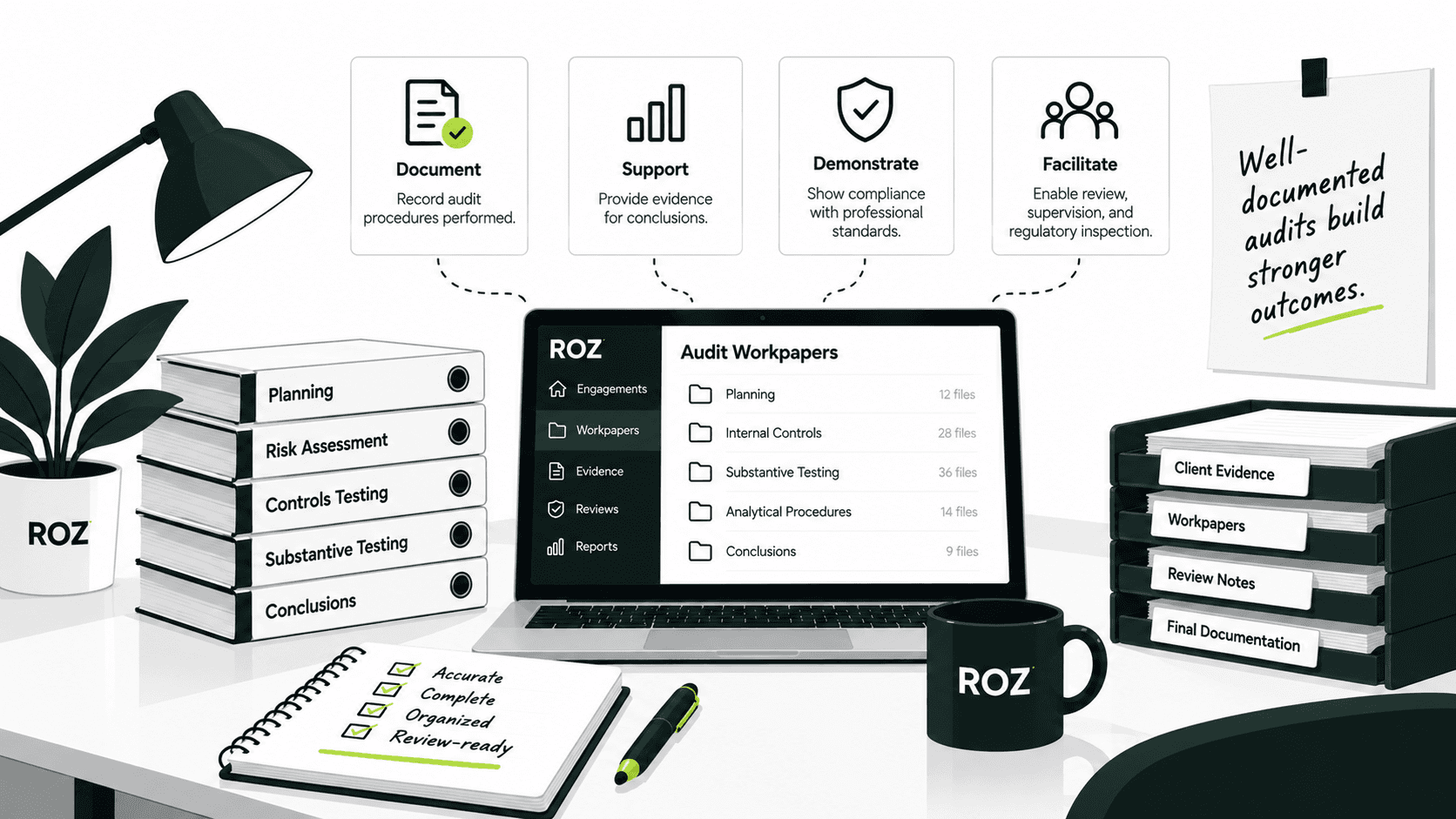
Generating workpapers with AI is not as simple as it may seem. A workpaper and an auditable workpaper are very different. An audit workpaper allows reviewers to trace the evidence, procedures, analysis, and review that support the conclusion.
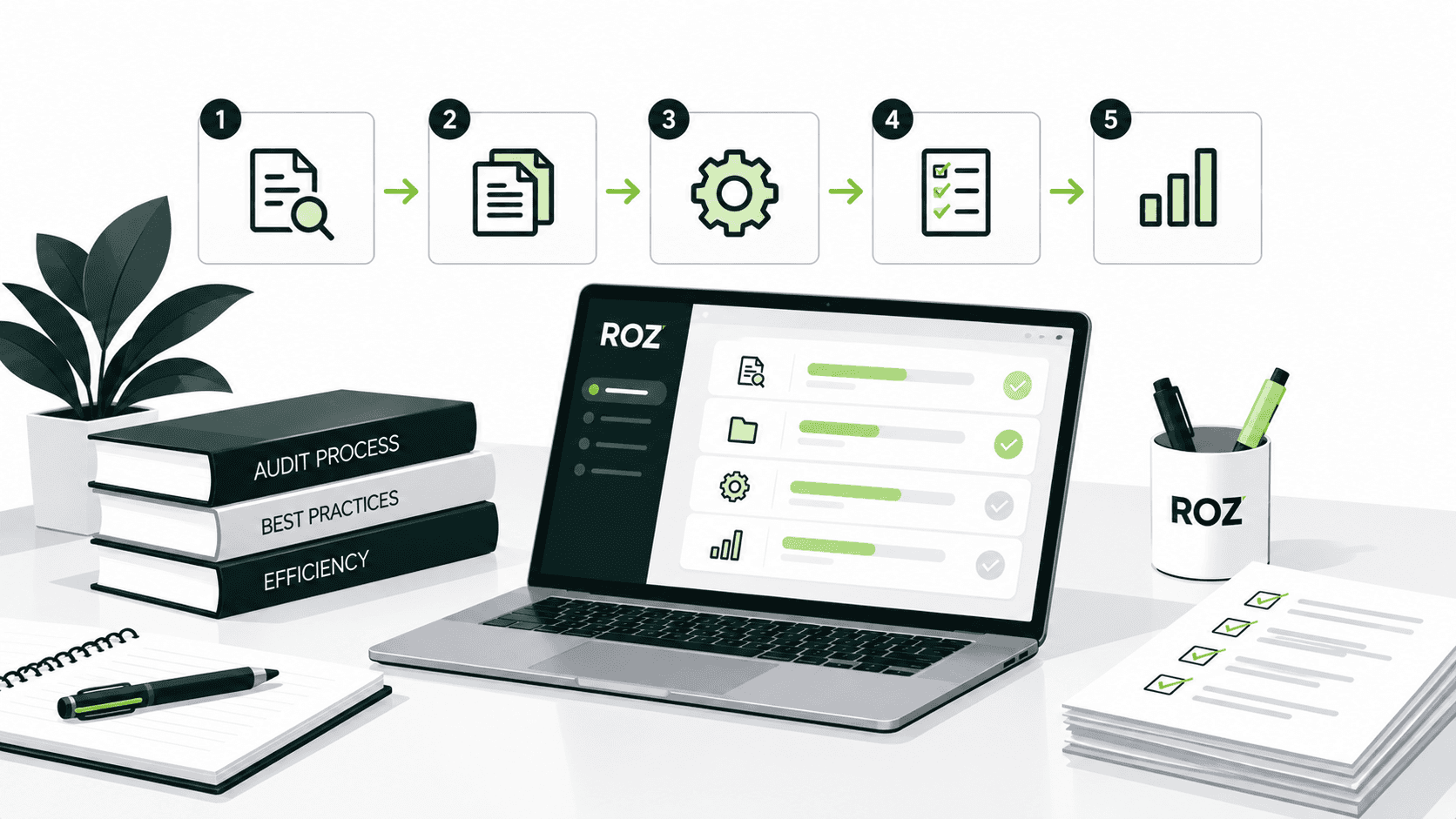
A workpaper that has an audit trail is created like this:

Capturing information on the workpapers at each stage allows the reviewer to trace the path from evidence to conclusion. Stages may be consolidated to some degree for greater efficiency; the main concern is having a path from evidence to conclusion.
Example: AI-assisted control test
These steps can be illustrated as follows. An example of an access review control is used.
Evidence: An access review report is uploaded to the engagement workspace.
AI analysis: The AI system examines the selected population and identifies exceptions.
Workpaper generated: A first-pass workpaper is created containing the test work performed along with references to the source evidence.
Reviewer action: The reviewer confirms the exceptions and analyzes if the population has been appropriately covered.
Auditor modification: The auditor updates the conclusion based on other evidence or context.
Final workpaper: The final workpaper retains the relevant record of the AI contribution, reviewer actions, and changes and the source evidence.
Every step is traceable. An independent reviewer should be able to trace each step from the raw evidence file to the final approved conclusion without having to make any assumptions.
How to Audit an AI-Assisted Workpaper
When reviewing a workpaper that was built with the help of AI, work through these five steps:
Step 1: Verify the source evidence: Is the referenced evidence available? Is the correct version being used? Does the source actually contain the information cited?
Step 2: Verify the evidence-to-conclusion link: Does the relevant evidence support the documented conclusion? Was relevant evidence overlooked? Is the conclusion appropriately qualified given what the evidence shows?
Step 3: Review the AI-generated analysis: Are there gaps or unsupported assumptions in the analysis? Does the AI output make an interpretation that requires auditor evaluation? Does the evidence support the analysis and resulting conclusion? Has the system produced a misleading or unsupported interpretation?
Step 4: Review human modifications: What were the changes? Why were they made? Do the modifications provide a clear difference to the system output? Are the changes appropriately documented?
Step 5: Verify the final workpaper: Is the documentation complete? Is the evidence traceable? Are reviewer actions recorded? Does the final conclusion accurately reflect the work performed and evidence considered?
How Roz Supports Traceable AI-Assisted Audits
Roz is an AI-native audit fieldwork platform designed for auditors and advisory firms performing control-based engagements across SOC 2, ISO 27001, CMMC, SOX, and related frameworks. Each client engagement has its own isolated workspace where teams can organize controls, evidence, testing, and workpapers in one place.
Within that workspace, Roz supports traceable control testing in several ways:
AI-powered control testing: Roz applies defined attribute checks to evidence and sample sets, returning PASS/FAIL/N/A/INFO outcomes with reasoning for auditor review. Teams can trace each result back to the supporting evidence.
Evidence-centered testing: Evidence is tied directly to controls and specific testing attributes, helping auditors move from supporting documentation to test results without losing context.
First-pass workpapers: Roz generates AI-assisted first-pass workpapers from completed control activities, with source references linked to the underlying evidence. Auditors review, edit, and approve the final documentation.
Human-in-the-loop review: AI supports testing and documentation, while auditors evaluate evidence, investigate potential exceptions, exercise professional judgment, and reach final conclusions.
Full audit trail: Test reruns, verifications, and overrides are logged, providing a record of how testing results changed throughout the engagement.
For firms managing multiple engagements, this approach can accelerate control testing while keeping the evidence, testing results, and final documentation connected and auditor-reviewed.
Conclusion
An effective AI audit trail is more than a record of prompts and responses. It creates a traceable connection between AI activity, audit documentation, source evidence, generated work, human review, and the final audit result, structured well enough for an independent reviewer to reconstruct the process and identify any material gaps in the workflow.
A useful AI audit trail should be reconstructable, evidence-linked, reviewable, and appropriately controlled. Build that trail into AI-assisted audit workflows from the start of each engagement rather than trying to reconstruct it after an issue arises. Testing the trail using a cold replay approach can also help identify gaps in traceability before they affect engagement review or inspection.
If you are building AI-assisted audit workflows, explore how Roz structures evidence-linked workpaper generation and traceable audit workflows.
Frequently Asked Questions
What is the difference between an AI audit trail and an AI audit log?
An AI audit log is a record of system activity and is helpful in a troubleshooting context. An audit trail is a recording of the activities of a system in a way that supports review and reconstruction. Logs are used in audit trails but are not a substitute for an audit trail.
How does AI observability differ from an AI audit trail?
AI observability is concerned with system behavior and performance as it relates to the engineering activity. An AI audit trail is a record of the evidence used, what the AI produced, who reviewed the AI-produced output, and the final result. AI observability and AI audit trail serve different functions and audiences.
Why are AI audit trails important for auditors?
When auditing activities utilize AI, documentation must enable reviewers to understand the work performed, the relevant audit evidence, and how conclusions were drawn, all within the confines of applicable professional and regulatory requirements. An AI audit trail may provide insights into the AI's contribution to the audit and may include the evidence used, outputs, and whether and to what extent a human reviewed and modified the AI's work. An AI audit trail does not ensure that the AI's work met the standard for sufficient evidence or that the AI's conclusion is correct.