Control testing remains one of the most time-intensive components of audit and advisory engagements. Across SOC 2, SOC 1, IT audits, and broader GRC engagements, audit teams continue to spend substantial time collecting evidence, evaluating control execution, documenting results, and responding to review feedback. Despite improvements in audit tooling and workflow management over the past decade, much of control testing remains highly manual.
This is not due to a lack of automation attempts. Firms have invested heavily in standardized templates, audit management platforms, and workflow automation. However, control testing presents unique challenges that are difficult to automate using traditional approaches. Controls vary significantly across organizations, evidence is often unstructured, and evaluation frequently requires professional judgment. These characteristics make control testing fundamentally different from structured transactional audit procedures.
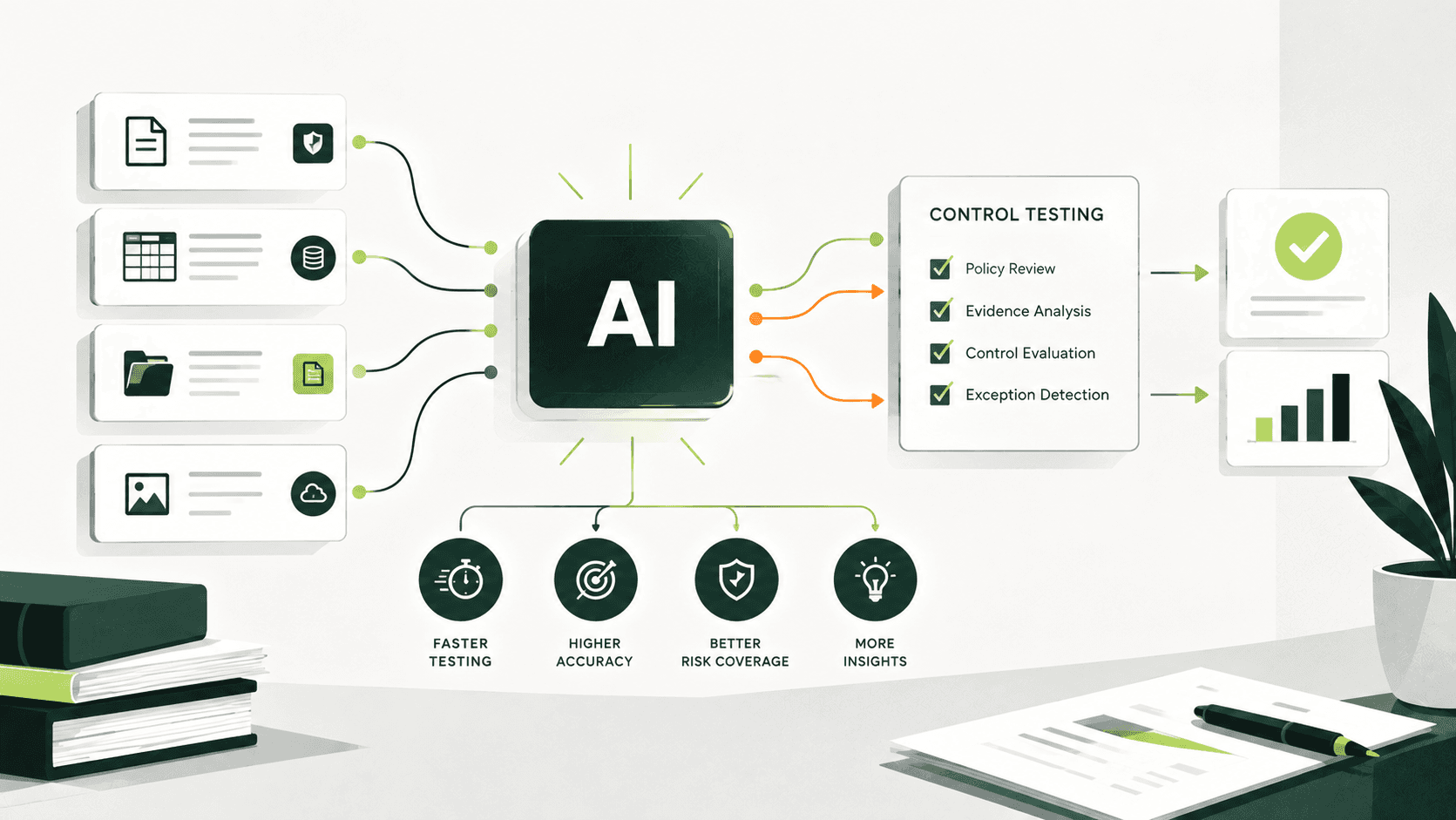
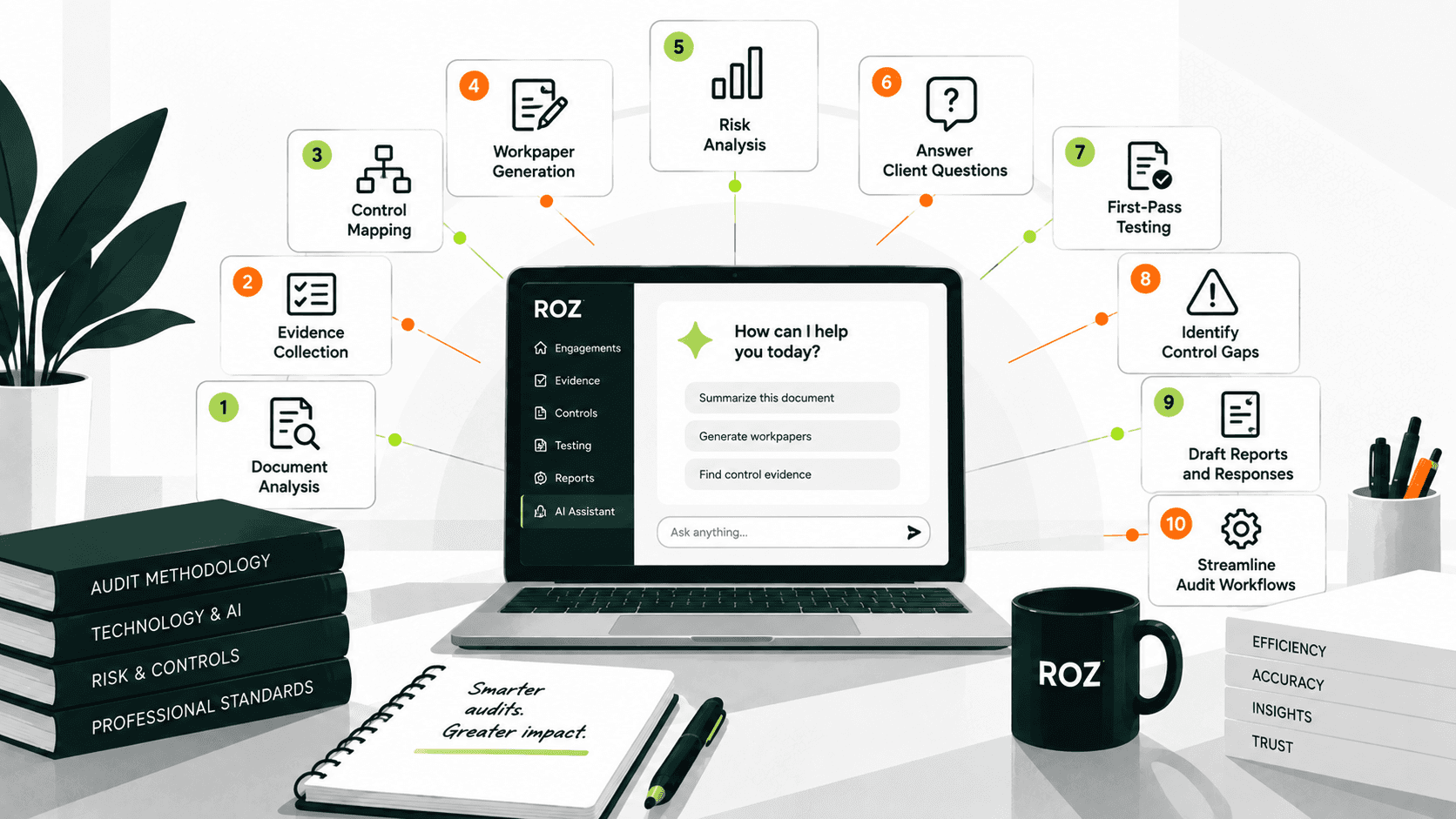
Recently, artificial intelligence has emerged as a potential solution to some of these challenges. AI systems can process unstructured documents, identify patterns across evidence, and assist with mapping controls to supporting artifacts. These capabilities introduce opportunities to reduce manual effort in control testing workflows. Despite these capabilities, audit practitioners remain cautious about AI adoption in audit environments. Tools that promise automation without preserving audit rigor can introduce additional risk. Similarly, solutions that reduce transparency or attempt to replace professional judgment may weaken audit defensibility.
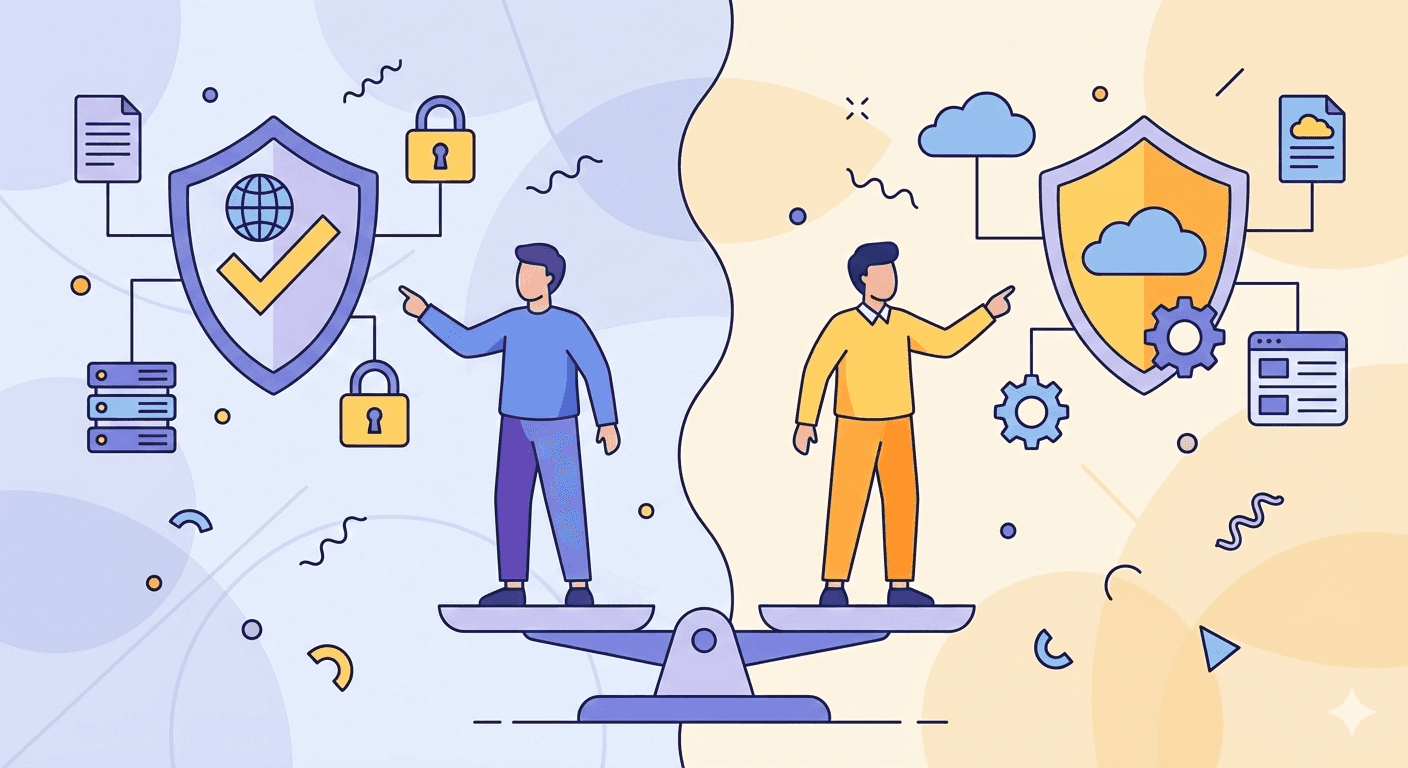
The firms seeing the most meaningful benefits from AI are not attempting to fully automate control testing. Instead, they are using AI to assist with structured, repetitive tasks, such as evidence organization, mapping, and documentation support, while maintaining human oversight and professional judgment for evaluation and conclusions.
This white paper explores:
Why control testing remains highly manual in 2026
Where AI meaningfully adds value in control testing workflows
Where AI should not replace auditor judgment
The difference between AI that accelerates rigor and AI that replaces it
What an effective AI-assisted control testing workflow looks like
What audit firms should ask vendors before adopting AI for control testing
The goal is not to advocate for AI adoption broadly but to provide a practical, practitioner-focused perspective on how audit teams are thoughtfully incorporating AI into control testing workflows while maintaining audit quality and defensibility.
Why Control Testing Is Still So Manual in 2026
Evaluating client controls across different environments remains difficult, as standard automation does not address many of the nuances involved in control testing. Testing controls cannot be boiled down to an automation issue, because controls differ across companies, and so do the formats of the evidence provided. Many testing procedures involve contextual nuance that rigid scripts or rule-based workflows fail to capture.
Evidence Is Highly Unstructured
A typical audit engagement requires the review of various types of evidence that do not have a standard structure, such as:
Screenshots from different Software-as-a-Service (SaaS) platforms.
Access review reports in various formats.
Approval workflows from a ticketing system.
Policy acknowledgments from HR systems
Unstandardized documentation adds complexity to testing. It is rare for controls to map consistently and cleanly to documentation. Supporting evidence for a control may be spread across multiple systems and formats. For example, an auditor may need to review a change ticket, a cross-reference to a code repository screenshot, and an activity validation against a deployment log.
These types of extensive cross-checking are quite common in modern cloud environments, where evidence is scattered across several platforms.
Control Interpretation Requires Professional Judgment
Controls are worded differently across various organizations. Even at a high level, the same control objective could be phrased very differently for different companies. This means that instead of simply matching the control wording, an auditor would have to analyze and assess the intent behind the control.
For example, with these types of reviews:
Logical access reviews
Change management approvals
Incident response testing
Auditors must apply professional skepticism when evaluating whether evidence meets the control objective. With a ticketing system, for example, an atypical approval path may represent a control exception, or it may simply be an additional compensating control that is acceptable based on the organization's underlying processes.
Most of these determinations hinge on professional judgment and contextual understanding, which rule-based automation cannot replicate.
Documentation and Defensibility Requirements
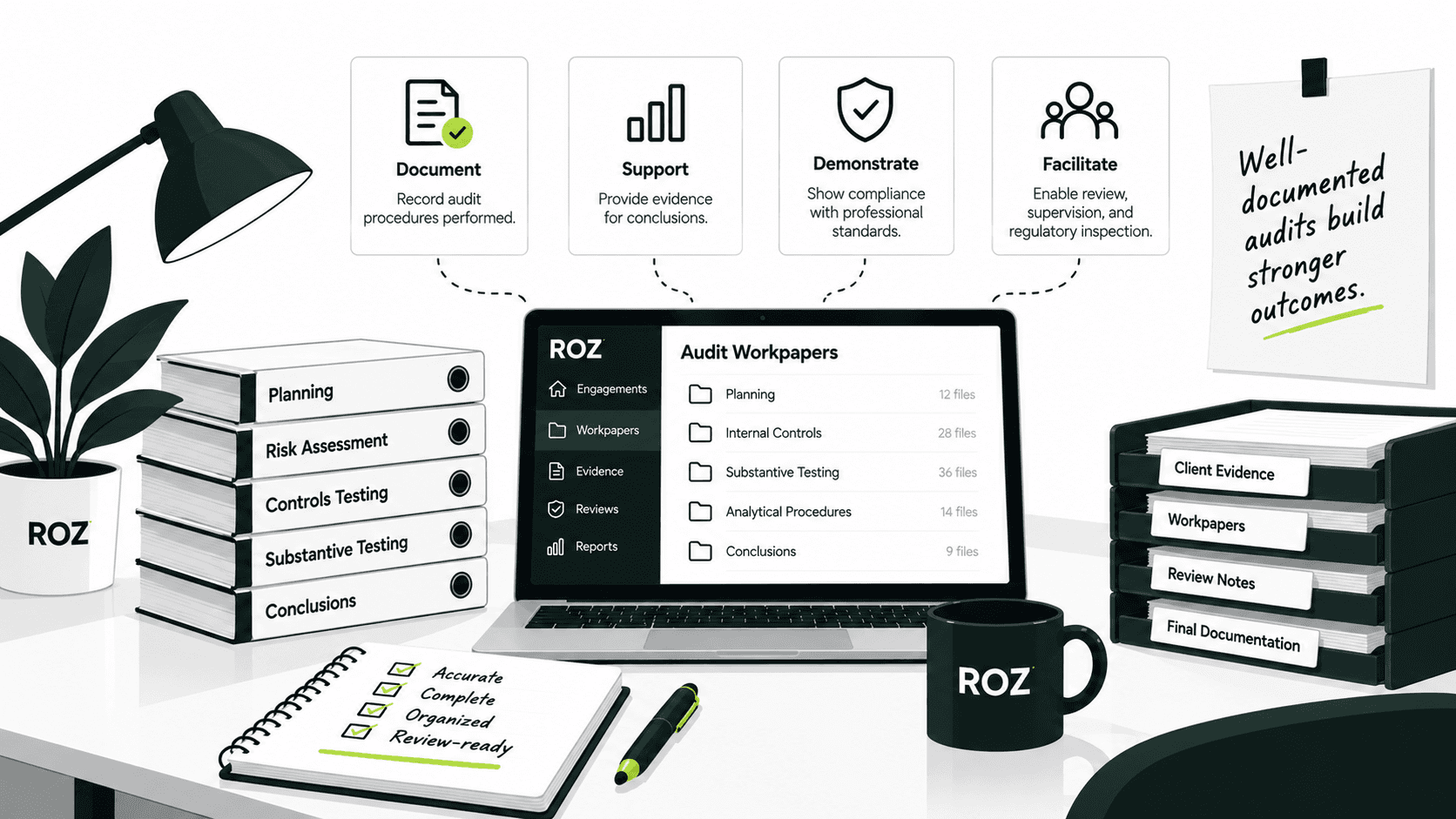
All auditors must document their reasoning and evidence since their work could be subject to external review, internal quality reviews, and oversight of the audit itself. Defensible documentation typically contains the following:
Testing steps executed.
Sample selection explained.
Evidence detailed.
Exceptions noted.
Conclusions summarized.
This sort of documentation and the associated manual work necessitate additional effort to prepare work papers, link the evidence, and coordinate reviews. Multiple review layers add to this burden as documentation requirements grow; reviewers may ask for more clarifications or additional support.
This type of variability in documentation is something traditional automation approaches do not handle well. Templates require extensive customization when client environments differ, and Robotic Process Automation (RPA) is better suited to processes that are structured and predictable than to processes that require interpretive control testing.
Where AI Adds Value in Control Testing (and Where It Doesn’t)
AI introduces capabilities that may benefit audit teams if technology is used properly. Most common and practical use cases center around the organization of data, extraction of insights, automation of mundane tasks, and retaining auditors' judgment and review processes.
Evidence Classification and Organization
AI can determine the type of evidence and the other related documents and how to structure testing folders. AI can help decrease the time spent on sorting documents manually and increase the level of consistency in sorting documents by tagging relevant documents to their supporting artifacts as they are uploaded. For example, platforms that serve as intelligent data rooms may be able to distinguish documents in the following categories:
Policy documents.
System screenshots.
Access review exports.
Change management tickets.
HR onboarding evidence.
This early organization is valuable before the auditors begin their testing. While it may be considered incremental, document organization can contribute significantly to the overall effort spent in control testing and is very relevant in large engagements.
Control-to-Evidence Mapping
AI models can be used to suggest potential evidence for particular controls, surface, and document the supporting artifacts in large document datasets and identify missing files. An example of AI usage could be to:
Map an access review export to an access control that is logical.
Link change tickets to appropriate controls pertaining to change management.
Identify relevant incident response controls to incident logs.
This first pass of document mapping allows auditors to focus their time on the relevant validation rather than the tedious data retrieval. Auditors still need to ensure the evidence mapped is relevant and appreciate whether it supports the control objective.
Gap Identification and Exception Flagging
AI tools can identify gaps in evidence, document evidence that is missing, and flag unclear control descriptions. These alerts are particularly helpful for audit teams to rectify problems prior to the reviewing phases of an audit. Patterns that may include the following can be identified:
Access reviews not completed.
Changes missing secondary approvals.
Incomplete onboarding documentation.
Missing timestamps or approvals.
AI tools may identify these issues and, as a result, may reduce the volume of evidence requests made at the last minute and enhance the timing of engagements.
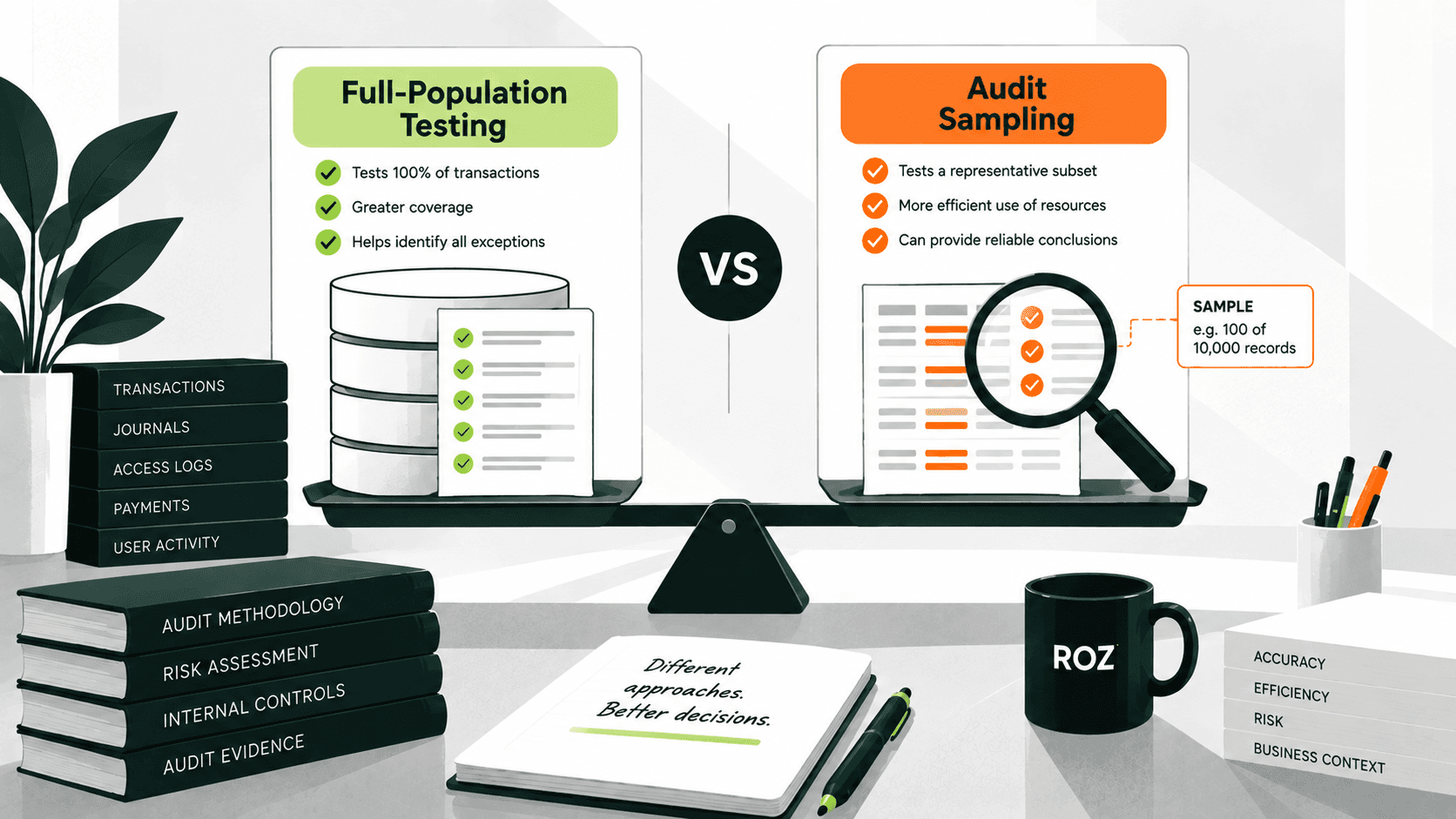
Sampling Support and Population Analysis
AI may assist with areas of sampling as well. Control testing largely requires auditors to sample enormous populations, such as:
User access lists
Change management logs
Incident response records
Vendor review populations
AI tools can help detect anomalies, highlight unusual patterns, and assist in normalizing the formatting of these populations, which could aid in sampling decisions. The auditor still has to do the following when it comes to sampling:
Determining the size of the sample.
Selecting sampling methodology.
Evaluating results.
Documenting conclusions.
Although AI tools are helpful in the area of population assessment, they do not substitute good audit practice.
Workpaper Drafting and Documentation Assistance
Control testing requires a substantial amount of documentation. AI tools may assist with the extent of control testing by:
Drafting initial testing summaries.
Linking references that substantiate evidence.
Standardizing language used in documents.
Structuring the workpapers
All documents are subject to review by auditors. Auditors may still edit and finalize the documentation. This method reduces the frequency of repeat typing in work papers while still allowing auditors to adjudicate and finalize their own conclusions.
Consistency Across Engagements
AI-assisted workflows can improve consistency across multiple engagements. For audit companies, the most common concern is:
Inconsistent documentation.
Variations in testing approaches.
Reviewer expectation differences.
AI tools can reduce this variation in the following areas:
Workpaper structure.
Evidence mapping approaches.
Testing documentation.
Improved consistency is likely to reduce review time, improve the efficiency of the audit, and make the documentation more defensible.
Where AI Does Not Replace Auditor Judgment
We need to establish boundaries for AI in the following areas:
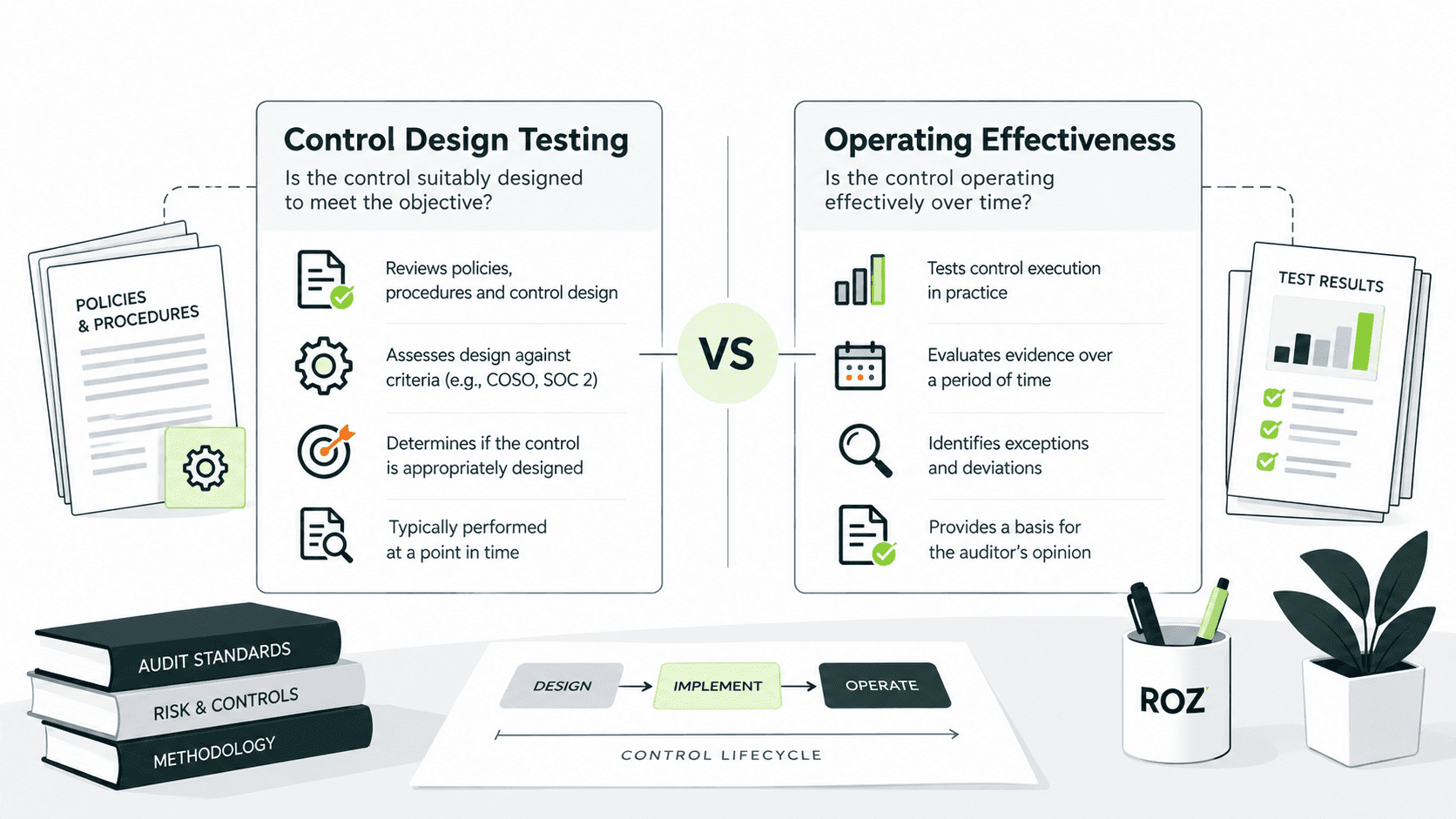
Control design evaluation
Overall risk assessment
Sampling decisions
Exception evaluation
Compensating control assessment
Final audit conclusions
These examples require contextual understanding, risk assessment, audit experience, and professional skepticism. It is not obvious whether, for example, an unusual approval path is a control exception or a legitimate compensating control. These decisions require contextual evaluation and professional judgment.
AI That Accelerates Rigor vs. AI That Replaces It
New technological innovations in audit workflows create new opportunities and risks. This is most apparent when managing audit defensibility, documentation, and AI tools that impact control testing. For audit firms exploring new AI solutions, understanding the differentials between AI that complements rigor and AI that replaces rigor is vital.
The Risk of Over-Automation
Some AI tools are developed to come to conclusions, remove documentation in the middle of a process, or provide outputs, which are simplified to just “pass” or “fail” without being able to track a rationale. These types of tools are developed to bring about efficiencies but actually introduce risks, which can be significant. Risks include:
Reduced audit defensibility.
Limited visibility for reviewers.
Inconsistent testing methodologies.
Lack of documented testing steps.
Difficulty supporting conclusions during inspections.
An auditor’s ability to explain why an AI system arrived at a particular conclusion may be critical to the defensibility of that workpaper during an internal review, peer review, or external inspection. Tracing audit conclusions to the testing results and rationale is a fundamental requirement for audit documentation. This is especially true for the systems that operate as “black boxes” and “generate” outputs without explanatory documentation. In the audit world, transparency is more valuable than speed.
AI That Accelerates Rigor
AI tools that promote rigor focus on complementing auditors and not replacing them. These tools provide:
First-pass evidence analysis.
Suggested control-to-evidence mappings.
Potential exception flagging.
Documentation assistance.
Evidence organization.
Under this model, auditors are responsible for:
Validation.
Interpretation.
Professional judgment.
Final conclusions.
Instead of reducing rigor, this might increase it by allowing the auditor to concentrate on risk assessment and exception analysis.
Characteristics of Defensible AI-Assisted Testing
Defensible AI-assisted selective control testing features include:
Clear audit trail of all actions
Direct evidence traceability and source linking
Reviewable intermediate outputs
Capability for human override and adjustment
Documented assumptions and testing steps
Preservation of reviewer workflows
These features complement traditional auditing standards and support defensible audit documentation.
The Reviewer and Inspection Perspective
Reviewers are particularly concerned with:
How conclusions were reached.
What evidence was reviewed.
Whether testing procedures were followed.
How exceptions were evaluated.
AI tools that preserve these elements help improve review efficiency. Poor intermediate step transparency may lead to additional review burdens. This is especially important for firms that face:
Internal quality reviews
Peer reviews
External inspections
Engagement quality reviews
Transparent auditing processes enhance quality and streamline the review process.
Why Firms Are Taking a Cautious Approach
As AI technology becomes more popular, audit firms are implementing AI technology slowly, including:
Testing AI within document review workflows.
Using AI for organizing evidence.
Applying AI to lower-risk controls initially.
Upholding manual review.
This incremental approach allows firms to evaluate effectiveness while managing adoption risk. Over time, firms may expand usage as confidence in AI-assisted workflows increases.
AI as an Enhancement, Not a Replacement
Firms seeing the most meaningful benefits from AI are using it to support, rather than replace, existing workflows. In these contexts, AI reduces busy work while still applying professional skepticism and audit judgment. This means that audit teams are gaining time while audit rigor remains intact, which is the primary aim with respect to the adoption of AI in control testing.
What a Good AI-Assisted Control Testing Workflow Looks Like
Integrating AI technology into auditing processes does not replace traditional auditing methodology. Rather, it augments the auditing process with a balance between manual work effort, professional judgment, and review layers that improve audit defensibility and methodology.
Traditional Control Testing Workflow
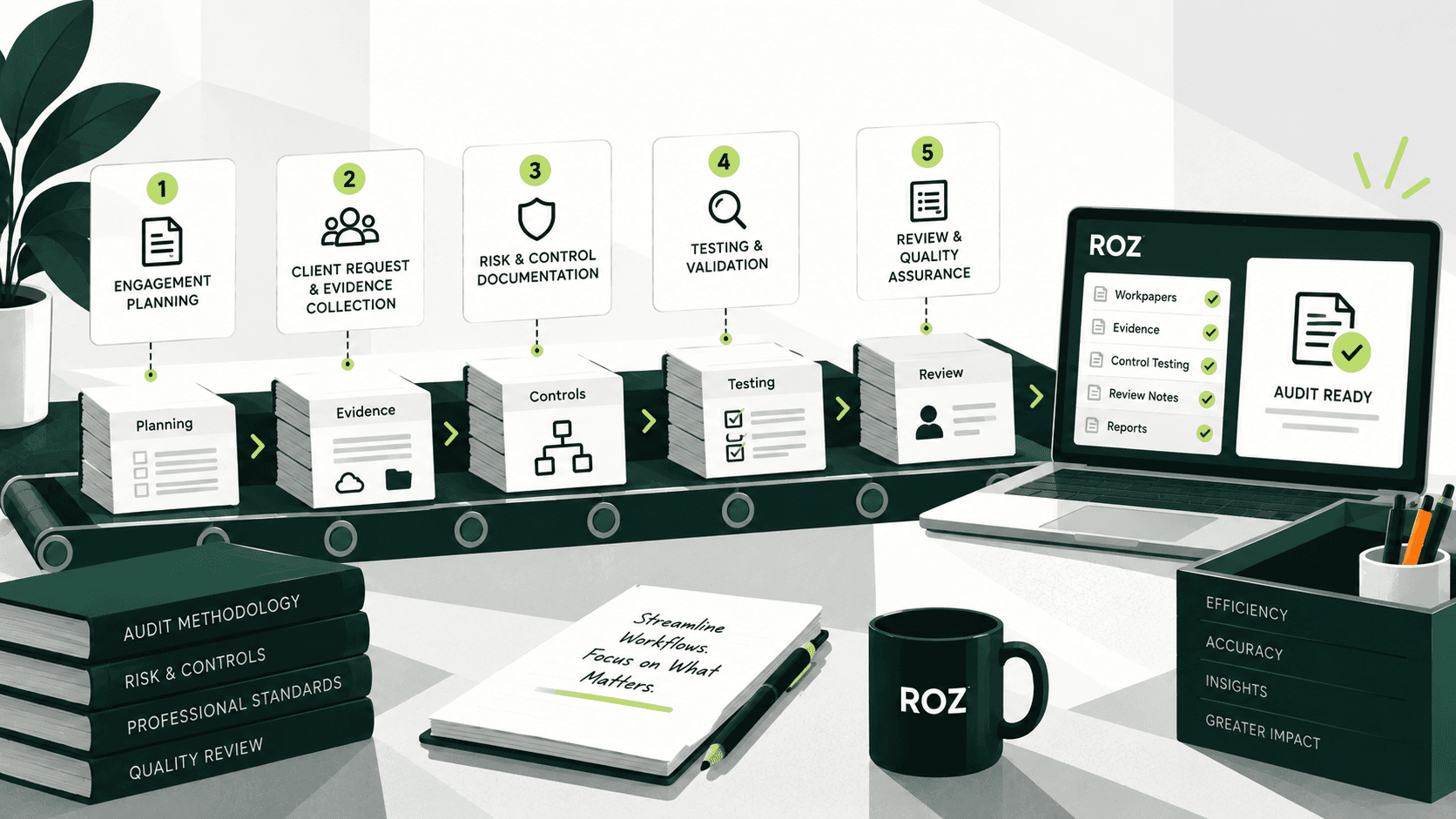
An example manual control testing workflow consists of:
Analyzing controls and determining the scope.
Asking the client for evidence.
Gathering and organizing documents.
Manually mapping evidence to testing procedures.
Performing control testing.
Documenting workpapers.
Submitting for review and responding to comments.
A significant portion of an auditor's work is to complete this process. It is time consuming and highly repetitive. Much of this time is spent on the organization of documentation and the cycle of updating work papers through review. Increased volume leads to a compounding impact on any of the manual steps of the auditing process.
AI-Assisted Control Testing Workflow
A well-designed AI workflow supports these same steps and reduces manual work.
Control Ingestion: AI assists in the analysis and organizational framework cross-mapping of control descriptions and testing procedures, as well as work scope delineation.
Evidence Ingestion: Intelligent engagement data room functionality provides structured organization of uploaded evidence documents, screenshots, system exports, and tickets.
Evidence Mapping: Gaps in documentation are identified, supporting artifacts and relevant control evidence are highlighted, and AI provides suggestions.
Exception Identification: Gaps in documentation, missing timestamps, or incomplete documentation are intercepted and flagged.
Auditor Review: Auditors draw on professional judgment to investigate flagged items, consider AI suggestions, and formulate conclusions.
Workpaper Documentation: Preserving the audit trail for review and workpaper documentation assistance is provided by AI for evidence linking and drafting.
This reduces manual effort while improving consistency and supporting scalability with the same auditing rigor.
What Audit Firms Should Ask Vendors Before Adopting AI
Choosing an AI system for control testing is not solely a question of technology; it is a question of risk management and audit quality. Vendors should be evaluated on defensibility, integrity of control testing, and integration into existing workflows.
Audit Defensibility Questions
Audit firms need to focus on the documentation practices on the AI outputs. Key questions include:
Does the platform provide a clear audit trail?
Can reviewers easily see supporting evidence for AI suggestions?
Are intermediate steps visible and reviewable?
For audit purposes, conclusions must be able to be documented and remain defensible for internal reviews and external inspections.
Control Testing Integrity Questions
Firms should clarify the role of AI in the testing process. For example:
Does the AI suggest findings or generate conclusions?
Can auditors override AI-generated outputs?
How are exceptions identified and documented?
AI should support audit workflows, not replace professional judgment.
Evidence Handling and Workflow Questions
Firms need to focus on how the platform will integrate with the existing workflows:
How is evidence mapped to controls?
How are documentation gaps identified?
Does the tool support multi-reviewer workflows?
Can firms maintain their existing audit methodologies?
How is accuracy evaluated, and how are false positives handled?
These factors are important for maintaining audit quality and managing risk while ensuring efficiency with the use of technology.
Conclusion
Control testing is one of the most labor-intensive parts of the audit engagement process. AI can help reduce manual data processing and improve evidence organization, particularly in areas involving structured work, unstructured data, and outlier identification.
Audit firms that have implemented AI technologies in a deliberate way have been able to enhance their operational efficiencies while maintaining the highest standards of defensibility. As the audit profession evolves, those audit teams that implement AI technologies while maintaining thoroughness, careful recordkeeping, and human oversight will enjoy the most significant GRC and assurance improvements.