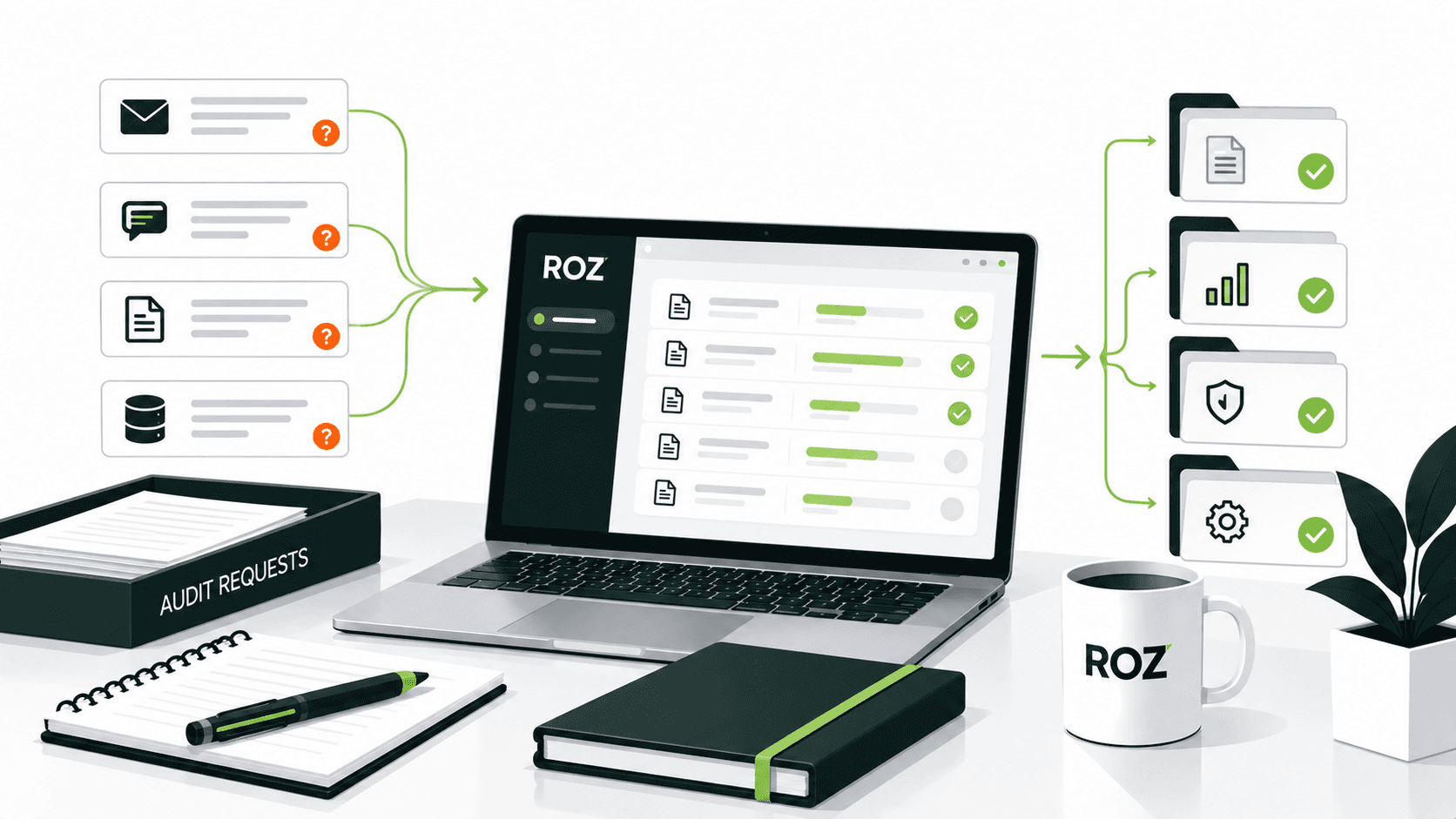
Audit teams are facing a familiar problem with an unfamiliar intensity. Scope keeps expanding. Documentation requirements keep growing. Timelines stay the same or shrink. And experienced staff are harder to find.
According to a 2025 survey by Personic, 83% of senior finance and accounting leaders report a talent shortage. The AICPA projects a shortfall of 340,000 CPAs by 2030. Meanwhile, 70% of internal auditors say growing regulatory compliance requirements are straining their current audit plans (IIA, 2025).
AI-assisted auditing has moved into this gap, not as a replacement for auditor judgment, but as a tool for handling volume. Understanding where AI adds genuine value and where human expertise remains non-negotiable is now a practical skill for every CPA and audit professional.
In this article, I will break down how manual and AI-assisted audits compare, where each approach performs best, and how firms can use both together to deliver higher-quality engagements.
What Is a Manual Audit?
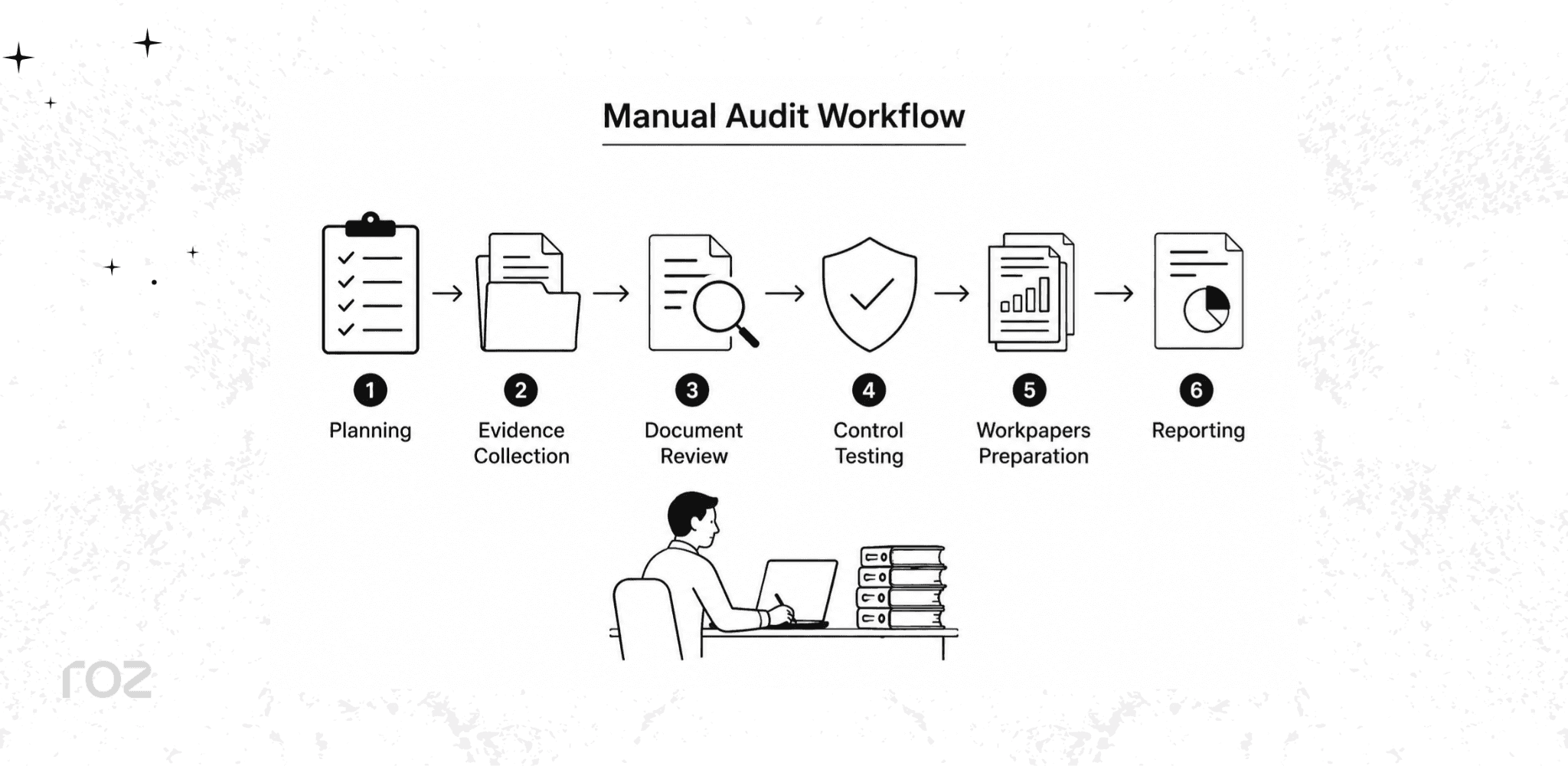
A manual audit relies heavily on human effort. During a manual audit, the auditor will review documents, select samples, conduct control tests, assess evidence, and develop workpapers, all without the help of artificial intelligence.
Most audit approaches are rooted in the same principles. Professional skepticism and interaction with the client are core to drawing evidence and making conclusions. These responsibilities continue to rely on professional judgment and cannot be delegated to AI.
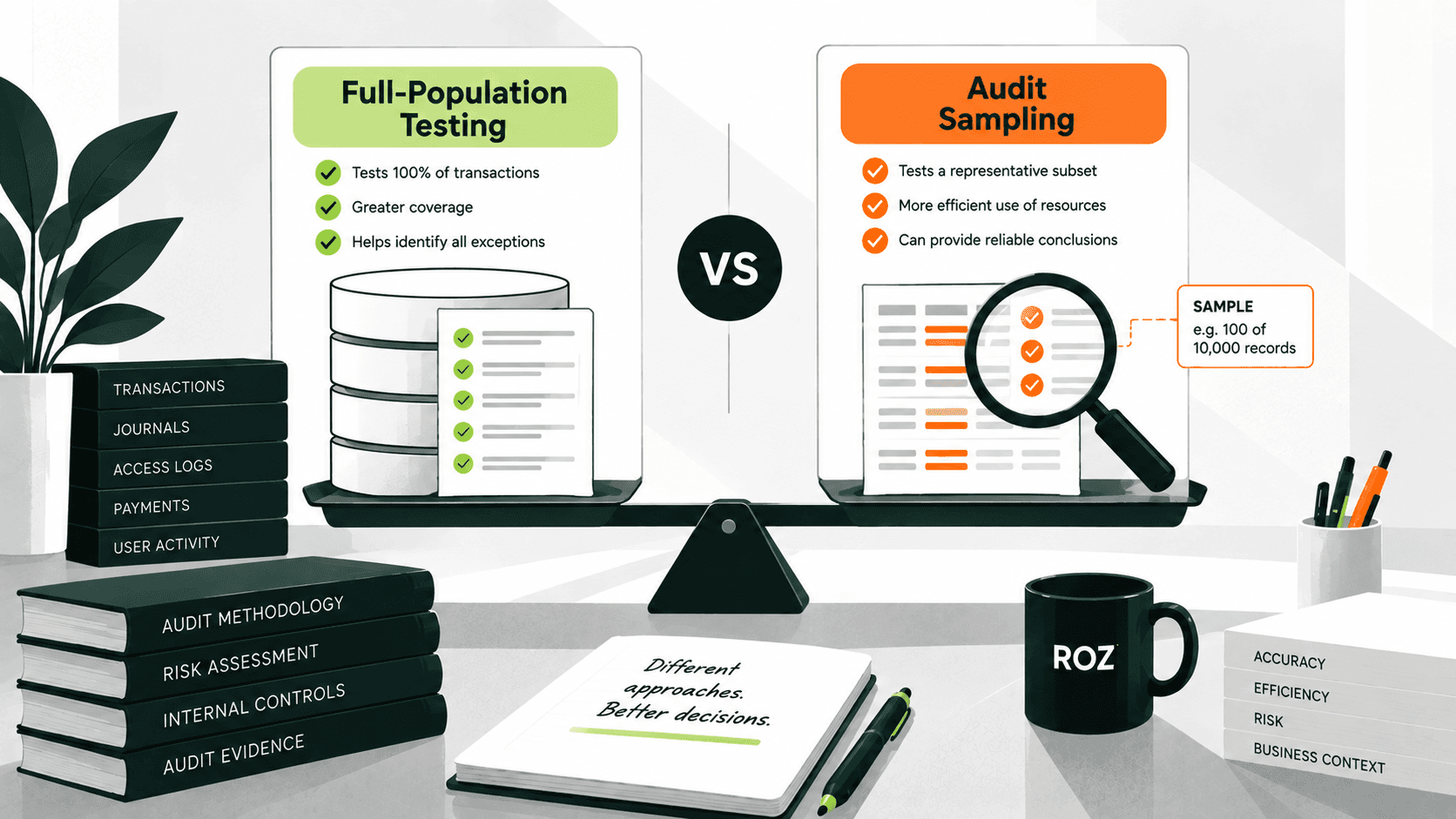
The primary drawback of a manual audit is how much scale limits it. The larger an organization is, the bigger the challenge to manually audit every record. Testing a sample by its nature leaves a significant part of the total records unexamined. This means some errors or anomalies may remain undetected within large datasets.
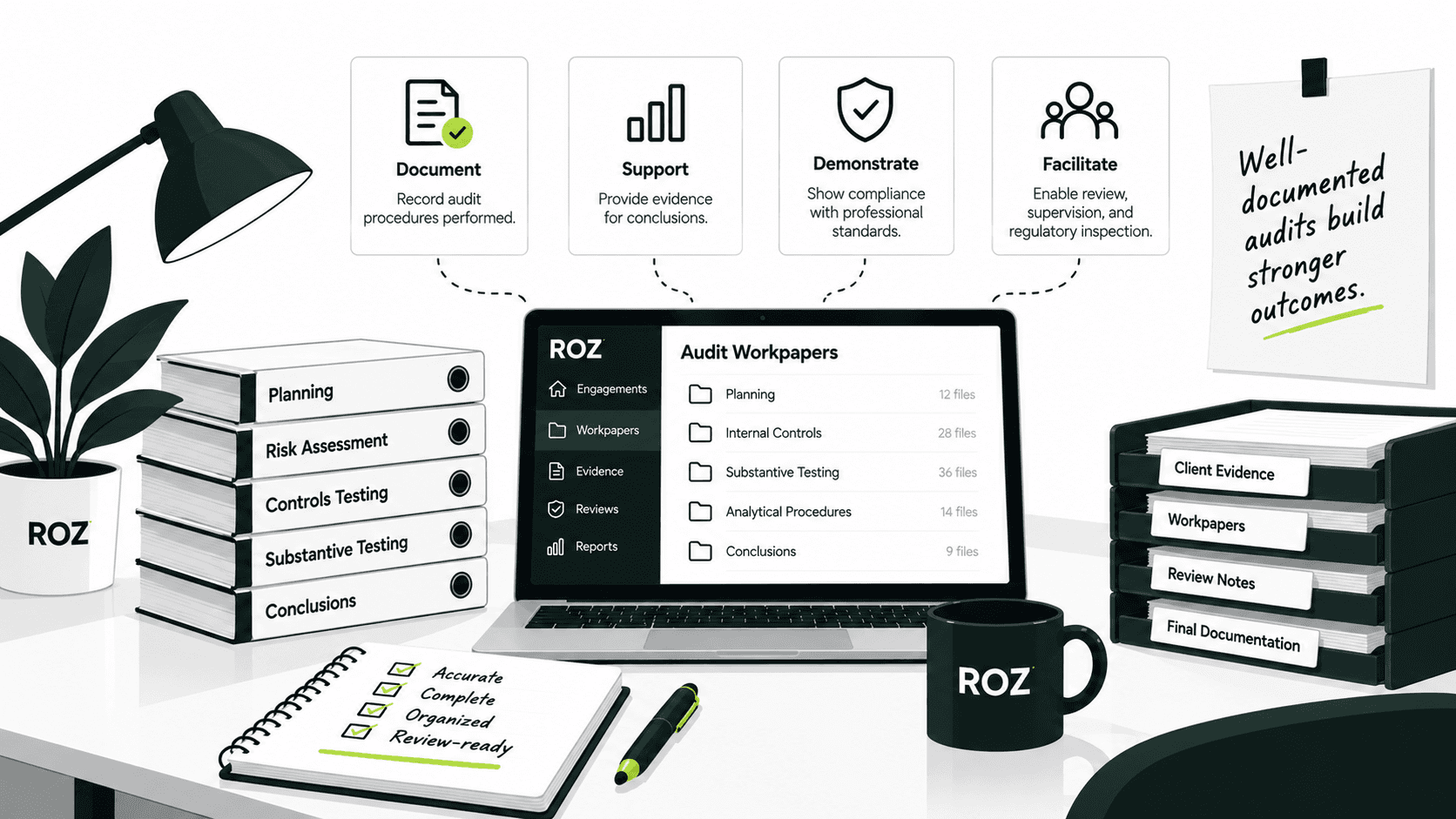
Much of a manual audit is concerned with the same tasks over and over again. Many administrative tasks compete for limited audit time, reducing the time available for higher-value audit activities. Those tasks include requesting evidence and structuring and organizing documentation as well as workpapers.
What Is an AI-Assisted Audit?
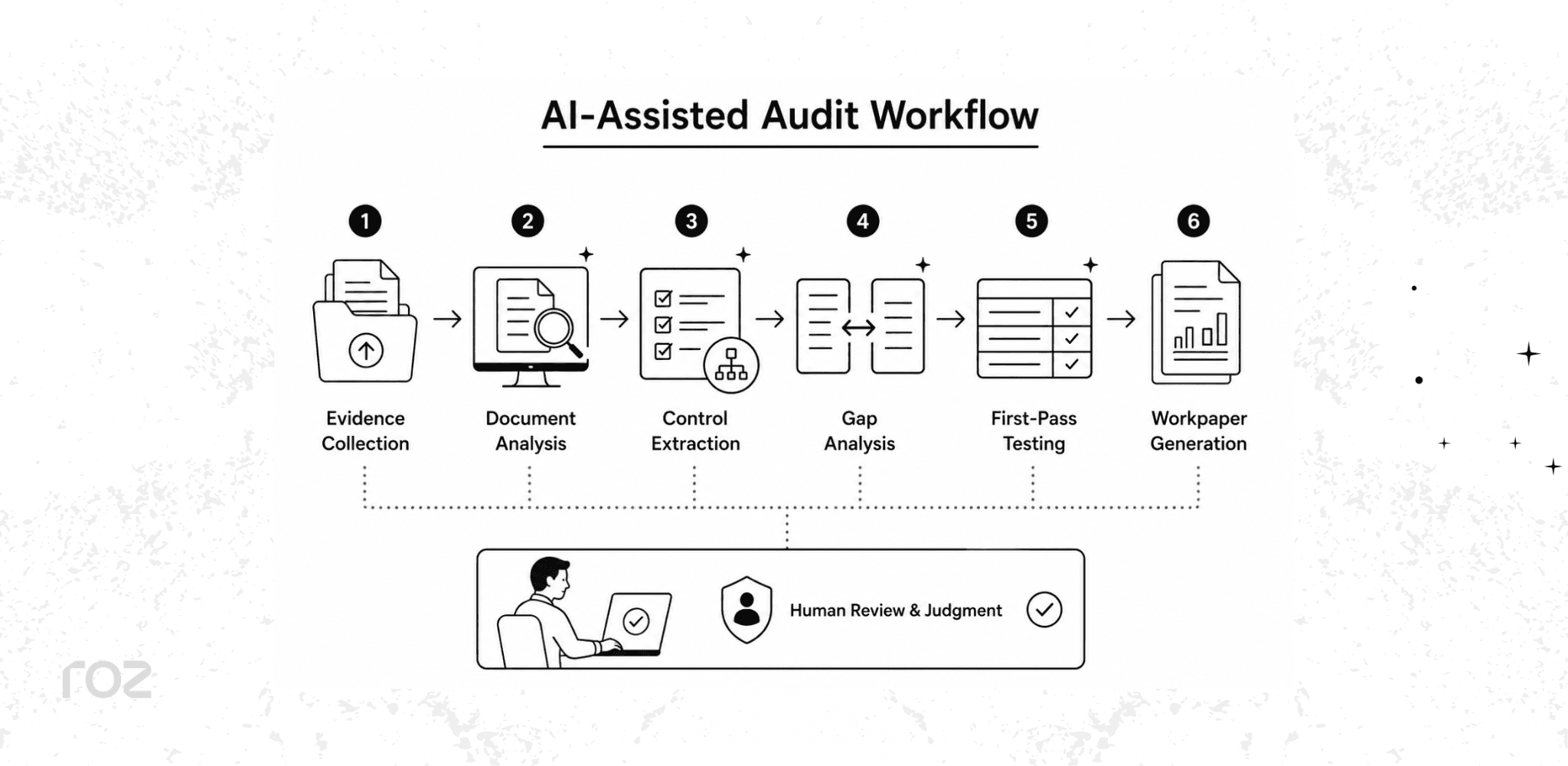
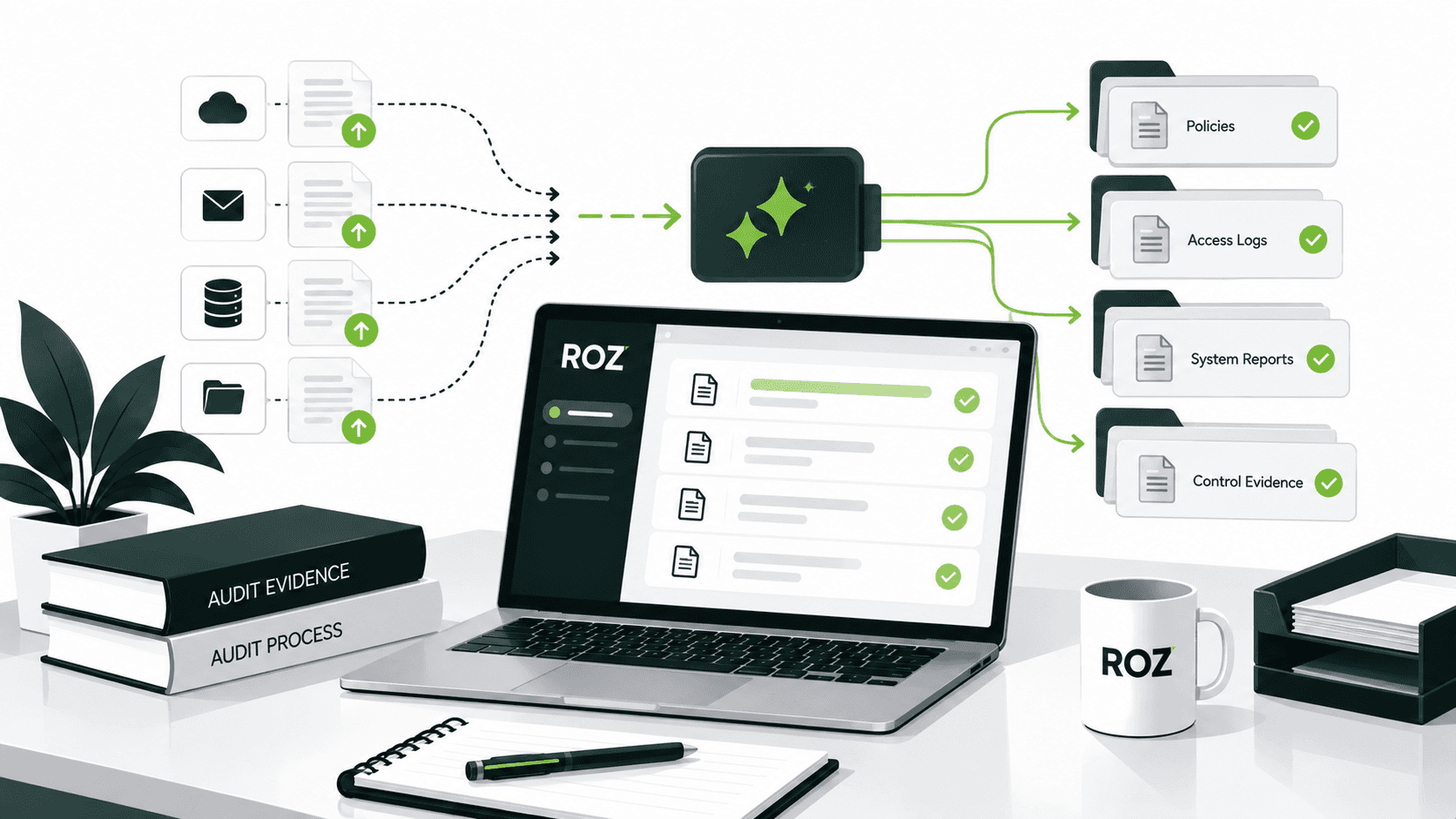
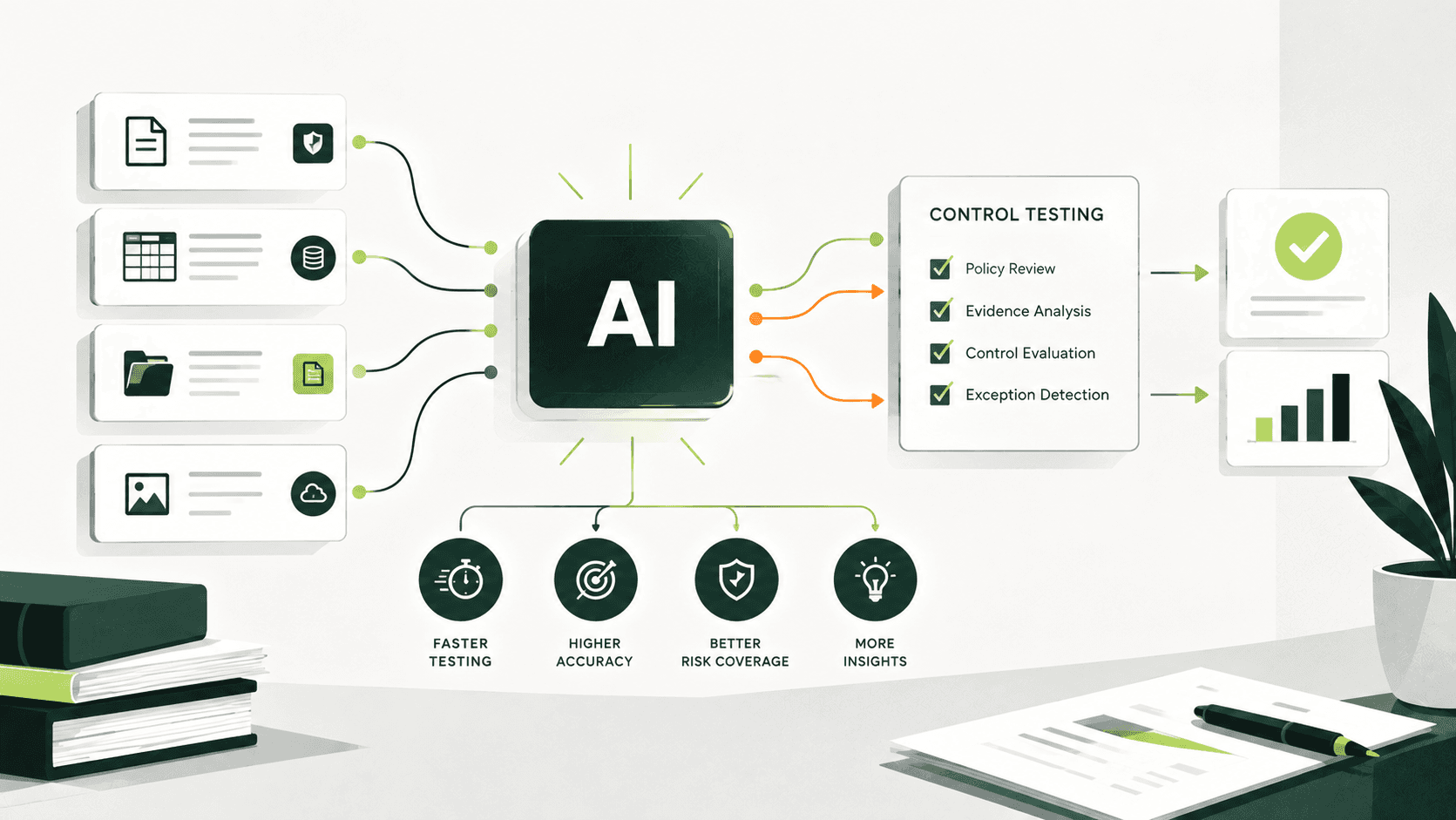
An AI-assisted audit is an audit where AI is used to support specific audit activities. Some of those tasks may include analysis of control extraction, control documentation, or evidence organization. Conclusions of the audit, opinions, and professional judgment all still rest with the auditor.
AI does not perform an audit independently. What AI does is remove countless hours of unnecessarily complex, repeated tasks that stretch the limits of an audit team. This allows the focus to be on evidence and professional skepticism.
AI-assisted audit tools are not intended to replace the auditor. Rather, they help the auditor in completing the audit.
Manual Audits vs AI-Assisted Audits: Side-by-Side Comparison
Feature | Manual Audit | AI-Assisted Audit |
Planning | Manual | AI-supported planning |
Evidence Collection | Manual requests | Organized and tracked with AI assistance |
Document Review | Manual reading | AI-assisted document analysis |
Control Mapping | Manual | AI-generated first pass |
Testing | Manual | AI-supported first-pass testing workflows with human review |
Workpapers | Created manually | AI-generated drafts reviewed by auditors |
Reporting | Manual | AI-assisted report preparation |
Scalability | Lower | Higher |
Review Time | Longer | Faster |
Auditor Judgment | Essential | Still essential |
Where Manual Audits Still Excel
Some audit tasks rely exclusively on human skills. For example, AI cannot replicate human judgment when tackling:
Complex accounting estimates: Analyzing assumptions requires advanced knowledge that goes beyond recognition of patterns.
Fraud investigations: Identifying management overrides, fake documents, or fraud requires a healthy dose of skepticism as well as an understanding of different behaviors.
Client interviews: An auditor must use their judgment in assessing the consistency of responses and determining the best follow-up questions in response to evidence.
Evaluating contradictory evidence: Understanding the meaning and professional judgment impact of the contradiction will always be required.
Materiality assessments: An auditor must judge what is significant, as this is a legal requirement.
Final audit opinions: The ultimate responsibility for the expression of an opinion on an audit report rests solely on the auditor.
Both approaches in auditing possess weaknesses. Understanding the nature of each approach's weaknesses will inform better judgment in which to employ.
Benefits of AI-Assisted Audits
Increased Efficiency
AI has the potential to significantly reduce time spent on the review of documents, organization of evidence, preparation of draft working papers, and other assistive tasks. This allows auditors to concentrate on the analysis. KPMG’s 2024 survey estimates that audit AI tools reduce preparation time by as much as 40% during structured engagements.
Reduced Administrative Work
Repetitive tasks such as data requests, reconciliations, document formatting, etc. drain an auditor’s time and do not require an exercise of professional judgment. AI can assist with these activities, facilitating a shift in focus of audit teams from document preparation to analysis.
More Consistent Documentation
AI can help improve documentation consistency that occurs in the preparation of workpapers by implementing uniform documentation workflows and templates across engagements. While auditors will need to review AI documentation outputs, the standard of documentation improves for all levels of staff and across different engagements.
Better Collaboration
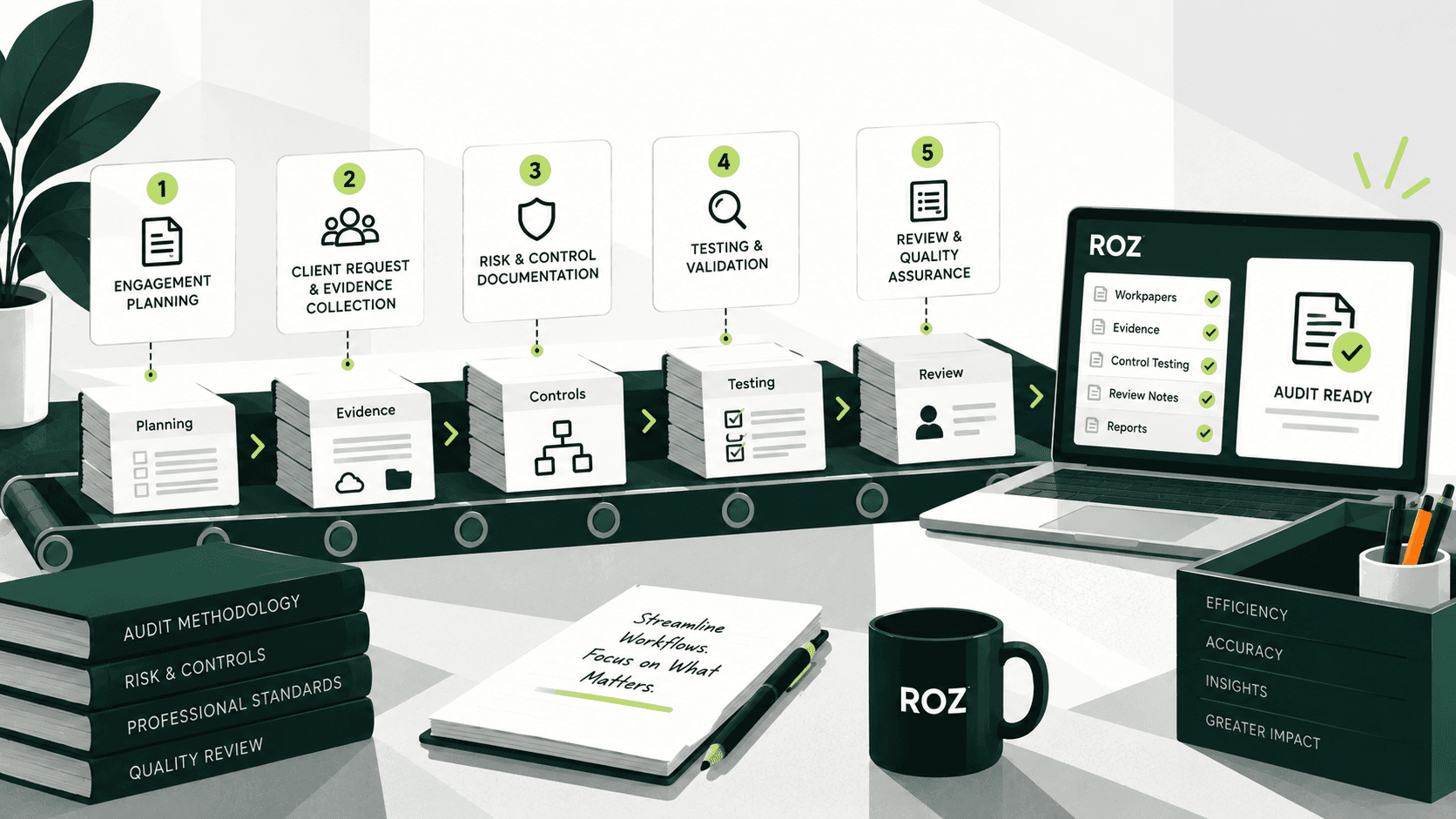
AI creates structured documentation workflows that help engagement teams identify the status of evidence, existing documentation gaps, and the current state of testing. Review is made easier and quicker by the ability to access information in a single, organized, and traceable location.
Faster Client Response Management
Due to the confidence score and sourced information it provides, AI’s ability to respond to compliance questionnaires and due diligence requests using client documentation reduces the time needed to fulfill client requests.
Improved Audit Traceability
Every output that is generated from AI tools will link to the evidence from which it is generated. This provides a defensible audit trail that reviews the quality of work with regulatory inspections.
When Should Firms Adopt AI-Assisted Audits?
AI-assisted auditing for firms that keep a lot of documentation, run several engagements at the same time, or work against tight deadlines. The firms that should benefit the most include:
CPA firms that complete SOC 2, ISO 27001, SOX, and CMMC reviews.
Internal audit teams that complete continuous auditing and continuous control monitoring (CCM) programs.
Readiness assessment consultants within a risk advisory practice.
Multi-client audit firms that complete multiple concurrent engagements with a defined level of process.
Firms that have audit staff shortages but need to deliver an audit of the same quality with fewer staff members.
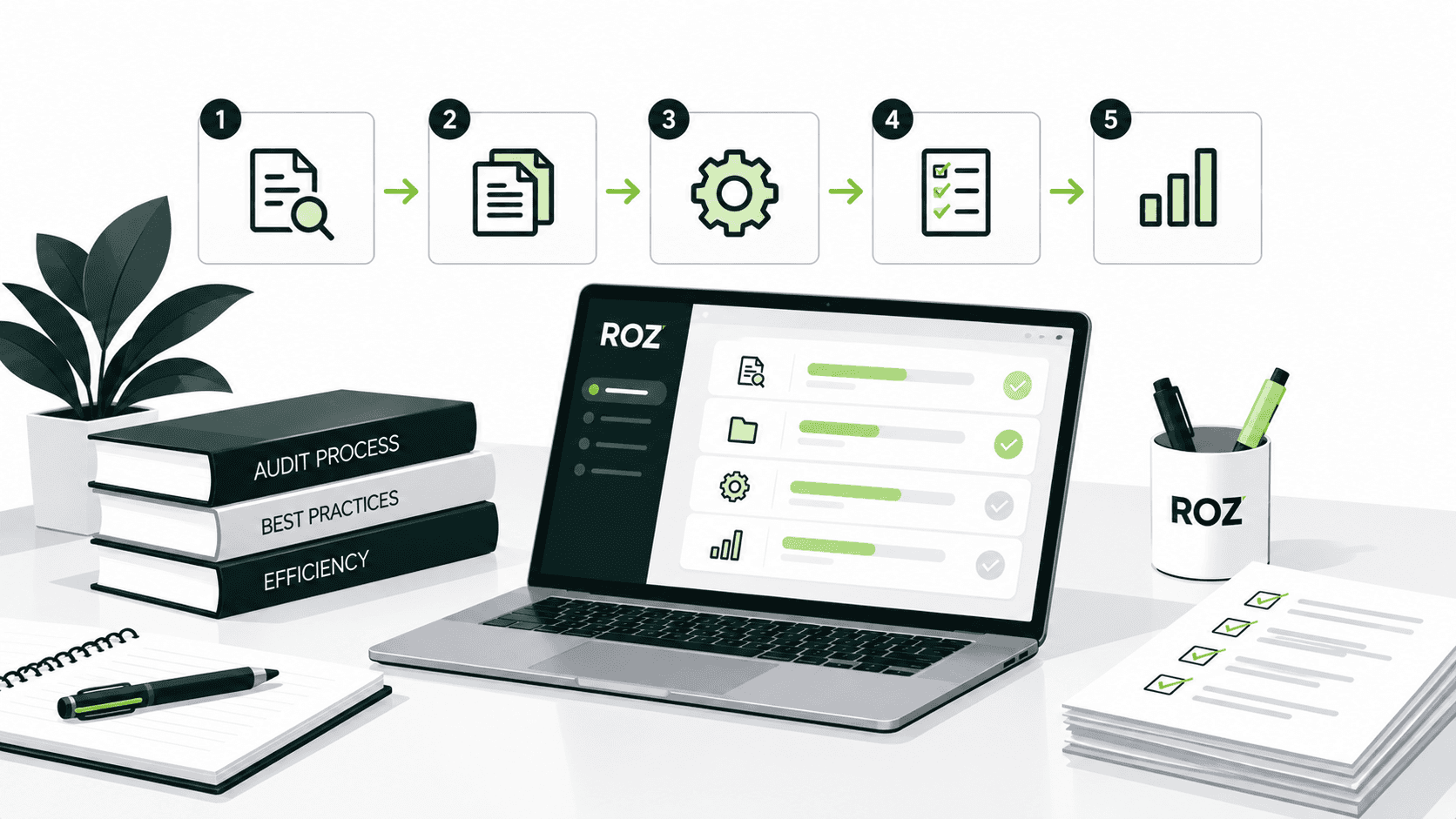
Best Practices for Implementing AI in Audit Workflows
Standardize audit methodologies first: AI applies to the automation of consistent steps. Clearly map your procedures before using AI in your workflows.
Start with low-risk, repetitive tasks: Evidence collection, arranging documents, and drafting workpapers are all good starting points for AI in your workflow.
Keep auditors in the review loop: Auditors must review and approve all work completed by AI prior to using any information to draw an audit conclusion.
Validate AI outputs against source evidence: For audit quality and governance, outputs should be traceable to the supporting source documentation.
Maintain audit trails for AI-assisted work: Expect questions from regulators and audit review authorities regarding the documentation and supervisory controls over AI in audit workflows.
Establish governance over AI usage: Determine which audit tasks AI can assist in completing, the supervisory controls, and the designated responsible individual for each task.
Train engagement teams on responsible AI use: Employees need to know the limits of AI use before they can use it.
Measure efficiency, quality, and consistency improvements: Determine the time savings in each audit test and the quality of documentation and review to measure the impact of AI in your audit workflows.
Manual Audits vs AI-Assisted Audits: Which Is Better?
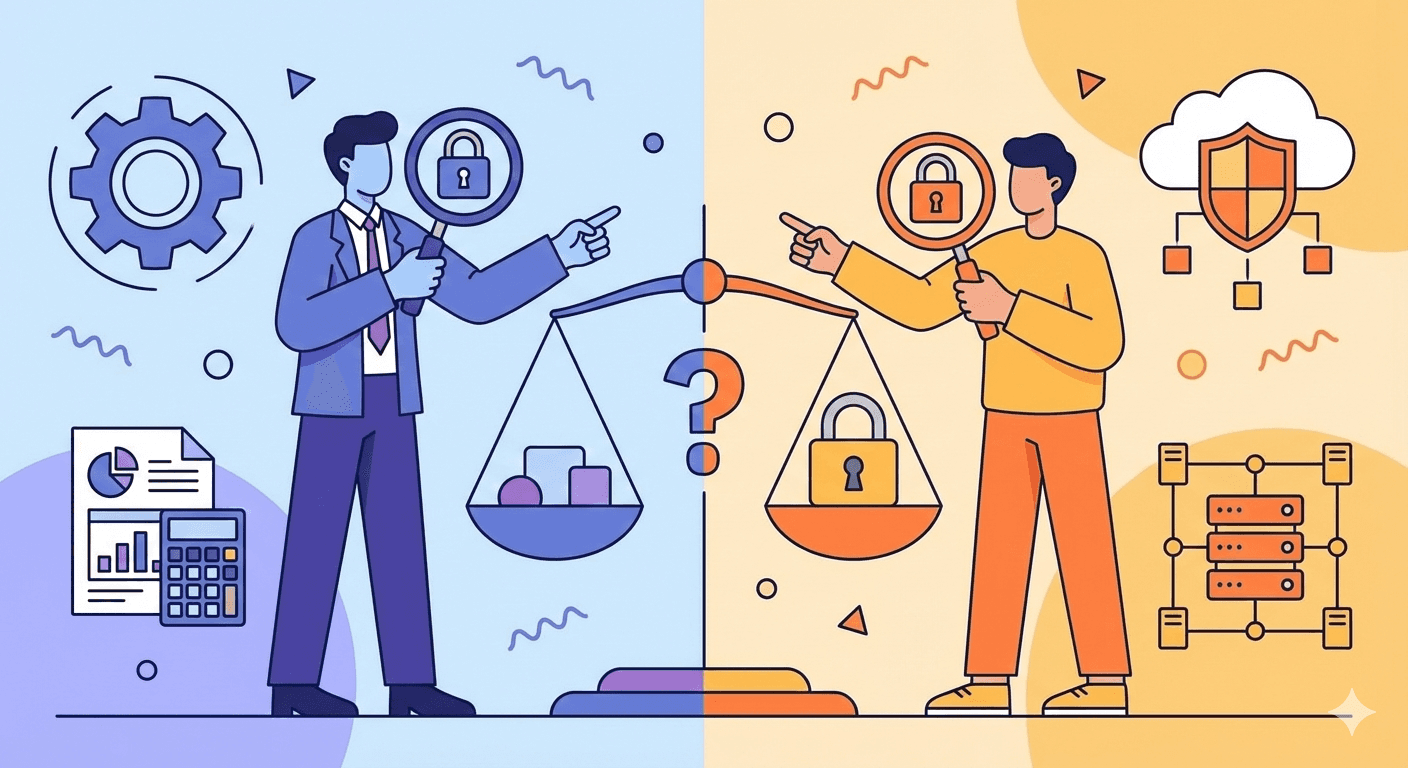
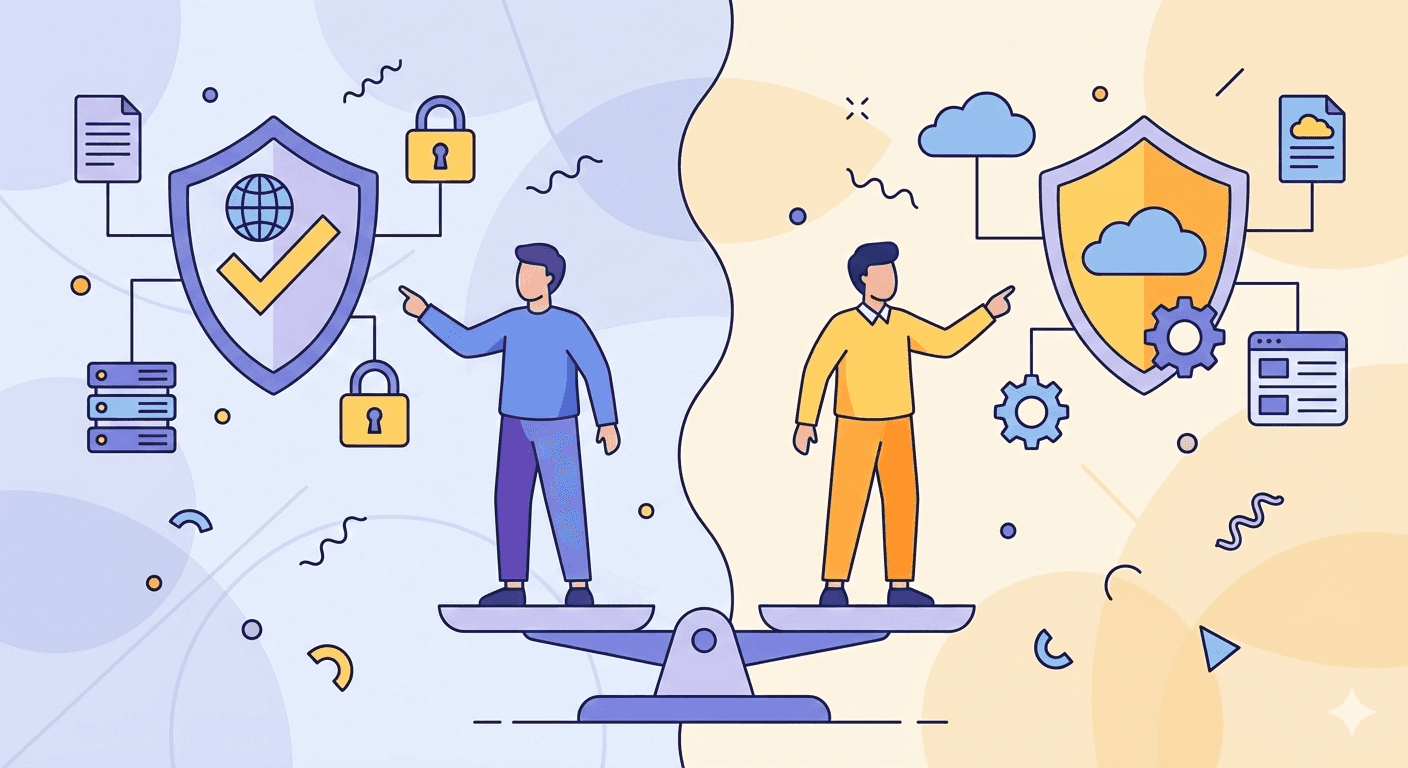
Neither manual nor AI-assisted audits can be considered better, as they each fulfill different needs in the auditing process.
Manual audits are needed for the professional judgment and audit opinion that provide the ethical responsibility and accountability that audit standards require. AI-assisted audits increase efficiency, consistency of documentation, the ability to scale the audit process, and traceability of evidence.
Both have their merits. For example, one of the best use cases for AI assistance for high-volume, repetitive tasks. This includes assembling evidence, drafting initial workpapers, and identifying and extracting controls and exceptions. Thereafter, professional judgment is required to deal with the exceptions, review the outputs, engage with the clients, and provide the final answer.
Firms utilizing the hybrid approach are in a better position to manage the growing complexity of audits while still being able to provide the level of service that is expected by clients and by the regulatory authorities. Most accounting firms have started to invest in AI, and the trend is increasing.
How Roz Supports AI-Assisted Audits
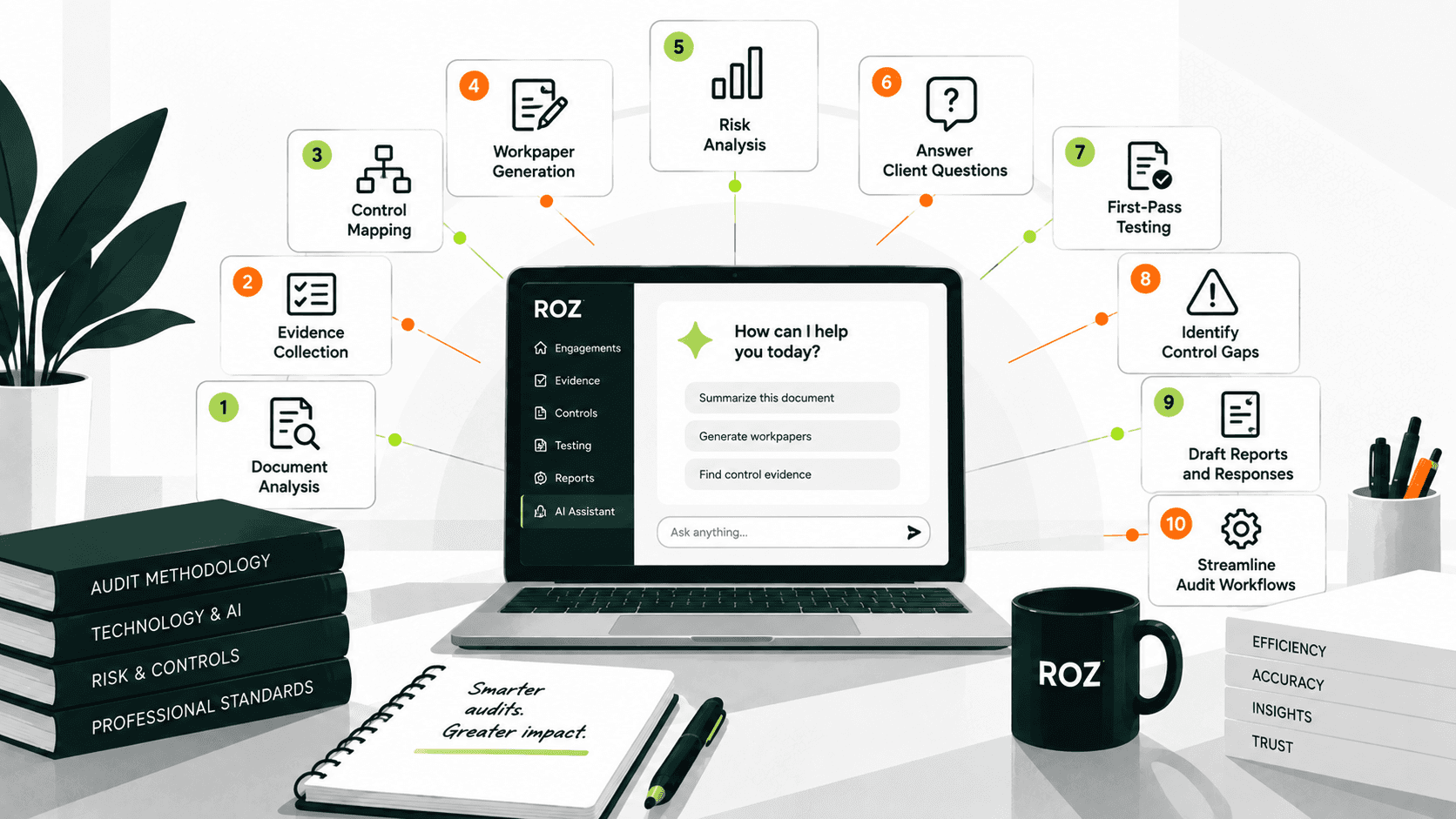
Roz is an AI platform built specifically for external audit and advisory firms. It helps teams accelerate evidence collection, perform readiness assessments, and support first-pass control testing workflows while keeping auditor judgment at the center of every engagement.
Roz supports AI-assisted audits by helping firms:
Organize client evidence in secure, client-specific workspaces.
Maintain structured engagement documentation.
Support control documentation and readiness assessments.
Generate AI-assisted questionnaire responses with source-linked references.
Support first-pass control testing and evidence sufficiency assessments.
Generate AI-assisted first-pass workpapers with traceable source links.
Streamline engagement workflows and evidence traceability.
Roz is designed to support auditors, not replace them. Audit conclusions, professional judgment, and final opinions remain the responsibility of the engagement team.
Conclusion
For most firms, manual and AI-assisted auditing are complementary rather than competing approaches.
Manual processes provide the judgment, skepticism, and professional accountability that standards require. AI provides the scale, speed, and documentation consistency that modern audit complexity demands.
Firms that separate these two, treating AI as a complete solution or dismissing it as incompatible with professional standards, are operating with an incomplete picture. The firms gaining ground are the ones building workflows where both are used deliberately, each in the areas where it performs best.
If your firm is managing growing engagement complexity with the same manual processes, now is a practical time to evaluate where AI-assisted tools could reduce the administrative burden on your engagement teams without changing who is accountable for the conclusions.
Frequently Asked Questions
Can AI perform an audit independently?
No. AI can assist with many audit-related tasks, including document analysis, organization of evidence, extraction of controls, and drafting of workpapers, but cannot perform an audit independently. The responsibility of drawing audit conclusions and issuing an audit opinion remains with the audit professionals.
What audit tasks can AI automate or accelerate?
AI can assist with document analysis, organization of evidence, extraction of controls, gap and anomaly detection, and generation of first-pass workpapers. The auditor is responsible for validating the AI output and making decisions related to the engagement.
How does AI improve audit efficiency?
AI can significantly reduce repetitive tasks. Some examples include the evidence organization, document summarization, and workpaper drafting. AI frees up an auditor's time to perform more critical tasks such as assessing risk, exercising judgment, or engaging with the client.
Should small CPA firms use AI-assisted audit software?
Yes, particularly for firms that run several simultaneous engagements or deal with documentation-intensive frameworks such as SOC 2 or ISO 27001. Ease of integration with existing workflows, audit evidence traceability, and retention of final evaluative control by the auditor are the most important factors to consider. With usage-based pricing, these programs are affordable.