Fraud risk assessment is a core part of audit planning. Auditors must consider the possibility of material misstatement due to fraud even when controls appear to be operating effectively. Management override can undermine controls that otherwise appear sound, which is why the assessment must go beyond a surface-level review of policies and procedures.
In this article, I will cover common fraud risk factors, the red flags auditors look for, the steps involved in conducting an assessment, and practical tools, a checklist, and a sample risk matrix to support a structured assessment. One point is worth emphasizing upfront: a red flag indicates a condition that requires evaluation. It does not, on its own, establish that fraud has occurred.
What Is a Fraud Risk Assessment?
A fraud risk assessment is the process of identifying and evaluating conditions that could lead to material misstatement due to fraud. It helps auditors assess risks involving fraudulent financial reporting and misappropriation of assets, including risks arising from management override of controls, and determine appropriate audit responses.
A fraud risk assessment is not the same as a fraud investigation. The assessment identifies and evaluates potential fraud risks to inform audit planning and procedures. A fraud investigation, by contrast, examines suspected misconduct to establish the relevant facts and gather evidence. In a financial statement audit, the two categories of fraud that are particularly relevant are:
Fraudulent financial reporting: Intentional misstatements or omissions intended to deceive financial statement users, such as fictitious revenue or manipulated accounting estimates.
Misappropriation of assets: Theft or unauthorized use of an organization's assets, such as cash, inventory, or other resources.
The fraud risk assessment informs the auditor's evaluation of the risks of material misstatement and helps determine the nature, timing, and extent of audit procedures. For PCAOB audits, AS 2110, Identifying and Assessing Risks of Material Misstatement, addresses risk assessment, while AS 2401, Consideration of Fraud in a Financial Statement Audit, addresses the auditor's consideration of fraud. PCAOB AS 2301 addresses responses to assessed risks. For relevant nonissuer audits performed under U.S. auditing standards, AICPA AU-C Section 240 addresses the auditor's responsibilities relating to fraud.
ISA 240 (Revised), issued by the IAASB in July 2025, is effective for audits of financial statements for periods beginning on or after December 15, 2026. Auditors should confirm which standards and effective dates apply to their engagement.
How Do Auditors Conduct a Fraud Risk Assessment?

The approach is consistent, but the specific procedures vary by engagement and applicable standard.
1. Understand the Organization and Its Environment
Understand the organization’s business model, financial performance, and structure, as well as significant changes that have occurred since the previous period. Identify business incentives and pressures that could result in fraudulent financial reporting or asset misappropriation (e.g., debt covenant pressure, aggressive growth targets, etc.).
2. Discuss Potential Fraud Risks With the Engagement Team
Engagement team members should discuss how and where fraud could occur and how it could result in a material misstatement in the financial statements. Consider management override, revenue recognition, and other fraud risks relevant to the engagement. Document the discussion and the team's significant judgments.
3. Identify Fraud Risk Factors Through Inquiry and Evidence Review
Make inquiries of management, employees, and those charged with governance, as appropriate to the engagement. Consider prior audit adjustments, whistleblower information, unusual transactions, and inconsistencies in financial information. Evaluate management's explanations against supporting evidence and revise the fraud risk assessment when the evidence indicates that the original assessment may be incomplete or inaccurate.
4. Evaluate Fraud Scenarios and Relevant Controls
For each fraud scenario, identify the potentially affected accounts, disclosures, processes, and financial statement assertions. Assess the design and implementation of relevant controls, including whether management could override or circumvent them. The existence of a documented control does not, by itself, demonstrate that the control is suitably designed or operating effectively.
5. Assess Risks and Design Audit Responses
Assess fraud risks at the financial statement and relevant assertion levels, considering the identified risk factors and the likelihood and potential magnitude of material misstatement. Determine the nature, timing, and extent of audit procedures needed to respond to those risks, including whether additional testing or corroborating evidence is necessary.
6. Document and Reassess the Fraud Risks
Document the fraud risk assessment, the rationale, the action planned, and the outcome of the action taken. Assess fraud risks again when there is new information or evidence, or if information previously assessed as relevant to fraud turns out to be incorrect.
What Red Flags Should Auditors Look for During a Fraud Risk Assessment?
Fraud risk indicators typically fall into well-known categories. Each of these categories may indicate different risks and be supported by different types of evidence. Auditors must evaluate the context of the indicators and assess what further actions are necessary. A red flag doesn’t mean fraud has occurred.
Unusual Revenue and Financial Reporting Patterns
Revenue recognition is an area where intentional misstatements may occur. Unexplained revenue increases, transactions with unusual timing or terms, and inconsistencies between reported revenue and supporting shipping, delivery, or production data may warrant further examination.
Relevant evidence: Contracts, delivery records, customer correspondence, and nonfinancial operational data.
Possible audit response: Test selected transactions, including transactions near period-end or those with characteristics associated with higher fraud risk. Compare the recorded transactions with relevant supporting documentation.
Suspicious Journal Entries and Adjustments
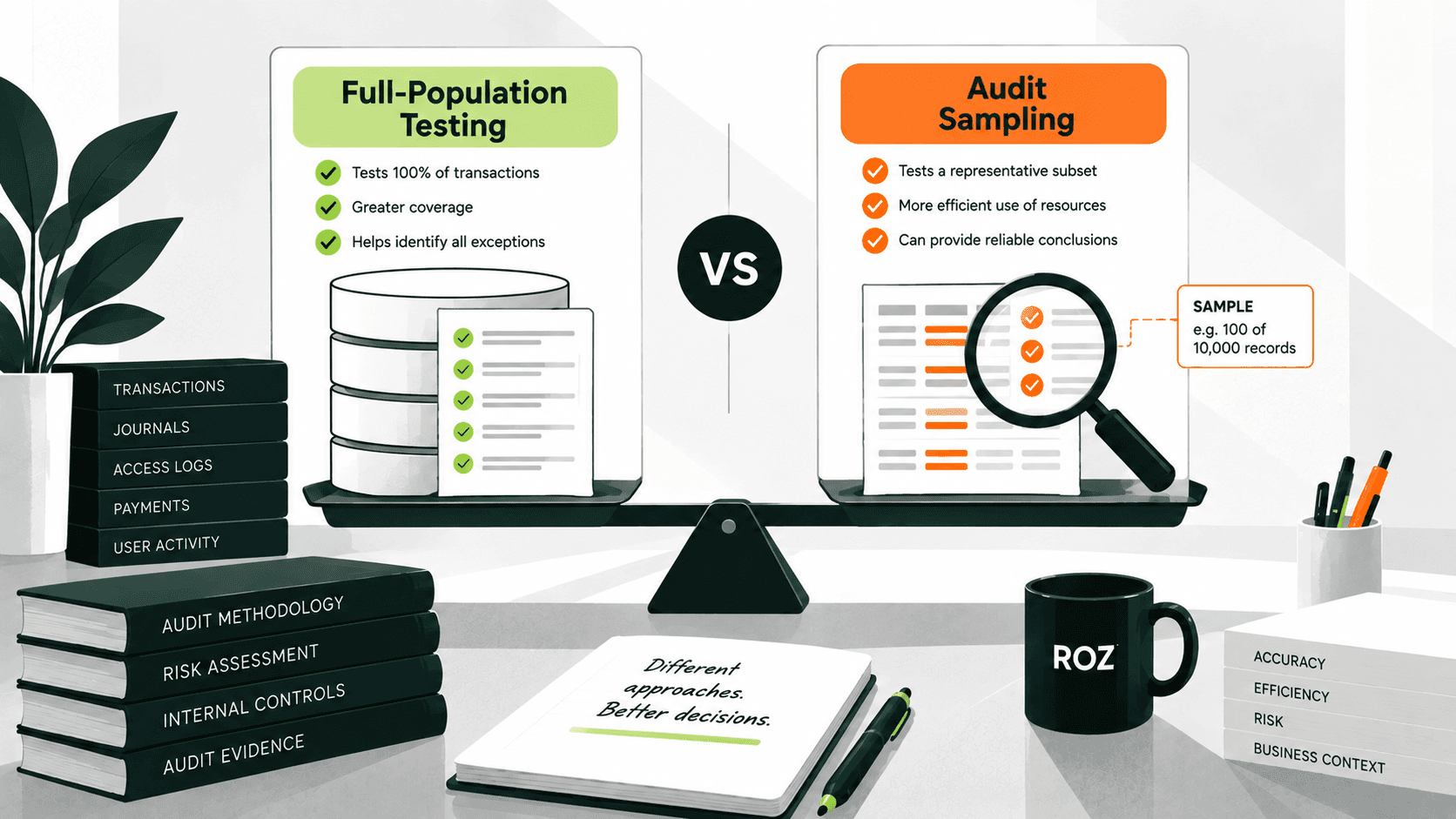
Journal entries may be used to override controls or manipulate financial reporting. Entries posted after closing, entries recorded by users who do not normally prepare them, and entries involving rarely used or unusual accounts may warrant further analysis. These characteristics do not establish fraud; auditors should evaluate the context, supporting evidence, and business purpose of the entries. Learn more about full-population testing vs. audit sampling.
Relevant evidence: Journal entry logs, supporting documentation, preparer and approver details, and information about the entry's business purpose.
Possible audit response: Select journal entries for testing based on risk factors, including characteristics and other appropriate factors. Evaluate the business reason for the entry and test unusual or unsupported entries.
Indicators of Management Override
Management override can undermine otherwise effective controls. Potential warning signs include intervention in normal approval processes, bias in accounting estimates, and significant unusual transactions without a clear business purpose.
Relevant evidence: Approval records, accounting estimates and underlying assumptions, journal entry records, and significant transaction documentation.
Possible audit response: Consider the risk of management override when designing audit procedures. This includes journal entry testing, retrospective review of accounting estimates, and evaluation of the business purpose of significant unusual transactions.
Potential Asset Misappropriation
Asset misappropriation can be in the form of a series of smaller, recurring transactions or discrepancies as opposed to a few larger transactions. Inconsistencies in inventory or cash, repeated unsupported expenses, and unusual payment patterns to vendors or employees can be indicative of asset misappropriation.
Relevant evidence: Reconciliations, expense documentation, inventory records, vendor files, and payment records.
Possible audit response: Investigate unexplained differences and consider whether additional substantive procedures or expanded testing of the affected accounts and transactions are warranted, based on the assessed risk.
Control and Governance Warning Signs
Repeated unresolved control exceptions, inadequate oversight of high-risk transactions, missing documentation, and explanations that conflict with independent evidence may indicate weaknesses in the control environment. Auditors should evaluate these conditions in context and consider their implications for the assessed risks and planned audit procedures.
Relevant evidence: Control exception logs, governance meeting minutes, approval records, and relevant third-party evidence.
Possible audit response: Evaluate the nature and significance of the exceptions, determine whether they indicate control deficiencies, and assess whether the planned audit procedures need to be modified.
Fraud Risk Assessment Checklist for Auditors

This checklist gives auditors a starting point. Adapt it to the specific engagement and the auditing standards that apply.
Have fraud scenarios relevant to the engagement been identified?
Have the relevant accounts, disclosures, and financial statement assertions been considered?
Have factors involving pressure, opportunity, and rationalization been evaluated?
Has the risk of management overriding controls been considered?
Have unusual transactions and journal entries been reviewed for possible signs of fraud?
Have relevant controls been identified and their design assessed? Where necessary, has their operating effectiveness been tested?
Have management's explanations been checked against supporting evidence where appropriate?
Have identified fraud risks been linked to suitable audit procedures?
Have exceptions, conflicting evidence, additional procedures, and conclusions been documented?
Has the assessment been updated to reflect new information or evidence obtained during the audit?
This checklist can help auditors approach fraud risk assessment systematically. It does not replace professional judgment, consideration of engagement-specific risks, or compliance with applicable auditing standards.
How Should Auditors Respond to Identified Fraud Risks?
When fraud risks are identified, auditors should tailor procedures to the assessed risks and relevant financial statement assertions rather than applying a generic response. The nature, timing, and extent of procedures should reflect the engagement circumstances and applicable auditing standards.
Inspect supporting documents and seek independent corroboration where appropriate.
Consider journal entry testing, additional substantive procedures, and analysis of significant unusual transactions.
Evaluate contradictory evidence rather than relying exclusively on management's explanations.
Consider whether additional procedures or communication with management and those charged with governance are necessary when suspected fraud is identified.
Document the procedures performed, evidence obtained, significant findings, and resulting conclusions. Where required, communicate relevant matters in accordance with the applicable auditing standards.
How Should Auditors Document a Fraud Risk Assessment?
Documentation should show the relationship between risks, audit response, evidence, and conclusion. The documentation may include:
Relevant discussions and procedures performed by the engagement team regarding fraud risks.
Risks identified at the financial statement level and related assertion level.
The relationship between assessed risks and planned audit responses and the results of such responses.
Significant exceptions, additional audit procedures performed, and the rationale for conclusions.
Relevant communications with management and those charged with governance, in accordance with the applicable auditing standards.
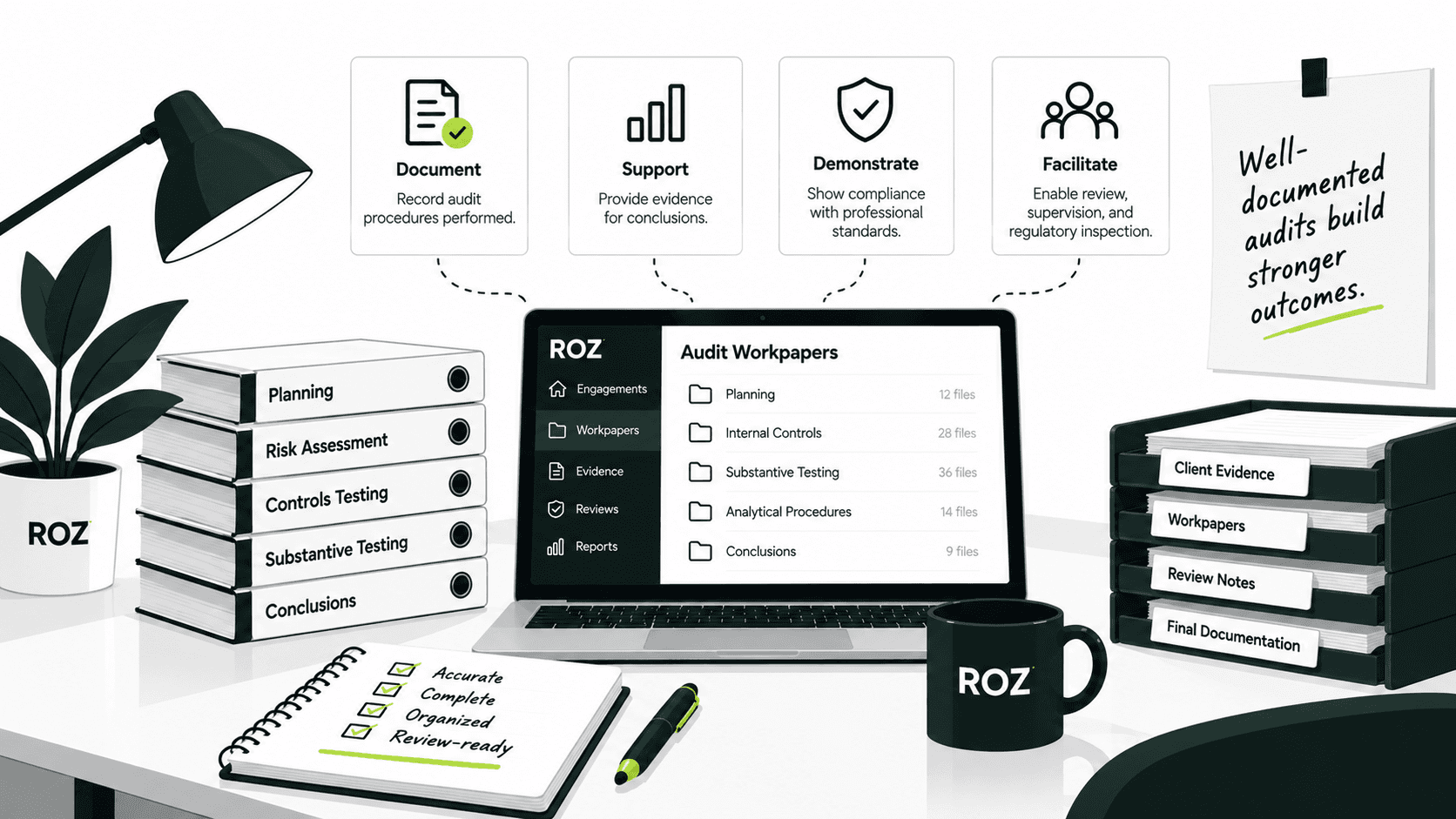
Maintaining traceability between the risk assessment, audit procedures, evidence, workpapers, and conclusions enables reviewers to understand the relationship between the audit procedures and the evidence supporting the auditor's conclusions.
Common Fraud Risk Assessment Mistakes
Treating a red flag as evidence of fraud: Always consider all the facts and circumstances and perform the appropriate audit procedures in order to gain sufficient, appropriate audit evidence.
Overreliance on management inquiries: Always corroborate management's explanations with appropriate evidence. Use other independent sources such as third-party confirmations and records external to the entity as appropriate.
Ignoring management override because other controls appear effective: Address the risk of management override even if other controls appear effective.
Relying on a checklist: Tailor the assessment to the entity’s circumstances, including industry and business model, structure, financial situation, and other fraud risks.
Identifying risks and not tying them to relevant assertions and procedures: Connect each identified risk to the relevant financial statement assertions, controls, and the audit responses.
Not reassessing risks: Reassess fraud risks throughout the engagement and alter the planned audit procedures based on new evidence.
Drawing conclusions without supporting rationale: Always document the audit procedures performed, the evidence obtained, the significant findings, and the rationale for the conclusions reached.
How Roz Supports Audit Fieldwork and Control Testing
Fraud risk assessment and audit execution are related but distinct activities. Once risks are identified, auditors still need to organize evidence, test relevant controls, and document their conclusions.
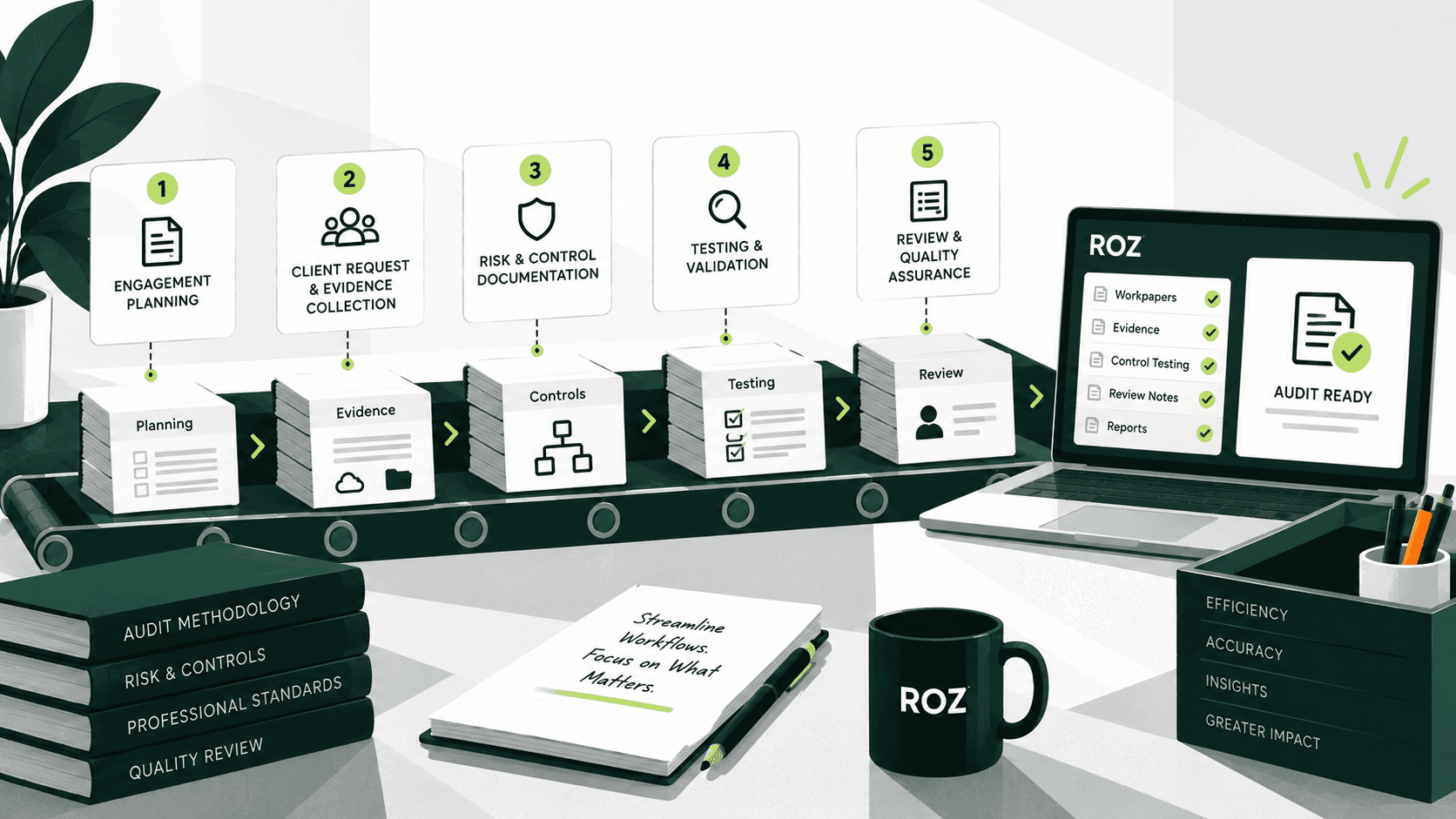
Roz is an AI-native audit fieldwork and control-testing platform that helps audit teams organize client documentation and supporting evidence within client-specific workspaces. Evidence-to-control mapping and AI-powered first-pass control testing support fieldwork performed in response to identified risks. Formatted workpapers, supporting evidence, annotations, and audit trails help auditors review results and trace conclusions back to source documentation.
Roz supports the fieldwork that follows a fraud risk assessment. It does not determine whether fraud occurred. Auditors remain responsible for assessing fraud risk, selecting appropriate procedures, evaluating evidence, and reaching final conclusions.
Conclusion
Fraud risk assessment connects potential red flags to targeted audit procedures and documented conclusions. Auditors should evaluate relevant evidence, exercise professional skepticism, and reassess fraud risks as new information emerges during the engagement.
A structured assessment helps auditors explain why specific risks were identified, how those risks informed audit procedures, and what the resulting evidence supports. The auditor remains responsible for evaluating the evidence and reaching the final conclusion.
Frequently Asked Questions
What is the purpose of a fraud risk assessment in an audit?
It allows the auditors to determine and assess the risks of material misstatement due to fraud and aids in the development of appropriate audit responses for those risks.
How do auditors identify fraud risk factors?
Auditors consider the organization's environment, financial pressures, internal controls, management attitudes, unusual transactions, and information gathered through inquiry and evidence review.
Does a red flag prove that fraud occurred?
No. A red flag indicates that further evaluation may be necessary. Auditors must assess the circumstances, gather relevant evidence, and determine the appropriate response.
How should auditors document identified fraud risks?
Documentation must include the procedures performed, exceptions identified, and the auditor’s response to those exceptions. The rationale should also be documented to support the conclusions reached by the auditors.