Government agencies are rapidly moving to the cloud, driving up the demand for secure SaaS platforms. With this shift comes a strong security expectation for federal cloud security. Organizations pursuing federal cloud opportunities typically need to understand FedRAMP requirements before selling cloud services to U.S. government agencies.
FedRAMP compliance refers to meeting the cloud security requirements established by the Federal Risk and Authorization Management Program for cloud services used by U.S. federal agencies. The framework standardizes security assessments, authorization, and continuous monitoring requirements for cloud providers handling federal data.
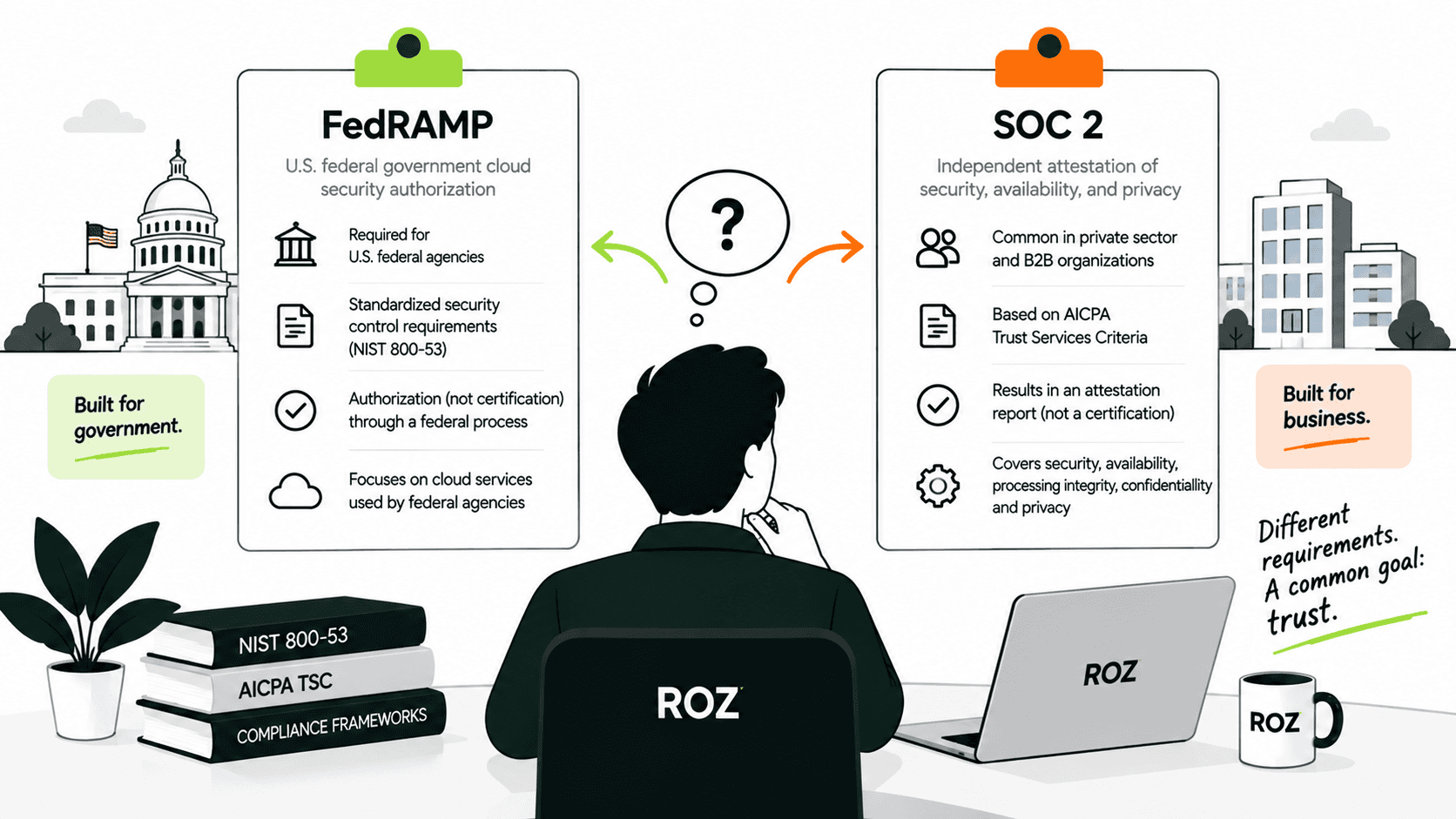
Keep in mind that FedRAMP is an authorization framework rather than a traditional certification. Earning this authorization requires significant operational effort and financial investment. In this article, I will explain what you need to know about the requirements, the process, and the costs.
What Is FedRAMP?
FedRAMP stands for the Federal Risk and Authorization Management Program, a U.S. government initiative that standardizes security requirements for cloud products used by federal agencies.
Before FedRAMP, each agency conducted its own security reviews. This created duplicated effort, inconsistent standards, and inefficiency. FedRAMP solved this by creating a unified framework based on the security controls in NIST SP 800-53. To earn an authorization, cloud providers must implement these controls, document their security posture, pass an independent assessment, and commit to continuous monitoring.
While people often say “FedRAMP compliance,” it’s more accurate to call it an authorization. FedRAMP authorization is not issued as a traditional certification. Instead, a federal agency or a designated board reviews your cloud service to determine if it meets the security requirements and if the risks are acceptable.
Organizations typically pursue one of three authorization paths:
Agency Authorization: A specific federal agency sponsors and grants the authorization.
Joint Authorization Board (JAB) Authorization: The Joint Authorization Board (JAB) includes representatives from federal agencies who review provisional authorization packages.
FedRAMP Ready: An initial step that shows your product demonstrates readiness to pursue a full FedRAMP authorization.
Recent modernization efforts are also introducing more automated and streamlined authorization processes.
Why FedRAMP Compliance Matters
Meeting federal cloud security standards requires time and money. Why do companies pursue it? It usually comes down to market access and trust.
Access to Federal Contracts
FedRAMP authorization is the primary gateway to the federal market. Federal agencies generally require cloud services to meet FedRAMP authorization requirements before use.
Reduced Duplicate Security Reviews
The program uses a "do once, use many times" model. After you achieve your initial authorization, other federal agencies can review your existing security package and grant their own ATO without forcing you to undergo an entirely new assessment.
Stronger Security Governance
The strict requirements force companies to mature their internal security posture. Implementing these controls can strengthen security governance and risk management practices.
Market Trust and Enterprise Readiness
Private enterprises recognize the rigor of the FedRAMP framework. Showing commercial buyers that your system meets federal standards can support your sales efforts and build trust with highly regulated industries.
How FedRAMP Compliance Works
The program relies on standard baselines, independent testing, and continuous oversight.
FedRAMP Security Baselines
FedRAMP categorizes cloud systems based on the sensitivity of the federal data they handle. These impact levels determine which security controls and assessment requirements apply.
The Role of 3PAOs
To get authorized, your system must be tested by a Third-Party Assessment Organization (3PAO), an independent auditing firm accredited by the government to verify that your security controls work as documented.
Their assessment activities usually include:
Technical testing
Vulnerability analysis
Documentation reviews
Personnel interviews
Process walkthroughs
Continuous Monitoring Requirements
The FedRAMP authorization process is continuous. After receiving your ATO, continuous monitoring is required to prove ongoing compliance. Activities include, but aren’t limited to, monthly vulnerability scans, incident reports, annual assessments, and ongoing monitoring activities.
FedRAMP Low vs Moderate vs High
Your FedRAMP impact levels determine the essential controls for your governed systems. According to NIST 800-53 Rev 5, increased impact levels dictate the increased control requirements.
LI-SaaS: Designed for low-risk SaaS technologies, requiring the implementation of 37 controls.
Low Impact: Designed for public systems with no or little sensitivity, requiring 156 controls.
Moderate Impact: The most popular classification, requiring the implementation of 323 policies for systems with sensitive, unclassified data.
High Impact: Designed for law enforcement and other emergency services systems, requiring the implementation of 410 controls for systems with the greatest sensitivity.
FedRAMP Requirements Explained
Establishing adequate security and controls across your organization is required to pass the assessment.
Access Control Requirements
Access to systems needs to be limited to only a small number of individuals. Some controls must include:
Multi-factor Authentication (MFA): Two or more pieces of evidence, known as factors, to confirm the user’s identity.
Role-Based Access Control (RBAC): Access to systems is at the discretion of the user’s role within the organization.
Least Privilege: Access to the systems or applications is tiered based on the individual’s needs to perform their required job functions.
Vulnerability Management
You must continually seek and repair security flaws within your systems. FedRAMP mandates that you conduct vulnerability scans on a routine basis, document how you remediate the flaws, and maintain a structured patch management schedule specifying how quickly you must remediate findings.
Incident Response Procedures
You must document a process to identify, escalate, and report security incidents. Depending on your level of impact, you may have to report some incidents to the government within timelines defined by FedRAMP and agency-specific requirements.
Audit Logging and Monitoring
Your systems must have the ability to provide logs of all security events such as administrator activity, API activity, and access activity. FedRAMP requires you to capture these logs in a centralized location to facilitate continuous monitoring and support security investigations.
Encryption Requirements
You must prevent unauthorized disclosure of information. This generally requires the use of FIPS-validated cryptographic modules to be used for data at rest and in transit.
Documentation Requirements
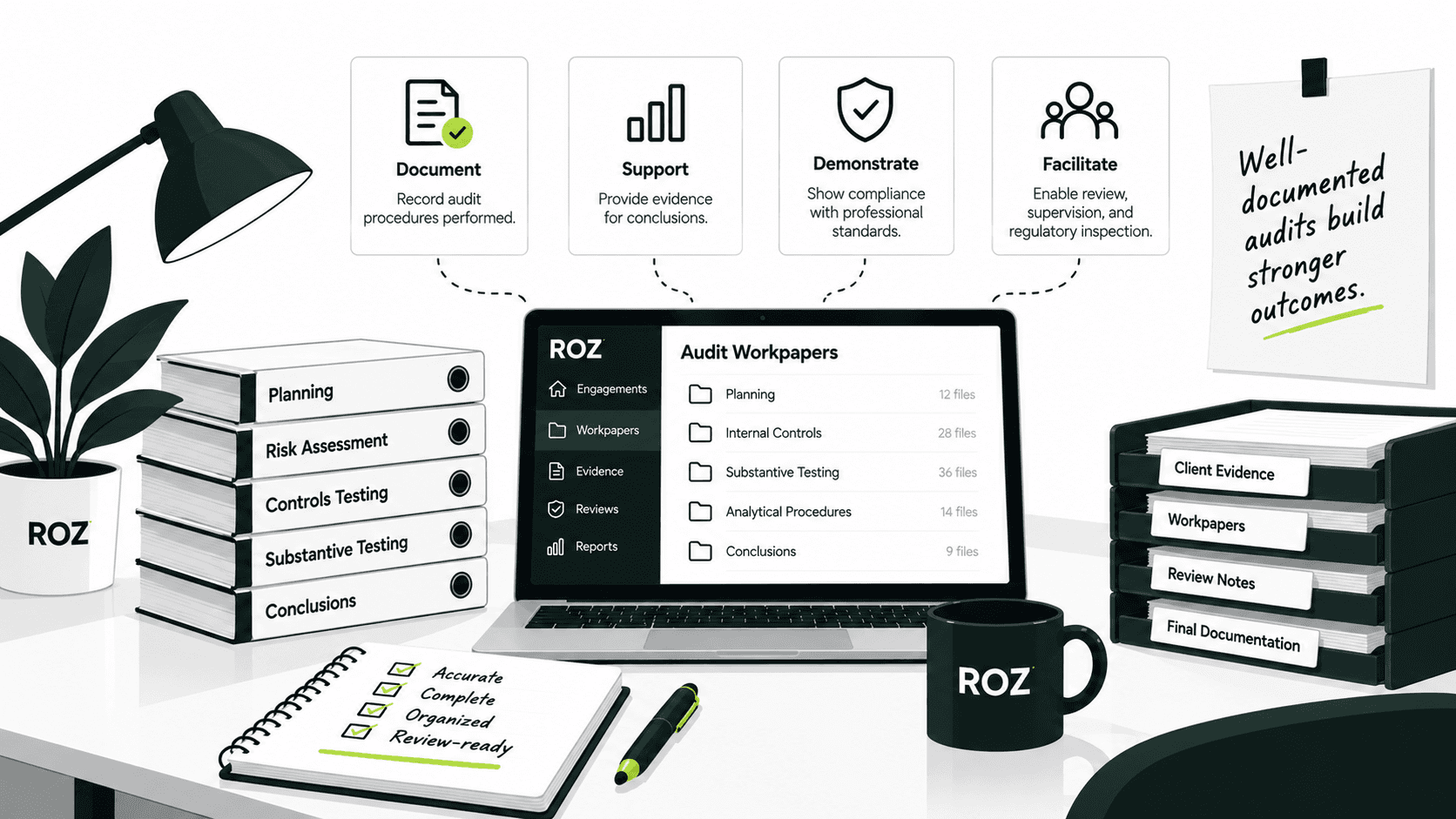
You must create many documents to support your FedRAMP engagement. This can include the System Security Plan (SSP), policies, procedures, and the testing and evidence of your security controls.
FedRAMP Authorization Process
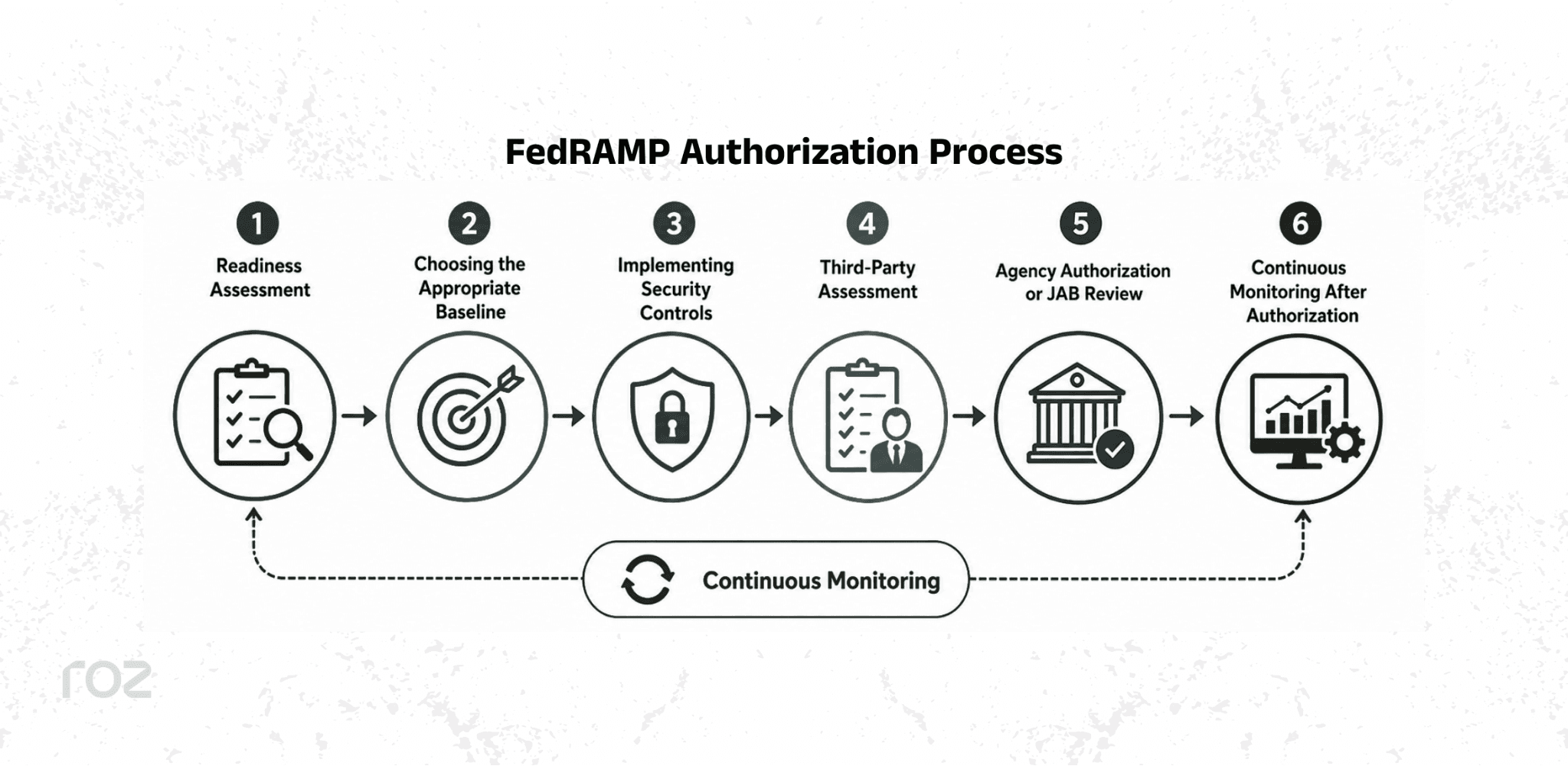
It is a structured process to gain authorization to operate (ATO).
Readiness Assessment: You engage an accredited 3PAO to test your system. This step is optional, but it is highly recommended.
Choosing the Appropriate Baseline: Based on your system, you choose which impact level your system is: low, moderate, or high.
Implementing Security Controls: Some of your own engineering and security team staff, along with your vendors, implement the control’s technical requirements.
Third-Party Assessment: Your 3PAO completes an assessment against FedRAMP security requirements. They test your system and write a Security Assessment Report (SAR).
Agency Authorization or JAB Review: Your sponsoring federal agency will look at the SAR and supporting documentation. If the federal agency accepts the risk, they will issue an authorization to operate (ATO).
Continuous Monitoring After Authorization: Your ATO will be kept active through monthly vulnerability scans, incident reporting, and annual assessments.
How Long Does FedRAMP Compliance Take?
Achieving authorization is a long-term project. Do not expect to finish in a few weeks.
Typical FedRAMP Timelines
Most organizations spend between 12 to 18 months to achieve their initial authorization. Systems pursuing the streamlined LI-SaaS path might finish faster, while high-impact systems can take up to two years.
Factors That Affect Authorization Speed
The maturity of your existing security program is the biggest factor. If you already comply with a framework like SOC 2 or ISO 27001, you have a head start. System complexity and the availability of your team also play major roles.
Why FedRAMP Projects Often Take Longer Than Expected
FedRAMP projects tend to stall during remediation and documentation. Once evaluations uncover security issues or structural problems, efforts to address them are usually more time-consuming. Such delays can be due to the need for engineering teams to make changes or to develop and integrate new documentation.
How Much Does FedRAMP Compliance Cost?
Federal cloud security is a major financial investment. Costs vary widely based on your system boundary and target impact level.
Initial Readiness Costs
You will spend money preparing your environment. This includes consulting fees for gap assessments and the cost of upgrading your internal security software.
3PAO Assessment Costs
You must pay an independent auditor, known as a Third-Party Assessment Organization (3PAO), to validate your system. For a moderate-impact system, a full assessment typically costs between $150,000 and $300,000. This is often one of the largest direct expenses in a FedRAMP project, and the final price can vary based on your system's scope and complexity.
Ongoing Monitoring Expenses
Continuous monitoring requires a budget. You must pay for monthly vulnerability scanning tools and annual 3PAO reassessment fees.
Factors That Influence FedRAMP Costs
Your total bill depends on how much engineering rework is required. For moderate authorization, total costs, including internal labor, external consultants, and 3PAO fees, may range from several hundred thousand dollars to more than $1 million, depending on scope and complexity.
FedRAMP Compliance Checklist
Use this checklist to help structure your FedRAMP authorization journey.
Define federal market objectives: Find out if federal opportunities fit your overall business and market strategy thinking and your ability to focus time and resources.
Determine the required impact level: Understand the level of federal data that your environment could potentially process, store, or transmit, and identify the data that fall within that level.
Conduct a readiness assessment: Perform a readiness assessment to identify gaps in controls, documentation, and operational processes.
Inventory your systems: Identify and list systems, applications, pieces of infrastructure, and data flows that lie within the boundary of authorization.
Implement required controls: Implement the required NIST SP 800-53 controls through appropriate technical and operational measures.
Conduct the SSP documentation: Build your SSP that documents system boundaries, controls, and operational processes.
Establish vulnerability management processes: Implement vulnerability scanning, remediation tracking, and patch management workflows.
Prepare incident response procedures: Establish procedures for incident detection, escalation, containment, and reporting.
Engage a 3PAO: Work with an accredited Third Party Assessment Organization (3PAO) to perform the independent assessment process.
Implement continuous monitoring: Implement continuous monitoring processes for vulnerability management, reporting, and ongoing risk tracking.
How Roz Supports FedRAMP Engagements
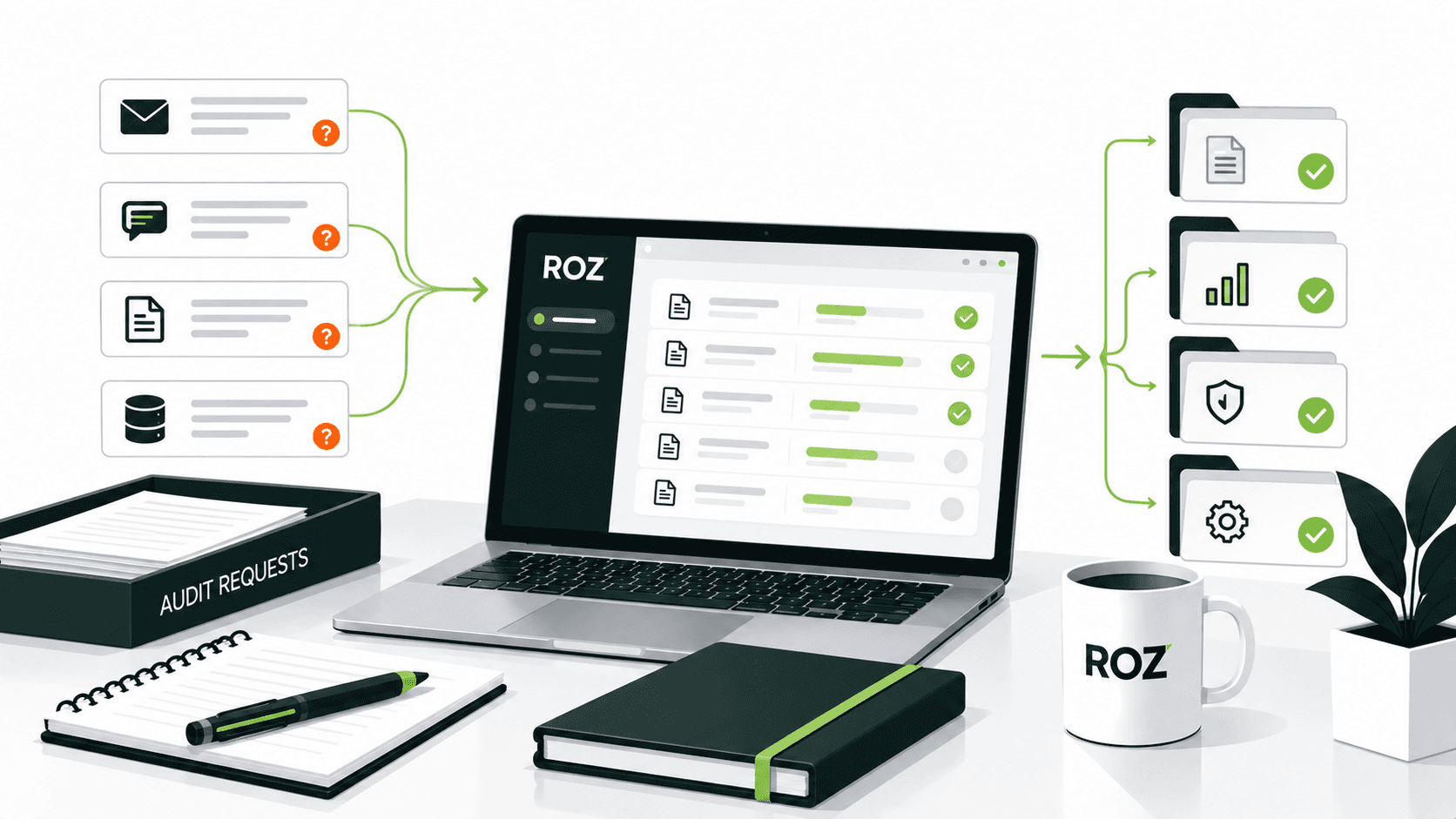
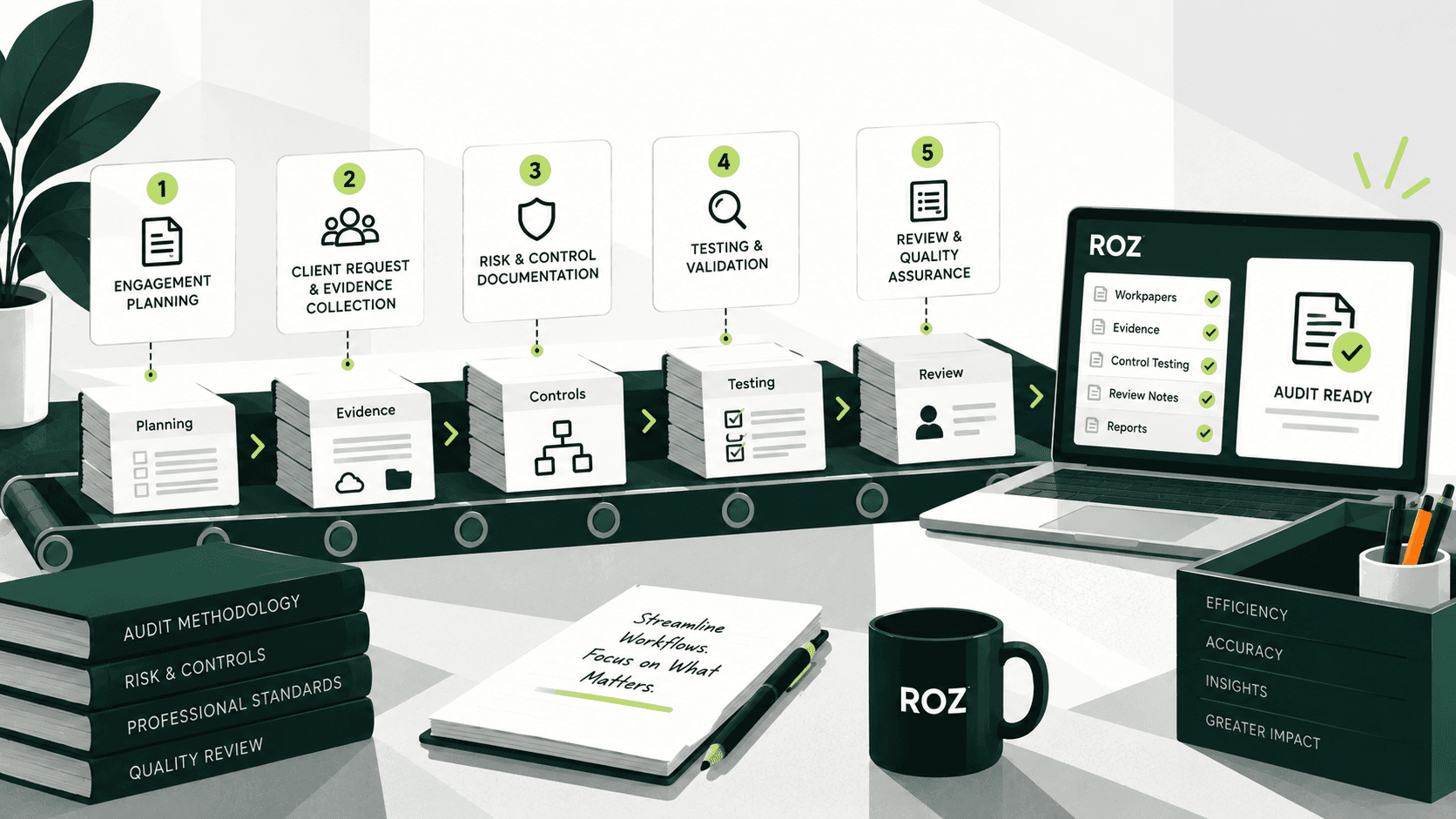
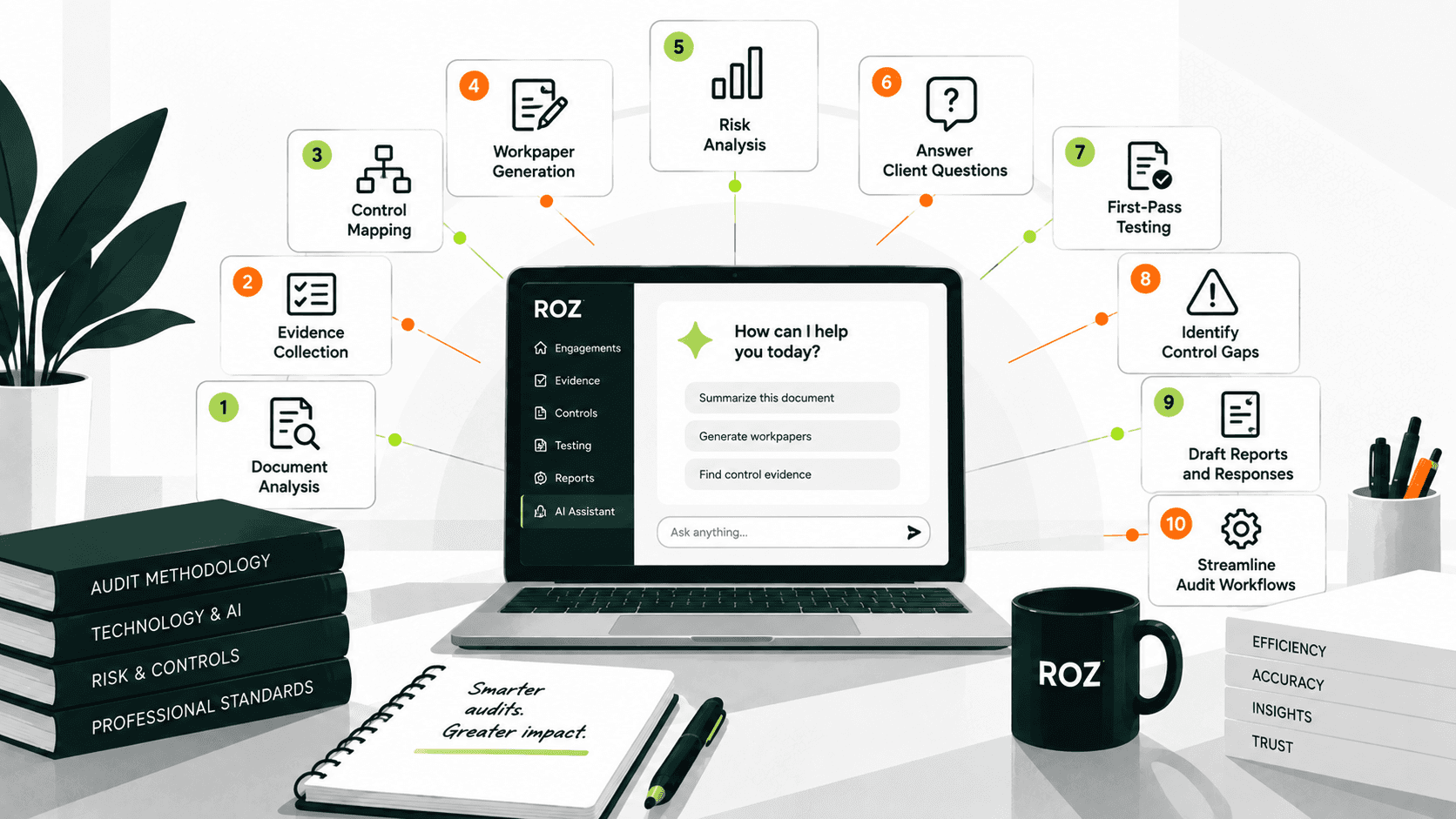
Managing documentation for a FedRAMP engagement can quickly become complex. Roz is an AI-native engagement and audit-delivery platform designed to support CPA firms and advisory teams with structured audit workflows and documentation management.
With Roz, teams can:
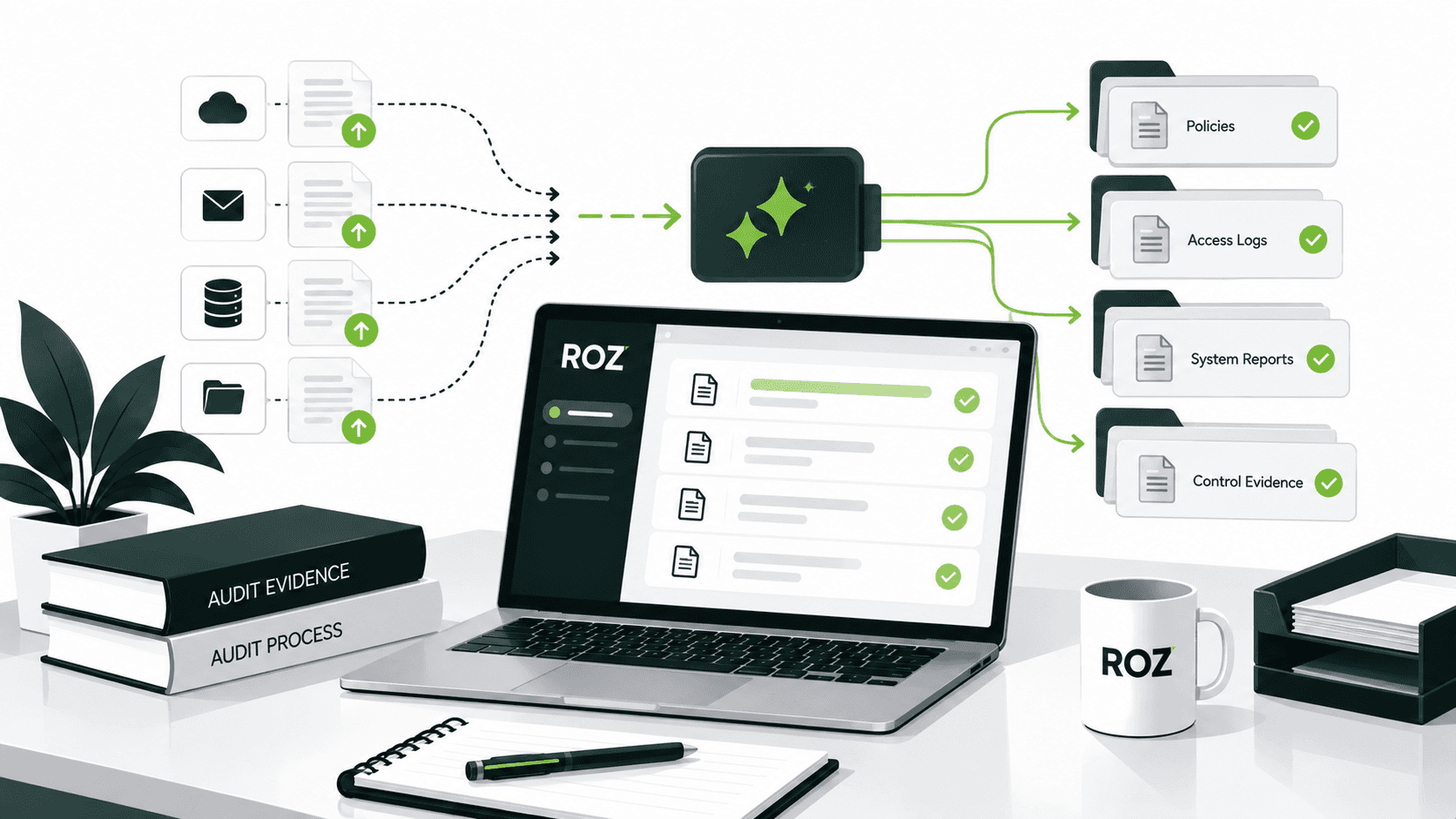
Centralize compliance documentation in secure, client-specific workspaces.
Organize evidence with traceability across engagement materials.
Extract controls and highlight potential documentation gaps.
Generate AI-assisted draft workpapers with audit trails and source links.
Support readiness assessments and gap analysis workflows.
Roz supports engagement delivery by helping teams structure documentation and compare framework requirements against client evidence, without replacing auditors or certification processes.
Conclusion
Federal cloud security requirements are strict, but they are also predictable. FedRAMP authorization is not only a regulatory requirement but can also support access to federal market opportunities. Building your system to meet these standards prepares your organization to work with federal agencies while strengthening your data protection practices. Start by assessing your current gaps, aligning your engineering resources, and finding the right tools to manage the process.