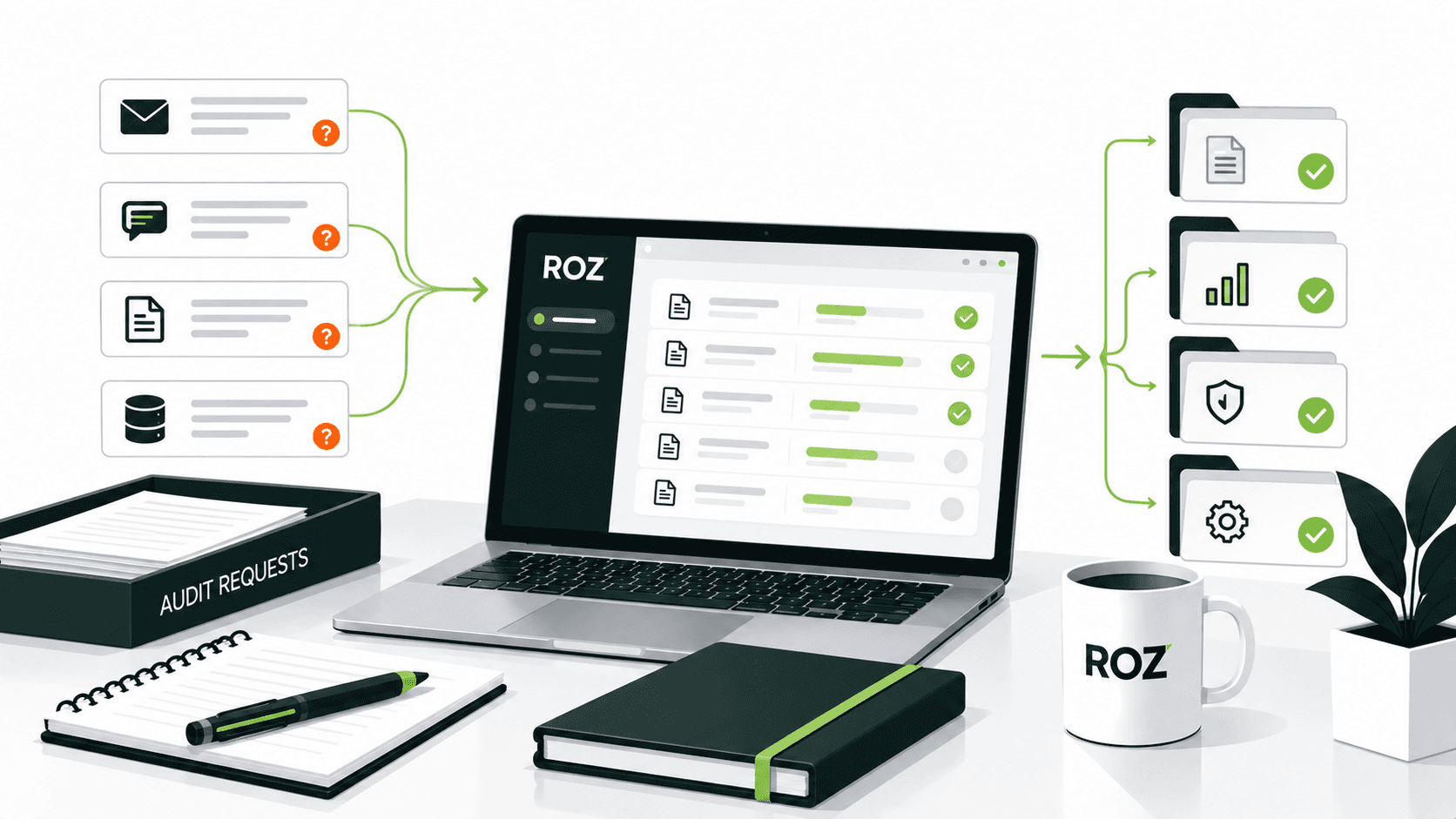
Audit evidence collection is often the most time-consuming part of the engagement for audit teams. Prior to drafting a single work paper, the audit teams may already be collecting audit evidence by managing scattered documents, following up on Prepared by Client (PBC) requests, and manually mapping submissions to controls.
Technology can streamline much of this administrative work. The key distinction is that tools can support the logistics of evidence collection, but they cannot replace the professional judgment required to evaluate evidence and reach audit conclusions.
In this article, I will break down how automated audit evidence collection works and how automation can assist with some of the work an audit team needs to do while maintaining the appropriate level of oversight.
What Is Automated Audit Evidence Collection?

Automated audit evidence collection is the software-enabled automation of the process for requesting, receiving, tracking, organizing, and classifying client-submitted documents and data for an audit engagement.
Automated audit evidence collection streamlines the process of requesting and collecting documents and data that clients typically submit through email, shared drives, spreadsheets, or other channels. Additionally, at a more sophisticated level, some AI-based tools can assist in identifying and addressing the completeness of evidence prior to auditors commencing their formal review.
There are three distinct layers to understand:
Manual evidence collection: Auditors send requests using preferred tools and document management systems. Auditors use email to manage the requests and manually organize the files.
Automated evidence collection: This layer of automation uses software to manage the requests and evidence collection process. The software collates submissions, tracks requests, and classifies evidence. Depending on the tool and the organization, evidence may not be classified but documented.
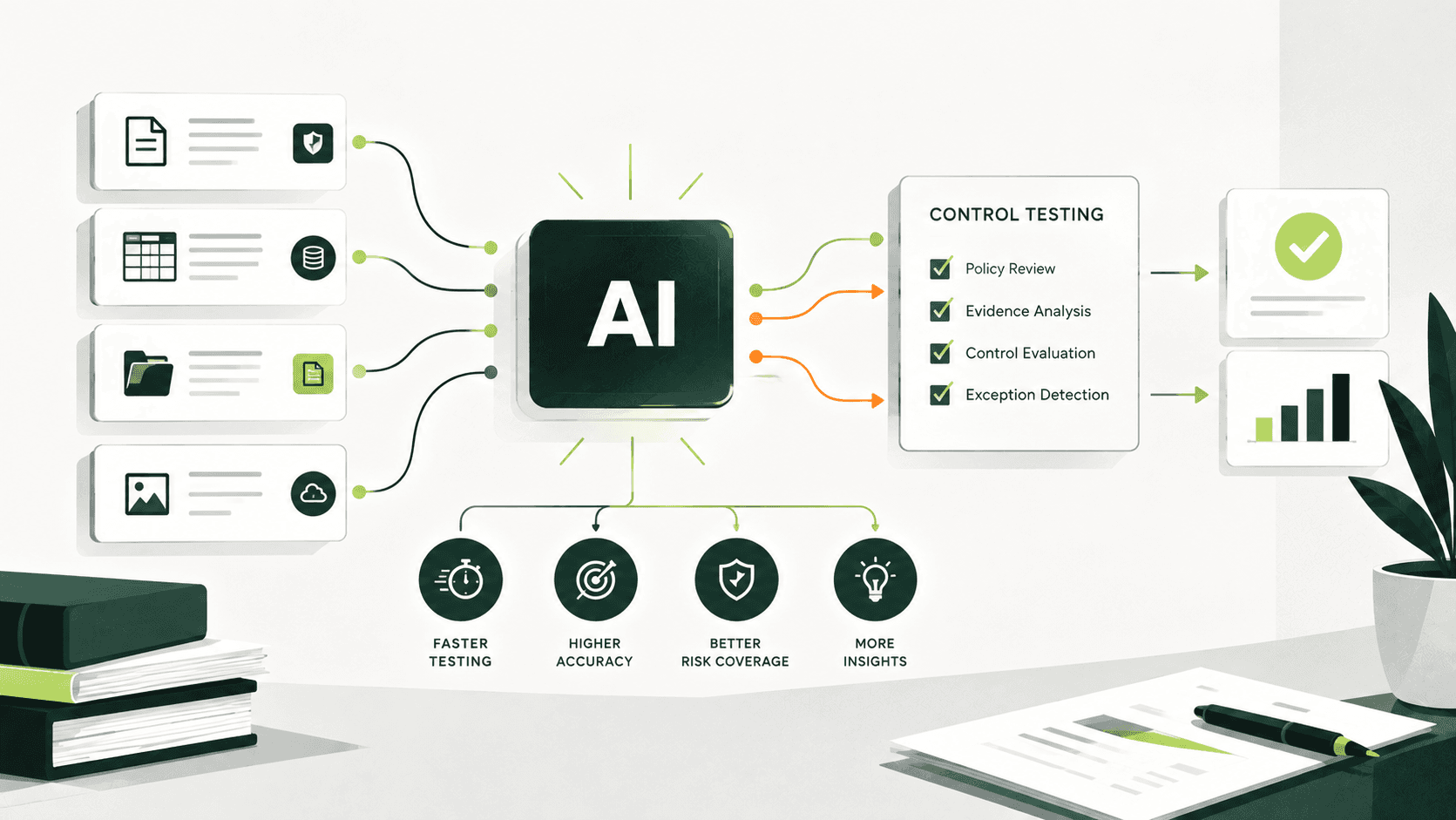
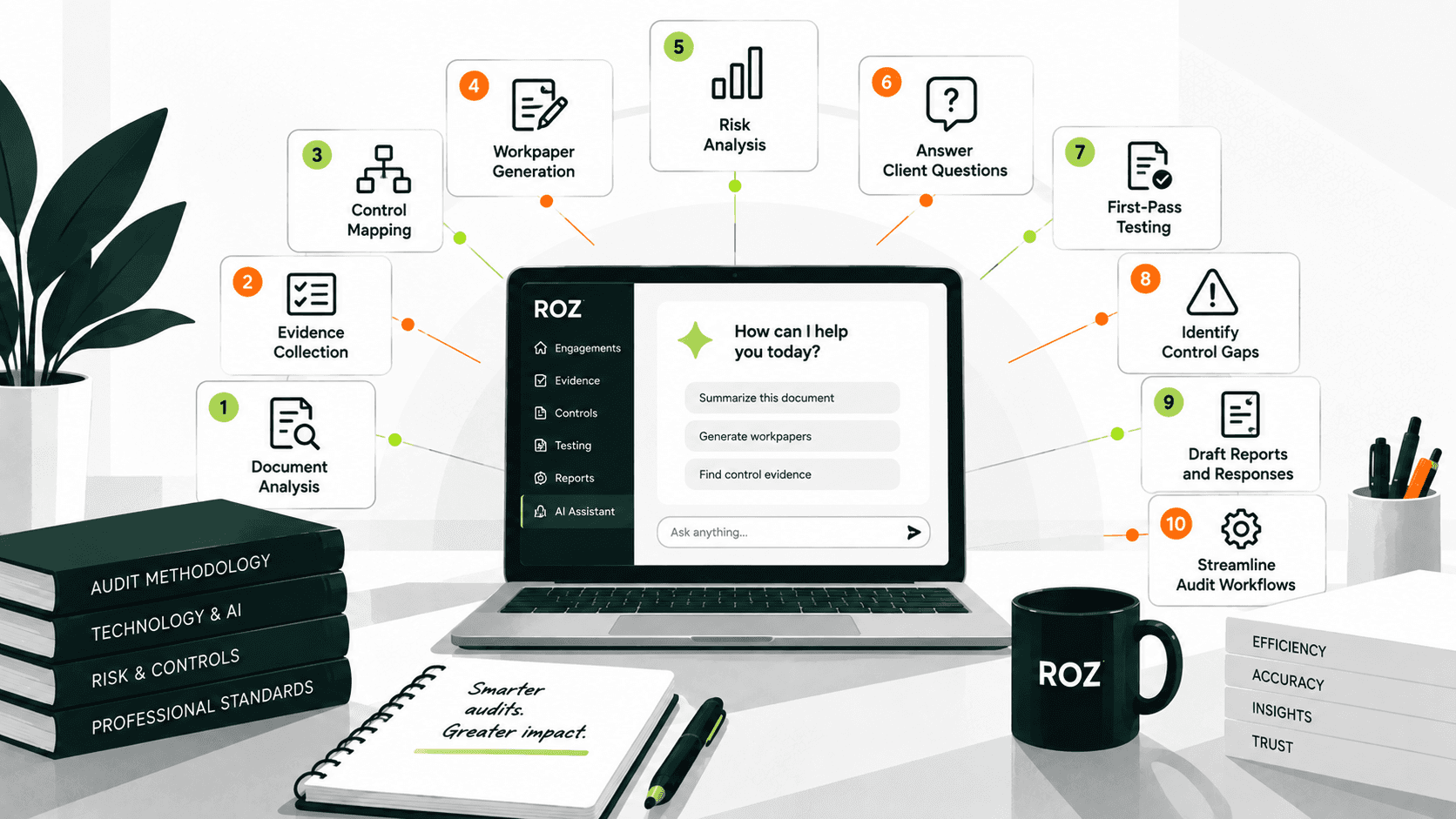
AI-assisted evidence analysis: AI tools support first-pass analysis, evidence-to-control mapping, and gap identification, with findings routed to auditors for review.
Each layer adds value to the last. Technology-supported evidence collection can accelerate the process of requesting, organizing, and tracking evidence. AI-assisted tools structure first-pass reviews, but neither platform is a substitute for reviewing audit evidence.
Why Audit Evidence Collection Is Still a Bottleneck
Collaboration with clients is the focus of most audits. This is where the bulk of the delays occur. Evidence is submitted through multiple channels, via email, cloud, and other document submission portals. For many of the PBC requests, clients may be asked to submit documents without sufficient context about what is required or how the evidence should be provided. Incomplete and duplicate submissions add to the delays.
The major issues are primarily structural:
Scattered evidence sources - Evidence can be found in emails, portals, shared folders, and internal applications, which spreads them out and thus hinders consolidation.
PBC tracking overhead - Auditors spend a lot of time pulling together request lists, sending reminders, and tracking the status of each request manually.
Rework from incorrect or missing submissions - When requests are not clear, responses are not clear, and there is a lot of back and forth to get clear evidence.
Manual mapping challenges - Evidence mapping large engagements is very time-consuming and often leads to mapped evidence being inconsistent.
These problems are not exclusive to any single firm. According to DataSnipper, email back-and-forth and confusion related to evidence requests are most notable friction points among audit teams’ PBC processes.
How Does Automated Audit Evidence Collection Work?

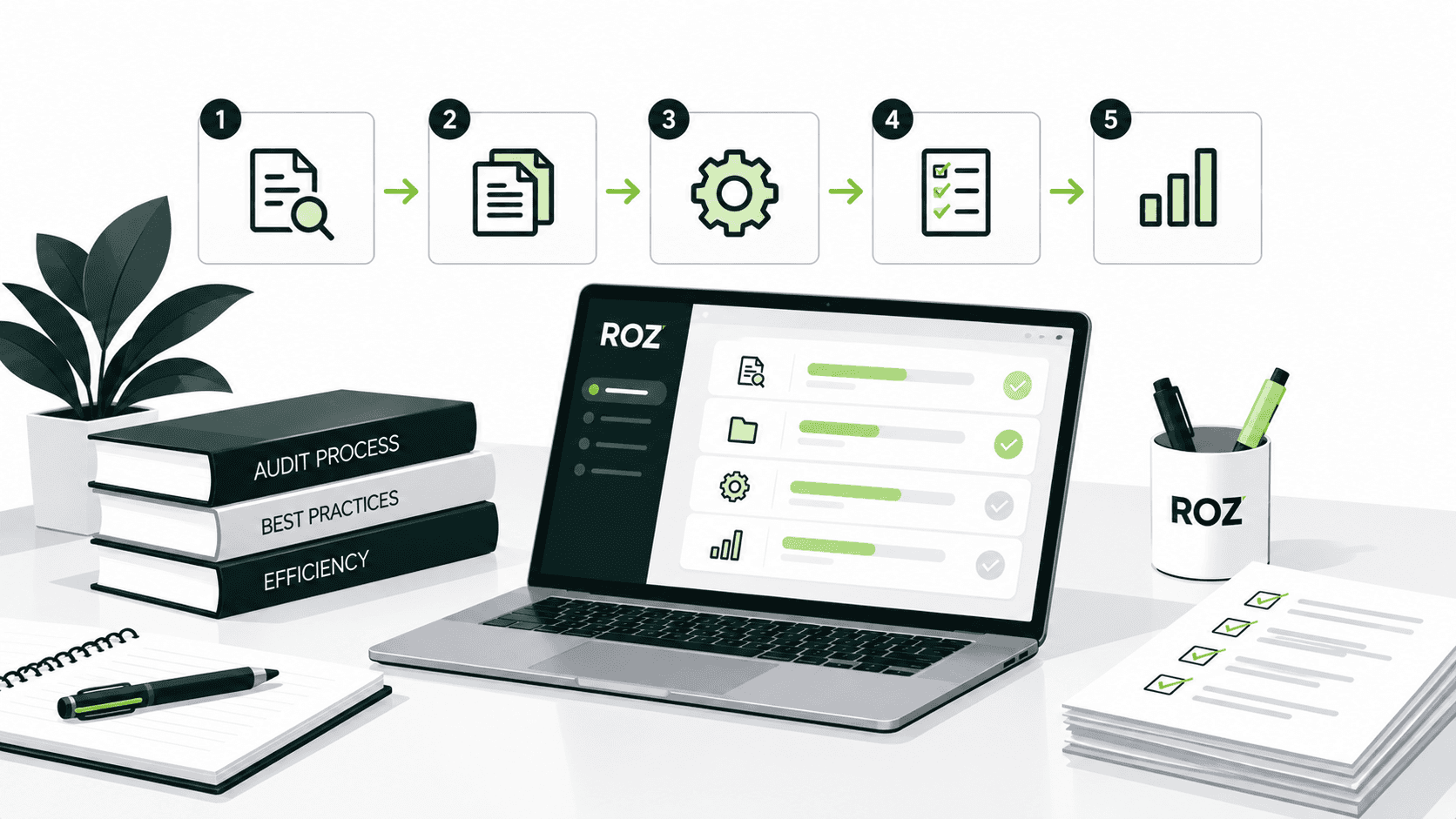
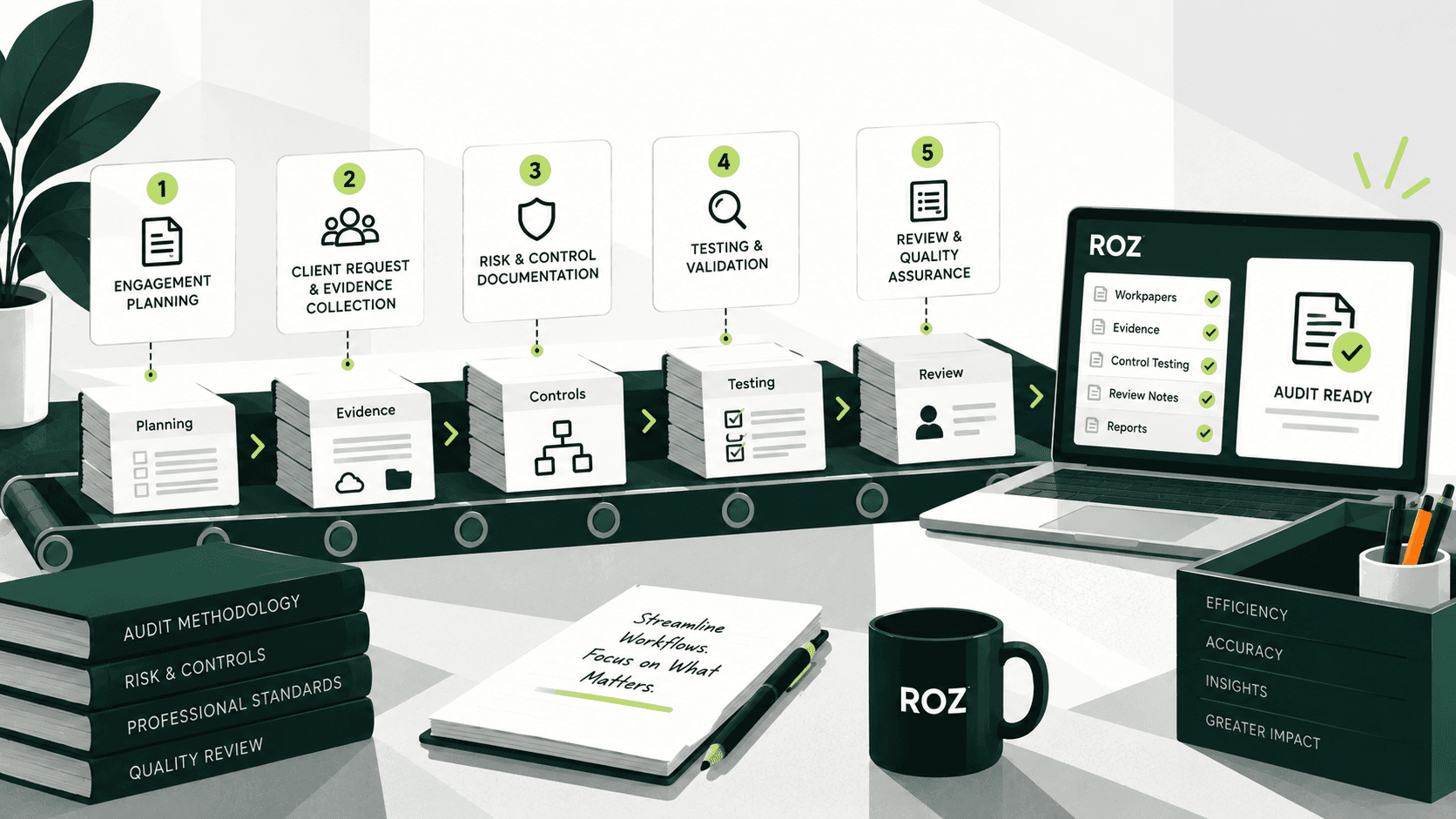
The process of automated evidence collection typically consists of the following steps:
Define evidence requirements: Audit teams outline the documentation needed for each control or area being evaluated.
Create and send evidence requests: The system generates prebuilt requirements (PBC requests) and sends collection requests to clients through an encrypted online request or an email link.
Collect client evidence: Clients upload the requested documentation to the secure online collection channel. The software logs the document submission, and the status appears in real time.
Organize and classify submissions: The system organizes uploaded evidence, captures relevant metadata such as dates, amounts, and vendor names, and associates the evidence with the applicable request.
Identify potential gaps or issues: The system flags potentially missing or duplicate submissions and evidence that appears not to satisfy the collection request.
Route evidence for auditor review: Relevant collected audit evidence, metadata, and submission records undergo a final classification and preparation process prior to the auditor's review.
Throughout the entire process, the auditors define the evidence needs and review collection requests. The automated processes capture the required evidence documentation, heavily reduce the burden of evidence review, and allow auditors to evaluate the evidence and apply professional judgment.
What Audit Evidence Collection Tasks Can Be Automated?
Not every part of evidence collection carries the same automation potential. The table below outlines which tasks can be automated, which benefit from AI assistance, and which remain the auditor's responsibility.
Task | Automation Level |
PBC request creation | High |
Evidence collection | High for supported sources |
Request tracking | High |
Document classification | High |
Duplicate detection | High |
Evidence-to-control mapping | AI-assisted |
Completeness checks | AI-assisted |
Evidence evaluation | AI-assisted + auditor review |
Audit conclusions | Auditor responsibility |
This distinction matters. Automating repetitive collection and organization tasks can give audit teams more capacity to focus on evidence evaluation, exception investigation, professional judgment, and engagement conclusions.
Automated Evidence Collection vs. Automated Evidence Evaluation
The distinction between these two processes is the most significant in the entire guide and, therefore, deserves the most explanation.
Collection entails the retrieval of documents, collating evidence, following up on requests, mapping evidence to controls, and noting anything that appears to be missing or is incomplete. Software, including AI software, can be used to assist in the entire process, but the reliability can be impacted by the implementation and the integrity of the underlying data.
Evaluation, however, is an entirely different process. Whether evidence is relevant and sufficient and whether it is reliable is assessed. Exceptions are evaluated. The context of the submission is evaluated. The auditor ultimately reaches the defensible audit conclusion. Assessing relevance, completeness, and reliability can be assisted by AI, but it is the auditor’s responsibility to make the assessments and reach the conclusions.
The risk of conflating the two is real. When an audit team treats a submitted evidence package, which is in order, as automatically sufficient, they skip the assessment that gives an audit its substance. Automation of the review process hastens the audit, but it does not replace the assessment.
Benefits of Automated Audit Evidence Collection
Automating evidence collection provides benefits to each member of an audit team when it is done carefully:
Faster evidence intake: Clients provide evidence through set submission portals, thereby reducing the time required to manually send, receive, and track evidence.
Less manual follow-up: Automated reminders and status tracking remove the need for email chains to be manually followed up on.
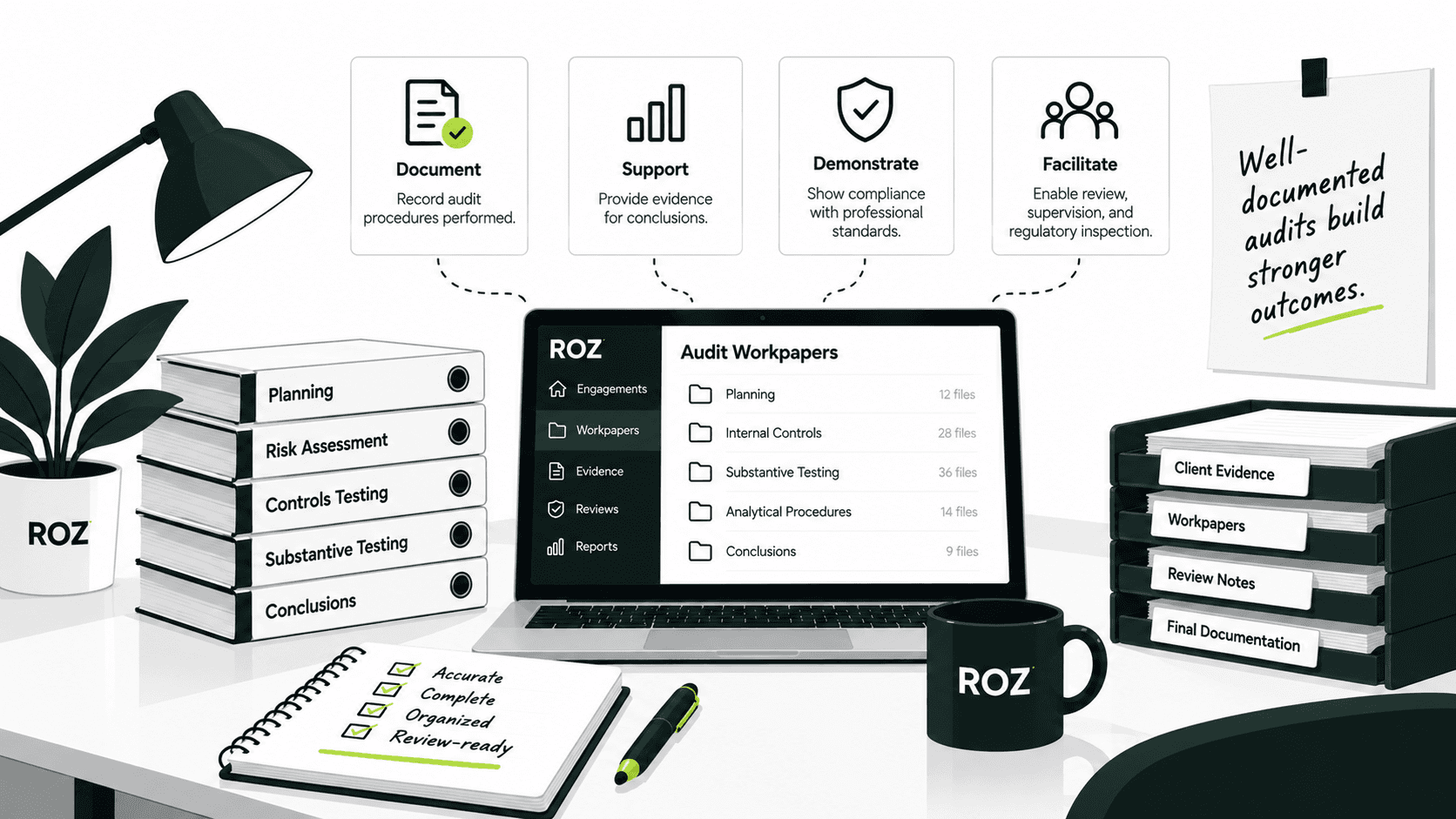
Better evidence organization: Improved organization of evidence with a centralized workspace. Files are submitted to the applicable requests and controls, reducing the likelihood of documents being misplaced or mislabeled.
Improved traceability: Improved audit trail with the logging of all submissions and changes, reducing the manual effort required to maintain an evidence trail.
Earlier identification of gaps: Automated completeness checks are done before the evidence review is conducted by the auditors, allowing potential documentation gaps to be surfaced earlier in the review process.
More consistent documentation: Standardized request templates and classification logic reduce variation across engagements and staff.
More capacity for judgment-based work: Streamlining evidence collection and classification can give auditors more time to focus on evidence evaluation, exception investigation, and professional judgment.
Common Challenges and Risks of Automating Audit Evidence Collection
Automation doesn't eliminate all friction. These are the challenges worth planning for:
Poorly defined evidence requirements: If requests are vague, automation simply delivers vague responses faster. Clear, specific PBC templates are a prerequisite for effective automation.
Incomplete or incorrect client submissions: Automation will identify what’s missing, if anything, but will not evaluate the evidence. Effective client communication and training will remain necessary.
Over-reliance on AI-generated analysis: AI-assisted-based tools support mapping and gap analysis on a preliminary basis. Relying on their findings is detrimental to the quality of the audit.
Data privacy and access controls: The evidence clients provide often includes sensitive data on the financial, operational, and personnel domains. Evidence collection tools should provide appropriate access controls, encryption, and safeguards for client data.
Loss of evidence context: Automated classification and extraction of documents can result in context being lost from the source or separated from the source. It's important to not lose the source or provide damaged files.
Lack of human review: The main risk is treating automated collection as a substitute for an evaluation. A complete and well-constructed evidence package is a good starting point, but it is certainly not a substitute for a conclusion.
How Roz Supports AI-Assisted Audit Evidence Collection
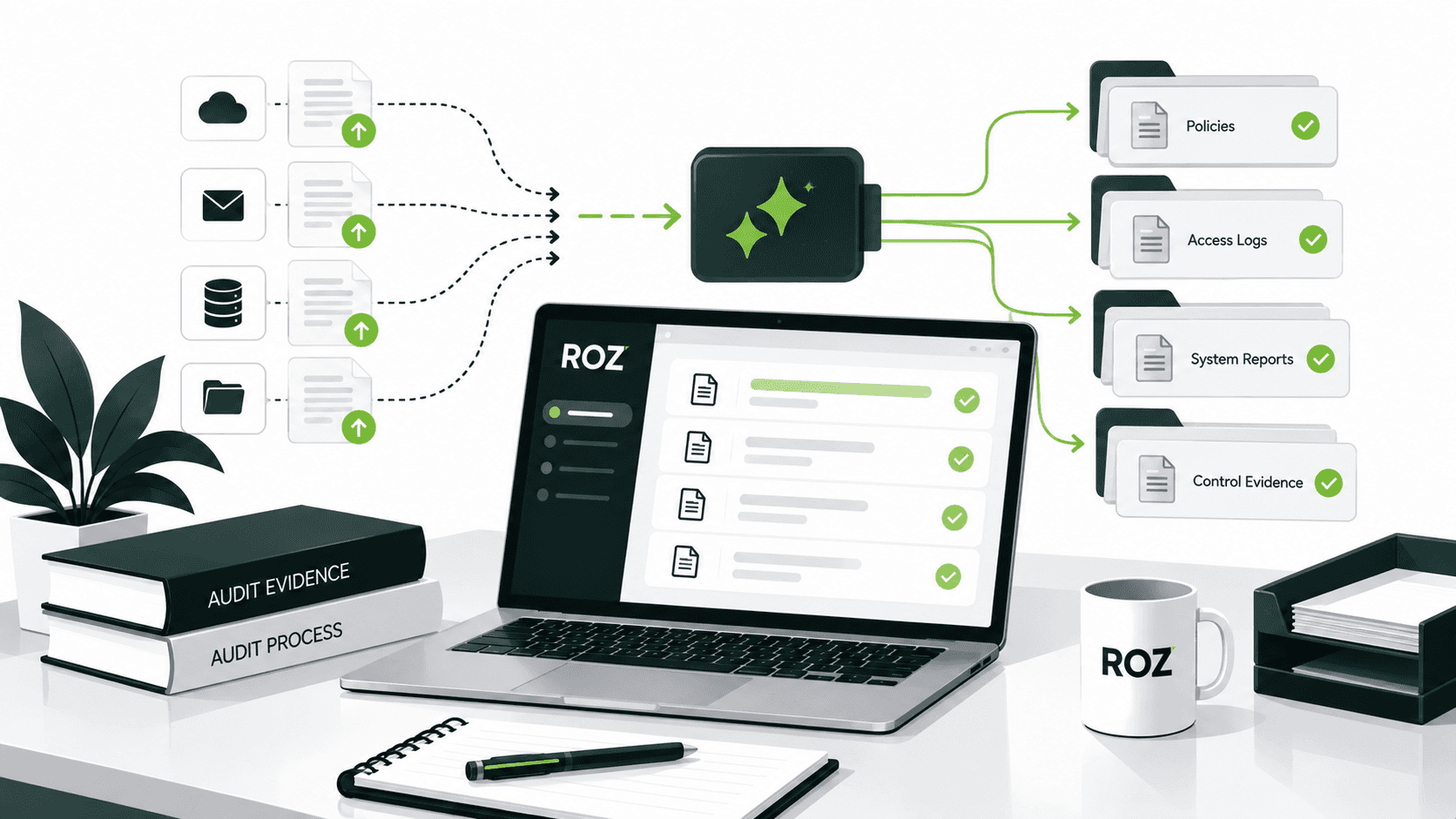
Roz is an AI-native audit fieldwork platform built for auditors and advisory firms performing control-based engagements across frameworks including SOC 2, ISO 27001, HITRUST, HIPAA, and CMMC. Within each client engagement, Roz provides a dedicated workspace where teams can organize controls, policies, procedures, evidence, and workpapers. From there, Roz supports several stages of the evidence workflow:
Evidence organization: Client documentation is organized in engagement-specific workspaces with clear traceability.
Evidence-to-control mapping: Evidence Requests and documentation can be tied directly to relevant controls and testing workflows.
Potential gap identification: Roz can surface areas where documentation may be missing or insufficient, supporting first-pass review and testing.
AI-assisted control testing: Roz can run attribute checks against evidence and sample sets, returning testing results and reasoning for auditor review.
Human-in-the-loop validation: Auditors review the outputs, investigate potential exceptions, and make the final judgments and conclusions.
Roz helps streamline evidence collection, control testing, and first-pass analysis while keeping professional judgment and accountability with the engagement team.
Conclusion
Automated audit evidence collection works well when firms think of it as the tool it is intended to be: a time saver in logistics for evidence management, not a proxy for the professional work that follows.
The framework is straightforward:
Collect → Organize → Analyze → Review
Automation can effectively support the first two stages when workflows, data sources, and implementation are well-structured. An AI-assisted tool can definitely be useful in the third step. The last step is auditor judgment and the conclusion, which remains the most important aspect of any engagement.
Firms that structure their evidence workflows around this approach can improve efficiency while maintaining appropriate auditor oversight.
Frequently Asked Questions
Can audit evidence collection be automated?
Yes. Technology can streamline PBC requests, client document submissions, request tracking, classification, and certain completeness checks. Auditors must still evaluate evidence, investigate exceptions, apply professional judgment, and reach the final conclusion.
How does AI help with audit evidence collection?
AI can support evidence organization, control mapping, completeness checks, first-pass analysis, and draft workpaper preparation. Auditors should review and validate AI-generated findings before relying on them in an engagement.
What types of audit evidence can be collected automatically?
Examples of evidence that may be collected include policies, procedures, system-generated reports, contracts, spreadsheets, screenshots, and configuration documentation. The appropriate evidence depends on the engagement and the control being evaluated.
Is automated audit evidence collection reliable enough for audits?
Automated technologies aid in the processes of evidence collection and evidence organization. Audit evidence automation does not guarantee the evidence is sufficient or reliable. Auditors will still need to assess the source, relevance, completeness, and timeliness of the audit evidence.