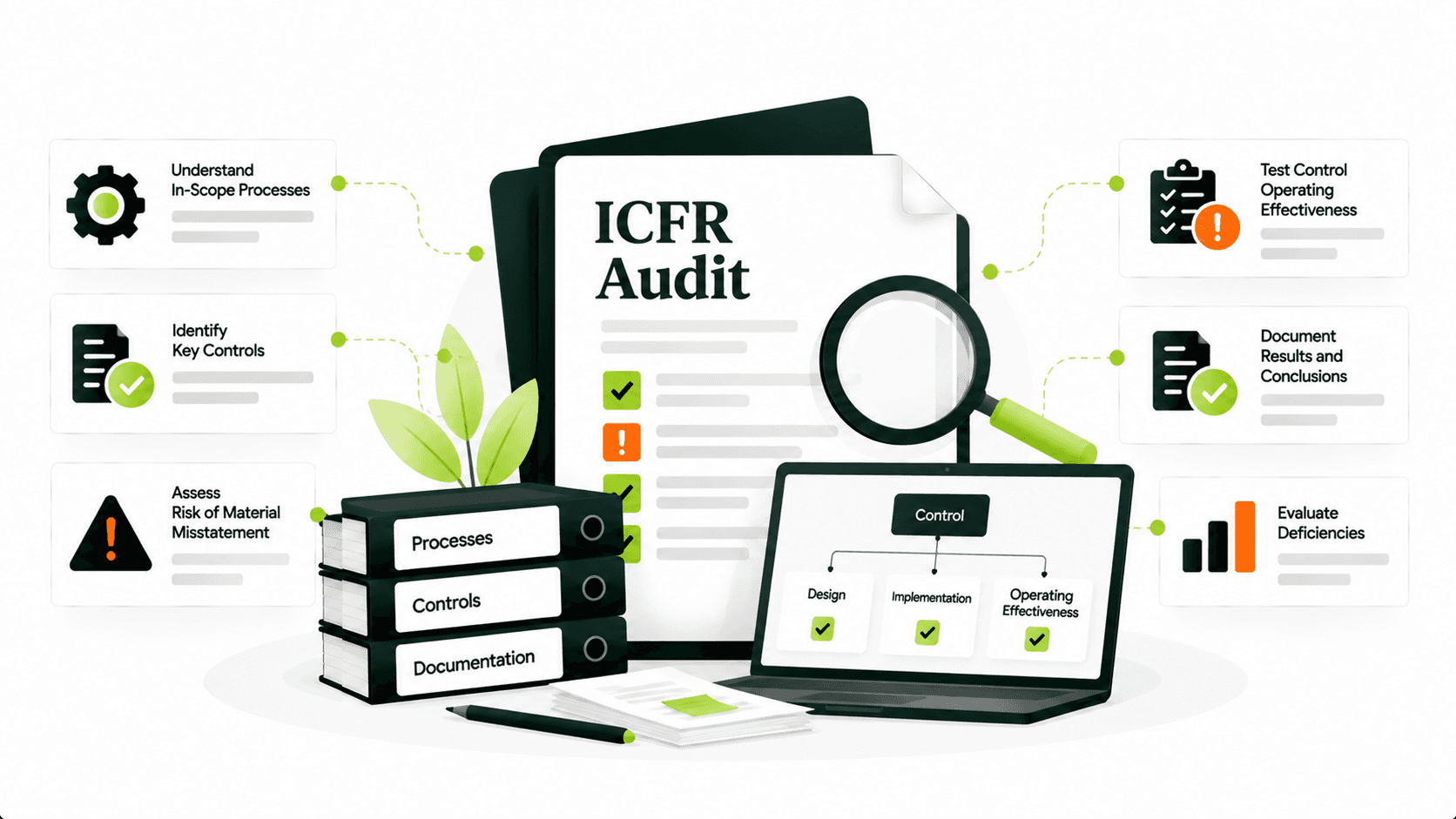
If you run external audit engagements, you have likely felt the squeeze. More systems to assess, more evidence to collect, and more controls to test, often with the same headcount and tighter deadlines. Documentation, evidence collection, and administrative activities often consume a significant portion of audit preparation time. Many firms are exploring AI-assisted workflows to reduce manual effort and allow auditors to focus more on risk assessment, testing, and professional judgment.
AI-assisted audit workflows are changing how teams handle that load. Instead of reading every policy line by line or copying data from PDFs into testing templates, auditors can use AI to perform an initial review of evidence and documentation, allowing them to focus more attention on judgment, risk assessment, and conclusions. This shift is showing up in preparation, evidence collection, control testing, documentation, and reporting.
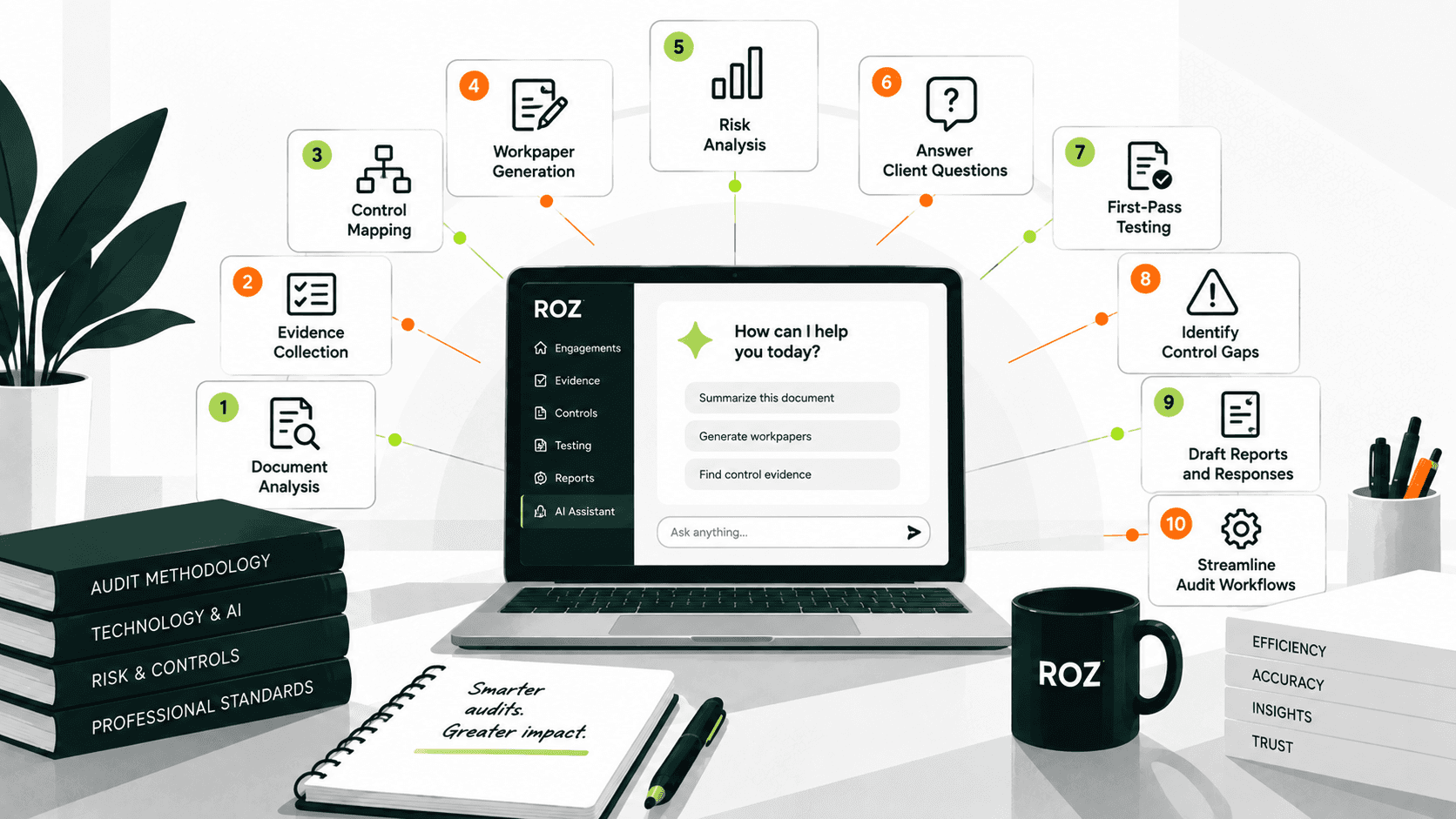
In this article, I will explain what AI means in an audit context, why firms are adopting it now, and 10 practical use cases you can apply today. It also covers the benefits, the risks worth watching, and how Roz fits into the workflow.
What Does AI Mean in the Context of Auditing?
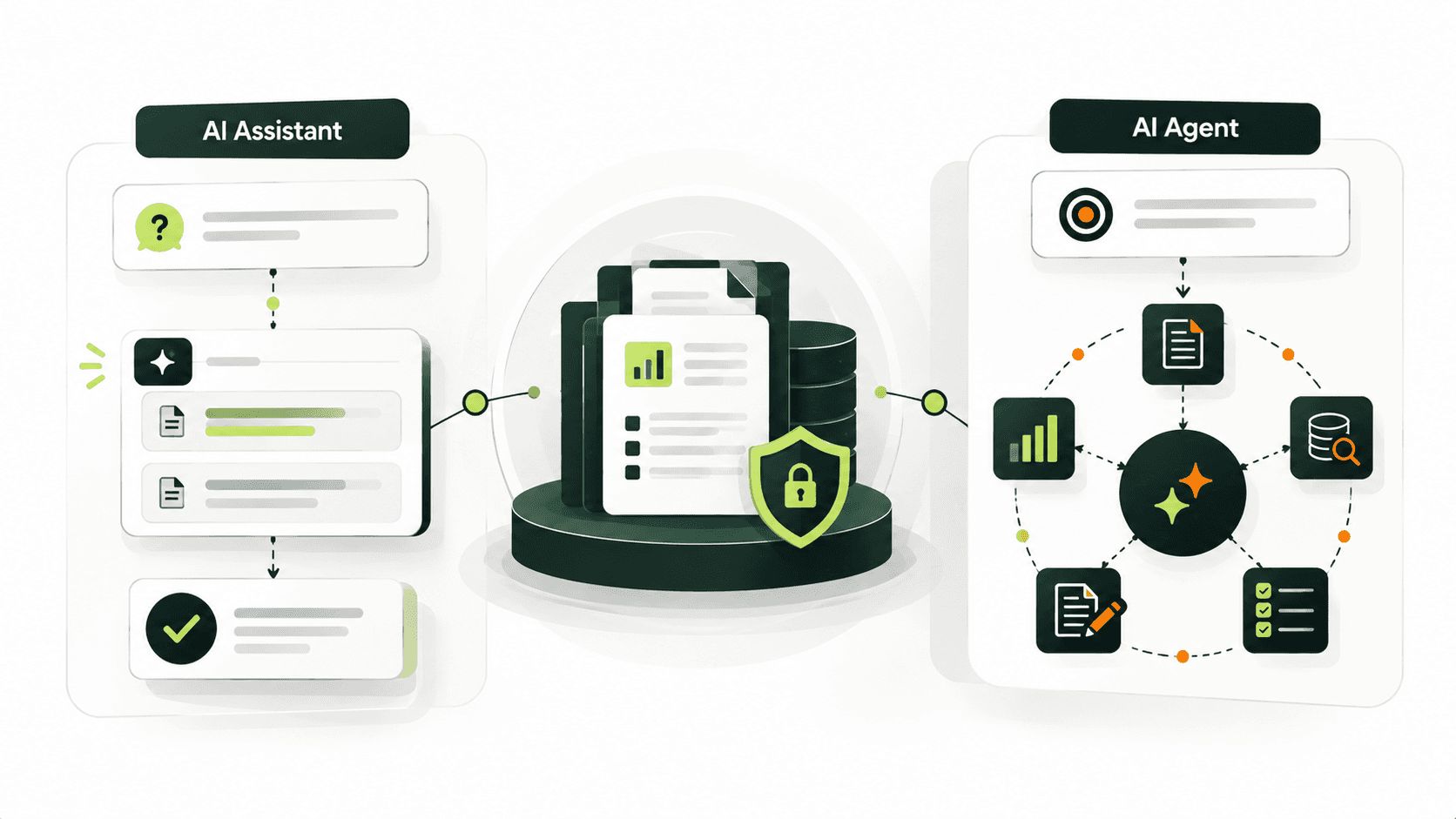
AI-assisted audit platforms can help analyze engagement data, organize documentation, generate draft outputs, and surface information for auditor review. Unlike a human, AI software cannot make autonomous choices. AI is designed to support auditor workflows rather than replace professional judgment.
AI vs. Traditional Audit Automation
Traditional auditing software systems organize and preserve the user’s work. Like AI, traditional auditing software does not make decisions. The distinction is important as it affects how your time is spent.
Rules-based automation: An example would be a traditional audit software flagging entries greater than a given dollar amount.
Machine learning: This is used to determine patterns in data; for example, systems can determine abnormal journal entries.
Generative AI: Creates draft text, summaries, or structured outputs based on provided inputs.
AI-assisted analysis: This combines these capabilities to review data and highlight areas that may require additional auditor attention.
Where AI Fits Within the Audit Lifecycle
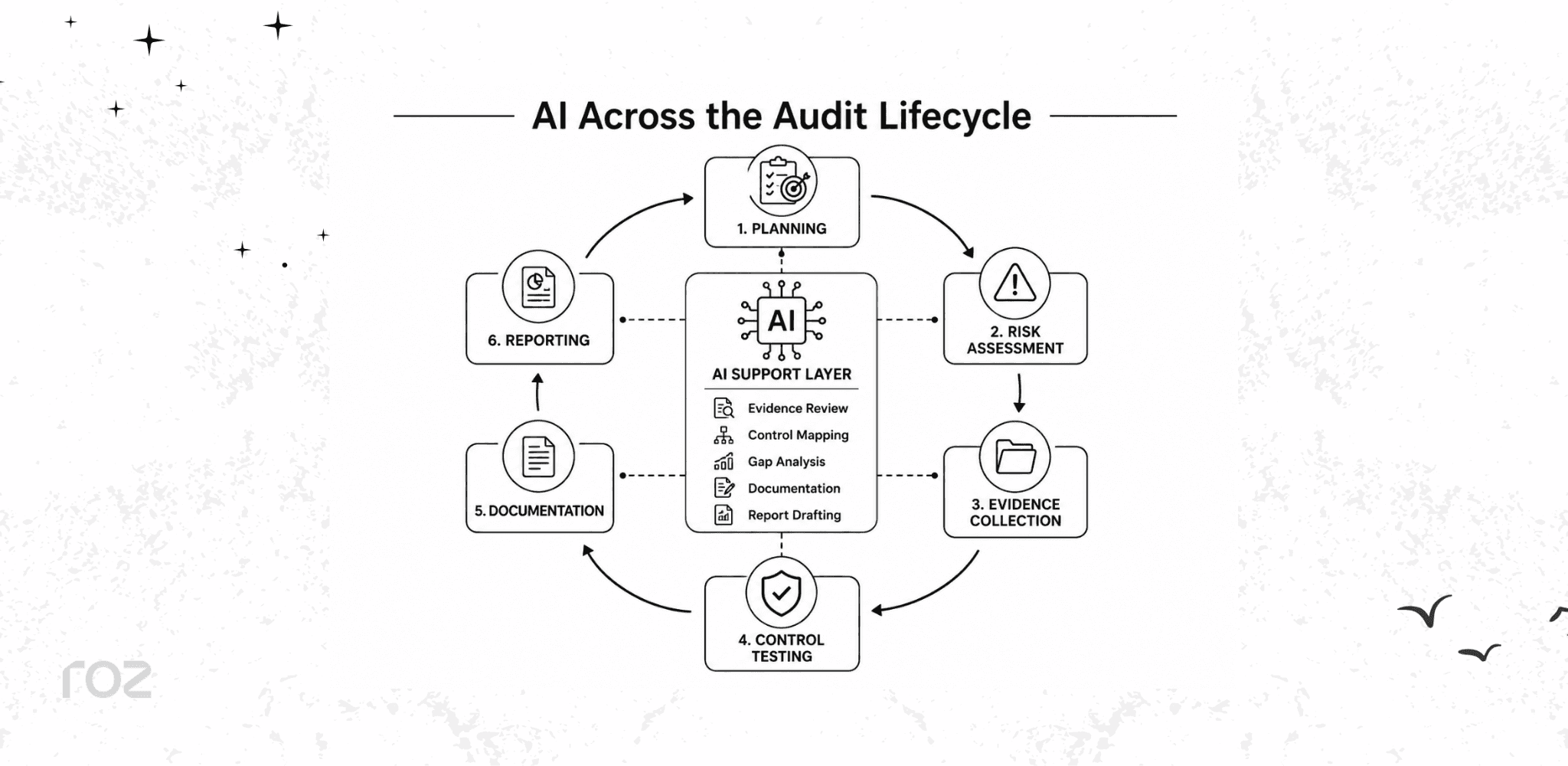
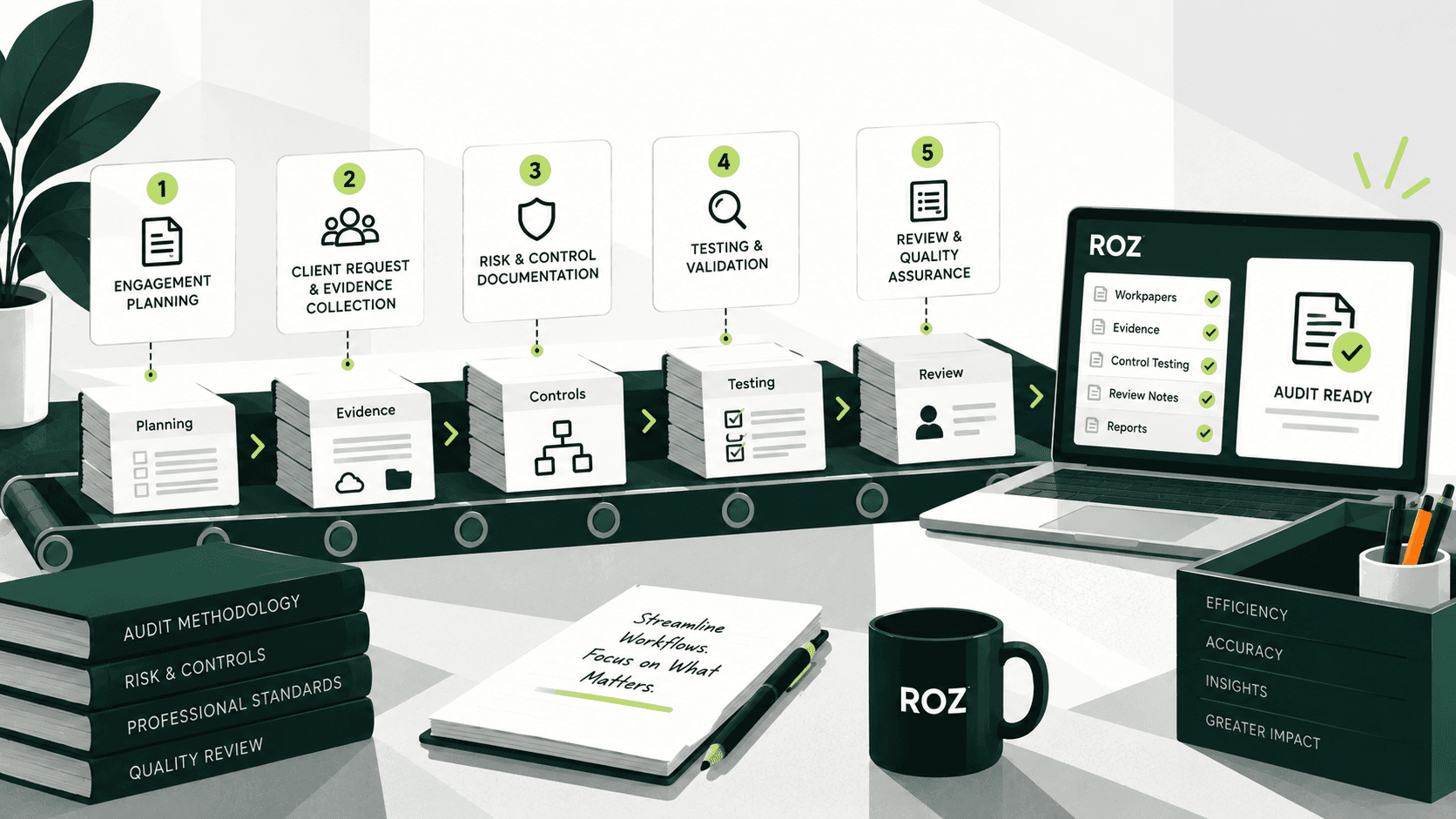
AI can support many stages of an engagement, particularly those involving large volumes of structured information and repetitive documentation activities. However, AI is the most effective for steps that require a large volume of work with distinct boundaries.
What AI Can and Cannot Do
AI can improve the efficiency of time-consuming tasks, allowing auditors to spend more time applying professional judgment. AI lacks professional skepticism and cannot form an opinion on the audit. AI will never assume the auditor's role or liability, as auditors will be accountable for each professional judgment made on each substantive task, no matter the tools employed to undertake the work.
Why Audit Firms Are Exploring AI in 2026
If you are working in audit, you are most likely already experiencing the effects of AI. Its use is rapidly advancing beyond niche uses. A Gartner survey from January 2026 noted that 83% of audit functions are in the pilot or already using AI, with another 12% planning to do so in the next year. Over 70% of chief audit executives reported that optimizing the use of data analytics and generative AI is a priority and of great importance to them.
This shift is driven by several factors:
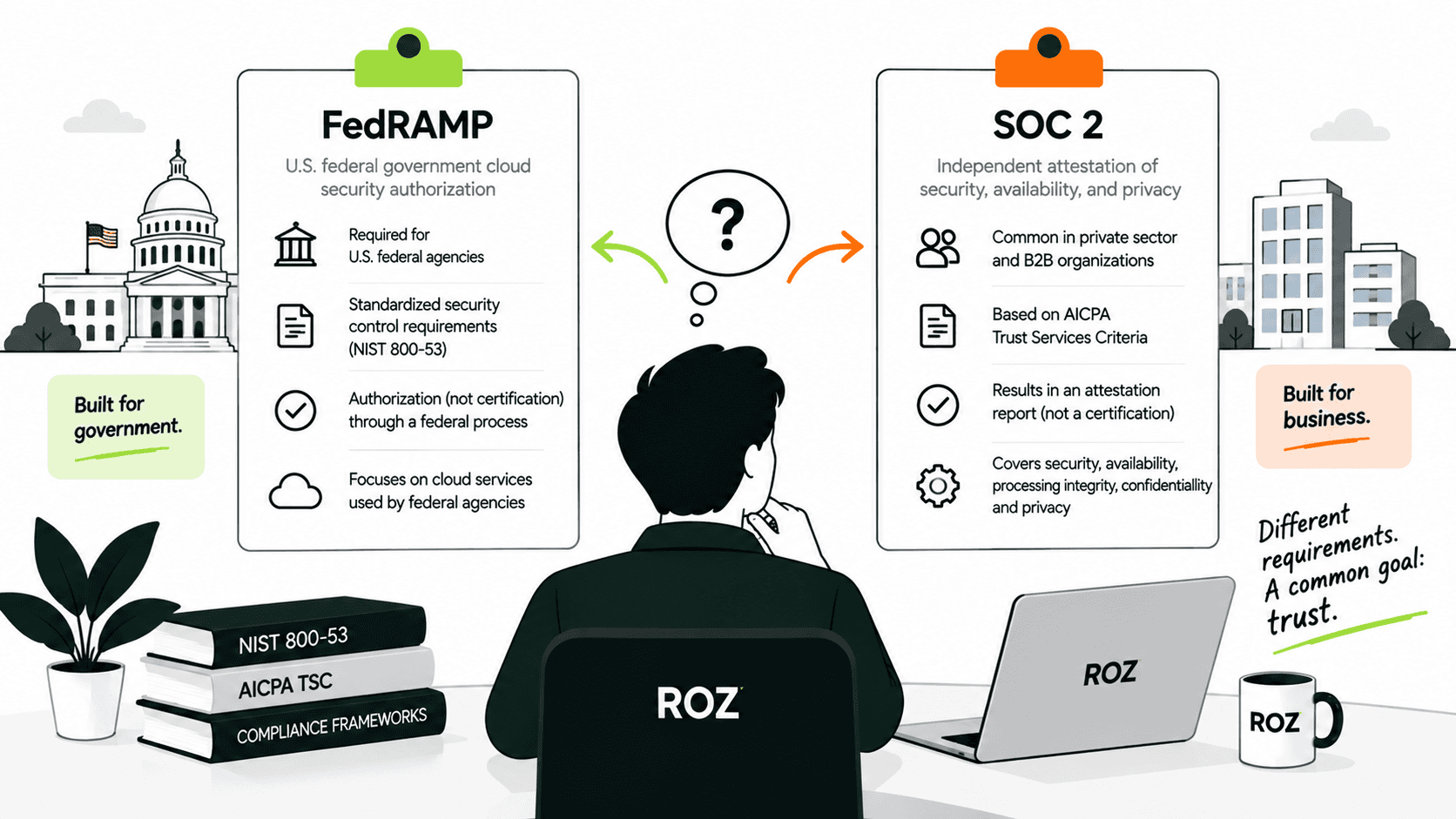
Growing Audit Complexity: Your clients have more systems, generate more evidence, and have more controls across frameworks such as SOC 2, ISO 27001, CMMC, and SOX. Manual review processes can become difficult to scale as engagement complexity increases.
Talent and Capacity Challenges: A shortage of staff and increased workloads and time-bound engagements are colliding. A 2026 Accounting Seed survey reported that 84% of finance employees spend at least 25% of their working time on manual and repetitive tasks. AI-assisted workflows can help firms improve operational capacity and efficiency.
Changing Client Expectations: Clients want services delivered faster, more transparency, and clear audit trails. Many are evaluating or using AI in their operations. The 2026 Accounting and Audit Seed survey indicated that 63% of audit and finance teams are looking into AI tools, demonstrating an evolving ecosystem.
10 Practical AI Use Cases for Auditors
1. Evidence Review and Classification
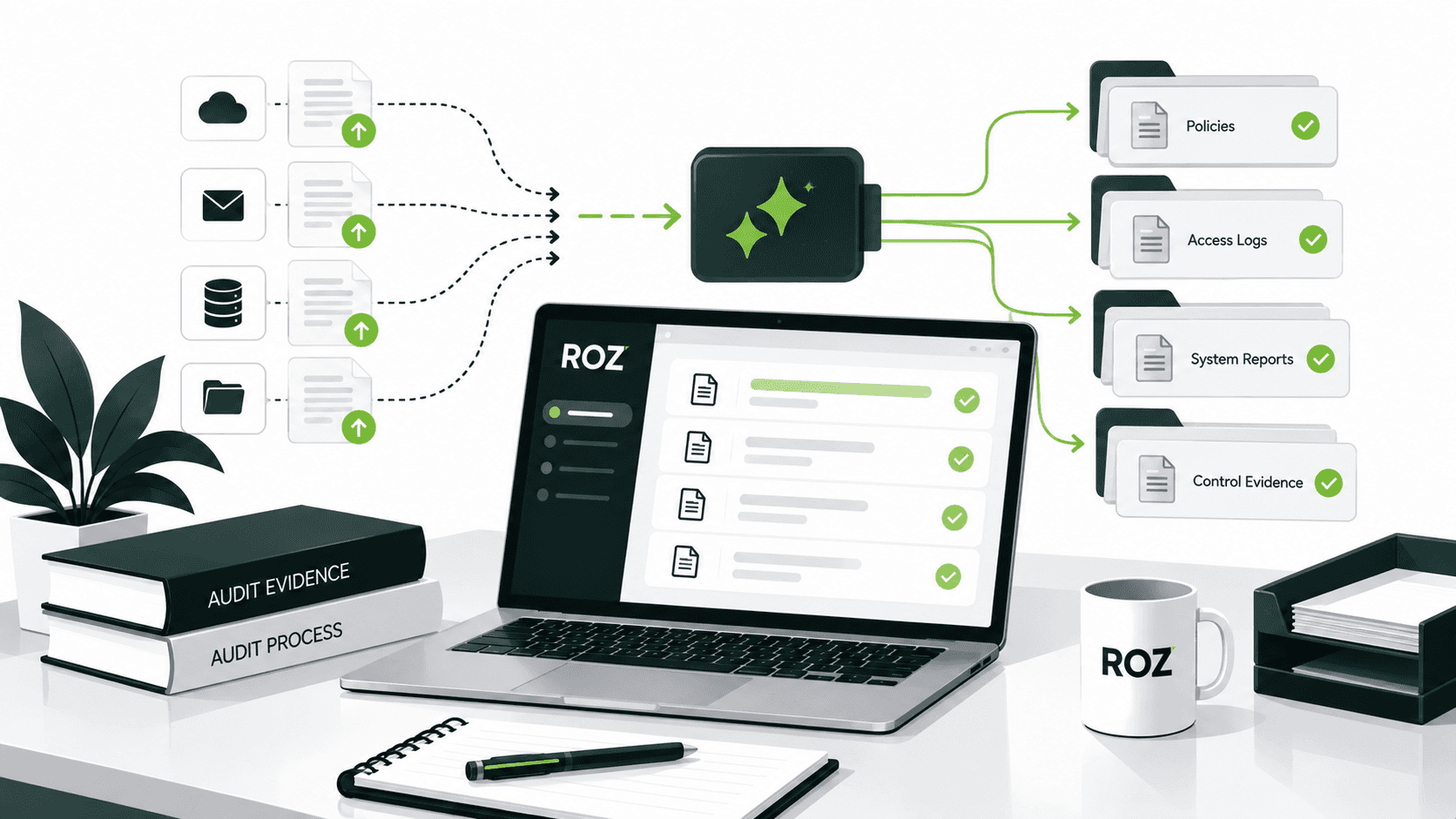
AI classifies and categorizes evidence in uploaded documents. During a SOC 2 engagement, AI can organize the hundreds of evidence files (e.g., access logs, policies, screenshots, etc.) into their respective testing buckets in a matter of minutes. AI can help reduce review effort, improve consistency, and accelerate evidence organization.
2. AI-Powered Audit Documentation
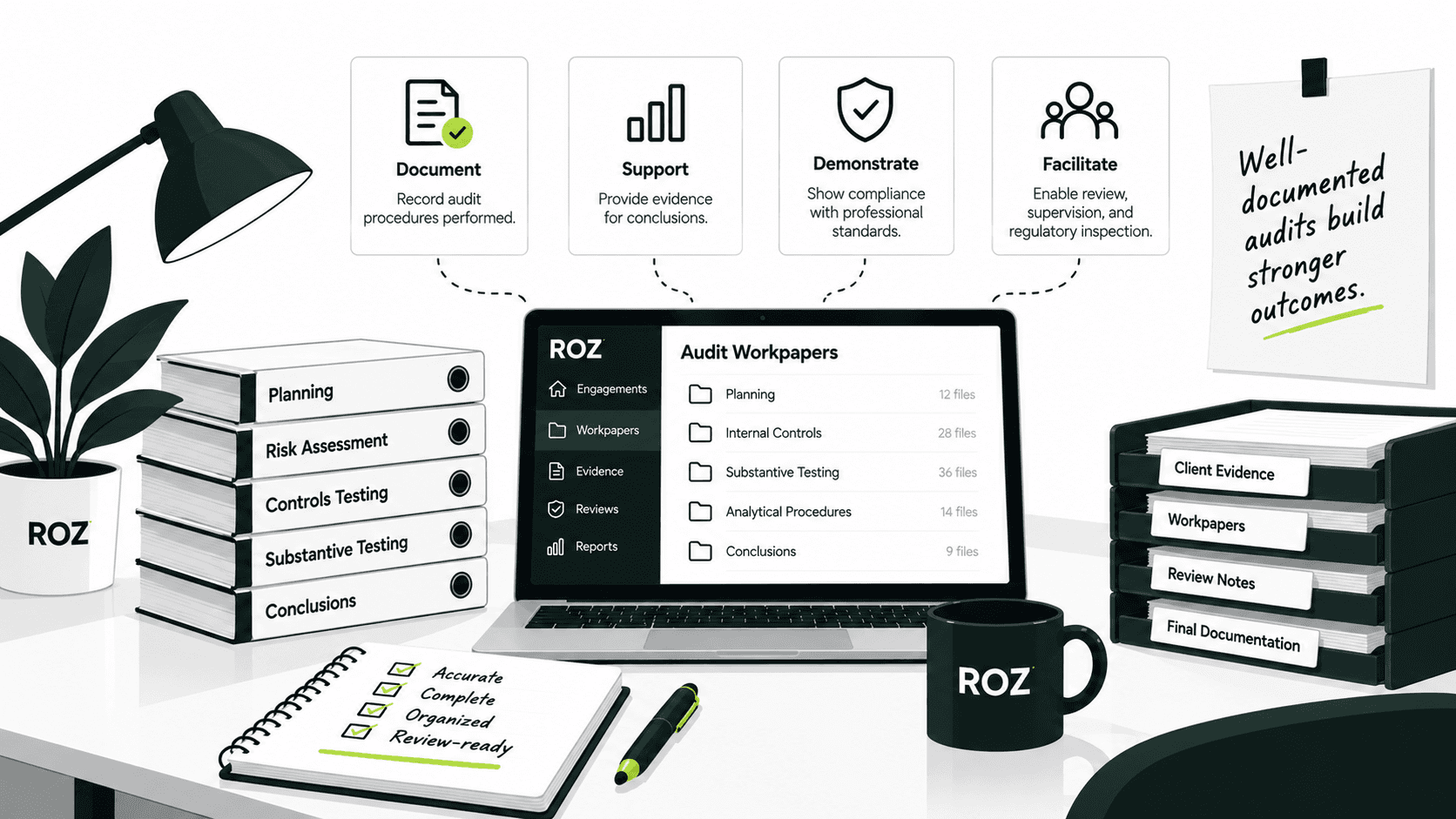
Drafting audit documentation is time-consuming. AI can generate a first-pass draft of documentation using client evidence and firm-approved templates. Documentation is created rapidly, and the work is ready for review. The drafting is done.
3. Control Identification and Extraction
AI can help generate a structured control inventory by extracting stated controls from uploaded policies and procedures. Your audit team can then review and validate the control inventory, instead of reading through all of the policies and procedures.
4. Control Mapping Across Frameworks
AI can facilitate control mapping across multiple compliance frameworks, such as SOC 2, ISO 27001, CMMC, and PCI DSS. Control mapping can be very time consuming since each compliance framework will state a control in its own wording. AI can support first-pass control mapping across frameworks.
5. Risk Assessment Support
AI can aid in risk-based audit planning by indicating areas with insufficient control coverage. This allows the auditor to concentrate the audit procedures on the areas that will have the greatest impact. Risk-based audit processes will always require auditor judgment. AI may present an area of risk, but the final risk determination will be made by the audit team.
6. Questionnaire and Request List Management
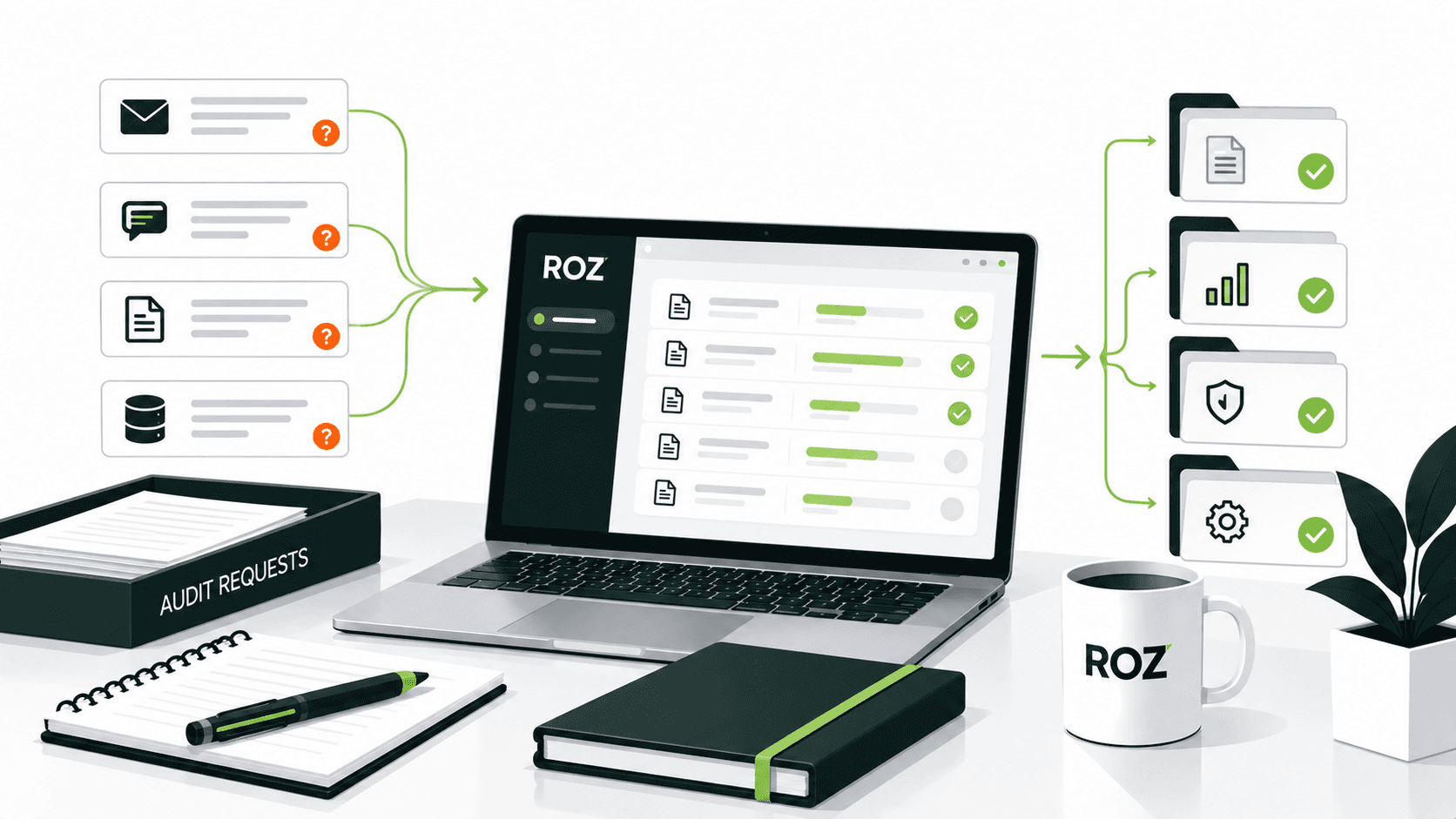
Security questionnaires and compliance checklists involve a lot of back-and-forth. AI can draft responses to standard compliance questions and cite client documentation with a confidence score and source links. AI can also identify and highlight areas where documentation is lacking. This significantly decreases the number of follow-up cycles and expedites the request.
7. Gap Analysis and Readiness Assessments
AI analyzes existing controls against a compliance framework and identifies gaps. This technology enables users to prioritize compliance gaps and help organizations prioritize remediation activities. This approach is often used for SOC 2, ISO 27001, and CMMC readiness assessments, which aim to highlight gaps to prospective clients prior to a formal compliance audit.
8. First-Pass Control Testing
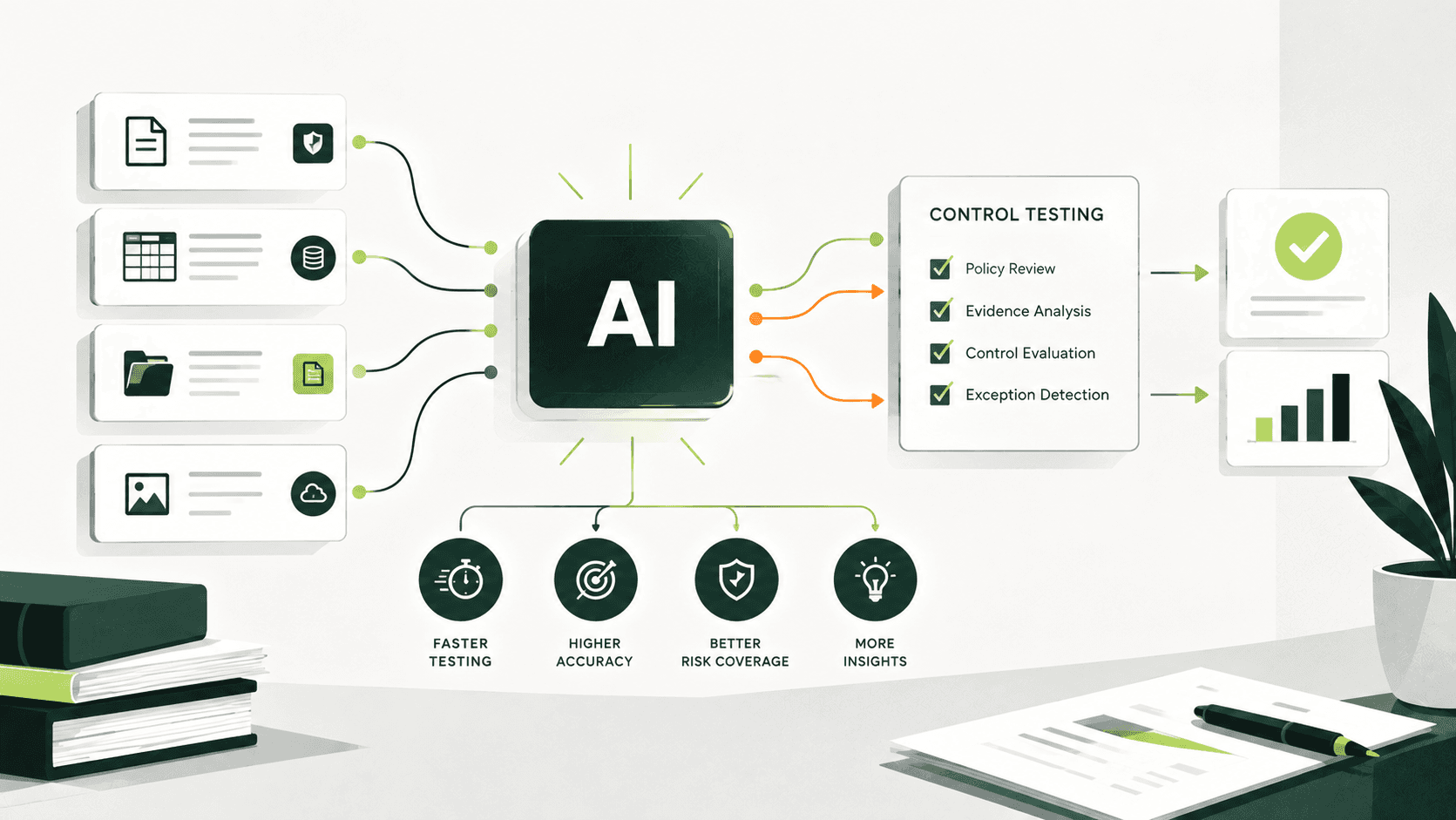
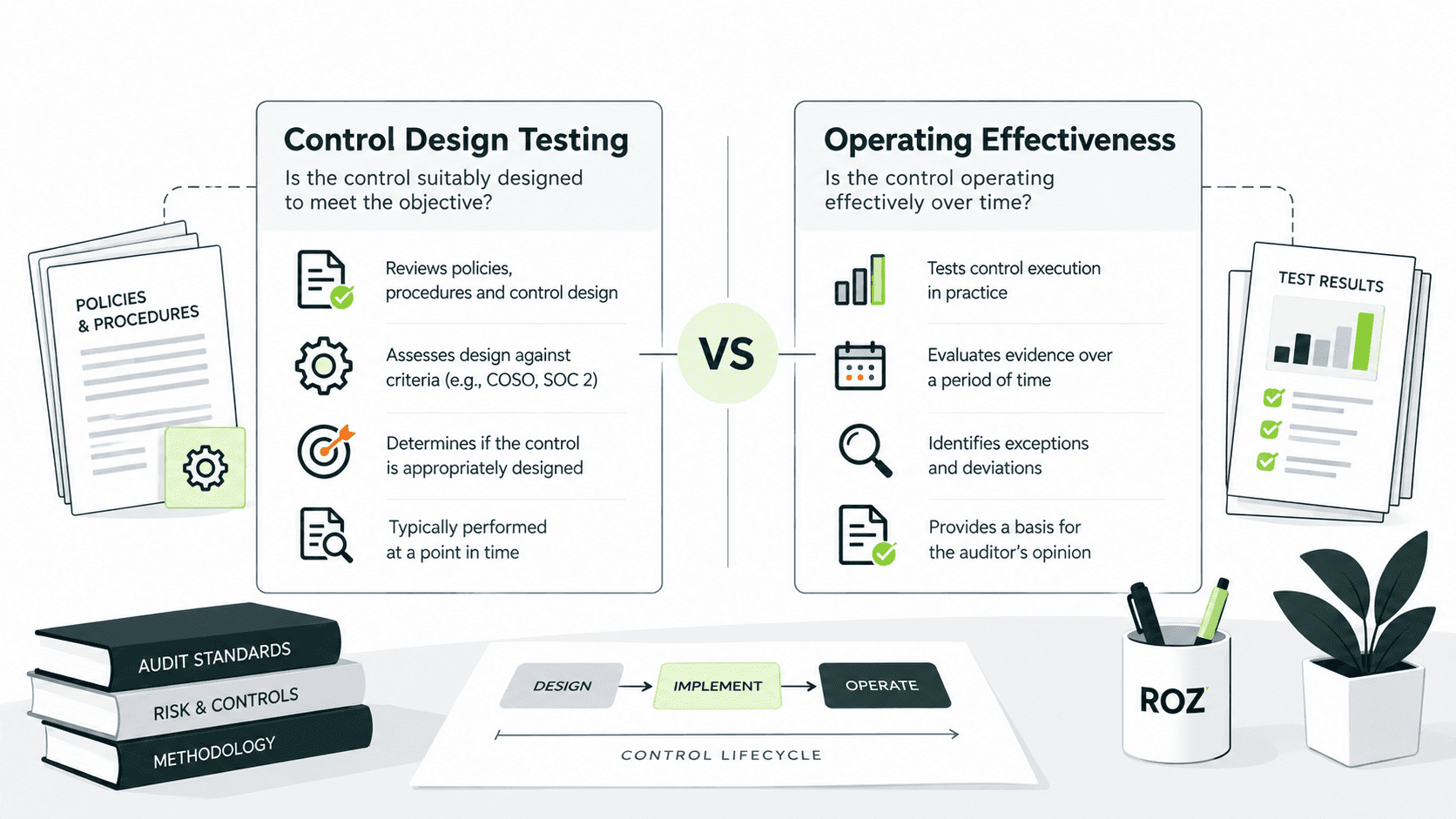
AI evaluates a sample of evidence against control requirements and identifies compliance gaps for your consideration. AI can perform an extensive preliminary review of evidence and identify testing exceptions. A significant amount of evidence is required to support a conclusion; therefore, AI is not a replacement for professional judgment.
9. Audit Report and Findings Drafting
AI provides drafts of high-level observations and preliminary findings and creates uniformity in the report while providing drafts of research findings. This decreases the overall time to complete audit reporting and provides a uniform report. Quality control review is required prior to issuance to the client.
10. Audit Knowledge Management
AI performs a search of previous audits and identifies existing audit documentation. AI enables staff to learn how a control was documented and tested as part of the previous year's audit, improving the overall consistency of the test. AI also helps to reduce onboarding and documentation effort.
Benefits of AI for Auditors
The gains concentrate in a few areas:
Improved efficiency: Repetitive procedural work can often be completed significantly faster.
Reduced administrative work: Less time on data transfer and document sorting.
Faster engagement delivery: Shorter cycles and quicker client feedback.
Better consistency: Standardized output across staff of different experience levels.
Enhanced knowledge reuse: Prior work becomes searchable and reusable.
Risks and Limitations of AI in Auditing
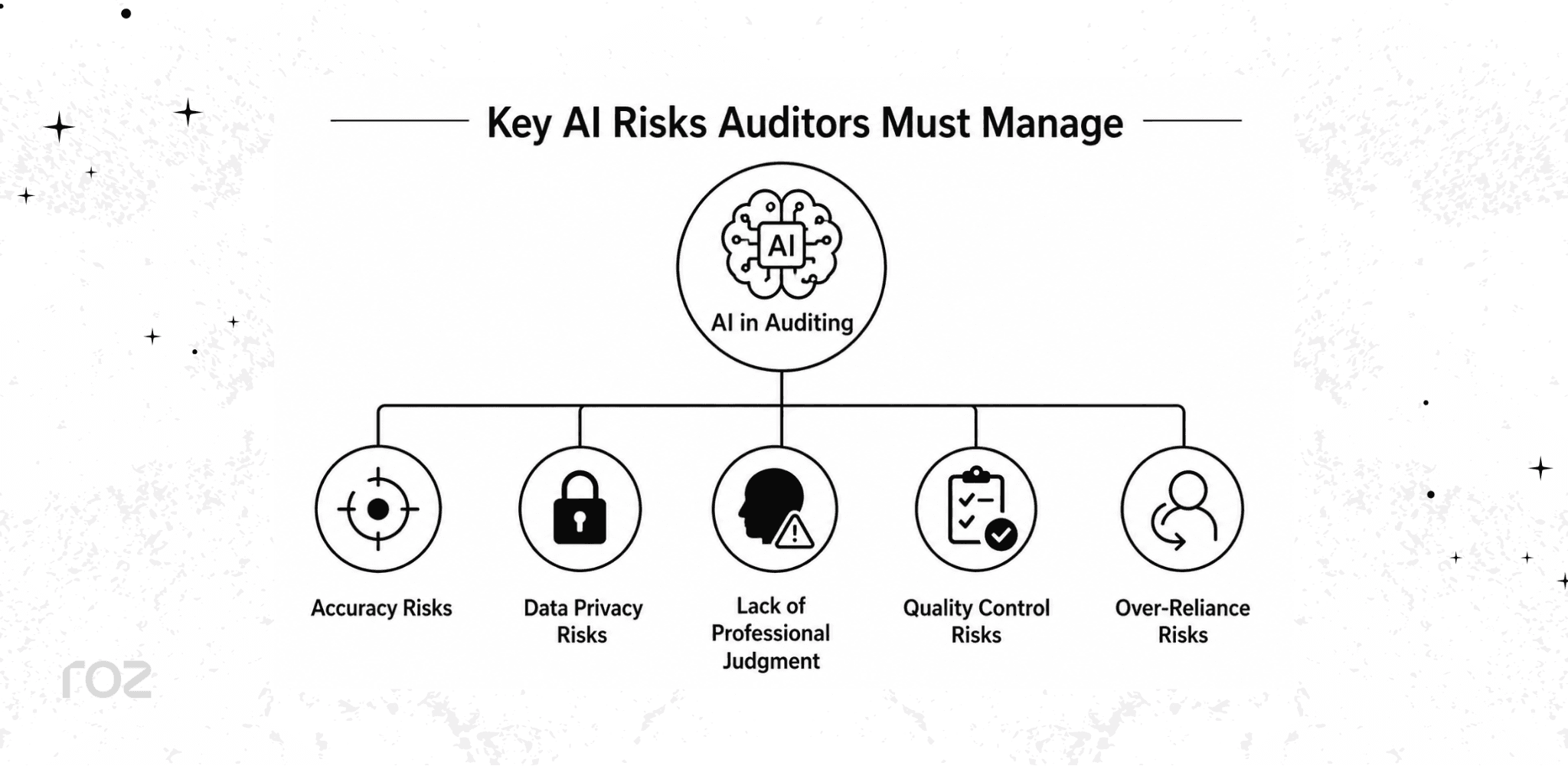
AI introduces risks you need to manage directly.
Accuracy risks: AI can be confident in the incorrect information. These are known as hallucinations. AI-generated outputs should be validated against source evidence.
Data privacy and confidentiality: Audit work involves sensitive client information. Confirm how a tool stores, processes, and protects that data.
Lack of professional judgment: AI tools cannot evaluate the sufficiency of evidence. Professional judgment remains essential to audit quality and defensibility.
Regulatory and quality control: AI can support first-pass analysis and documentation activities. This does not remove the requirement for documentation of the criteria and the population reviewed.
Over-reliance on AI: AI tools sort through 10,000 items and flag 12. It is incorrect to assume that the flagged items are the only issues. It is necessary to maintain professional skepticism with regard to both the flagged and cleared items.
How Roz Helps Firms Streamline Audit Workflows
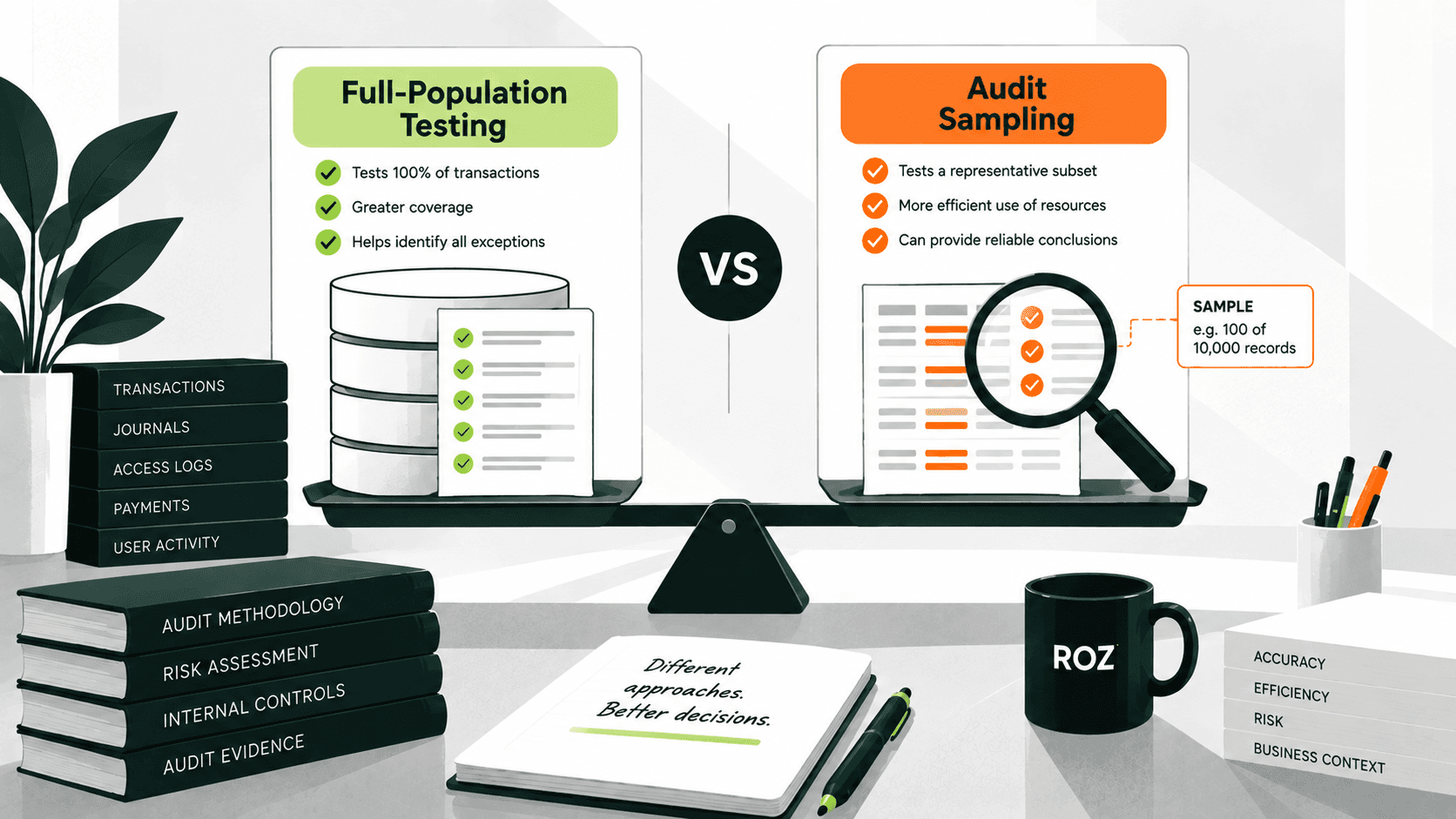
Roz is an AI platform built specifically for external audit and advisory firms. It helps teams accelerate evidence collection, perform readiness assessments, and support first-pass control testing workflows across sampled or full populations, with human-in-the-loop validation keeping auditor judgment at the center of every engagement.
With Roz, firms can:
Organize evidence in secure, client-specific workspaces
Perform readiness assessments and surface potential documentation gaps
Extract controls to support testing workflows
Generate AI-assisted first-pass workpapers from firm-approved templates
Maintain traceability with source-linked evidence and audit trails
Roz helps firms streamline documentation, evidence review, and first-pass analysis while keeping professional review, auditor judgment, and final conclusions with the engagement team.
Conclusion
AI is becoming a practical tool for modern audit teams, and its greatest value comes from removing repetitive work rather than replacing the auditor. Human judgment stays central to audit quality. Firms that adopt AI thoughtfully, with clear verification steps, strong data controls, and consistent professional skepticism, can improve efficiency while maintaining the rigor their clients and standards require.
Start small. Pick one high-volume task, such as evidence review or readiness assessments, define what success looks like, and measure the results before scaling.
Frequently Asked Questions
What are the biggest risks of AI in auditing?
Risks of AI in auditing involve output errors, data privacy, AI overdependence, and inadequate documentation. It is vital that auditors check AI outputs against the evidence and uphold the review standards for the audited tasks.
Is AI allowed in SOC 2 or ISO 27001 audits?
Yes. The existing standards of audit and assurance do not prohibit the use of AI to undertake audit procedures. The AI technology use, however, should be accompanied by the application of professional judgment and appropriate evidence. Auditors remain accountable for the conclusions reached during the engagement.
What audit tasks benefit most from AI?
The main uses of AI in auditing include the review of evidence, extraction of controls, analysis of gaps, management of questionnaires, drafting of documentation, and testing support in the form of a first-pass. These use cases are based on the significant volume of work that is generally repetitive.
What should firms look for in an AI audit platform?
Audit trail, evidence-linked outputs, confidence scoring, advanced data protection, and processes that keep audit practitioners in control of final decisions.
How can small audit firms start using AI?
Start with the use of AI to accelerate evidence review activities for a single audit and gradually increase the use of the technology for other audit tasks based on the benefits realized.