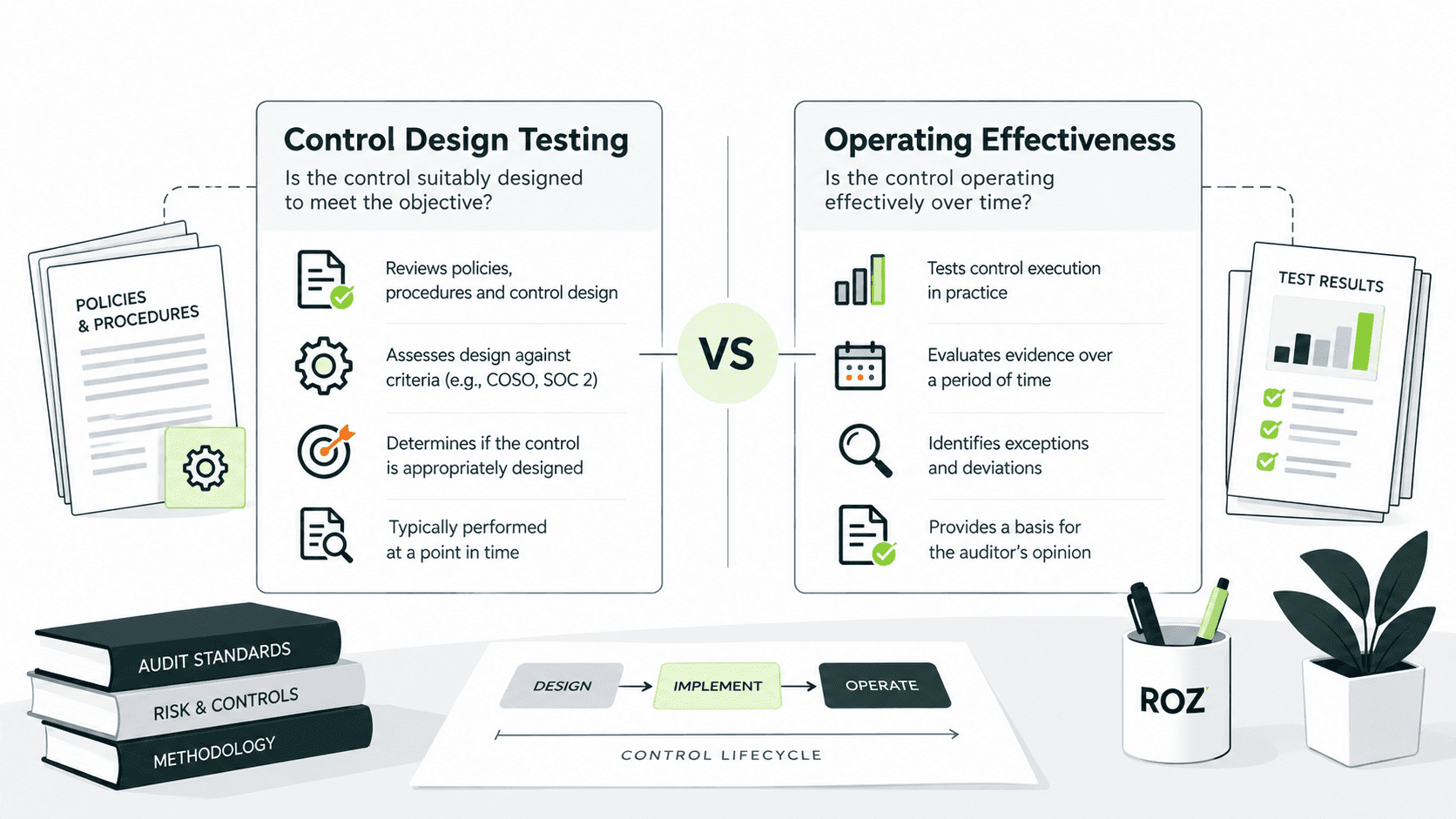
Point-in-time control testing has a built-in limitation: it tells you how controls performed during the testing window, not across the entire period under review. For high-volume, data-driven controls, that gap can be significant. Exceptions that occur between testing cycles may go undetected until the next formal review.
Continuous control testing addresses this by replacing periodic snapshots with recurring evaluation cycles. Rather than testing a sample of transactions once a year, auditors define the control criteria, identify the relevant evidence source, and run structured tests repeatedly throughout the period.
In this article, I will explain what continuous control testing is, how the process works step by step, which controls are good candidates, and how AI tools like Roz can support recurring evidence analysis and workpaper preparation without replacing auditor judgment.
What Is Continuous Control Testing?
Continuous control testing is the recurring evaluation of controls using defined testing criteria and evidence collected from relevant systems, processes, or documentation.
The term "continuous" is often misread as "real-time." The more precise meaning is this: testing occurs at a defined, repeating frequency throughout the period under review, rather than at a single point in time. How frequently depends on the control, the associated risk, and the availability of evidence. The goal is ongoing coverage, not a one-time snapshot.
Understanding a few core terms helps clarify how the process works:
Control objective: The outcome the control is designed to achieve (e.g., only authorized users can access financial systems)
Control activity: The specific action that achieves the objective (e.g., access is reviewed and recertified on a defined schedule)
Testing criteria: The measurable assertion used to evaluate whether the control operated (e.g., all reviews were completed within the required timeframe)
Evidence: The documentation or system data used to test the assertion
Exception: A test result that does not meet the defined testing criteria or for which sufficient evidence is unavailable to determine whether the criteria were met
With these definitions in place, the testing process becomes a structured, repeatable lifecycle.
How Does Continuous Control Testing Work?
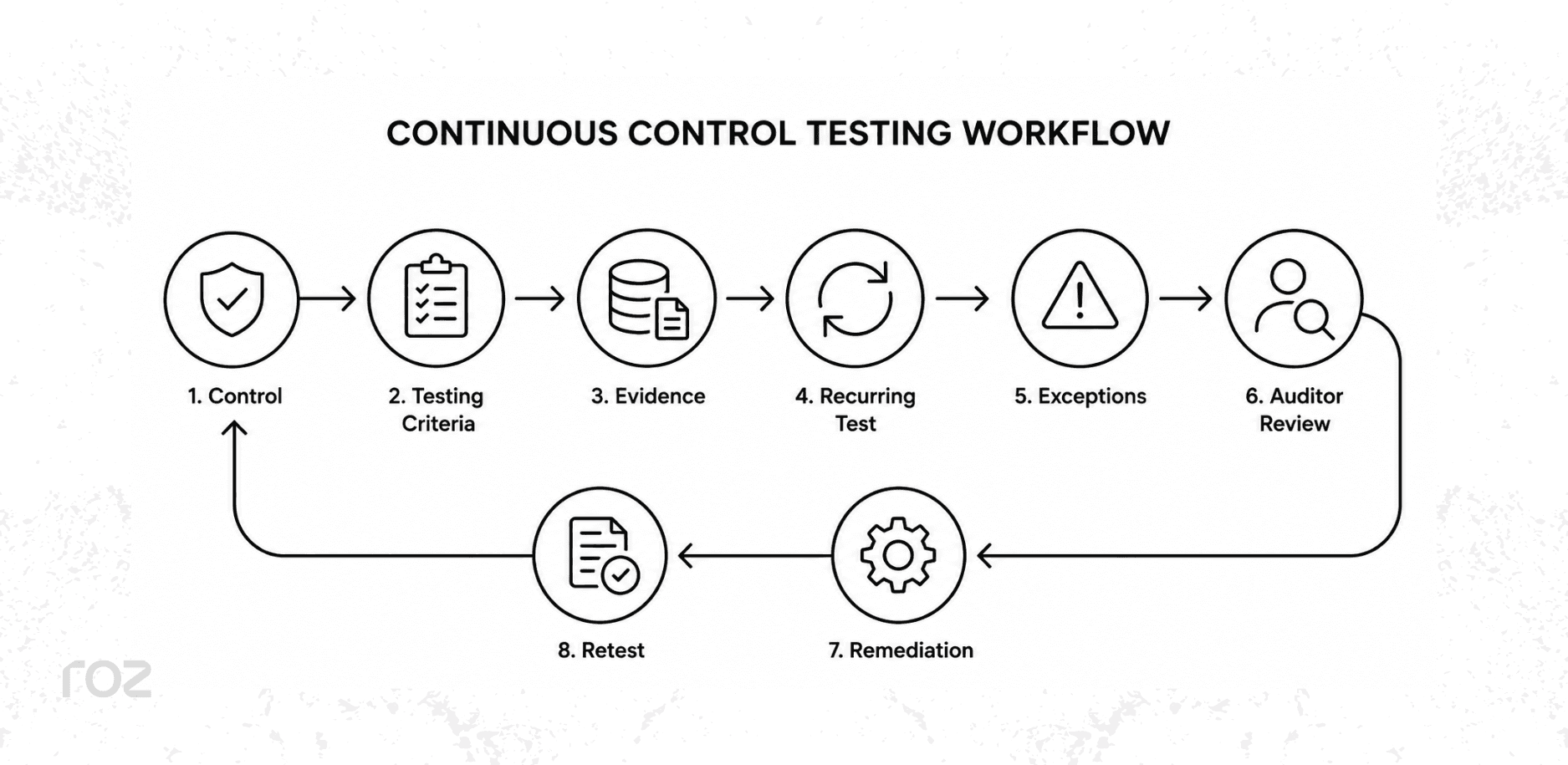
Step 1: Identify the Control
Identify the control objective, control activity, and risk that the control is aimed at addressing. A control that is poorly defined will likely produce poorly defined results.
Step 2: Define Testing Criteria
Each control should be defined in a testable way. For example, the following are testable assertions.
Approval has been documented on every transaction.
Access has been removed. Post-termination within the defined timeframe.
Authorization to make the change has been documented.
The required review occurred within the defined frequency.
The criteria must be clear enough that a test can either pass or identify an exception.
Step 3: Identify Evidence Sources
Some common sources from which evidence can be derived are IAM systems, HR systems, ERP systems, ticketing systems, cloud configuration databases, financial systems, and system logs. The availability of reliable, structured evidence from these sources is an important factor in determining whether a control is a good candidate for continuous testing.
Step 4: Establish Testing Frequency
The frequency of testing will be determined by the risk of the control, how frequently the control is exercised, and the velocity at which exceptions need to be identified. A control with a higher risk and a higher frequency of operation may be tested more frequently. A lower-risk control that operates infrequently, such as a monthly reconciliation, may be tested at a corresponding frequency, depending on the engagement objectives and available evidence.
Step 5: Run the Control Test
Define the relevant population or testing approach, apply the testing criteria, and compare the results against the expected condition. The test produces a set of results: items that meet the criteria and items that do not.
Step 6: Identify Exceptions
Identify results that do not meet the defined testing criteria, as well as cases where sufficient evidence is unavailable to determine whether the criteria were met. Neither result necessarily establishes a control failure; both provide a basis for further investigation.
Step 7: Investigate and Validate Exceptions
Exceptions may be caused by a number of factors, including timing issues among systems, incomplete data, legitimate business circumstances, or even false positive results. The auditor evaluates these possibilities before finalizing conclusions about the control's operation.
Step 8: Document Results
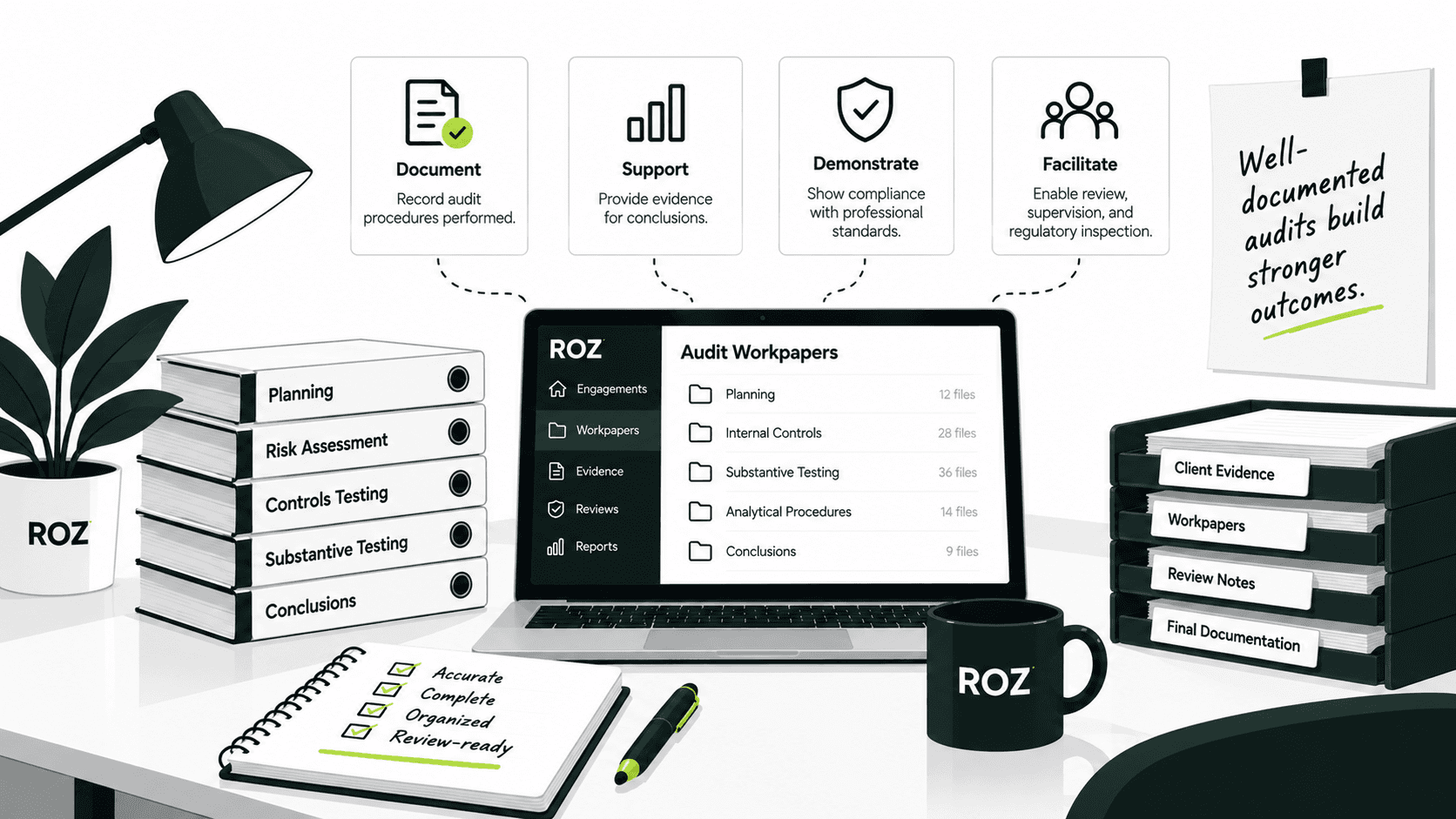
Testing documentation should establish the test population, methodology, evidence, date of the test, exceptions found, and who conducted the test and approved the documentation, along with any conclusions drawn and any remedial actions that may be planned. Documentation should be conducted even if the test is performed using automated systems.
Step 9: Remediate and Retest
Recurring testing gives management an opportunity to assess whether remediation activities have addressed identified issues. Over time, the results can provide a broader view of control performance across the organization.
Continuous Control Testing vs. Traditional Control Testing
Factor | Traditional Control Testing | Continuous Control Testing |
Frequency | Periodic | Recurring or ongoing |
Evidence | Collected periodically | Collected repeatedly where available |
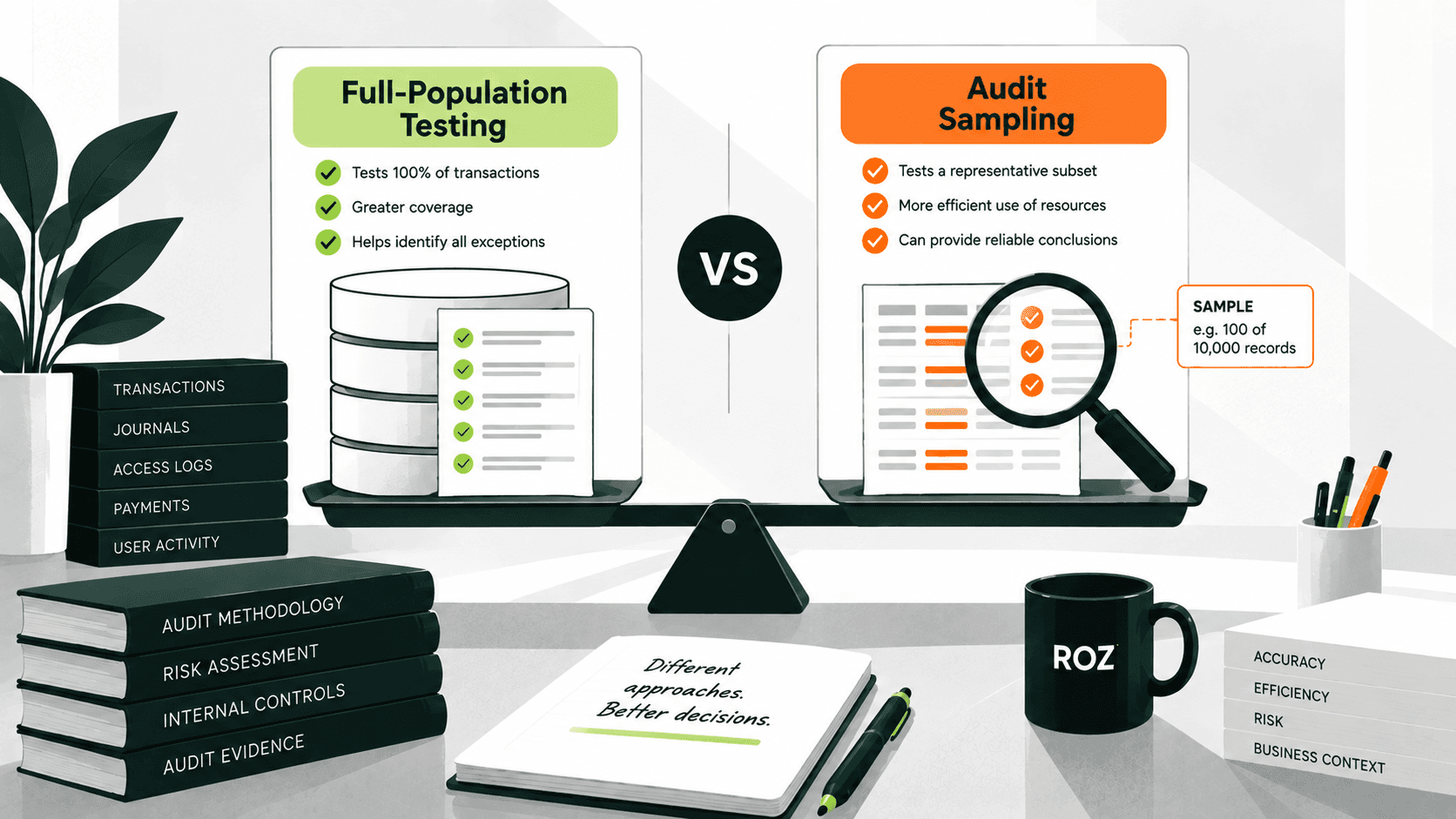
Population | May use sampling | Can support broader populations |
Testing approach | Periodic procedures | Recurring, repeatable procedures |
Exception detection | During testing cycles | Potentially closer to occurrence |
Documentation | Periodic workpapers | Recurring test records |
Data sources | Often manually gathered | Can use system-derived evidence |
Remediation | Often follows testing | Can support earlier identification and remediation |
The comparison above highlights the structural differences. Neither method dominates; rather, the proper choice is contingent on the control, nature of available evidence, and purpose of the engagement.
Which Controls Are Best Suited for Continuous Testing?
Controls with structured evidence, repeatable logic, and clearly defined expected outcomes are generally strong candidates. For example, controls in high-risk areas where the consequence of an exception is high, even though the volume of transactions is low. Controls that rely on qualitative judgment, unstructured data, and infrequent events are poor candidates.
Access controls are some of the more common options:
Terminated-user access removal
Privileged access reviews
Inactive account identification
MFA configuration and status reviews against defined requirements
Access provisioning timelines
IT general controls that can be assessed using system data include:
User access management
Change management approvals
Compliance with configuration baselines
Backup completion (where system-generated evidence for backup is retained)
Among the change management controls, criteria may be defined as:
Unauthorized change (i.e., change without associated ticket)
Change with insufficient approval
Change implemented as an emergency and not reviewed post-implementation
Segregation of duties controls can be tested using role and permission data to identify conflicting access across the financial or operational systems.
Financial controls with structured transaction data may include approved limits and duplicate payment detection.
Policy and compliance controls, such as the completion of required training within an established timeframe, may be tested using system-generated data.
Benefits of Continuous Control Testing
The benefits of recurring testing are real, and they are worth stating precisely:
More frequent visibility: Recurring testing reduces the time gaps between testing, providing auditors and control owners insights on the performance of controls sooner.
Broader coverage: Where adequate data exists, technology allows testing on larger populations than what is possible with manual control testing.
Earlier exception identification: Recurring testing identifies exceptions sooner, as opposed to manual testing, which may take months to discover.
More consistent testing: The use of standard criteria across multiple control testing cycles results in less variability due to manual processes.
More efficient use of auditor time: If testing is performed in a data-driven manner, auditors can focus their efforts on investigating the exception, exercising their judgment, performing risk analysis, and other activities that have a significant impact.
Broader coverage does not by itself establish assurance. Test logic, evidence quality, population completeness, and the rigor of exception assessment all affect the reliability of the results.
Challenges and Limitations of Continuous Control Testing
Once an organization decides to implement continuous control testing, there are some challenges and limitations that need to be addressed.
Data quality: Test answers rely on data as evidence. Poor quality, incomplete, and obsolete data leads to poor answers. Tests cannot be trusted without quality data.
System integration: Reliable data connections and consistent definitions are necessary across systems for testing that spans more than one system.
Test logic design: Rules of logic that are designed poorly yield results that are invalid, incomplete, or otherwise erroneous in some way. Logic designed for testing must be reviewed and be placed in a validated state before being used.
Evidence interpretation: Continuous control testing is typically focused on the testing of controls that can be judged using structured data. Judgment of evidence that is unstructured is not conducive to continuous control testing.
Control and system changes: Continuous control testing will require the testing logic to be revised if there are changes to the controls or systems that are being tested.
Exception management: Organizations need clear, defined processes for exception validation, remediation, escalation, and retesting. Without defined processes, exception volumes can become difficult to manage and may reduce the effectiveness of the testing program.
Governance and documentation: Even when technology supports recurring testing, the criteria for the test, test history, test logic changes, test evidence, the reviewer, and the exceptions must be documented.
Continuous testing does not provide continuous assurance. Tests performed repeatedly assist in the assessment of control but do not provide an independent conclusion from the audit. Final conclusions still require professional judgment and auditor evaluation.
How Roz Supports AI-Assisted Control Testing
Roz is an AI-native audit fieldwork platform built for auditors and advisory teams performing control-based engagements across SOC 2, ISO 27001, SOX, CMMC, and related frameworks.
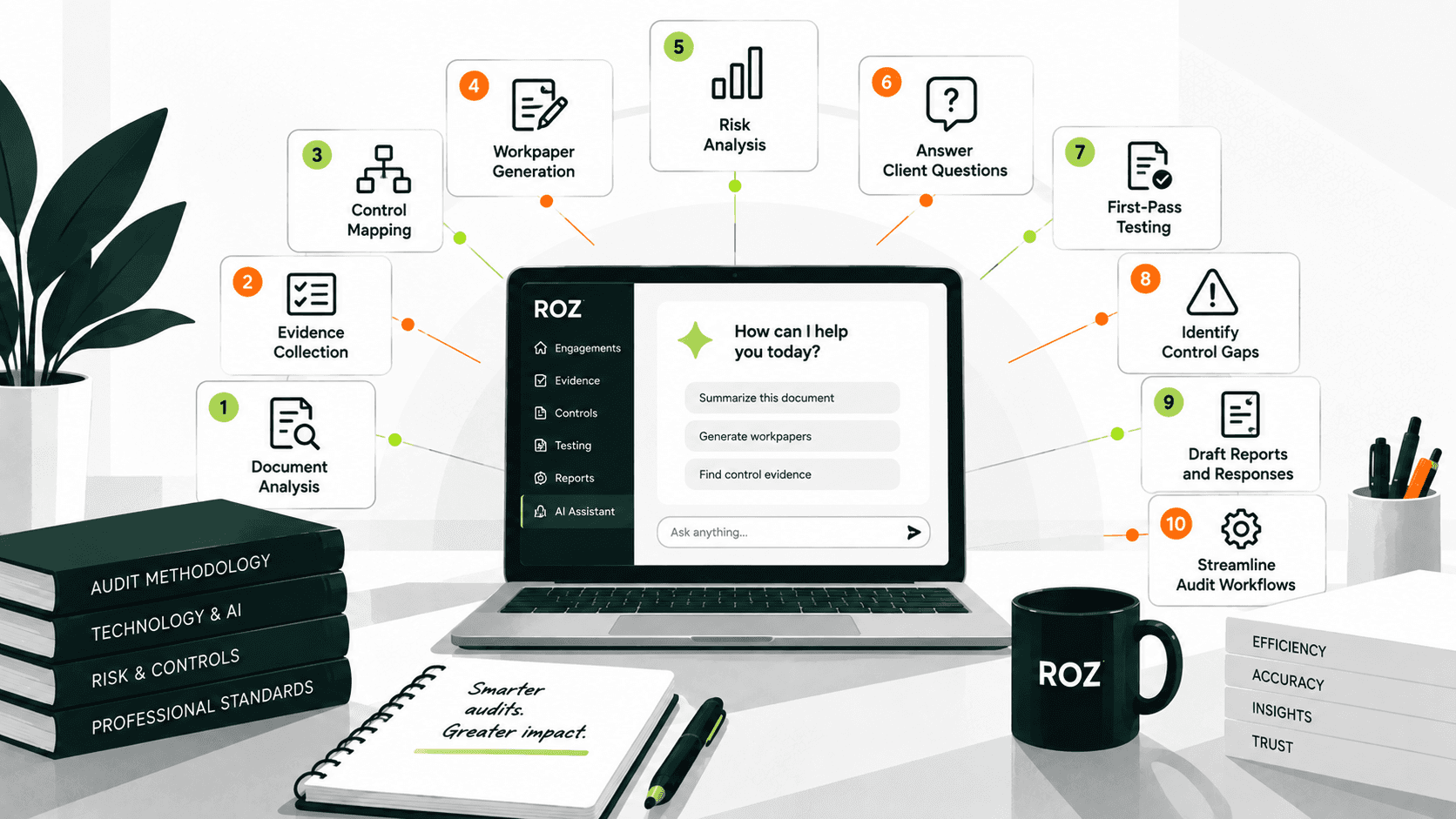
Roz supports the recurring control testing workflow at several points:
Evidence organization: Client-specific workspaces keep evidence structured and accessible across the engagement team.
Control extraction and mapping: Roz can extract controls from client documentation and organize them within a structured control workflow.
Evidence sufficiency checks: Roz can surface potential gaps where documentation may be missing or insufficient before testing.
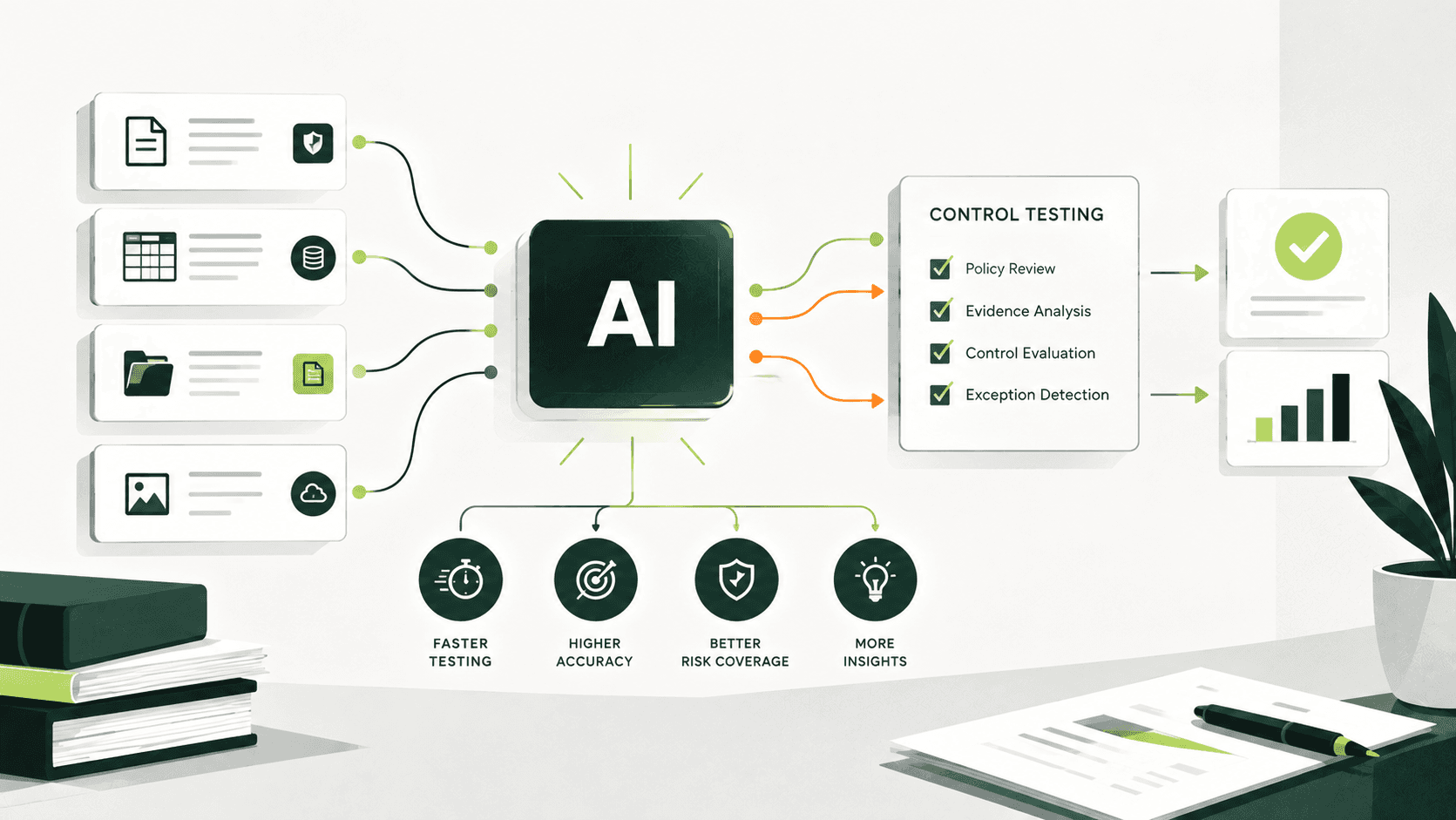
AI-powered control testing: Roz runs defined or suggested attribute checks against evidence and sample sets, returning testing results and reasoning for auditor review.
Workpaper preparation: Completed control activities can be exported as formatted workpapers with supporting evidence, annotations, and audit trails.
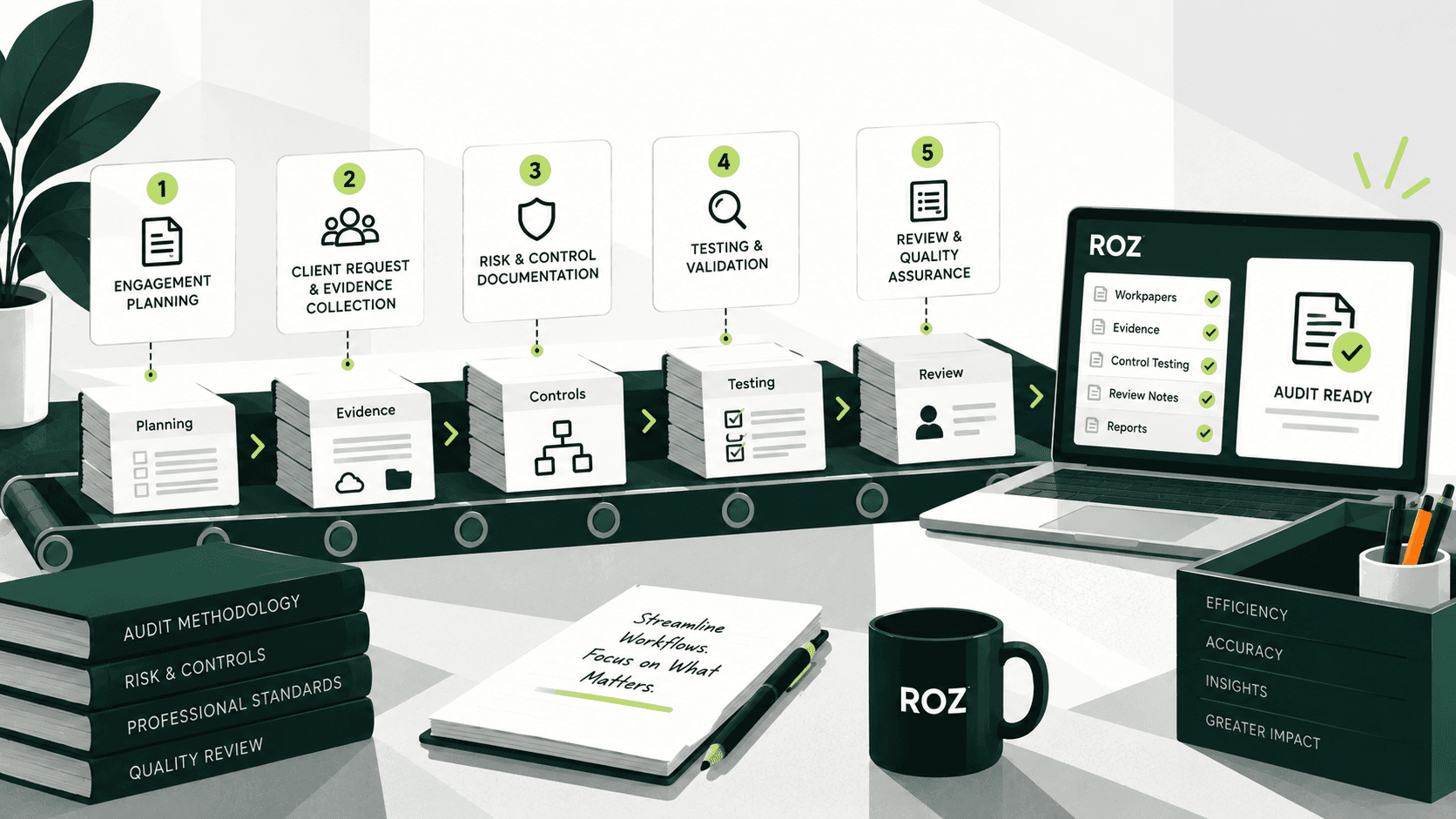
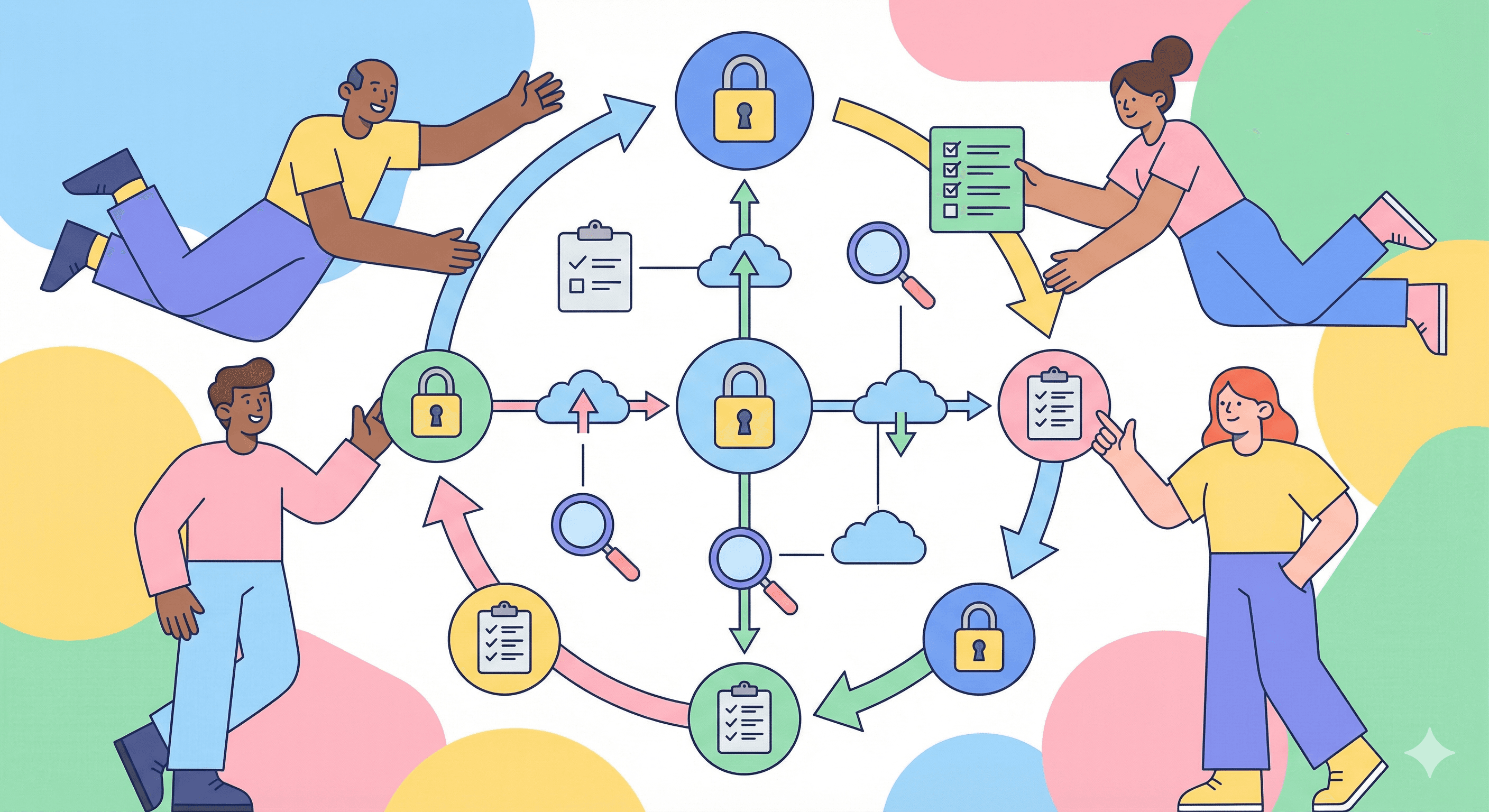
The workflow follows a clear sequence: Control → Evidence → Attribute Checks → AI Testing → Result → Auditor Review → Workpaper → Remediation/Retest.
Auditors validate results, investigate potential exceptions, exercise professional judgment, and make final conclusions. Roz streamlines the repetitive first-pass work without removing the judgment that defines audit quality.
Conclusion
Continuous control testing can increase testing frequency, support broader population coverage, and surface potential exceptions closer to when they occur. It does not replace sampling, investigation, or auditor judgment; those remain central to the work.
Start with two or three controls that have structured, system-derived evidence and clearly defined testing criteria. Define the criteria, identify the evidence source, establish the frequency, and build the documentation workflow before expanding.
AI platforms like Roz support evidence collection, first-pass testing, and workpaper preparation as the program scales, without shifting responsibility away from the auditor.
Frequently Asked Questions
Is continuous control testing the same as continuous control monitoring?
No. Continuous control testing evaluates whether a control meets defined testing criteria at recurring intervals. Continuous control monitoring focuses on ongoing observation of control performance, conditions, or exceptions.
Which controls are best suited for continuous testing?
Good candidates generally have structured evidence, repeatable testing logic, and clearly defined expected outcomes. Access controls, ITGCs, change management controls, and some financial controls are examples.
Is continuous control testing required for SOC 2?
No. SOC 2 does not prescribe continuous control testing as a required methodology or establish a universal testing frequency. Recurring testing can be used as part of an organization's evidence collection and control evaluation approach, depending on the engagement and the controls being assessed.