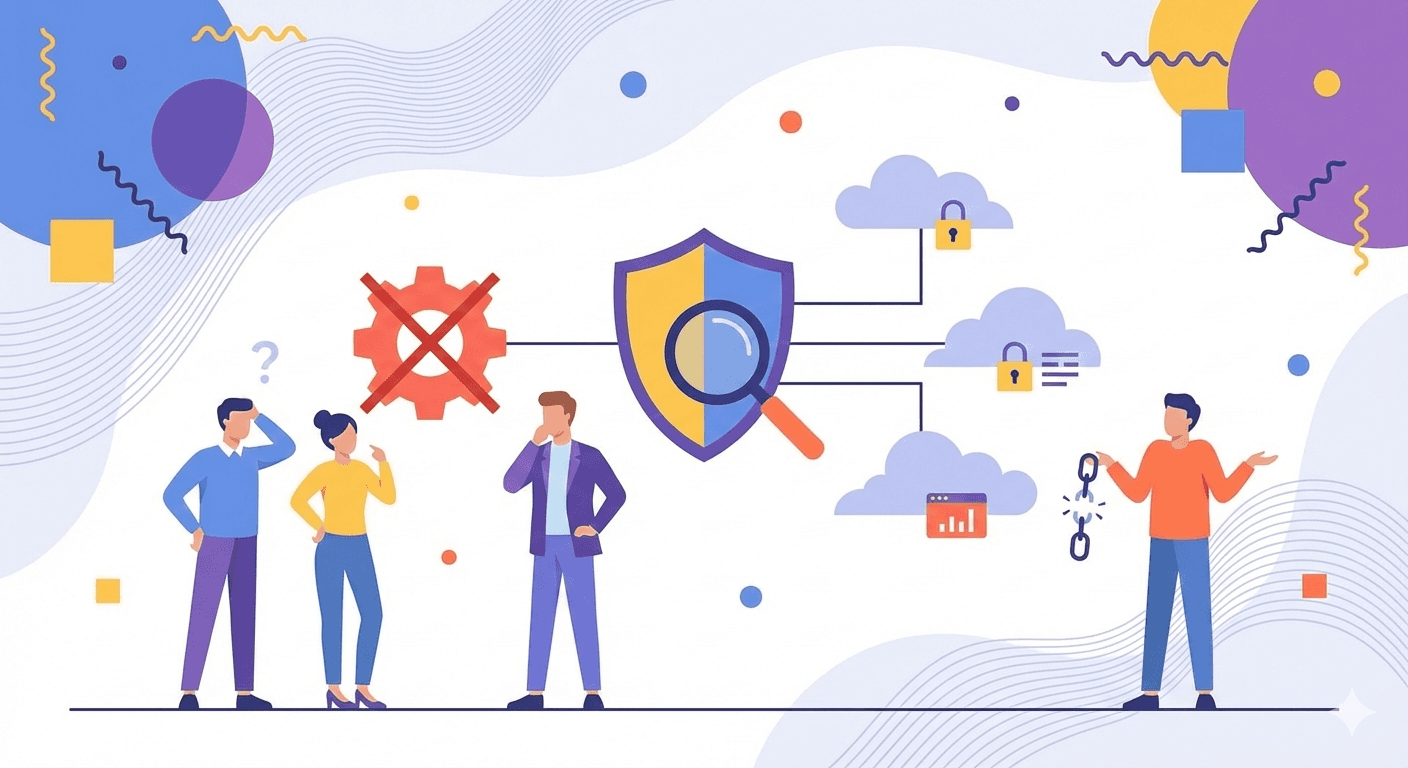
Most audit teams are not struggling with framework knowledge. They are struggling with evidence volume, repetitive testing, and fragmented workflows.
As regulatory requirements expand, compliance complexity continues increasing across SOC 2, SOX, ISO 27001, HIPAA, and internal audits. Organizations are generating more data than ever before, yet many professionals still rely on traditional spreadsheet-heavy testing workflows that typically do not scale well. Manually matching screenshots to control frameworks is a labor-intensive process that can lead to reviewer fatigue and administrative bottlenecks.
In this article, we will address these challenges: AI-assisted audit workflows are changing how modern audit teams execute engagements. Automated control testing helps reduce manual review while improving consistency and visibility. By using continuous compliance monitoring and streamlined SOC 2 readiness workflows, firms can support higher quality engagements without necessarily relying on linear headcount growth.
What Is Automated Control Testing?
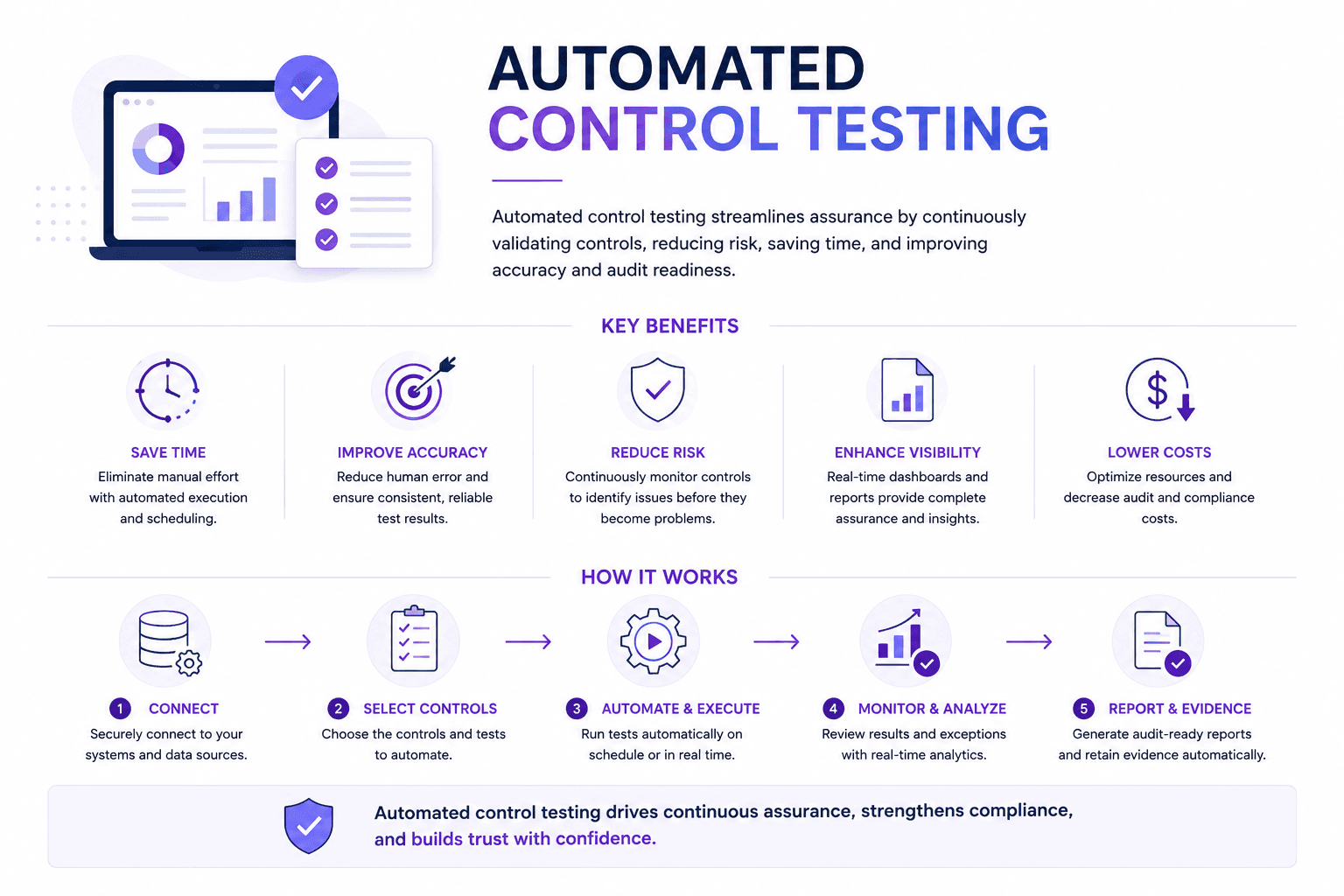
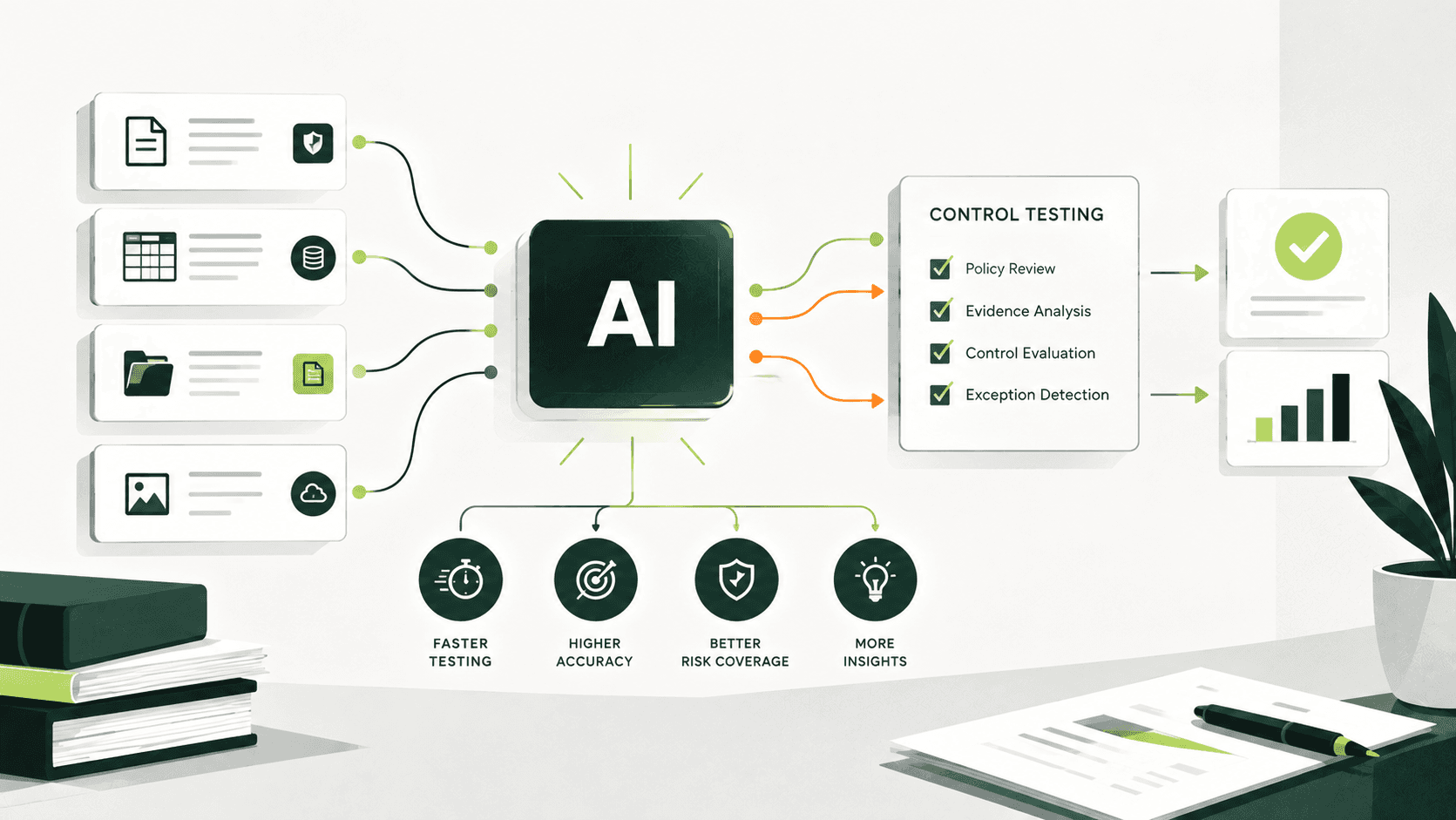
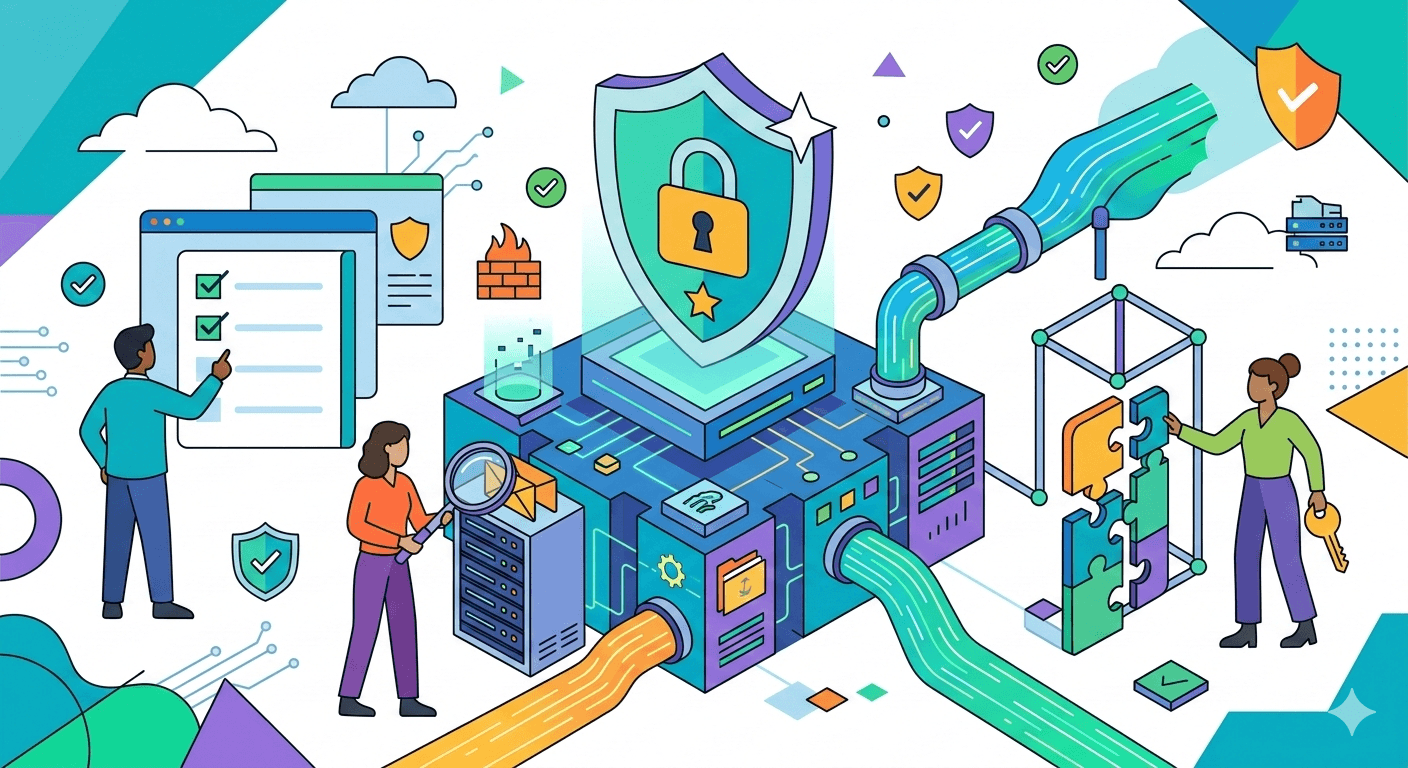
Automated control testing uses software and integrations to evaluate the effectiveness of internal controls. Unlike the traditional process of conducting samples, reviewing evidence, and examining spreadsheets, automated systems perform the following tasks:
Collect evidence automatically
Validate control activity
Monitor configurations
Identify exceptions
Generate audit trails
Support continuous monitoring workflows
Automated testing is designed not to replace the auditors whose expertise is needed the most. But in the process of automating repetitive administrative tasks, it allows the audit teams to focus their efforts on more complex and sophisticated activities like analytical work, professional judgment, and remedial oversight.
How Automated Control Testing Differs From Manual Testing
In a fundamental way, a manual compliance testing process and an automated control testing workflow differ.
Manual Testing | Automated Testing |
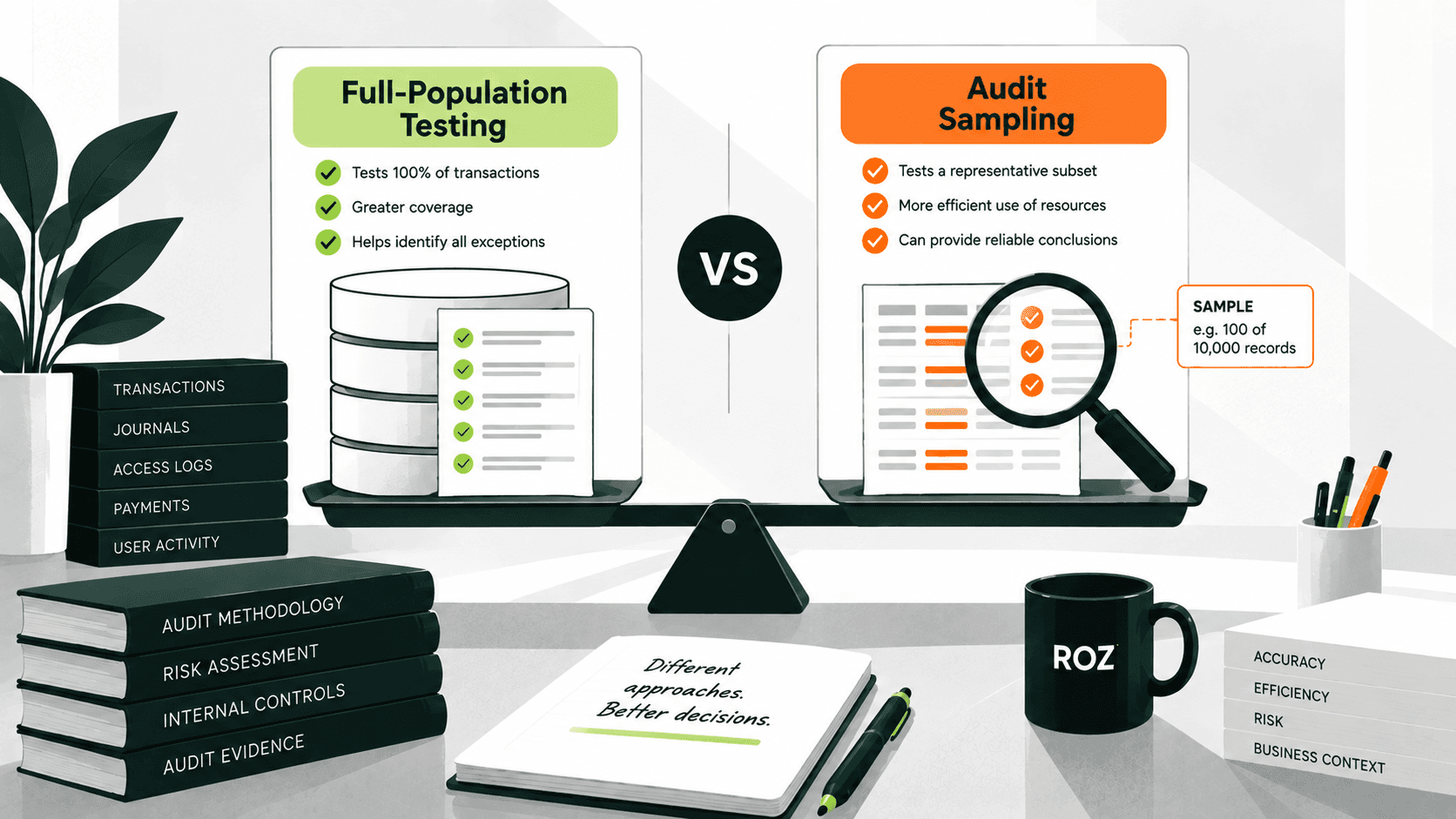
Sample-based testing of a specific period | Population-wide validation |
Periodic evaluations (e.g., annually) | Continuous or near real-time monitoring |
Spreadsheet-driven documentation | System-driven workflows |
Manual evidence review via screenshots | Automated evidence analysis via integrations |
Reactive gap identification | Proactive exception detection |
Types of Controls Commonly Automated
Processes that are highly structured are generally better suited for automation. Controls that are largely systems-driven, data-centric, and process-oriented are well suited for automated testing workflows.
Examples of these controls are:
Access reviews and user provisioning/deprovisioning.
Change management and deployment approvals.
Multi-factor authentication (MFA) enforcement.
Standardized approval workflows.
Segregation of duties (SoD) monitoring.
Cloud configuration compliance.
Privileged access monitoring.
Backup and logging validation.
Why Audit Teams Are Moving Toward Automated Testing
Organizations are increasingly focused on improving efficiency and scalability. Growing compliance requirements and operational complexity are driving organizations toward more automated workflows.
Growing Evidence Volumes Are Unsustainable
With the growth of the cloud and SaaS, the amount of data companies have to concern themselves with has just exploded. In environments based on continuous delivery, changes may happen even hourly. Manually assessing such environments in the light of growing compliance requirements is increasingly infeasible.
Manual Audit Workflows Create Operational Bottlenecks
Manual evidence collection and review can become operational bottlenecks. For manual data collection, pain points can include collection of manual screenshots, audit evidence collection requests, and fatigue stemming from the collection and management of complex reviewed systems. Complex frameworks can increase the risk of oversight gaps and inconsistent reviews.
Audit Firms Need Better Scalability
The gap between client expectation and what firms are able to deliver has seen firms develop new technologies to close the gap. In order to maintain their competitive advantage, firms are required to adopt audit methodologies that enable scalable growth.
Continuous Compliance Expectations Are Increasing
An audit that covers a particular point in time may no longer satisfy enterprise procurement expectations. Buyers are starting to expect that organizations maintain continuous audit readiness and functionality, and CCM is instrumental in achieving and maintaining ongoing control effectiveness throughout the year.
Signs Your Audit Workflow Is Becoming Unscalable:
Your team spends more time formatting spreadsheets than evaluating risk.
Clients frequently complain about duplicate evidence requests.
Status tracking requires daily meetings to reconcile different tracking documents.
Reviewers are experiencing burnout from evaluating thousands of access logs.
Common Use Cases for Automated Control Testing
Automated testing can be applied across multiple compliance frameworks due to overlapping control requirements that are suitable for automation.
User Access Reviews
Manual access rights controls can be time-consuming; however, automation can determine if employees who leave the organization still have access, control privileged access, and even monitor enforcement of MFA across different platforms.
Change Management Testing
Automation can facilitate the comparison of code deployments to tickets that identify unauthorized production changes. This provides assurance of ticket approval and captures deployment evidence.
Cloud Security & Infrastructure Controls
Modern infrastructure can be evaluated via APIs. Automated checks can evaluate AWS or Azure configurations, access controls, logging settings, and backup validation.
Financial & SOX Control Testing
Financial auditing requires a high level of assurance. Automation can be used to validate approvals, check proper segregation of duties in financial applications, and test financial workflows in the ERP.
Vendor & Third-Party Compliance Reviews
External risk management is a challenge. Automated solutions can offer support with vendor policy tracking, completion of evidence checks, and consistency of documentation assessments.
Benefits of Automated Control Testing
Automating workflows has several advantages for audit firms and their clients.
Reduced manual effort: Minimizes administrative work through the elimination of repetitive tasks, especially the need for validation through screenshots.
Better audit coverage: Automation of testing moves the audit process from a sampling framework to full-population testing and enables the processing of large data sets to identify exceptions in a timely manner.
Faster audit readiness: Less disrupting preparation for SOC 2, ISO 27001, and various internal and third-party audits and assessments.
Improved consistency and traceability: Standardized workflows and evidence that are linked and defined at the source and are defensible, thus leading to trails that can be audited clearly.
Faster remediation cycles: Identifying gaps in security postures is quicker, allowing teams to address security issues in a very brief timeframe.
Challenges and Risks Audit Teams Should Understand
While the quality control testing is a valuable capability, it has its limits. Here are some of the things to consider when adopting an automated control system.
Automation Does Not Replace Auditor Judgment
Automated programs are not substitutes for judgment. Auditor review and professional skepticism remain essential. Human validation must be built into the end-to-end process to ensure consideration of context and goals.
Poorly Designed Controls Cannot Be Automated Successfully
Automation is only feasible when process control design is adequate and the evidence generated is consistent. Normalizing fragmented systems with poor data quality and control design is crucial to support reliable testing outcomes.
AI Outputs Still Require Traceability
For auditing purposes, evidence must be explained. Automated systems must ensure evidence and output provide explainable provenance and reliable documentation, ensuring support for audit defensibility and traceability.
Integration Complexity Can Slow Adoption
Automated testing platforms need to connect to ERP legacy systems, customized cloud environments, complex identity providers, and custom-built ticketing systems. Doing this takes a substantial amount of work in advance.
Continuous Monitoring Creates New Operational Expectations
Gap analysis is not the end of the process. Once the gap is identified, owners have to close the gap. If governance processes are inadequate, frequent alerts can contribute to alert fatigue.
How Audit Teams Can Start Implementing Automated Control Testing
Adopting automation is typically most successful when approached iteratively.
Start with high-volume, repetitive controls: Common examples include access reviews, evidence collection, approval workflows, and check-ups for compliance.
Centralize evidence collection: It is better to create an evidence repository that can be reused to ensure that there are no duplicate requests. This will help organize the data and allow it to be analyzed before the time it is needed.
Standardize control frameworks: Use standardized control mappings across frameworks whenever possible.
Prioritize systems with strong data quality: Automation relies on consistent data, so choose systems that generate consistent logs and structured evidence or offer reliable integration.
Build human-in-the-loop review workflows: AI-assisted workflows still require auditor oversight and review. Don't rely on an AI process without auditing. It is better to have the workflow rely on an auditor to ensure that exceptions are reviewed.
Where Roz Fits Into Automated Control Testing
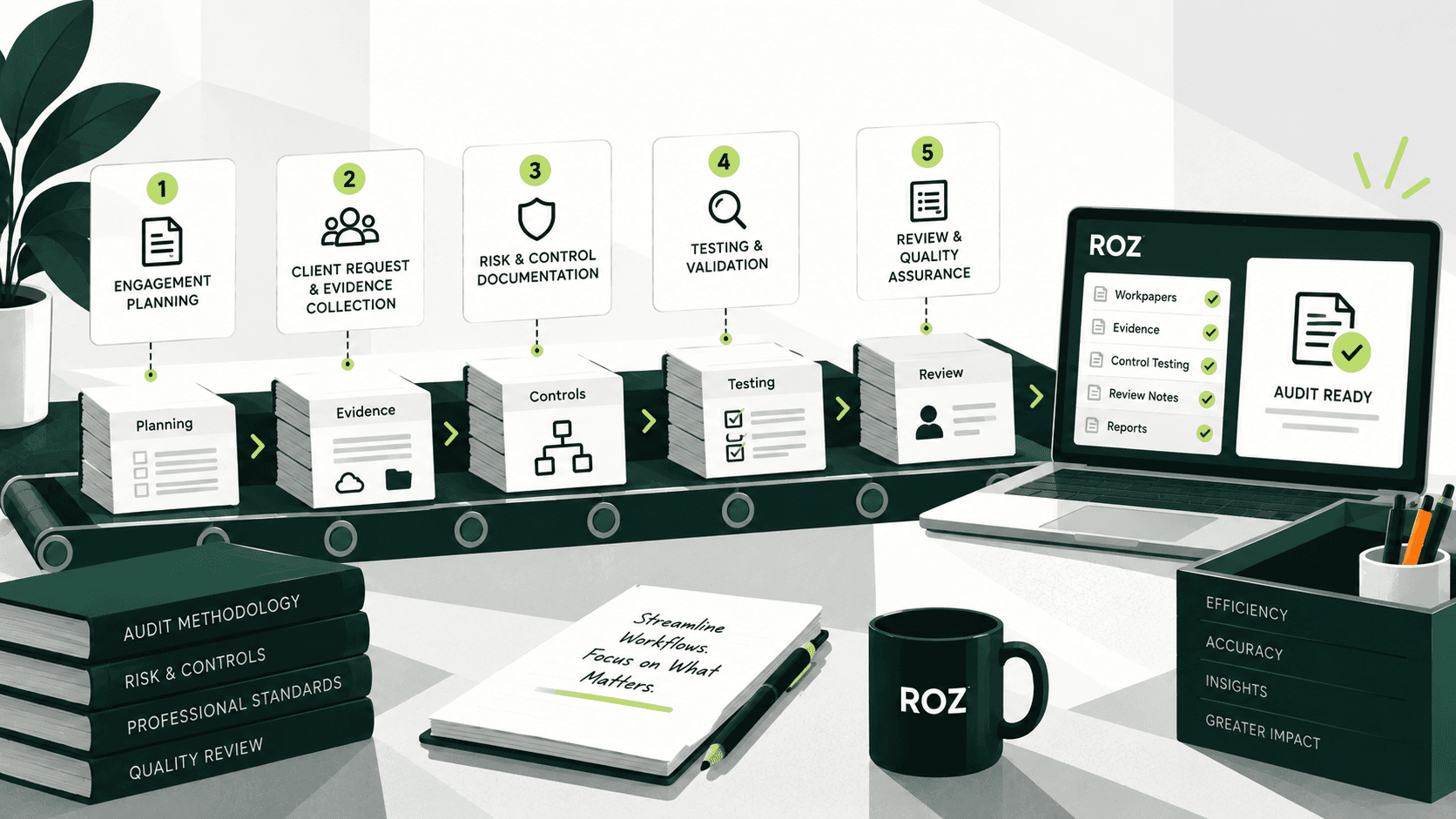
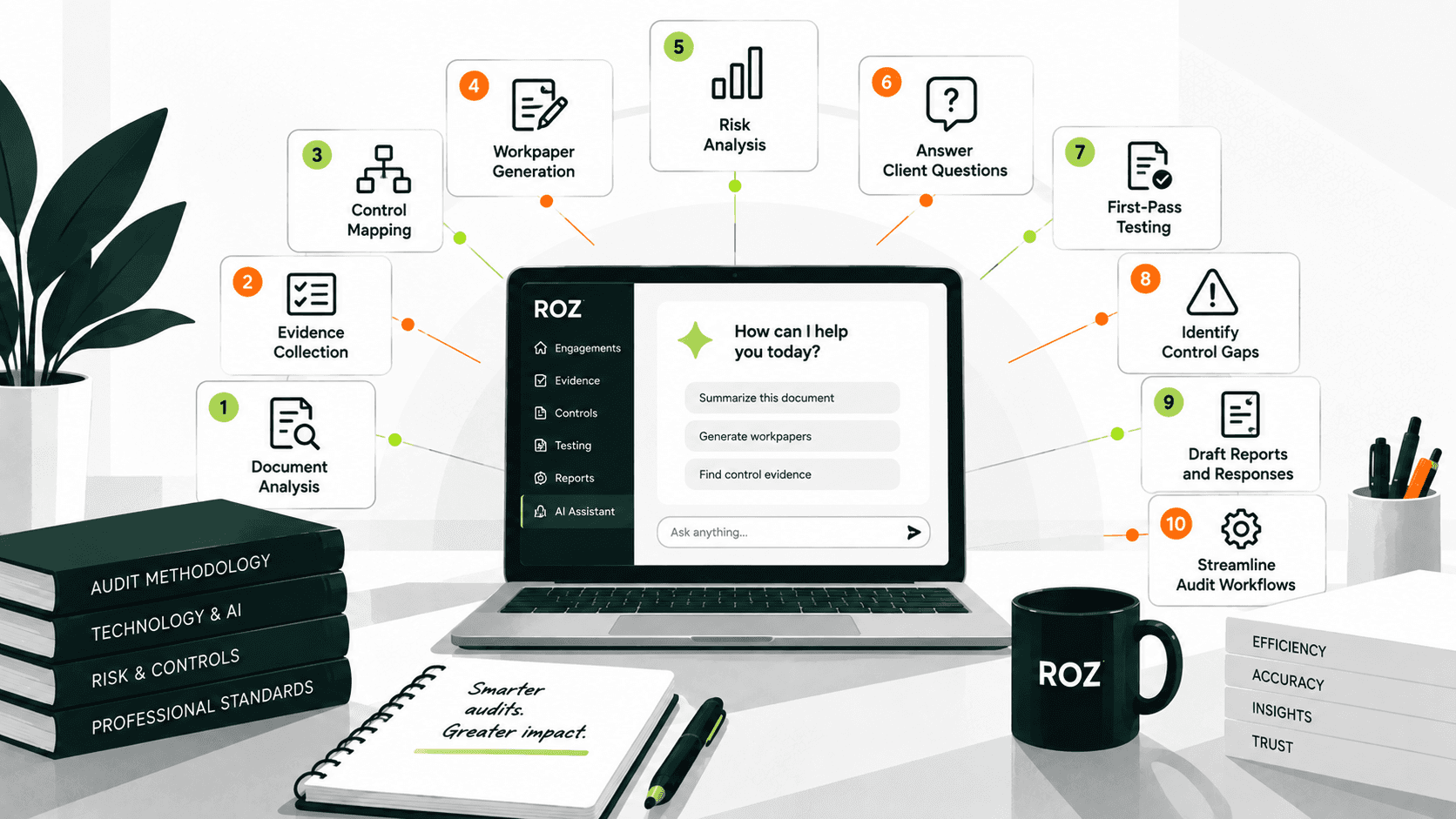
Roz is an AI-driven platform that integrates engagement and audit processes to facilitate control reporting and the delivery of audit services for CPA firms and advisory service teams.
AI-Assisted Evidence Review: Roz guides teams in recognizing evidence gaps and locating inconsistencies. By helping with the first-pass testing workflows, the platform reduces the manual workload and allows auditors to focus more on important risk analysis tasks.
Centralized Audit Workspaces: Roz functions as a smart enterprise data room, providing organized evidence documentation and reusable control structures where each client has a dedicated workspace. This consolidates all engagement-related documents in one organized location.
Source-Linked Audit Traceability: Roz provides clear evidence references and source-linked traceability to the uploaded files. This feature helps support auditor review and explainable outputs.
Engagement Visibility & Readiness Support: Risk and control matrix views provide organized documentation that helps teams create workflows to improve readiness.
Human-in-the-Loop Audit Execution: Roz speeds up workflow processes, but it does not replace auditor responsibilities. Consistency across engagements is increased through the platform, but auditors are responsible for all reviews and conclusions.
Conclusion
Automation and AI-assisted testing can help address some of the challenges that arise from increasingly complex audits and non-scalable manual workflows. They help professionals reduce repetitive administrative effort toward more valuable advisory work. They result in greater consistency and better visibility during the process.
Updating an audit workflow doesn’t mean replacing auditors, and AI-assisted testing still depends on the oversight and judgment of auditors. The use of structured engagement models and continuous assurance helps firms address the growing demands of compliance and improve operational efficiency.
If you want to help your firm enhance the workflows of their audit engagements, achieve greater consistency, and reduce the time spent reviewing evidence, then schedule a demo of Roz’s AI-native audit workflow.
Frequently Asked Questions
Does automated control testing replace auditors?
No. Automated control test support data collection and preliminary analysis workflows for the auditors. Auditors then need to apply their professional judgment and skepticism when reviewing the work before making final decisions pertaining to compliance.
How does AI help with audit testing?
AI can assist audit testing by finding and linking evidence to control frameworks, identifying areas of missing evidence, documenting audit trail exceptions, and drafting first-pass workpapers linked to evidence.
What are the benefits of automated evidence collection?
Automated evidence collection reduces the administrative burden for clients and audit teams. It reduces the number of requests made to clients, standardizes the format of documents, and offers a repository of evidence that will help support ongoing compliance readiness.